
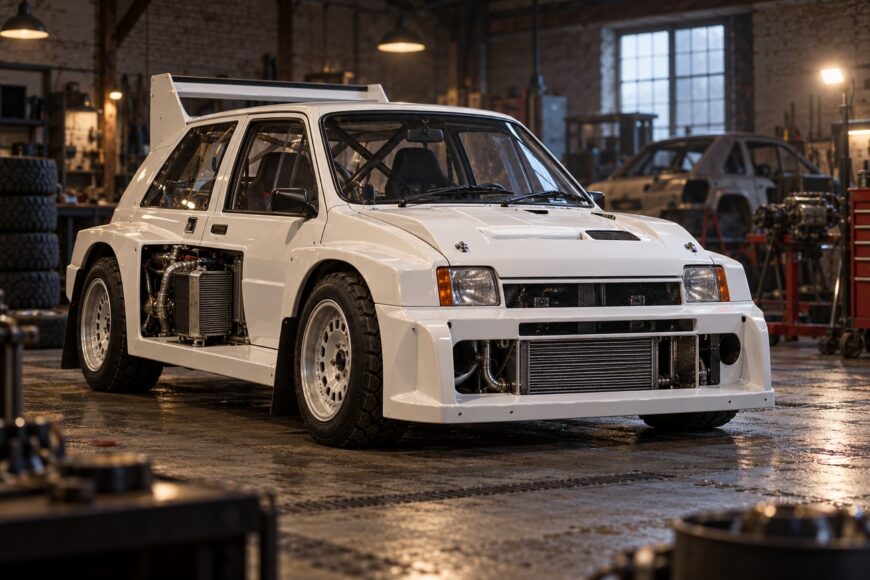
The MG Metro 6R4 wore the outline of a tiny Austin Metro, yet its 3.0-litre naturally aspirated V6 sat transversely in a mid-positioned layout behind the occupants and drove all four wheels. Beneath the familiar shape was a deeply re-engineered Group B homologation car. Its compact body made the engineering look even more improbable.
The 6R4’s reputation cannot be explained by a horsepower figure alone. Its short wheelbase, immediate throttle response, and demanding balance gave it a character distinct from its turbocharged rivals. That distinction matters whether you admire the Group B legend, want to understand how the car worked, or are considering the far less romantic business of owning one.
- What the MG Metro 6R4 Really Was
- Tiny Body, Radical Engineering
- Power, Versions, and the Numbers Problem
- Why It Was Fast—and Difficult to Drive
- The Ownership Trap: Parts, Provenance, and Restoration
- Myths, Group B Context, and the 6R4 Legacy
- Frequently asked questions
- How much is an MG Metro 6R4 worth?
- Why was Group B banned?
- What is the top speed of the MG Metro 6R4?
- Was Group B the fastest rally era?
What the MG Metro 6R4 Really Was
The 6R4 took its visual identity from the Austin Metro, but treating it as a tuned production hatchback leads to the wrong conclusions. Its engine position, drivetrain, structure, and purpose belonged to a specialized rally project. The Metro connection supplied a recognizable silhouette, rather than a useful guide to how the car drove or how it must be maintained.
At the center of the project was a 3.0-litre naturally aspirated V6 instead of the Metro’s production engine. The choice offered an alternative to the turbocharged approach common among Group B rivals: power would arrive without waiting for boost. That response was attractive on a rally stage, where a driver repeatedly has to place the car and accelerate away from slow corners.
Road-going 6R4s existed because Group B required cars to be produced for homologation, alongside compliance with its sporting rules. Their existence does not make the 6R4 an ordinary road model. A homologation car may be registered for the road while retaining compromises that make sense primarily for competition.
Nor should a road car be described using the specifications of a works rally car. Engines, running gear, and subsequent development could differ substantially. Whenever a quoted performance figure appears beside the name “Metro 6R4,” the first task is to establish which version, at which stage of its life, the figure describes.
Tiny Body, Radical Engineering
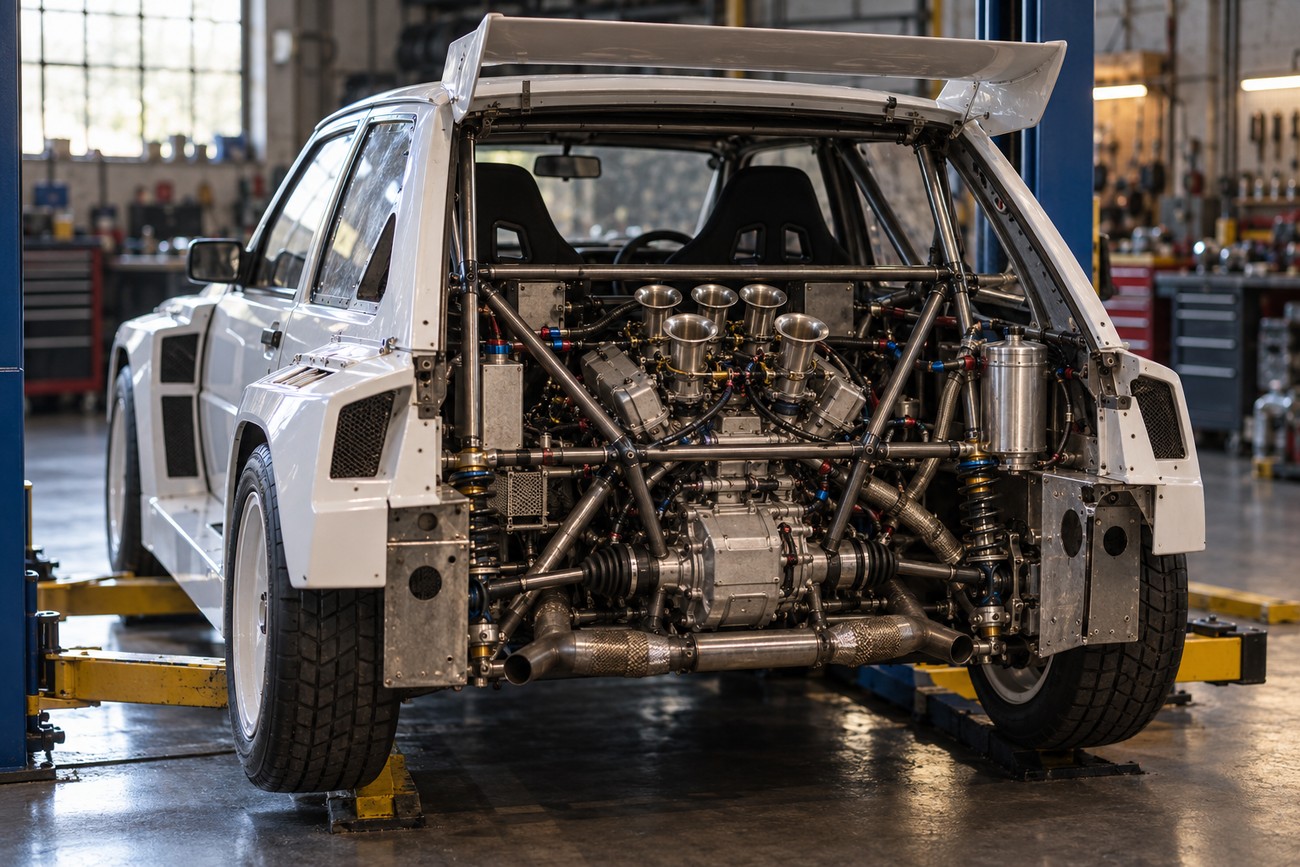
The V6 was mounted transversely in a mid-positioned layout, with four-wheel drive carrying its output to the road. Packaging those components inside a Metro-shaped car dictated much of the 6R4’s form. The broad stance and prominent bodywork were part of a competition machine built around its mechanical layout, rather than styling additions to a small hatchback.
Its very short wheelbase helped the car change direction quickly. On a tight stage, that sharp response could help a driver rotate the car and commit to the next corner. The same compactness could make small steering or traction changes feel consequential when speeds rose.
Fast combinations exposed the trade-off. A car that turns eagerly into the first bend still needs to settle before the driver asks it to turn the other way. Surface changes, bumps, and uneven grip could narrow that margin further, making the 6R4 demanding to place precisely.
Compactness therefore shaped the setup window as well as the driving sensation. Tyres, suspension geometry, and differential settings had to suit the surface and the driver’s approach. A setup that made the car keen through slow corners could leave it less reassuring through a fast, broken section.
Power, Versions, and the Numbers Problem
All the principal versions shared the basic idea of a 3.0-litre naturally aspirated V6, but that description is too broad to serve as a specification sheet. Clubman was the less powerful principal road version; International was the more powerful one. Competition cars occupied another category, with outputs that changed with preparation and evolution.
Road-car power is commonly described as roughly 250–300+ hp, depending on version and source. That range is more informative than attaching one exact number to every surviving car. It also prevents a road-going Clubman from being casually described as if it had a works engine.
Competition outputs are often quoted at around 400 hp and above, depending on specification and evolution. The frequently repeated 410-plus-hp claim may describe a competition configuration; it should not be assigned automatically to every road-going 6R4. Even among rally cars, a figure needs the context of the engine and period being discussed.
Published numbers can also follow a car long after its specification changes. A surviving 6R4 may have received later components, been rebuilt after competition, or been altered for a different use. The badge remains the same while the mechanical description becomes more complicated.
This is why the claim that the 6R4 was Group B’s most powerful car is a poor shortcut. Rival outputs varied and could be higher. The 6R4’s importance lies partly in how it delivered power from a compact, naturally aspirated package, not in winning a comparison built from mismatched figures.
Why It Was Fast—and Difficult to Drive
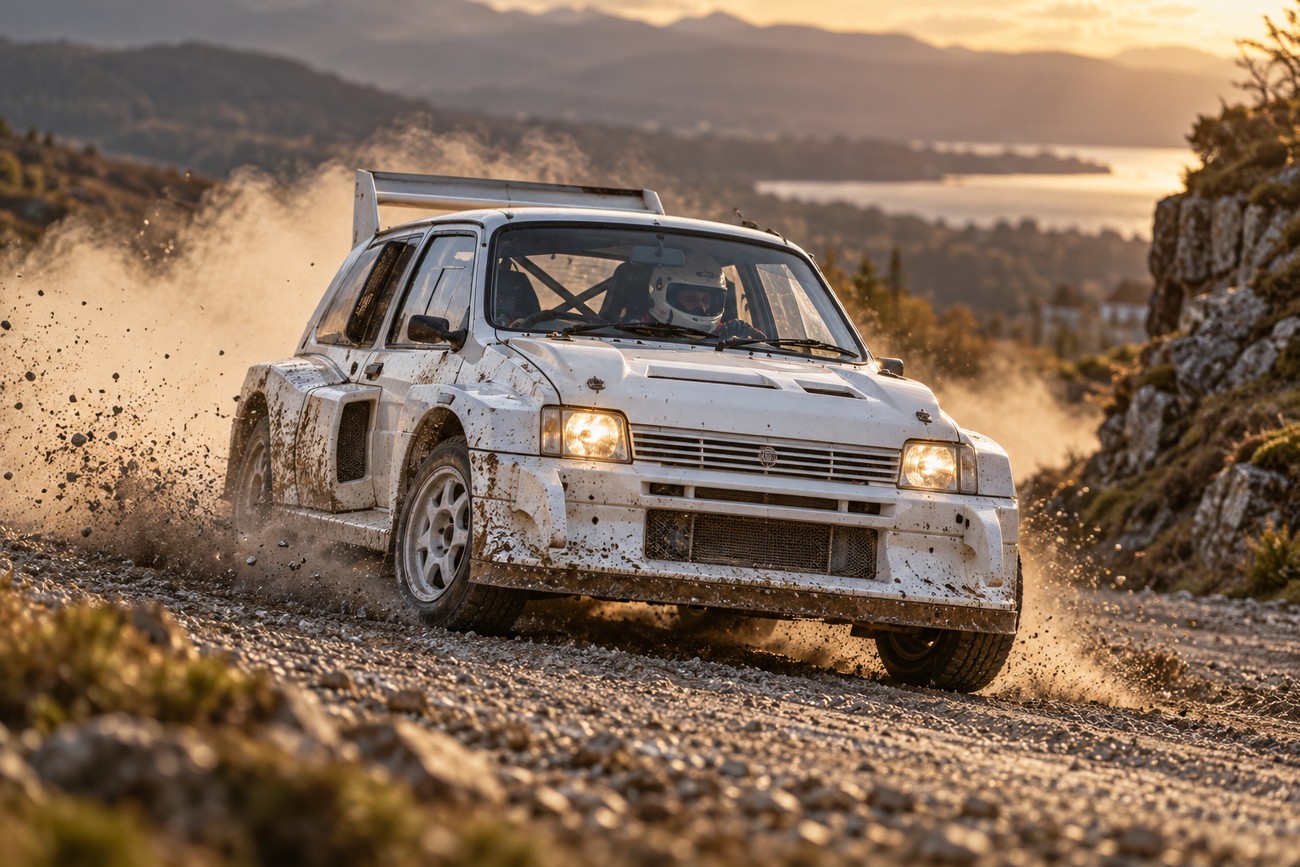
Without a turbocharger to build boost, the V6 gave the driver a more linear response than many turbocharged Group B rivals. That helped make throttle inputs easier to judge, especially when balancing the car through a corner. It did not remove the need to manage the grip available at each wheel.
The short wheelbase gave the 6R4 its quick reactions, but it cannot explain every report of nervous handling. Tyre choice, suspension geometry, differential settings, and surface conditions all affected when the car turned, settled, or broke traction. A driver meeting an abrupt slide might be feeling a combination of those factors rather than one inherent flaw.
Clutch behavior mattered too. On a rally stage, getting power through a four-wheel-drive system without upsetting the car required precision. A predictable engine could still be difficult to use well if the clutch engagement or drivetrain setup made a clean transition from braking to acceleration hard to achieve.
Changing surfaces sharpened the challenge. A setup that felt composed on consistent grip could demand different inputs where the road turned loose or uneven. In a fast sequence, the 6R4’s eager change of direction left less time for a correction than its modest size might suggest.
Driving it quickly, then, was a matter of matching the whole car to the stage. The accessible-sounding phrase “no turbo lag” describes one useful characteristic, not an easy rally car. Its pace depended on preparation and commitment as much as on the engine’s output.
The Ownership Trap: Parts, Provenance, and Restoration
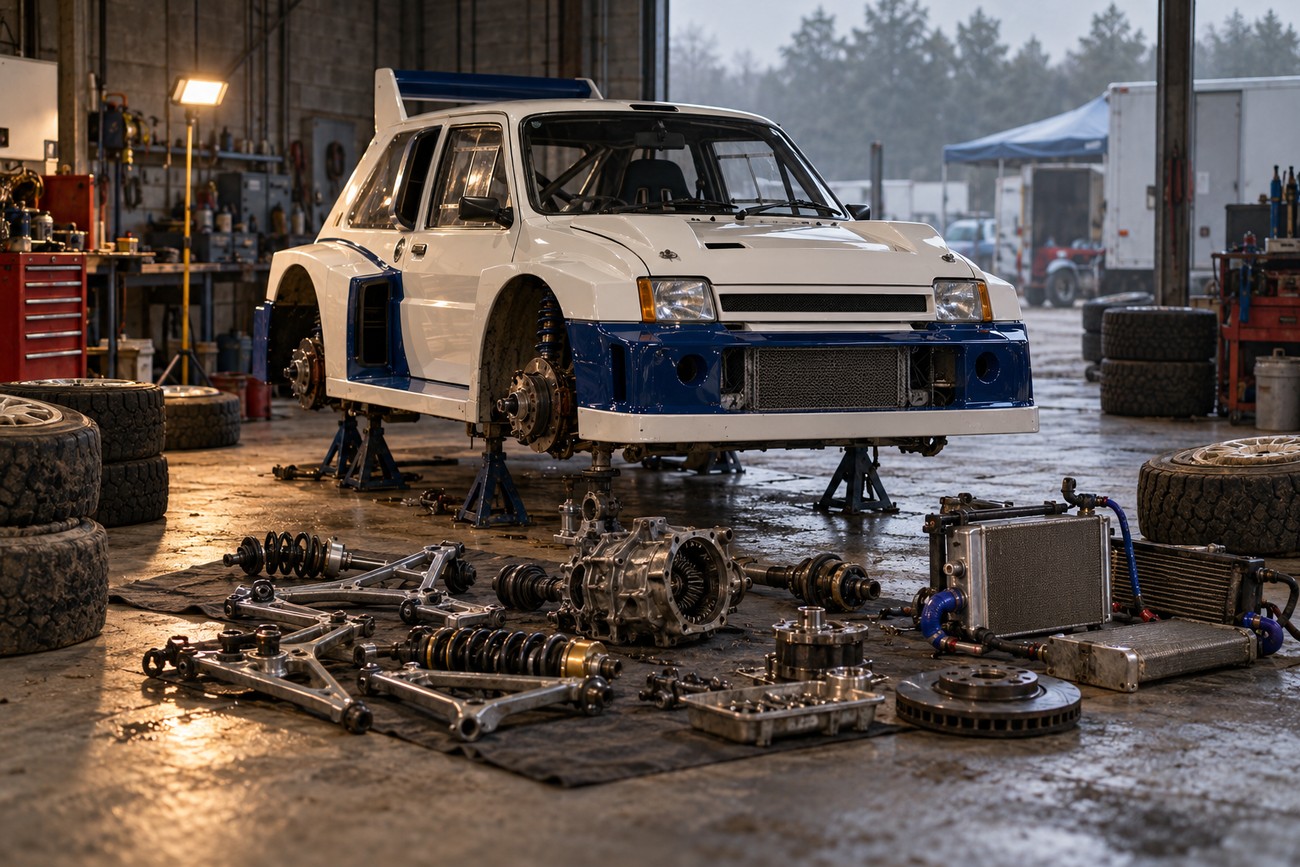
A 6R4 cannot be maintained like an ordinary classic Metro. Its rare V6 components, specialized transmission parts, and four-wheel-drive hardware call for knowledge and sourcing beyond routine hatchback work. If an original part is unavailable, repair may involve custom sourcing or bespoke fabrication, with cost and time difficult to predict.
Differential configuration and condition deserve particular attention because they affect both mechanical health and how the car behaves. A running engine and tidy body do not prove that the drivetrain is correct or properly set up. Buyers should allow for a thorough mechanical inspection before treating a driveable example as a ready-to-use car.
Verify the chassis identity, drivetrain specification, and period-correct evolution parts before estimating a restoration. Cosmetic completeness cannot establish mechanical originality.
Documentation can be as important as visible condition. Chassis number, provenance, competition history, recorded evolution, and original specification help establish what a particular car is. Those details may place two apparently similar 6R4s in different collector categories, especially where one has a clear history and the other has gaps.
A complete-looking car with incorrect components may be a harder restoration proposition than its appearance implies. Reversing changes can require scarce parts, specialist work, and evidence of the intended specification. An original restoration may take years and cost far more than an initial inspection suggests.
For many surviving cars, historical authenticity matters more than everyday usability. That is a sensible priority for a rare homologation machine, but it changes the ownership calculation. The appeal of hearing the V6 and feeling the car work must be weighed against careful servicing, limited parts availability, and the responsibility of preserving its history.
Myths, Group B Context, and the 6R4 Legacy
Group B encouraged technically extreme rally cars, and the 6R4 belongs firmly to that era. Yet describing it as the most powerful of them obscures its distinctive engineering. Outputs differed among rivals and across their development, while the 6R4’s naturally aspirated response offered a different way to use available power.
The “fast Metro” label is equally misleading. The body recalled a familiar small car, but the mid-positioned V6 and four-wheel drive defined a specialized homologation rally prototype. Its compact proportions were central to both its agility and the effort required to control it at speed.
Another persistent myth makes the naturally aspirated engine sound like a safety feature. Linear power delivery helped a driver judge the throttle; it did not neutralize the demands of the chassis, tyres, or stage conditions. Group B’s dangers cannot be reduced to whether a particular car had a turbocharger.
Rarity, the tiny silhouette, and the sound and response of the V6 keep the 6R4 compelling. Its story is stronger when the versions remain distinct: a road Clubman, a road International, and an evolved competition car need not share one output or one specification. The real machine is more interesting than a universal “monster” statistic.
Frequently asked questions
Specifications and history matter more than a headline number when assessing a 6R4. These distinctions also help put common claims about its value, speed, and Group B status in context.
How much is an MG Metro 6R4 worth?
There is no meaningful single price for an MG Metro 6R4. Clubman and International cars, examples with genuine works history, and cars with later changes can occupy different market categories. Chassis provenance, originality, restoration quality, running condition, and documented competition history can separate two examples that look similar in photographs.
Why was Group B banned?
Group B ended because the combination of extreme performance, limited homologation constraints, rising speeds, dangerous crowd placement, and fatal accidents made the formula’s safety risks unacceptable. The decision reflected the event environment as well as the cars. It was not the result of one technical defect shared by every Group B model.
What is the top speed of the MG Metro 6R4?
No single top-speed figure represents every 6R4. Gearing, rally setup, aerodynamic configuration, and road-versus-competition specification can change the result, so published figures need context. On stages, acceleration, traction, and suitability for the route mattered more than the maximum speed attainable under different conditions.
Was Group B the fastest rally era?
Group B produced exceptionally fast and spectacular rally cars for its period, but “fastest era” is not a universal measurement. Later cars, changing surfaces and regulations, and differences in how stages are timed complicate direct comparisons. Group B’s spectacle is beyond doubt; a single ranking across eras is much harder to defend.







