
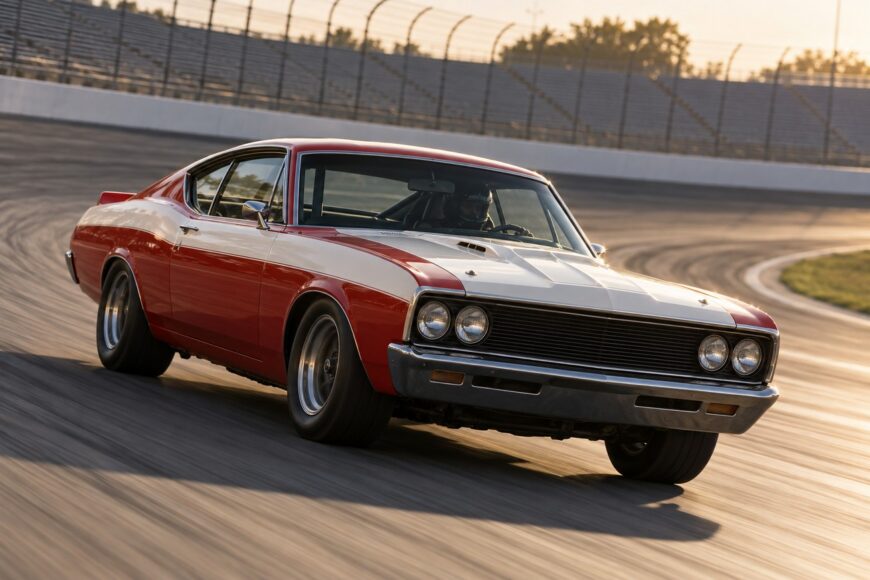
The Mercury Cyclone Spoiler II is a NASCAR homologation special whose value depends as much on authentic body geometry and provenance as on its V8. Built only in early 1969 from the first-generation Mercury Cyclone, it received a long, tapered nose designed for high-speed oval racing rather than ordinary showroom appeal.
The central correction to popular descriptions is mechanical: street homologation cars used a 351 Windsor V8, while NASCAR race cars could use different engines, including Boss 429-related applications. That distinction explains much of the confusion surrounding advertised horsepower, factory specifications, and claims attached to surviving cars.
Clones, incomplete restorations, and ordinary Cyclones converted with replacement panels are common risks. A credible purchase therefore requires more than a badge, paint scheme, or seller’s production claim. VIN records, front-end geometry, period documentation, and the relationship between the hood, fenders, and grille must agree.
- Why the Cyclone Spoiler II Was Built for NASCAR
- The Long Nose: What Made the Spoiler II Different
- Street Power Versus NASCAR Mythology
- Mercury Cyclone Spoiler II: Core Specifications
- Production Numbers, Gurney and Yarborough Versions
- How to Identify an Authentic Spoiler II
- The Ownership Risks Sellers Rarely Emphasize
- Common Buying and Modification Mistakes
- What the Spoiler II Is Worth as a Collector Car
- Frequently asked questions
- How much is a Mercury Cyclone worth today?
- How much horsepower did a 1970 Mercury Cyclone Spoiler have?
- What is a Mercury Cyclone Spoiler?
Why the Cyclone Spoiler II Was Built for NASCAR
The Mercury Cyclone Spoiler II appeared only in early 1969 as a homologation version of the first-generation Mercury Cyclone. Its purpose was to give Ford and Mercury a production-based shape that could satisfy NASCAR rules and compete effectively on the long, high-speed tracks where aerodynamic drag mattered more than showroom styling.
This was a fundamentally different strategy from producing another conventional muscle car. The Spoiler II’s extended front end, lowered hood, and smoothed grille addressed airflow over the nose and around the front of the car. Those changes made the vehicle more useful as a racing foundation, even though they made it less practical and less familiar to street buyers.
The model belonged to Ford and Mercury’s Aero Warriors program, which included the Ford Torino Talladega and confronted Chrysler’s Dodge Charger Daytona and Plymouth Superbird. These cars were shaped by competition requirements, and retail sales served the homologation purpose rather than broad consumer demand.
Every production Spoiler II used a 2-door hardtop fastback body with a front-mounted V8 and rear-wheel drive. That common architecture can make an ordinary Cyclone appear deceptively similar, especially after decades of repairs, repainting, and parts substitution.
The Long Nose: What Made the Spoiler II Different
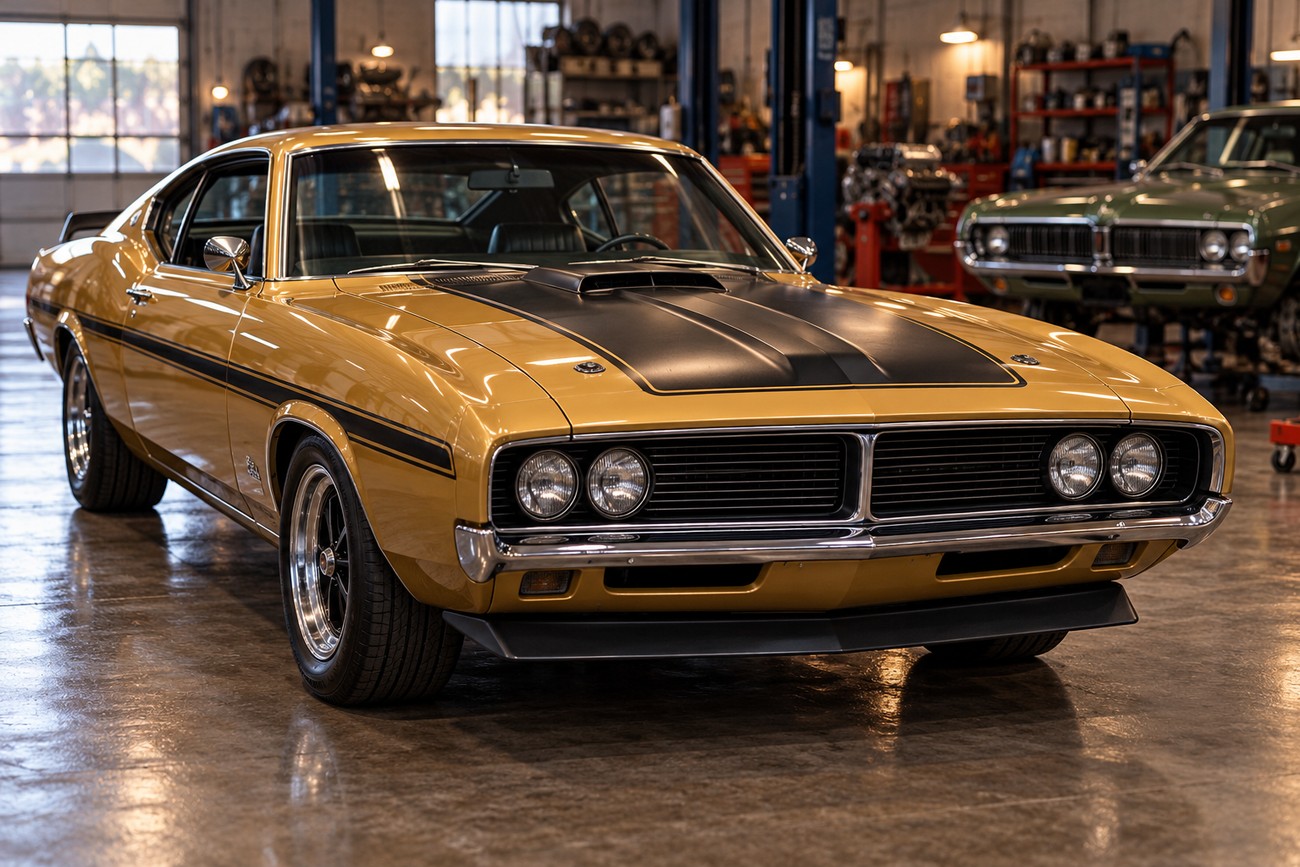
The defining alteration was a tapered nose approximately 19 inches longer than the one on a standard Cyclone. The design also used a smoothed grille and a lowered hood, creating a more continuous airflow path across the front of the car and toward the sides.
Those dimensions matter beyond appearance. The hood-to-fender transitions, grille position, and shape of the front assemblies determine how the car presents its nose to the air. A front end that looks acceptable at a parking-lot inspection can still have incorrect angles, uneven gaps, or altered transitions that affect high-speed behavior.
Correct parts are difficult to source. The extended hood, grille, and front fenders are scarce, and restoration frequently involves careful handwork rather than simple replacement. A modern body kit or universal panel may reproduce the general silhouette while missing the geometry that gives the car both its historical identity and its intended aerodynamic behavior.
For collectors, the panel relationships are evidence. Consistent gaps, straight hood lines, and the way the nose meets the fenders are more informative than a fresh paint job. An attractive conversion can therefore be less valuable than a less polished car retaining verifiable original structure.
Street Power Versus NASCAR Mythology
The street homologation specification centered on a 351 Windsor V8 displacing 5.8 liters and using a four-barrel carburetor. Commonly stated output is approximately 290 hp and approximately 522 N·m, figures that describe the road car rather than a fully prepared NASCAR machine.
Race cars built for the Aero Warriors program could use different engine specifications, including Boss 429-related race applications. That fact has encouraged a persistent mistake: assigning a race engine, race output, or race-car performance to every surviving Spoiler II.
A street car with a 351 Windsor was still a serious late-1960s V8 muscle car, but its road performance was broadly comparable to other cars using similar engines. The aerodynamic advantage became most meaningful at high speed on NASCAR superspeedways, where drag and stability had consequences that ordinary road driving rarely reproduced.
Engine claims should be checked against the actual car. A replacement engine, altered carburetion, or decades of mechanical work can change performance substantially, while an advertised horsepower figure says little about the condition of the engine currently installed.
Mercury Cyclone Spoiler II: Core Specifications
The table separates the clearest street-car specifications from the disputed or poorly documented details that are sometimes borrowed from other Cyclone, Spoiler, or racing references.
| Specification | Mercury Cyclone Spoiler II |
|---|---|
| Production period | Early 1969 |
| Body style | 2-door hardtop fastback |
| Layout | Front-mounted V8, rear-wheel drive |
| Street engine | 351 Windsor V8, 5.8 liters |
| Street output | Approximately 290 hp and approximately 522 N·m |
| Clearly documented transmission | 3-speed FMX automatic |
| Transmission uncertainty | 3- or 4-speed manual and SelectShift references are not clearly tied to the Spoiler II and may refer to other Cyclone or racing specifications |
| Front suspension | Independent coil-spring suspension |
| Rear suspension | Dependent live rear axle with leaf springs |
| Brakes | Front disc brakes and rear drum brakes |
| Wheels | 14-inch wheels |
| Aero dimension | Nose approximately 19 inches longer than on a standard Cyclone |
The FMX automatic is the clearest stated transmission specification for the street homologation car. References to manual gearboxes or SelectShift should be treated cautiously unless they are supported by documentation for the specific vehicle rather than by a general Cyclone parts listing.
Specification sheets also need to identify whether they describe a street car or a race car. Mixing those categories produces false expectations about engine output, gearing, suspension, and performance.
Production Numbers, Gurney and Yarborough Versions
The commonly cited official production figure is 503 examples. Some enthusiast and secondary references instead give an approximate range of 300–500, so the total should be treated as disputed rather than presented as an unquestionable census.
That uncertainty affects how sellers describe rarity. A claim that a car is one of an exact number may sound authoritative, yet the underlying figure may reflect a particular accounting method or a source that does not reconcile with other records. Buyers should record the source of the number rather than accepting it as proof of authenticity.
The two principal appearance identities are the Dan Gurney Special and the Cale Yarborough Special. Their paint schemes and trim details are relevant to authenticity, and an incorrect combination can point to repainting, parts mixing, or a later attempt to create a more desirable presentation.
Configuration matters alongside production numbers. A documented car with correct aero components and period-consistent trim has a stronger historical case than a visually dramatic example whose identity rests only on a rare-sounding description in an auction listing.
How to Identify an Authentic Spoiler II
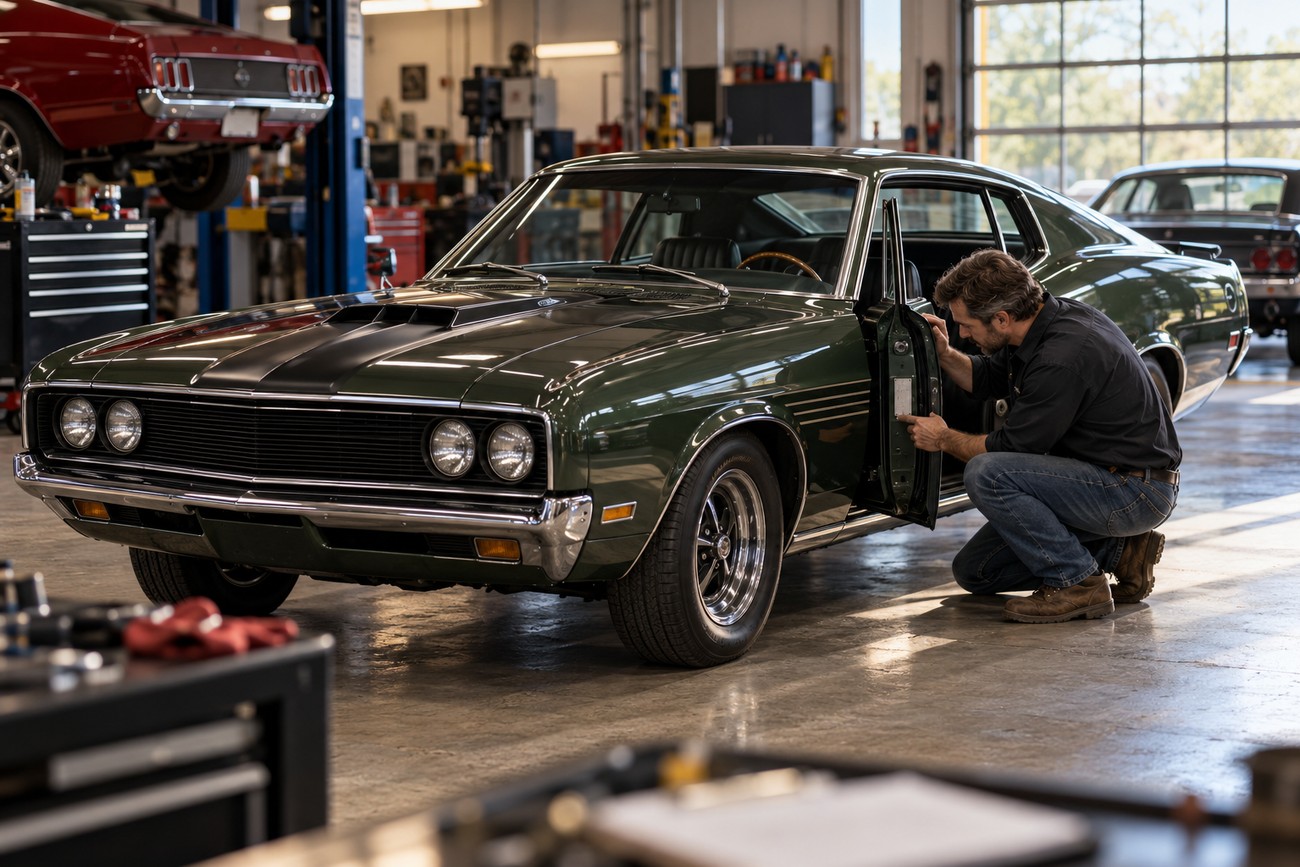
Begin with the VIN and documented ownership history before evaluating appearance. The paperwork should be consistent with an early-1969 Mercury Cyclone Spoiler II, while sales records, restoration files, and period references can help establish whether the car retained its identity through previous work.
The extended front end is essential. A badge, paint scheme, or replacement nose does not make an ordinary Cyclone or Cyclone Spoiler a genuine Spoiler II. Inspect the hood, grille, front fenders, and their attachment points for the correct proportions and construction.
Panel gaps and hood-to-fender joining lines deserve particular attention. Uneven transitions, excessive filler, altered mounting points, or a nose that sits at the wrong height can indicate a conversion. Original aero panels are scarce, so restorers may have repaired or fabricated sections; that work must be judged for accuracy rather than dismissed automatically.
Factory manuals do not comprehensively document every Spoiler II-specific detail. Reliable research often requires cross-checking period photographs, parts references, production information, restoration records, and specialist documentation. A professional inspection is especially valuable when the seller’s claim depends on disputed production numbers or incomplete history.
The Ownership Risks Sellers Rarely Emphasize
Front-end repairs can be expensive because the nose is both structurally complex and visually unforgiving. A small error in length, angle, or panel relationship may change high-speed behavior while remaining difficult to spot in listing photographs.
Correct hoods, grilles, and front fenders are difficult to obtain. Fabrication can preserve a car that would otherwise be lost, but the cost and quality of that work should be reflected in the purchase decision. A rare model does not make poorly reproduced aero parts correct.
The long nose also reduces convenience in ordinary use. Parking, tight turns, and judging the front corners require more care than with a standard Cyclone. Cabin comfort and noise control may also feel less impressive than the price of a rare collector car suggests.
Storage, security, and insurance appraisal require planning. An insurer or appraiser may classify a Spoiler II as an ordinary Cyclone and assign an inadequate value unless the owner supplies documentation. Cooling and high-speed stability can also suffer when the aero package has been restored away from its intended specification.
Common Buying and Modification Mistakes
The most expensive buying mistake is accepting a visual impression without checking the VIN, history, and front-end geometry. A convincing clone may be an ordinary Cyclone or Cyclone Spoiler converted with replacement panels, and correcting that identity after purchase can be impractical.
Universal or modern aero panels create a second problem. They may make the car look more aggressive while changing the nose profile, panel alignment, and collector value. Correct restoration is usually slower and more expensive than fitting available parts, but it preserves evidence that the car is what the seller claims.
Suspension and brake upgrades should account for the car’s front-end weight and aerodynamic balance. Changes developed for a different Cyclone, a drag car, or a modern chassis can produce behavior that is poorly matched to the Spoiler II’s original design intent.
A drag-oriented engine and chassis setup can also erase the car’s historical NASCAR character. Advertised horsepower should never replace a mechanical inspection, compression and condition checks, and, where relevant, dyno evidence. The number in a brochure describes a specification; it does not certify the engine currently in the car.
What the Spoiler II Is Worth as a Collector Car
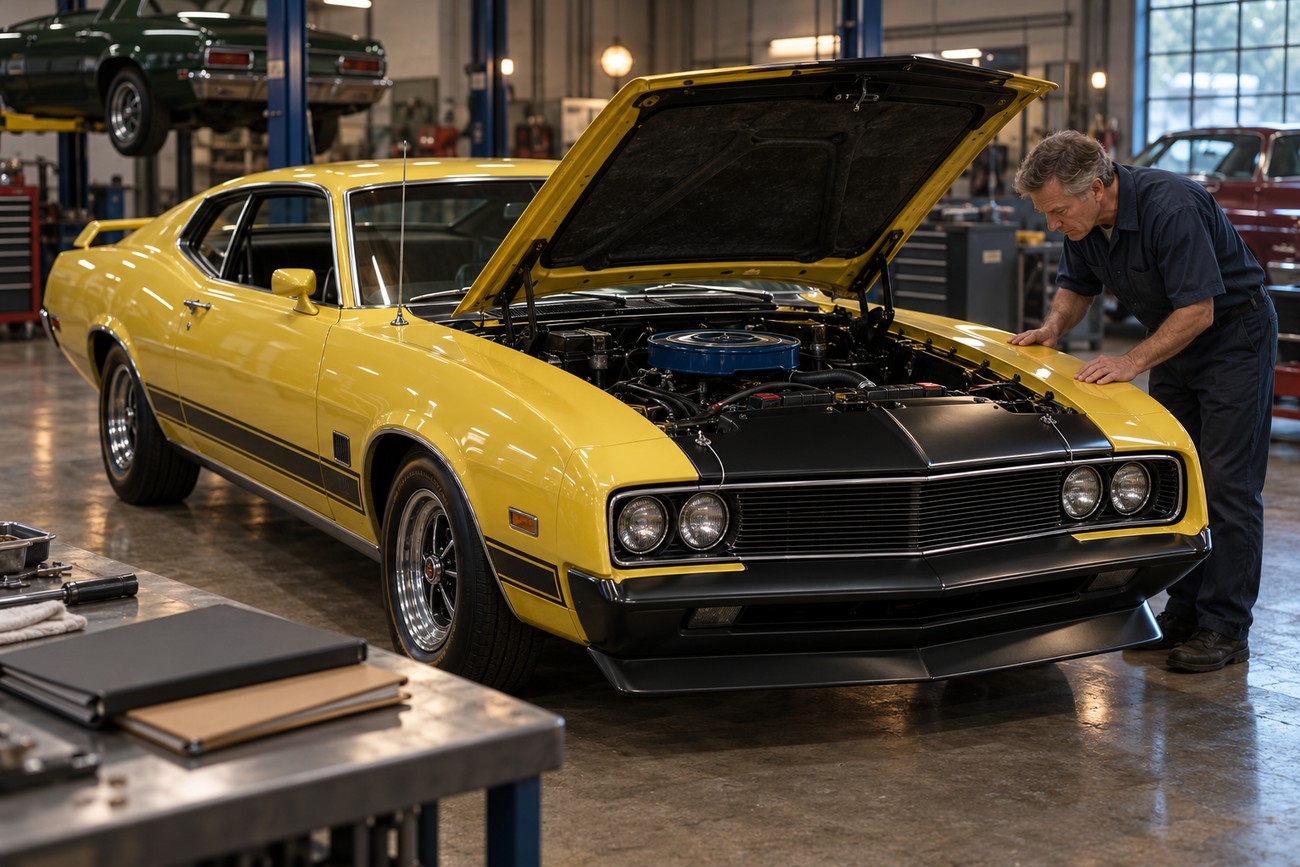
A single market price would be misleading because value depends first on identity. A documented Spoiler II with correct original or accurately restored aero components belongs in a different comparison group from an ordinary Cyclone, a cosmetic replica, or an incomplete project.
Assess the VIN and provenance, the quality and completeness of the nose, the Dan Gurney Special or Cale Yarborough Special configuration, mechanical originality, and the standard of restoration. A car with extensive fabrication may be sound and attractive, but its value depends on how convincingly that work restores the correct geometry.
The disputed production count can influence how sellers frame rarity, so wording deserves scrutiny. Rare Aero Warrior status may command a premium over faster and more widely produced muscle cars, even when the street car’s performance is broadly comparable to other late-1960s V8 models.
For insurance and auction purposes, the description should explicitly distinguish the Cyclone Spoiler II from an ordinary Cyclone or Cyclone Spoiler. An insurance-grade appraisal should document the identity, configuration, bodywork, and condition rather than relying on a generic model label.
Frequently asked questions
These questions address model identity, valuation, and engine output. The answers distinguish the early-1969 Spoiler II from other Cyclone models. Documentation and condition remain central to any assessment.
How much is a Mercury Cyclone worth today?
There is no responsible universal price for a Mercury Cyclone without separating the model and condition. Compare a documented 1969 Cyclone Spoiler II with correct extended bodywork against other documented Spoiler IIs; compare ordinary Cyclones, replicas, and incomplete projects in separate groups.
For a practical valuation, verify the VIN and provenance first, then adjust for original or accurately restored aero parts, Gurney or Yarborough configuration, mechanical condition, and restoration quality. A seller’s rarity claim should not substitute for records and an inspection of the nose geometry.
How much horsepower did a 1970 Mercury Cyclone Spoiler have?
A 1970 Mercury Cyclone Spoiler is a different model-year and specification question from the early-1969 Mercury Cyclone Spoiler II. Its advertised engine output should be verified from documentation for that exact 1970 car and engine, rather than used to identify or price a 1969 homologation model.
The 1969 Spoiler II street specification is commonly associated with a 351 Windsor V8 producing approximately 290 hp. That figure cannot be transferred automatically to a 1970 Cyclone Spoiler, a NASCAR race car, or a modified survivor.
What is a Mercury Cyclone Spoiler?
Mercury Cyclone Spoiler is a broader name within the Cyclone range and should not automatically be read as Cyclone Spoiler II. The Spoiler II was the rarer early-1969 NASCAR homologation version with a distinctive extended and tapered nose, smoothed grille, and lowered hood.
An ordinary Cyclone Spoiler with cosmetic modifications may resemble the aero car without sharing its factory identity. VIN records, provenance, and the construction and geometry of the front end are required to distinguish a genuine Spoiler II from a conversion.







