
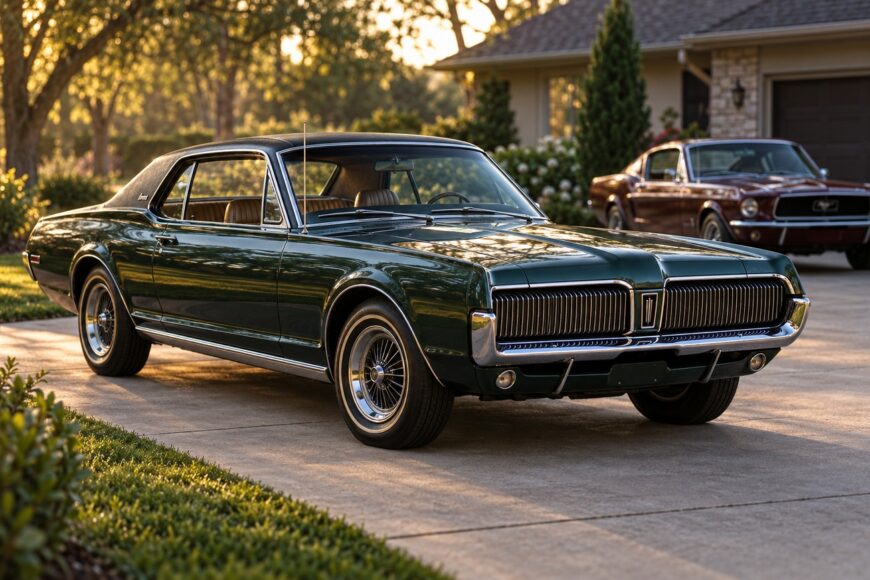
The Mercury Cougar XR-7 captured the appeal of Mustang-era V8 styling in a quieter, more richly furnished package. Its longer body, hidden headlamps, formal grille, and upgraded cabin gave the car a more mature presence, while familiar Ford engines kept its mechanical foundation accessible.
That familiarity can mislead buyers. Many powertrain components are shared with the Mustang, yet Cougar-specific trim, lighting, electrical parts, and interior pieces can be difficult and expensive to replace. The XR-7 makes more sense as a grand tourer with Mustang roots than as a disguised Mustang.
- A Mustang Foundation, a Different Brief
- What Makes the XR-7 a Gentleman’s Mustang?
- The Costs Hidden Behind Mustang Familiarity
- How to Choose an XR-7 Worth Keeping
- Frequently asked questions
- What does XR-7 mean on a Mercury Cougar?
- How much is a 1967 Cougar XR-7 worth today?
- How can you verify a claimed factory 428 Cobra Jet XR-7?
A Mustang Foundation, a Different Brief
The first-generation Mercury Cougar was built from 1967–1970, using the Mustang’s basic platform and Ford’s established mechanical architecture. The relationship is real, and it helps with engines, transmissions, and some chassis work. The Cougar received its own body, trim, and equipment strategy, however, which gave it a distinct identity.
Its wheelbase measured approximately 111 inches, compared with 108 inches for a comparable Mustang. Those extra inches contributed to a slightly roomier cabin and trunk, along with a more settled appearance on the highway. The Cougar’s proportions also supported its role as a personal luxury coupe rather than a compact sporting car.
Lincoln-Mercury positioned the model as a premium sports car, and the price reflected that ambition. The XR-7 was the Cougar’s upscale equipment package, with richer cabin trim and additional equipment. Depending on the year and the individual car, that could include leather or leather-trimmed seating, woodgrain-look trim, a clock, and other upgrades.
Equipment lists changed over the production run, so a badge alone does not establish every feature a car should have. Buyers assessing a purportedly original example should compare its trim, instruments, upholstery, and options with documentation for that model year. Treating every Cougar as a Mustang with a different front end usually leads to the wrong expectations.
What Makes the XR-7 a Gentleman’s Mustang?
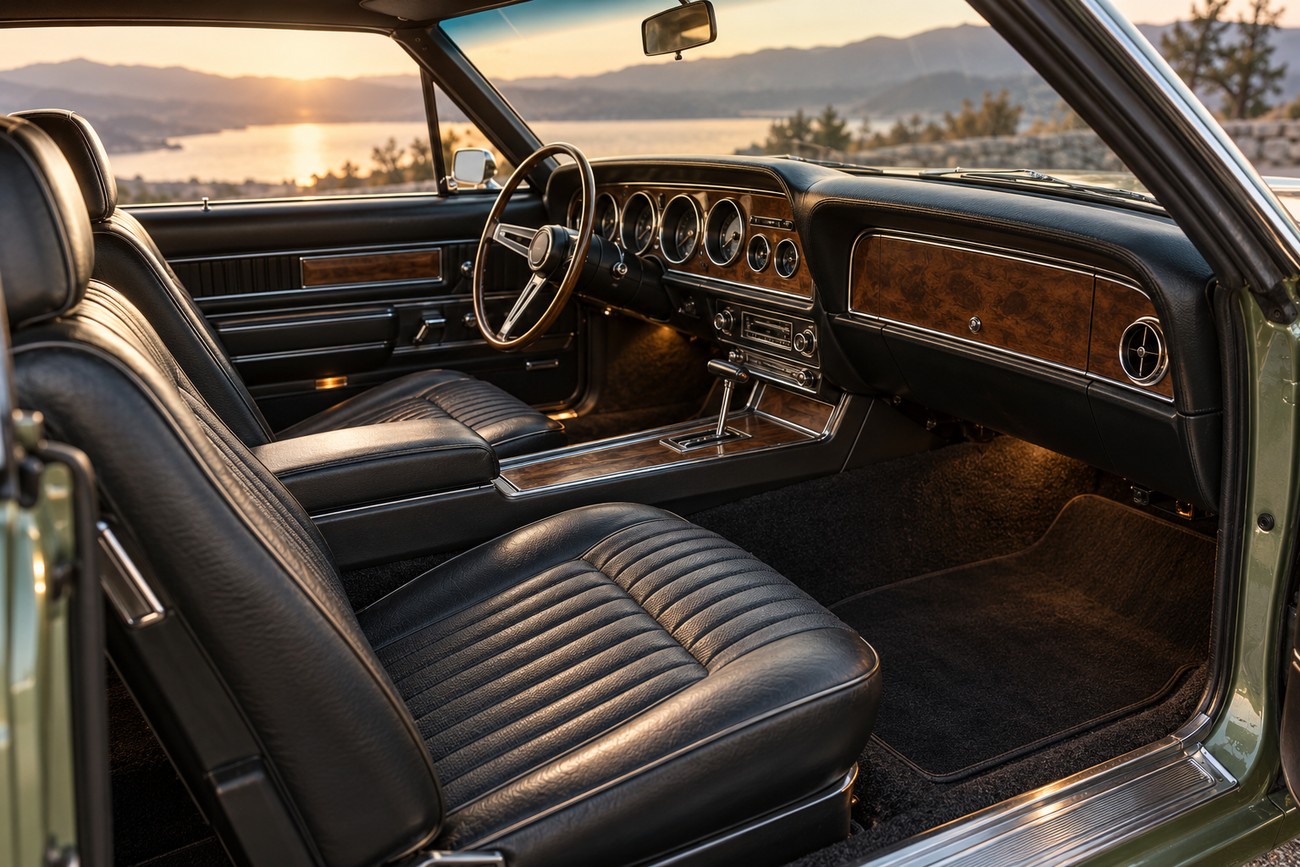
The XR-7’s character comes from the way its parts work together. Richer upholstery, individual seating, additional instruments, and more substantial trim create a cabin intended for longer journeys. The longer wheelbase adds stability, while the suspension generally feels softer and more comfort-oriented than that of a comparable Mustang.
Period marketing emphasized sportiness, and the Cougar can certainly move with authority when equipped with a suitable V8. Owners often describe it as a cruiser, though suspension condition, tires, alignment, and previous modifications can change the experience considerably. A sound XR-7 rewards a relaxed driving style more than aggressive corner entry.
Relevant V8 offerings across the model years included the 289, 302, 390, and 428 Cobra Jet. Period figures ranged roughly from 195 to 335-plus horsepower, depending on specification, and used SAE gross ratings. Those figures should not be compared directly with modern net horsepower ratings or used as a precise guide to how every surviving car performs.
The result is a car with more visual drama and mechanical potential than a conventional luxury coupe, combined with a calmer road manner than many pony cars. That balance explains the “gentleman’s Mustang” description. The XR-7 can be quick, yet its best qualities often appear during a long highway run, where its quieter cabin and stable ride matter more than lap times.
The Costs Hidden Behind Mustang Familiarity
Shared Ford mechanical make routine engine, transmission, and some suspension work comparatively approachable. Cougar-specific body panels, grille parts, tail lamps, moldings, and XR-7 interior components are a different matter. Supply is smaller, reproduction quality varies, and a missing piece can cost more in time and money than the equivalent Mustang part.
Electrical faults are common ownership frustrations, especially around instrument illumination, clocks, relays, and aging connections. Hidden headlamps add a vacuum system with hoses, reservoirs, valves, and actuators. Leaks or failed components can leave the lamps slow, uneven, or inoperative. Check for leaks before replacing the original system with an electric conversion.
Rust deserves an inspection on a lift, even when the paint presents well. Check the frame rails, rockers, lower rear quarters, floor areas, and the inner structure behind visible panels. Corrosion in a structural section changes the financial calculation quickly, while scarce exterior trim may make a seemingly minor restoration unexpectedly difficult.
The 390 and 428-powered cars bring greater fuel and cooling demands, particularly in traffic. A tired radiator, restricted passages, weak water pump, or poorly configured fan can turn a pleasant cruise into a heat-management exercise. Mechanical familiarity helps here, but it does not remove the need to verify the actual specification and condition of the car in front of you.
How to Choose an XR-7 Worth Keeping
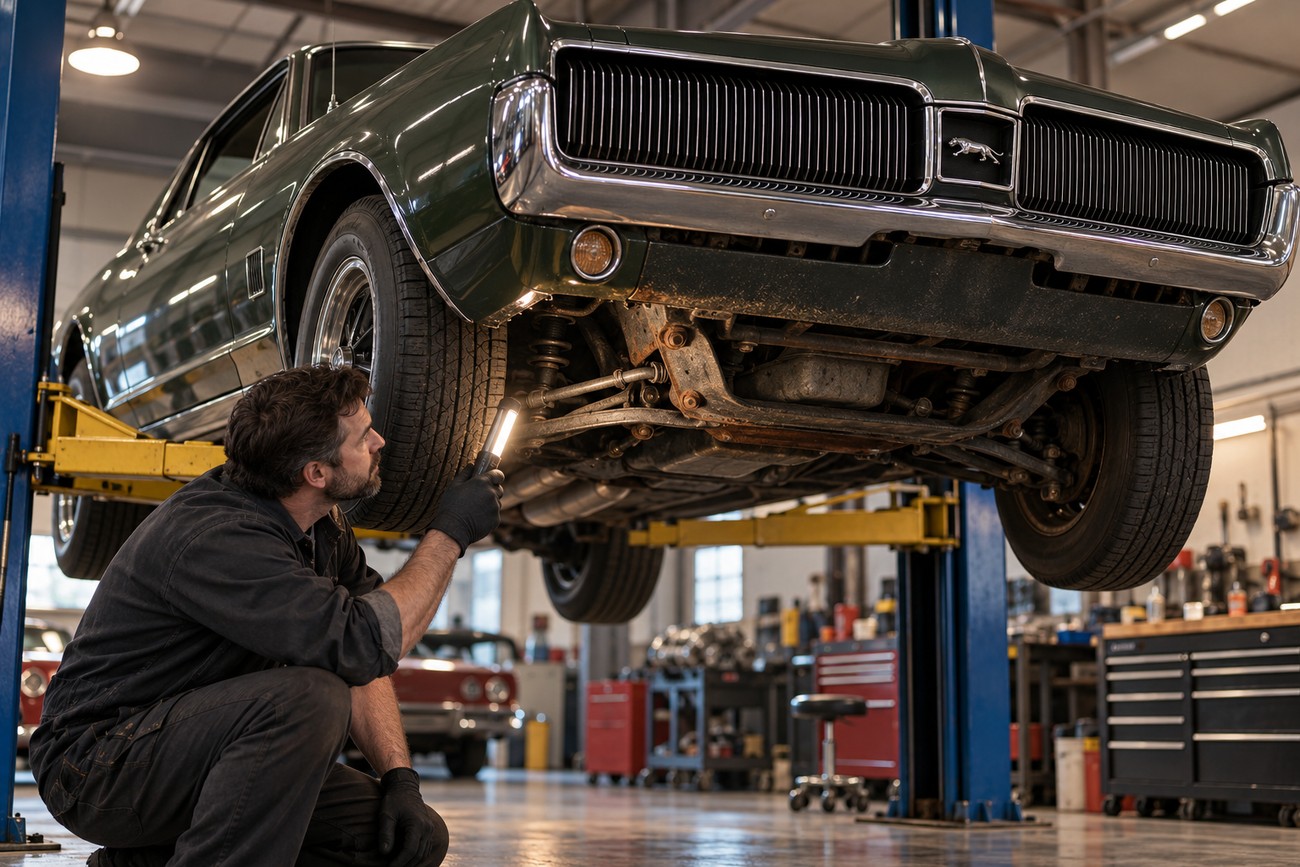
Begin with structure, then assess completeness. Inspect the underside, suspension mounting points, floor, rockers, frame rails, and lower quarters before becoming distracted by polished paint or a running engine. A solid body with imperfect upholstery is usually a more sensible starting point than a visually attractive car hiding extensive corrosion.
Next, inventory the Cougar-specific pieces. Confirm that the grille, hidden-headlamp hardware, tail lamps, moldings, dashboard parts, gauges, seats, and XR-7 trim are present and usable. Shared mechanical components are often easier to source than a complete original interior, and low-quality replicas can undermine the character and value of an otherwise sound car.
Test every electrical function and operate the headlamps repeatedly. Check whether the vacuum system holds, whether the clock and instrument lighting work, and whether previous repairs are tidy and documented. Then review engine numbers, transmission details, cooling-system work, and modifications rather than accepting badges or a seller’s description as proof.
A sympathetic cruiser usually suits the Cougar better than an indiscriminate Mustang suspension swap. Cougar and Mustang parts may be related, but spring, stabilizer, and damper choices affect ride character. Rare, well-documented configurations can attract collector interest, while the narrower buyer pool makes originality, provenance, and condition more important for resale.
Frequently asked questions
The XR-7 badge identifies an equipment level, while value and authenticity depend on the complete car. Year, specification, condition, and documentation matter more than the badge in isolation.
What does XR-7 mean on a Mercury Cougar?
XR-7 denotes the Cougar’s upscale equipment package. It does not prove that the car has a particular engine, and there is no need to assign the letters an unsupported official expansion.
Cabin materials and additional features varied by year and car, so verify the upholstery, trim, instruments, and options against period documentation. A genuine XR-7 may have valuable original details that are harder to replace than its shared mechanical parts.
How much is a 1967 Cougar XR-7 worth today?
There is no reliable blanket figure for a 1967 Cougar XR-7. Value depends on structural condition, originality, factory specification, documentation, and whether important Cougar-specific trim is missing.
Compare recent sales of similarly specified cars rather than relying on asking prices. Adjust the comparison for rust, incomplete interiors, non-original drivetrains, and restoration quality. A rare car can command collector interest, but the Cougar’s buyer pool remains narrower than the Mustang’s.
How can you verify a claimed factory 428 Cobra Jet XR-7?
Verify the car’s identifiers and period production records against the engine, transmission, paperwork, and documented factory configuration. The presence of a 428 Cobra Jet engine alone does not establish that the Cougar left the factory with it.
Look for consistent identification details, credible provenance, and evidence that the drivetrain history has been recorded rather than reconstructed from badges. This distinction is essential because valuable engines and components have sometimes been moved between cars.







