
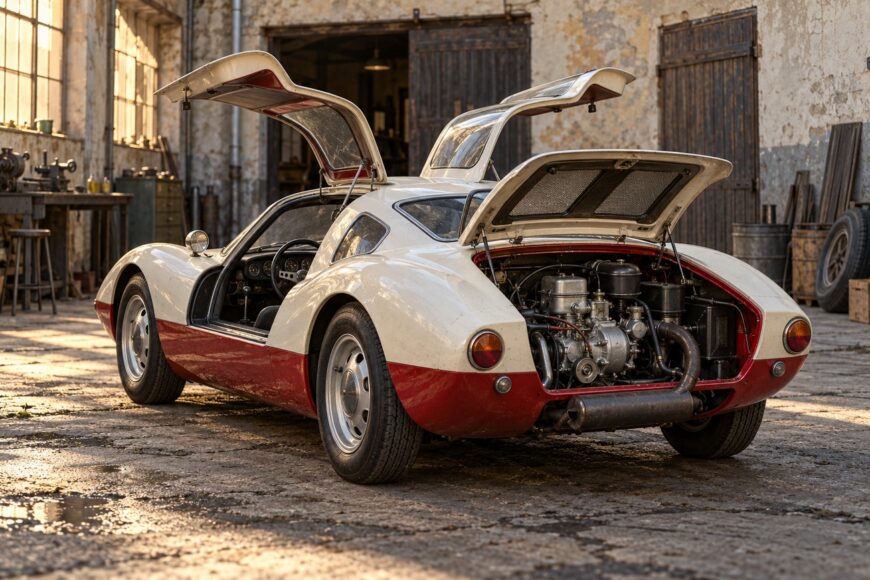
The Melkus RS 1000 looks like a car from an exotic-car poster: a low fiberglass body, gullwing doors, and a cockpit tucked beneath a long roofline. Its mechanical foundation is less theatrical. Beneath the shell sits a Wartburg-derived three-cylinder two-stroke engine driving the front wheels.
That mismatch is central to its appeal. Built in small numbers in East Germany, the RS 1000 turned familiar components into a lightweight sports car that could be used on roads or in competition. Understanding what made it remarkable also means looking past the doors to the compromises involved in driving and preserving one.
- How the RS 1000 emerged in East Germany
- Gullwing bodywork, tubular frame, and Wartburg hardware
- How fast was the Melkus RS 1000, really?
- The driving experience beyond the gullwing photos
- Restoration traps: frame, fiberglass, and the two-stroke engine
- What makes an RS 1000 worth preserving?
- Frequently asked questions
- How should a long-stored RS 1000 be approached before its first drive?
- What is the safest way to store an RS 1000 for an extended period?
- What records should an owner keep when restoring an RS 1000?
How the RS 1000 emerged in East Germany
The Melkus RS 1000 came from a motorsport-minded approach to building a sports car with parts already available in East Germany. Production is commonly dated to 1969–1973, with differing estimates putting the total at approximately 101–110 cars. Those figures describe a small series rather than a securely established count of identical factory-built examples.
Wartburg components made the project feasible. An existing engine, gearbox, and associated running gear reduced the need to develop an entire drivetrain for a car that would be built in tiny numbers. The distinctive work lay in combining those parts with a light frame and body suited to sporting use.
Road-going RS 1000s existed, while other examples were used in East German circuit racing and rallies. Competition was part of the model’s purpose, but calling every RS 1000 a race-only machine erases an important distinction. A road car and a car prepared for events need to be judged against their own histories, especially where later owners changed equipment.
Gullwing bodywork, tubular frame, and Wartburg hardware
The RS 1000’s fiberglass gullwing body sits on a tubular frame, giving familiar mechanical parts an unusually striking shape. Reported weight varies from approximately 700 to 780 kg, depending on configuration. Low mass helps explain the car’s engineering appeal more clearly than its resemblance to far more powerful sports cars does.
Its Wartburg 353-derived running gear includes a 992 cc three-cylinder two-stroke engine, front-wheel drive, and a four-speed manual gearbox. Front-wheel drive is part of the design, despite the sports-car proportions that the low body might suggest otherwise in photographs. The car’s character comes partly from that unexpected combination.
The gullwing doors make the narrow cabin accessible through an opening that a conventional door could not provide in quite the same way. They also add hinges and supports whose condition matters during every entry and exit. What looks like a dramatic styling flourish is therefore a working part of the ownership experience.
No single specification describes every surviving car. Carburetors, exhausts, and interior details can differ between small-series examples, and subsequent changes further blur the picture. A component that appears unusual on one RS 1000 may belong to its documented past; another may be a much later substitution.
How fast was the Melkus RS 1000, really?

Reported standard-engine output is approximately 70–75 hp. In a car weighing approximately 700–780 kg, depending on configuration, that is enough to make performance interesting without making the RS 1000 a high-power exotic. Its modest engine and low mass have to be considered together.
Modified racing engines are reported at around 90–100+ hp, but that range does not define a uniform competition specification. Tuning, reduced weight, and the demands of a particular event could produce a car quite different from a road-going example. Quoting a racing figure for every RS 1000 gives a misleading impression of what one might encounter today.
Owner recollections put road-car acceleration from 0–100 km/h at roughly 12–13 seconds. That is useful as a description of the car’s general pace, not as a controlled road-test result. An individual engine’s condition and state of tune matter too much to turn a recollection into a guaranteed figure.
Top speed deserves similar care. Club and reference accounts commonly suggest approximately 165–175 km/h, while popular claims around 200 km/h are disputed and may concern extensively modified cars. The latter figure should not be treated as standard road-car performance, however often it appears beside photographs of the gullwing body.
The driving experience beyond the gullwing photos
Getting into an RS 1000 can demand more flexibility than its large upward-opening doors imply. The cabin is cramped, and taller drivers in particular may find the opening and seating position awkward. A photograph of an open door says little about the space available once the driver is seated beneath it.
Owners describe considerable cabin heat and limited ventilation, along with pronounced two-stroke noise, vibration, and exhaust odor. Those accounts are useful warnings, although a well-sorted car and a poorly maintained one need not feel the same. A leisurely drive can still involve managing temperature and noise rather than settling into modern sports-car comfort.
Brakes and suspension also call for period-car expectations. The RS 1000’s lightness does not give it the stopping performance or composure of a contemporary sports car, particularly if its condition is uncertain. Assessing those systems before driving hard is more sensible than treating the dramatic body as a promise about its capabilities.
The engine adds another distinction: a two-stroke rewards attention to mixture, plugs, and tuning in ways unfamiliar to drivers accustomed to four-strokes. That need for attention is part of the car’s character, though it should not be romanticized into effortless reliability. Each surviving RS 1000 reflects decades of maintenance, storage, and modification.
Restoration traps: frame, fiberglass, and the two-stroke engine
A tidy body can conceal a difficult restoration. Inspect the tubular frame and its repairs beneath the fiberglass, paying particular attention to areas around suspension mounts where corrosion or poor welding matters structurally. A roadworthy-looking shell is no substitute for establishing what supports it.
Old fiberglass can develop cracks, delamination, and paint defects, so refinishing needs an assessment of the material underneath. Applying an ordinary metal-body paint process without accounting for aged fiberglass can leave defects that return after the car looks finished. Unique glazing and small fittings are difficult to replace, making completeness an important part of any inspection.
A glossy repaint should prompt a closer look at the frame and suspension mounts beneath it. The finish shows how the shell presents; it cannot establish the quality of earlier structural repairs.
Check gullwing hinges and supports before trusting an open door: worn hardware can let it drop during entry. Missing or damaged door parts may require fabrication rather than a straightforward replacement. The same scarcity makes apparently minor damage to glazing or fittings consequential for a keeper.
The 992 cc three-cylinder two-stroke also needs an appropriate fuel-oil mixture, ignition parts, and tuning. After long storage, fuel-system condition and cooling deserve attention before repeated starting attempts or road use. Cosmetic upgrades will do little for a car that runs poorly or overheats.
An engine swap can create fresh questions about weight, mounting, cooling, and the car’s documented identity. Modifications may also complicate registration or insurance, depending on jurisdiction. For a prospective keeper, the soundest approach is diagnostic: establish what is fitted, how it was installed, and what evidence supports the work.
What makes an RS 1000 worth preserving?
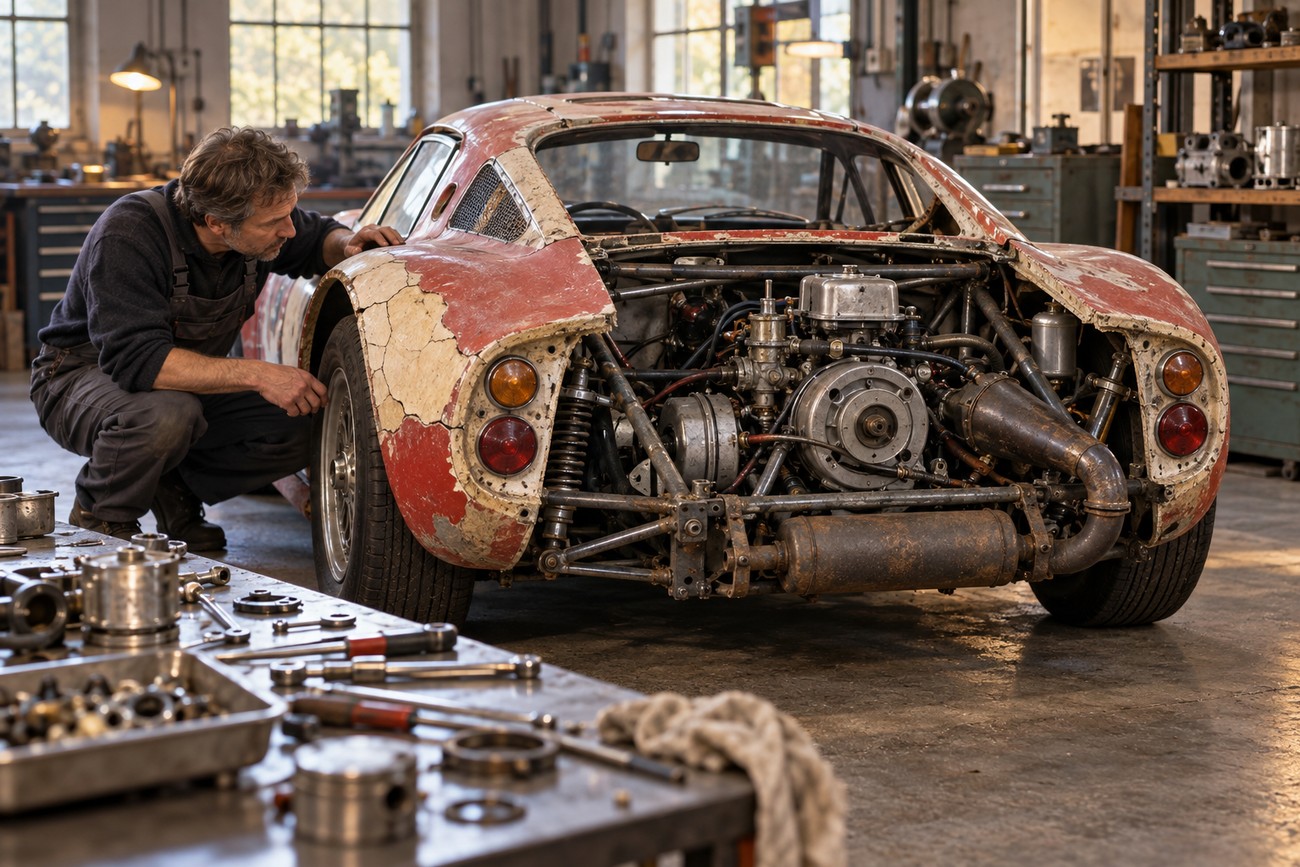
Originality is harder to judge here than on a mass-produced car with a fixed equipment list. Small-series variation, competition preparation, and later repairs can all explain differences between RS 1000s. A polished example with major undocumented changes may tell less of the model’s story than a worn car whose configuration can be traced.
Period photographs and competition entry records can help connect particular equipment to a particular car. They are especially valuable where an owner claims a racing history or where a restoration has replaced visible components. Evidence of how the car changed over time is more useful than assuming that every departure from another example’s specification is wrong.
Nor was every RS 1000 built solely for racing: road-going versions existed alongside cars used in competition. That mixed history is part of its significance. It shows how a small East German project adapted attainable hardware for uses that ranged from ordinary roads to organized events.
No verified total of surviving cars is established here, and collector estimates should not be mistaken for a census. The lasting value of an individual RS 1000 rests partly in what can be understood and preserved about it. As an inventive lightweight sports car, it is more compelling on its own terms than as a supposed rival to the era’s larger-engined exotics.
Frequently asked questions
How should a long-stored RS 1000 be approached before its first drive?
Inspect the fuel system first, then establish the correct two-stroke lubrication for the engine as fitted. Check the cooling system and brakes before road use, rather than assuming that a successful start means the car is ready to drive.
An initial condition assessment should also identify leaks, deteriorated parts, and undocumented modifications before the car is driven regularly.
What is the safest way to store an RS 1000 for an extended period?
Keep it dry and ventilated, with attention to moisture around the steel frame and suspension attachments. Protect the aging fiberglass from prolonged heat and sunlight, and check that the gullwing doors are securely supported rather than relying on worn hardware.
Inspect the car periodically so developing moisture or door problems do not go unnoticed.
What records should an owner keep when restoring an RS 1000?
Keep before-and-after photographs, component identification, repair invoices, and any surviving evidence of earlier configurations. Record changes to the frame, engine, body, and door hardware in particular.
Those records help a later owner distinguish a documented repair or period alteration from an unexplained modification.







