
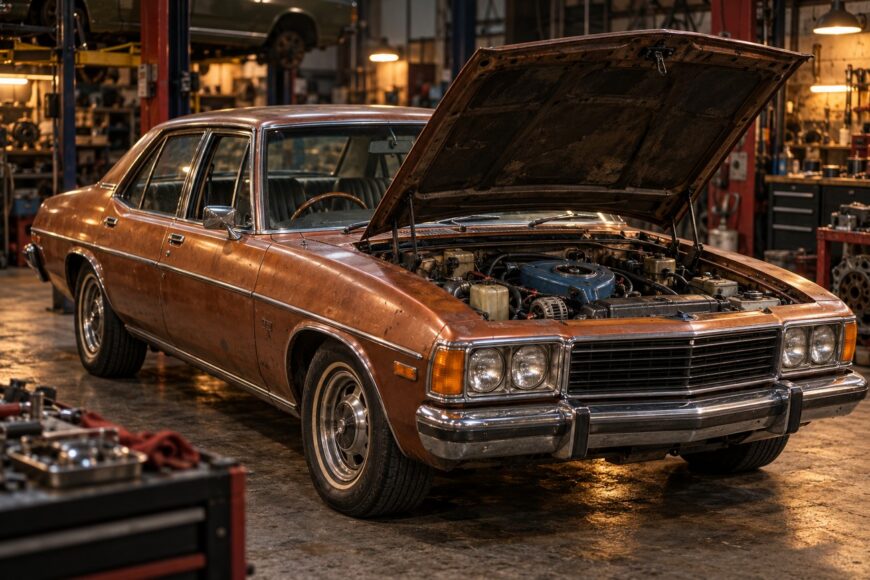
The Mazda Roadpacer AP embodies an awkward contradiction: Mazda’s technically distinctive rotary engine was installed in a heavy sedan derived from an Australian Holden. The combination suggested refinement, modern engineering, and executive comfort. In daily use, the car delivered smoothness and rarity while struggling with the basic demands of moving a large, roughly 1.6-tonne body.
Produced from 1975 to 1977, the Roadpacer was an engineering and marketing experiment rather than a forgotten RX-style sports car. Its historical appeal comes from the unusual Mazda-Holden partnership, while its ownership burden comes from scarce parts, an aging rotary powertrain, and a body whose origins do not make every component easy to replace.
- A Mazda Rotary in a Holden Body
- The Roadpacer AP’s Mechanical Package
- Why the Rotary Could Not Rescue the Heavy Sedan
- The Ownership Problems Hidden by Rarity
- Common Roadpacer Myths, Corrected
- What a Sensible Restoration Actually Requires
- Why the Roadpacer Still Matters
- Frequently asked questions
- What should be restored first on a Roadpacer AP?
- Why is the cooling system a priority during Roadpacer restoration?
- What should be checked in the Roadpacer AP automatic transmission?
A Mazda Rotary in a Holden Body
The Roadpacer AP began with an Australian Holden HJ/Premier-based platform. Mazda adapted that large sedan for the Japanese market, including a right-hand-drive layout and Mazda-specific equipment. The result was a rare large Mazda sedan with a distinctly hybrid identity: Australian structure, Japanese rotary power, and a product concept aimed at executive buyers.
This arrangement mattered because Mazda did not develop a wholly Mazda-designed luxury body for the project. Using the Holden platform gave the company access to a substantial, comfortable sedan without the cost and time of creating an entirely new model. It also created the central mechanical problem: the rotary engine had to serve a vehicle designed around a much larger and more torque-rich type of powertrain.
The Roadpacer’s positioning was therefore quite different from that of Mazda’s lightweight rotary coupes. It was intended to provide quiet, smooth transport with a technically interesting engine, rather than sharp handling or high-speed acceleration. The rotary badge carried an advanced image, yet the surrounding vehicle emphasized size, equipment, and presence.
That mixed origin gives the car significance beyond its modest sales result. The Roadpacer records a period when manufacturers were willing to combine unrelated national engineering solutions in search of a distinctive market proposition. It is a useful case study in how a promising engine concept can lose much of its advantage when installed in the wrong weight class.
The Roadpacer AP’s Mechanical Package
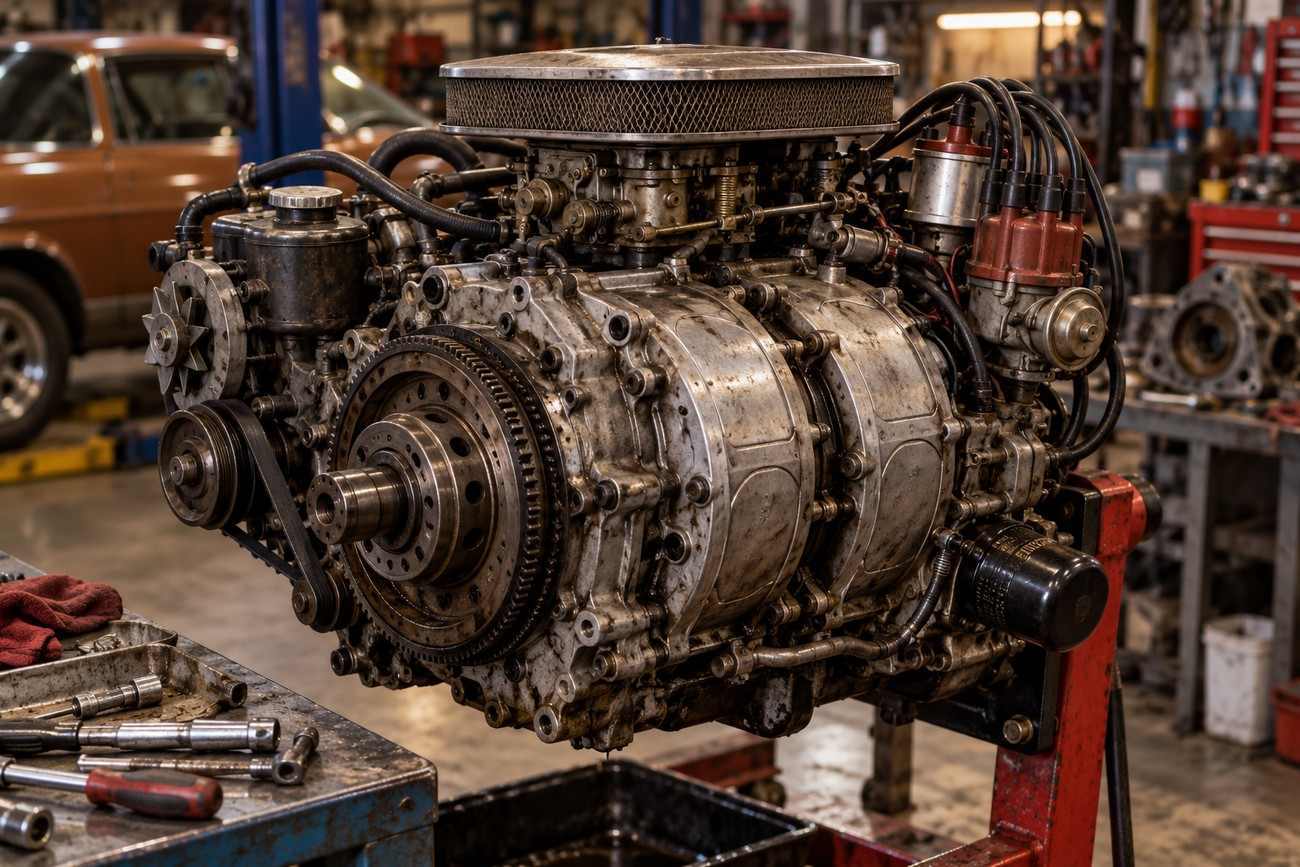
Power came from Mazda’s naturally aspirated 13B, a two-rotor rotary engine with a stated displacement of 1,308 cc. Sources commonly report output at about 130 PS, although exact figures vary. That uncertainty is worth preserving, since period specifications and later references do not always use the same measurement standards.
Torque is commonly reported at about 172 N·m. For a large sedan, that was a modest figure, especially compared with the low-speed pulling power expected from the larger piston engines used in cars of this size. The 13B could rev smoothly and produce its power in a characteristically linear manner, yet the Roadpacer needed usable thrust well below the point where a rotary feels most comfortable.
Transmission choice narrowed the car’s ability to exploit the engine. Every Roadpacer AP used a three-speed automatic, with no manual transmission offered. A wide, heavy sedan and a three-speed gearbox placed considerable demands on the engine during takeoff, overtaking, and uphill driving.
The specification sounds intriguing on paper because it joins a sophisticated rotary with a substantial executive car. In mechanical terms, however, the weight and gearing were decisive. The engine was distinctive, while the complete package was compromised by the need to move about 1.6 tonnes through an automatic transmission with limited ratios.
Why the Rotary Could Not Rescue the Heavy Sedan
The Roadpacer’s acceleration was subdued because its main strengths did not address its main requirement. A smooth rotary engine can feel refined in a light car, where low mass allows modest torque to produce responsive movement. In this sedan, about 172 N·m had to overcome a heavy Holden-derived body, generous equipment, and the losses associated with an automatic transmission.
The three-speed automatic added to the impression of softness. Its broad ratios could make the car feel reluctant to respond in ordinary traffic, while downshifts did not transform the Roadpacer into a quick machine. Drivers expecting the eager, rev-happy character associated with smaller rotary Mazdas instead encountered a large car that gathered speed gradually.
This is why the Roadpacer can feel disappointing even when its engine is running correctly. Mechanical smoothness is present, and the rotary remains unusual, but smoothness should not be confused with performance. The Mazda-plus-rotary image promises more than the vehicle’s mass, torque, and gearing can deliver.
Fuel consumption was poor for its era. Owners could experience the consumption associated with a large V8-powered sedan while receiving less low-speed pulling power, which made the trade-off particularly difficult to justify in ordinary use. The car’s fuel demand was therefore part of its identity, rather than an isolated defect caused only by age or poor maintenance.
Its best environment was relaxed cruising, where the engine’s low-vibration character and the sedan’s size made more sense. Even there, expectations must remain realistic. The Roadpacer offers unusual mechanical character and a calm presence, while its real-world dynamics remain mediocre by the standards suggested by its rotary reputation.
The Ownership Problems Hidden by Rarity
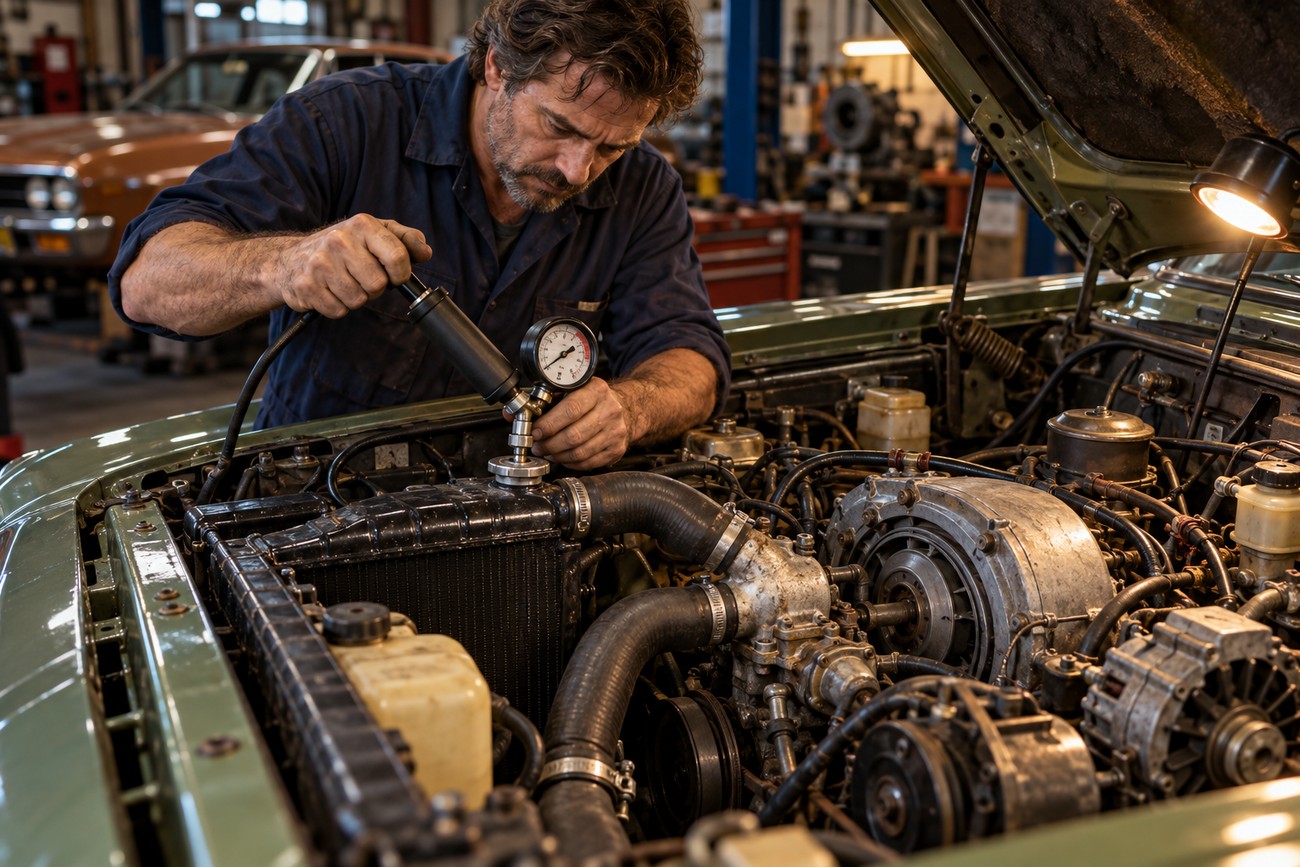
The cooling system deserves early attention on any surviving Roadpacer. An old rotary is particularly vulnerable to the consequences of overheating, and a neglected radiator, hoses, thermostat, water pump, or related component can turn a running car into a major engine project. A clean engine bay or attractive paint cannot compensate for uncertain cooling performance.
Specialist knowledge also matters. A mechanic familiar with modern Mazda maintenance may have little experience with early rotary systems, their service requirements, and the way ignition, fuel, sealing, and cooling condition interact. The Roadpacer needs someone who understands that period of rotary engineering, along with the automatic transmission and the car’s unusual installation.
Cosmetic restoration should wait until the cooling system and automatic transmission have demonstrated reliable operation. A presentable shell can conceal the most expensive Roadpacer-specific failures.
The Holden foundation helps in selected areas, yet it does not solve the parts problem. Some Holden-related components may provide useful reference points or possible replacements, but interchangeability is not universal. Mazda-specific fittings, interior pieces, trim, wiring details, and adapted components may still require specialist sourcing, repair, or careful fabrication.
Age adds another layer of risk. Corrosion, hardened rubber components, wiring faults, and tired interior hardware can affect a car that appears complete in photographs. Original body, interior, and trim parts are difficult to source, even in Japan, so a missing piece can cost more time and effort than a conventional mechanical repair.
Fuel use remains a permanent ownership cost rather than a problem that restoration can eliminate. Rarity also raises the cost of mistakes: buying a cheap but incomplete example can lead to extensive searching for parts before the car is roadworthy. A Roadpacer can be kept alive, but it rewards preparation, patience, and access to appropriate technical support.
Common Roadpacer Myths, Corrected
The first myth presents the Roadpacer as a sports Mazda with an unusually large body. Its actual character was that of a heavy representative-style sedan. The 13B supplied distinction and smoothness, while the Holden-derived structure, automatic transmission, and equipment level directed the car toward comfort and status.
A second assumption gives the rotary automatic performance it could not provide. The 13B’s technical image did not overcome low torque, high mass, and three-speed gearing. About 130 PS is commonly reported, but the exact figure varies between sources, and even the higher-sounding specification says little about how the car feels when pulling away from a stop.
Rarity creates a third misconception: the belief that a low-production car must have been built to a superior standard or designed for easy preservation. The Roadpacer was unusual, yet it still carries the corrosion, wiring, rubber, cooling, and interior deterioration associated with an aging vehicle. Limited production makes replacement and repair more difficult rather than automatically improving reliability.
The fair interpretation is less flattering and more interesting. The Roadpacer was a serious attempt to combine Mazda’s rotary identity with a large Japanese-market sedan, and it exposed the limits of that formula. Its failures are part of the historical lesson, since the car shows how marketing logic and engineering practicality can pull in different directions.
What a Sensible Restoration Actually Requires
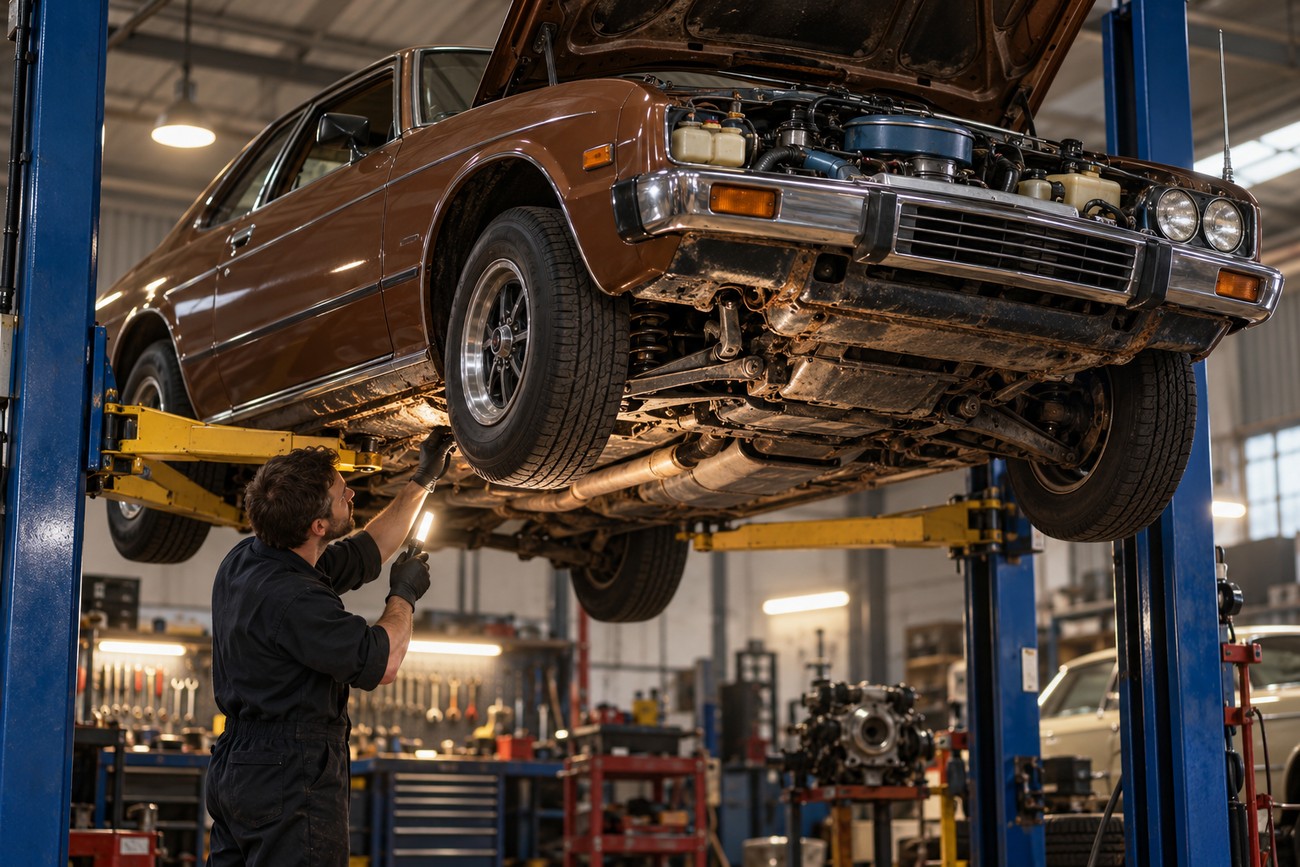
A prospective owner should begin with the structure and the powertrain, rather than the paintwork. Inspect the Holden-derived body shell for corrosion, confirm that major mounting areas are sound, and look for evidence of previous repairs. Structural weakness can make every later restoration decision more expensive and may limit the value of cosmetic work.
The next priority is cooling performance and rotary health. The engine should be assessed together with its cooling system, ignition, fuel delivery, and signs of overheating. A car that starts and idles in a workshop is not automatically ready for sustained road use, especially if its temperature control under load has not been established.
The three-speed automatic needs its own evaluation. Check engagement, shift quality, delayed response, slipping, and the condition of the controls and associated wiring. Because there was no manual option, a defective automatic is central to the car’s usability, and sourcing the right repair expertise may be harder than finding a general transmission shop.
Electrical inspection should cover the harnesses, connections, charging system, instruments, and age-damaged insulation. Interior hardware deserves similar care because missing switches, trim, fittings, and seat components may be difficult to replace. Holden-related parts can assist in some areas, although Mazda-specific adaptations still demand careful identification before purchase.
A donor car or a reserve of usable parts can materially improve the feasibility of long-term ownership. That does not make every restoration economical, but it reduces the risk of stopping the project over a small, model-specific component. Specialist support should be secured before buying; the rarest Roadpacer problem may be access to informed repair work rather than the initial mechanical fault.
Why the Roadpacer Still Matters
The Roadpacer occupies an unusual place in Mazda and Holden history. It links an Australian Holden HJ/Premier-based platform with Mazda’s rotary technology and a Japanese-market adaptation. Few cars express that combination so directly, which explains why the model attracts attention far beyond its limited production.
More than 800 cars are commonly cited, although the exact production total varies by source. That small output helps explain the car’s collector appeal, yet it also means that surviving examples cannot rely on a broad supply network. Each complete car preserves a larger portion of the model’s history, while each missing or damaged component can complicate the restoration substantially.
The Roadpacer is more compelling as a historical case study than as a high-performance sedan. It shows the appeal of rotary engineering, the commercial value of a distinctive badge, and the practical consequences of fitting a low-torque engine to a large body. Its unusualness is genuine even when its acceleration and fuel economy disappoint.
Collector interest should therefore be separated from driving expectations. A well-preserved example can be an important Mazda-Holden artifact and an engaging conversation piece, but restoration still requires money, parts, and specialist knowledge. The car matters because the experiment happened, not because it achieved the performance its rotary image might suggest.
Frequently asked questions
What should be restored first on a Roadpacer AP?
Start with structural integrity, then verify the cooling system, rotary engine health, and three-speed automatic operation. Corrosion in important areas can undermine the entire project, while an overheating rotary or defective automatic can consume resources before cosmetic work has any practical value.
Once those areas are understood, inspect wiring, fuel and ignition systems, brakes, suspension, and rubber components. Appearance should come later, after the car has a sound foundation and the owner has identified a reliable source for Mazda-specific and Holden-related parts.
Why is the cooling system a priority during Roadpacer restoration?
An aging rotary engine is especially vulnerable to overheating. The radiator, hoses, thermostat, water pump, and related components should be tested or renewed before the car is used regularly, because cooling failure can turn a running engine into a costly rebuild.
What should be checked in the Roadpacer AP automatic transmission?
Inspect engagement, shift quality, delayed response, slipping, controls, and associated wiring. Since the Roadpacer was offered only with a three-speed automatic, transmission condition is central to its drivability and should be confirmed before cosmetic restoration begins.







