
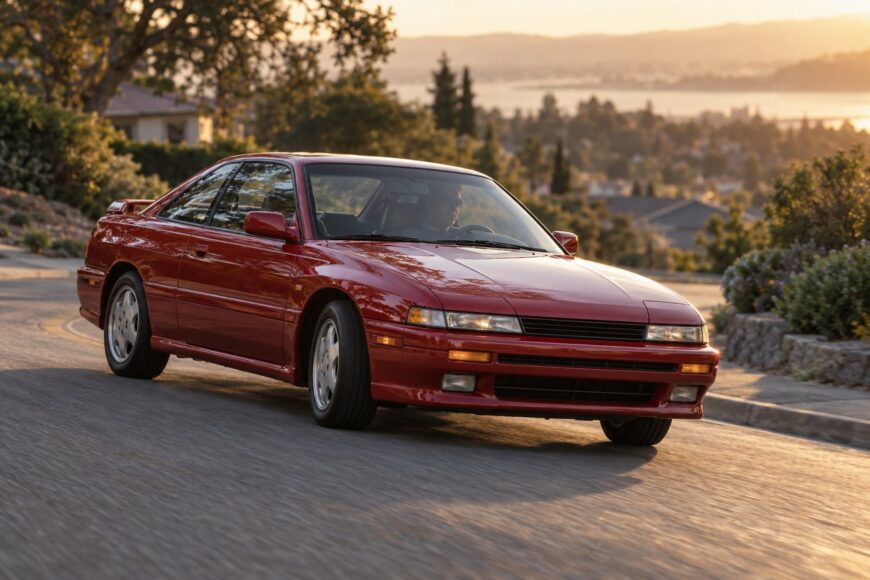
4WS means four-wheel steering, not all-wheel drive. The second-generation Mazda MX-6 remained front-wheel drive, including versions equipped with rear-steering assistance. The front wheels still provide all engine-driven traction; the rear wheels alter their steering angle to influence response and stability.
That makes the MX-6 an appealing 1990s coupe with a feature many rivals lacked. It also makes condition more important than the badge. A worn 4WS system, tired suspension, poor alignment, or missing electrical and hydraulic parts can turn an interesting car into an expensive project.
The engine and market matter just as much. Japanese, North American, and other export versions used different engines, outputs, transmissions, and equipment. A careful buyer therefore needs the exact specification, working 4WS hardware, and evidence of proper maintenance before treating any MX-6 as a bargain.
- What the MX-6’s 4WS System Actually Does
- MX-6 Engines and Market Versions
- MX-6 Powertrains by Market
- Why the Turbo MX-6 Is More Complicated Than It Looks
- Common Problems and Hidden Costs on a 30-Year-Old MX-6
- How to Inspect an MX-6 Before Buying
- MX-6 Performance Numbers Versus Real-World Condition
- Frequently asked questions
- What are the common problems with the Mazda MX-6?
- Why is the Mazda6 so cheap, and is it the same car as the MX-6?
- How can you tell whether an MX-6 really has 4WS?
What the MX-6’s 4WS System Actually Does
Front-wheel drive describes where engine torque reaches the road. In the MX-6, that means the front axle drives the car. All-wheel drive would send engine torque to both axles through a driven rear axle and related hardware; 4WS describes steering action at all four wheels, without adding rear-wheel drive.
With four-wheel steering, the rear wheels assist the front wheels during cornering and maneuvering. The result can be a more responsive change of direction and a different sense of stability at speed. It is a handling system, not a traction system, so it cannot provide the AWD effect some buyers expect from the name.
Age complicates the assessment. Rear-steering components, suspension joints, steering parts, wiring, and related electrical or hydraulic elements can wear or become difficult to source. A car may drive acceptably in a straight line while still having incorrect rear geometry or a system fault that becomes obvious only during cornering.
Alignment deserves particular attention because a previous suspension repair can alter the way the front and rear systems interact. On an old MX-6, unusual tire wear, pulling, vague turn-in, or an unstable steering feel should be treated as diagnostic evidence rather than as a normal characteristic of 4WS.
MX-6 Engines and Market Versions
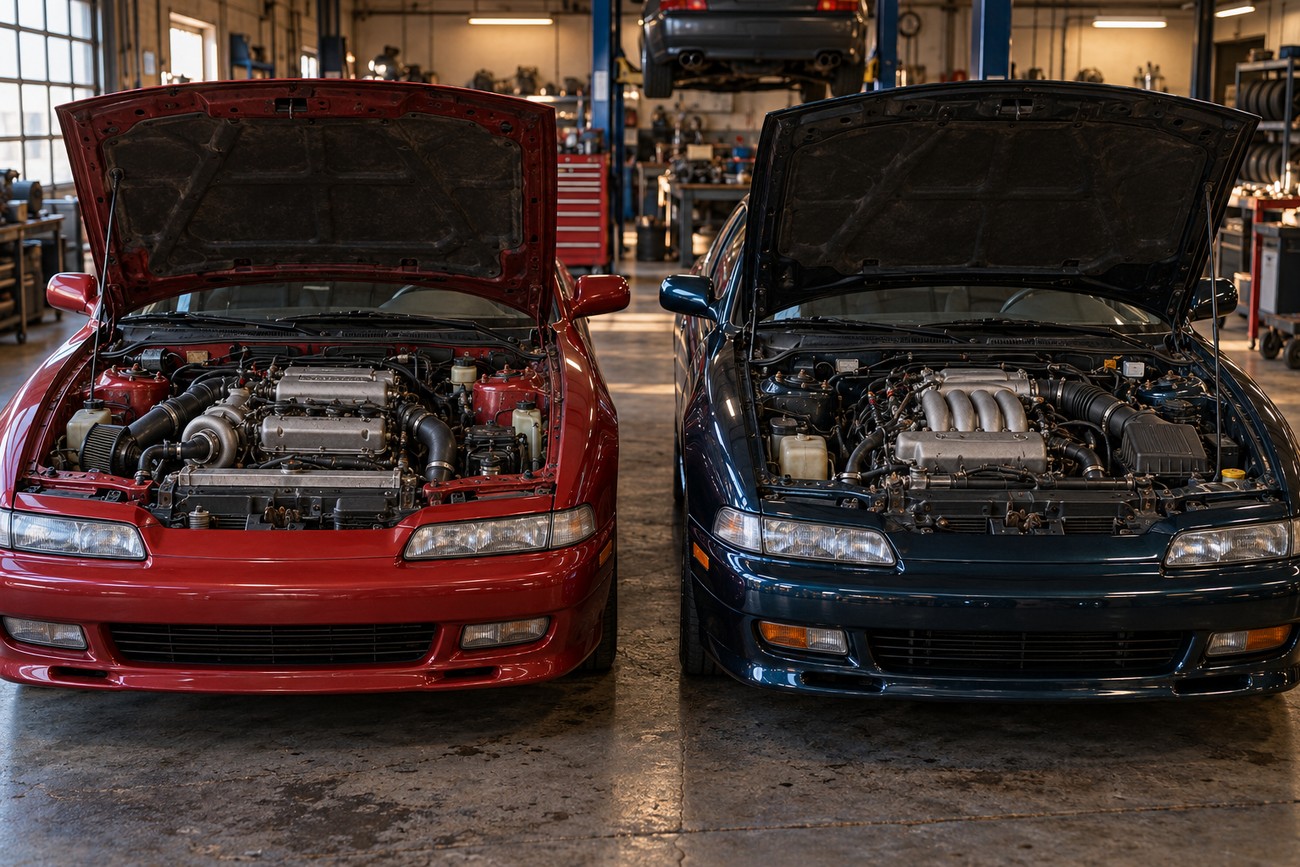
“MX-6” does not identify one universal engine or performance level. Across documented gasoline versions, displacement runs approximately from 2.0 to 2.5 liters, while catalog power ranges from approximately 112–200 hp across markets and versions.
Japanese-market references include a 2.0 V6 rated at 160 hp and a 2.5 V6 rated at 200 hp. North American references include a 2.0 rated at 118 hp and a 2.5 V6 rated at approximately 160–164 hp. Those figures describe different market specifications rather than a single engine offered everywhere.
The engine family affects more than acceleration. It changes parts compatibility, cooling-system requirements, transmission choices, emissions equipment, wiring, and the information available in service manuals. A seller’s description or a familiar-looking engine bay is insufficient evidence for ordering components.
Before comparing cars, verify the market, engine code, transmission, 4WS status, and supporting documentation. Catalog discrepancies in power and torque often reflect different years, regions, and test conventions, so the exact identity of the car matters more than a generalized MX-6 specification.
MX-6 Powertrains by Market
The table summarizes documented engine families and approximate outputs. Figures vary by region, year, equipment, and catalog source, so they should be used for identification rather than treated as one universal specification.
| Engine family | Approximate output | Market context | Buyer’s note |
|---|---|---|---|
| 2.0 V6 | 160 hp | Japanese-market reference | Confirm the engine code and parts catalog before ordering components. |
| 2.2 naturally aspirated | Approximately 120 hp | Documented export or regional reference | Output and equipment depend on the specific market and year. |
| 2.2 turbo | Approximately 145 hp | Documented turbocharged version | Inspect turbo hardware, cooling, lubrication, fuel delivery, and transmission condition. |
| 2.5 V6 | Approximately 160–164 hp in North American references; 200 hp in a Japanese-market reference | North American and Japanese-market references | One specification lists 2497 cc and 217 Nm; catalog values vary. |
Why the Turbo MX-6 Is More Complicated Than It Looks
The 2.2-liter turbo is attractive because its documented output is approximately 145 hp, compared with approximately 120 hp for the naturally aspirated version. On a surviving original car, the turbocharger gives the MX-6 a more distinctive power delivery and a stronger reason to seek out the less common specification.
Age changes the calculation. Turbo hardware depends on sound lubrication, effective cooling, reliable fuel delivery, intact seals, and a transmission that can cope with the engine’s torque. A neglected system can suffer from leaks, overheating, unstable running, or inconsistent boost, even when the engine still starts and idles.
Modification history is another risk. Non-original boost controls, wiring, intake parts, exhaust work, or fuel-system changes can make diagnosis harder and reduce the value of factory documentation. An original car with clear maintenance records is usually easier to evaluate than a more powerful project assembled from mismatched parts.
V6 examples also require evidence of healthy cooling, lubrication, and transmission systems. The advertised output is a poor reason to overlook a cooling problem or an uncertain gearbox; repair access and parts availability matter more once the car is several decades old.
Common Problems and Hidden Costs on a 30-Year-Old MX-6
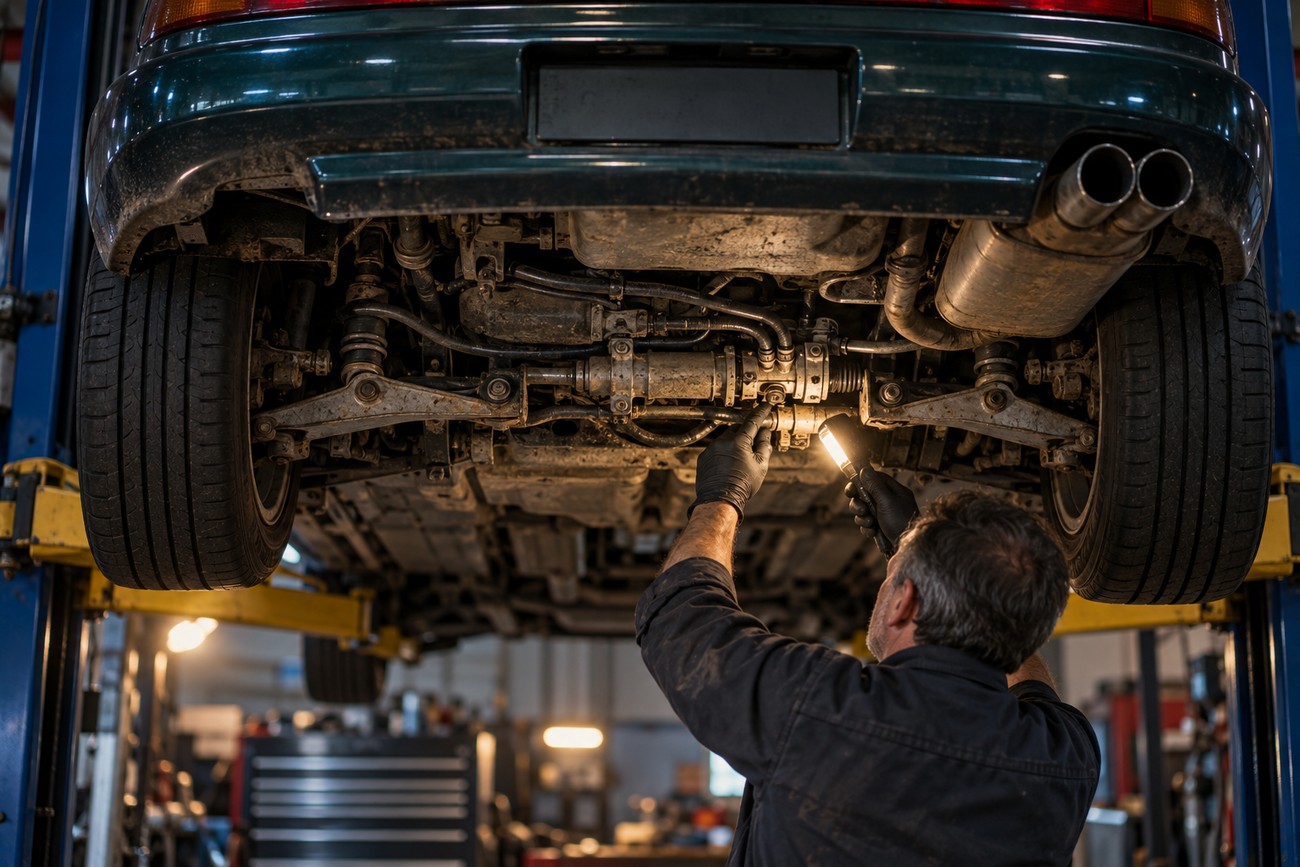
The first ownership risk is parts support. Components for the 4WS system, together with aging electrical or hydraulic parts, can be difficult to locate. A repairable fault is manageable when replacement parts exist; a missing actuator, rare control component, or damaged original assembly can turn a routine repair into a sourcing exercise.
Suspension and alignment deserve equal priority. Worn joints, bushings, or steering components can create play, pulling, and uneven tire wear. On a 4WS car, replacing one part without checking the complete geometry may leave the vehicle driving strangely and can lead to repeated alignment work.
Cooling, fuel delivery, brakes, and drivetrain service are predictable age-related expenses. Owner complaints about overheating, leaks, unstable running, or tired transmissions should be treated as plausible risks rather than universal faults. The inspection should establish whether these systems have been maintained, repaired correctly, or simply kept working through temporary fixes.
Body and interior parts can be harder to replace than mechanical service items. Bumpers, lamps, plastic trim, dashboard pieces, and other original details may be scarce, particularly for a car imported from a different market. Corrosion, structural fatigue, and accident repairs can cost more to correct than a worn engine because suitable panels and trim may be unavailable.
A tired MX-6 may also fail to deliver its published performance. Wear, poor diagnosis, incorrect maintenance, and previous modifications can leave the car substantially slower or less stable than its catalog description suggests. The practical value lies in a sound shell, original systems, and documented mechanical health.
How to Inspect an MX-6 Before Buying
Start with identity. Confirm the generation, market, engine code, transmission, front-wheel-drive layout, and presence of 4WS. Compare the vehicle documentation with the physical hardware and service information, since seller descriptions often simplify or confuse market specifications.
Test the 4WS system before spending time on tuning. Look for the rear-steering hardware, inspect its mounts and connections, and assess the car at low speed and during normal cornering. Any unusual rear-end movement, steering correction, tire wear, or warning indication deserves a complete suspension and alignment inspection.
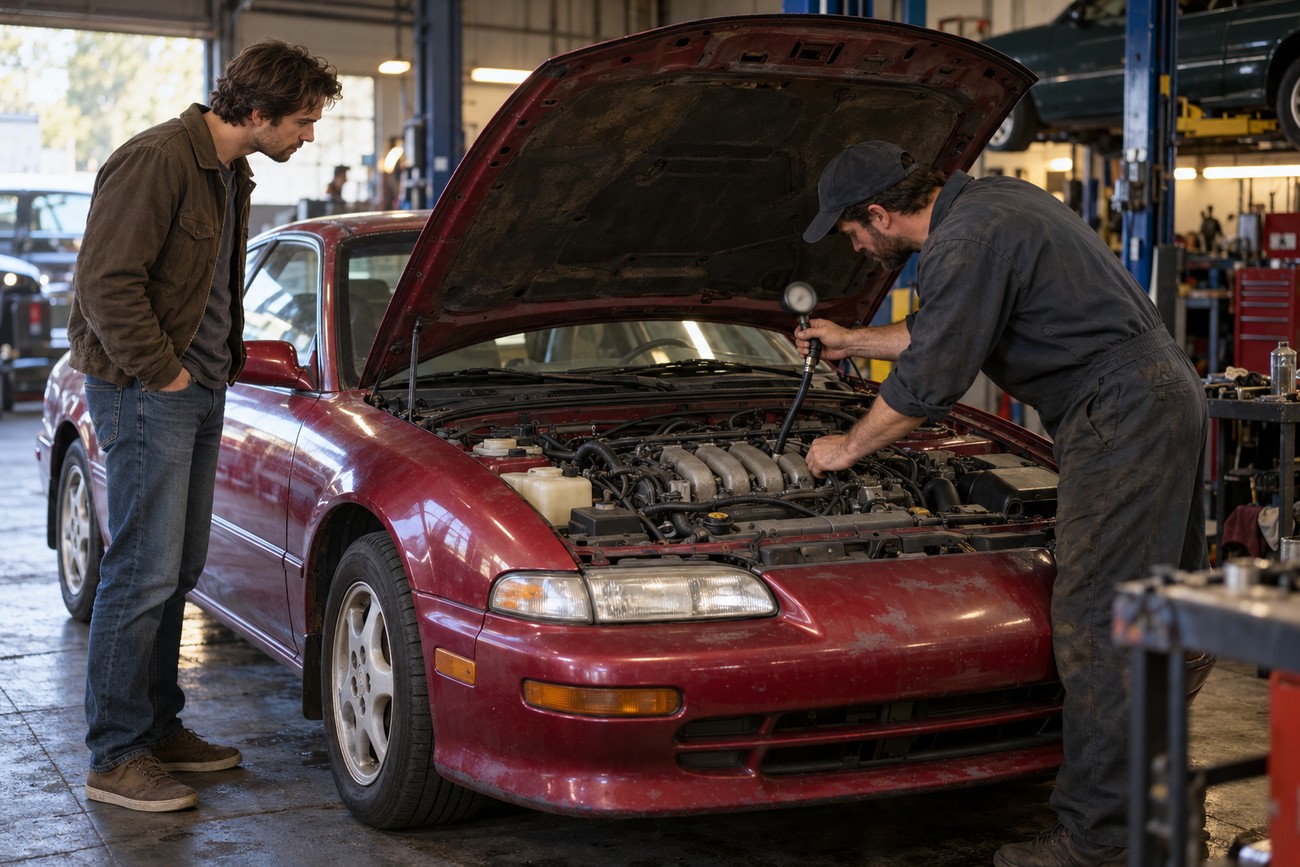
Evaluate the engine cold and hot. Check compression, cooling behavior, leaks, lubrication evidence, fuel-system condition, and the quality of previous repairs. Turbo versions need additional attention to boost hardware, seals, charge plumbing, and signs of overheating; V6 versions also need demonstrably healthy cooling and transmission systems.
Finish with the systems that are easy to overlook: clutch or automatic-transmission behavior, brakes, electrical functions, corrosion, structural repairs, and non-original wiring. Budget for rubber components, cooling parts, brakes, fuel-system work, and electrical repairs even when the test drive feels acceptable.
Compression and overall condition are more useful than an advertised acceleration time or top speed. A healthy, original 4WS system generally has greater ownership value than a higher brochure power figure attached to a modified or poorly documented car.
MX-6 Performance Numbers Versus Real-World Condition
Catalog figures are reference points, especially because the MX-6 changed across markets and transmissions. A Japanese V6 specification cannot automatically describe a North American car, and an automatic transmission entry should not be compared directly with a manual version without considering the complete specification.
Some 2.5 automatic catalog entries list a 2610 mm wheelbase, a 1560 kg gross mass, a 58-liter fuel tank, and a 207 km/h top speed. These are catalog-style reference data, not universal specifications for every MX-6.
The reported top speed is particularly easy to misuse. Tire condition, engine health, transmission operation, cooling performance, gearing, and aerodynamics all affect what a surviving car can achieve. A road test that reveals hesitation, slipping, overheating, or instability is more informative than a printed maximum-speed figure.
Use published numbers to identify the version and to spot obvious inconsistencies. Use compression results, maintenance records, alignment quality, and a thorough inspection to judge the car. On a 30-year-old coupe, condition determines performance far more reliably than the specification sheet.
Frequently asked questions
The questions below focus on common ownership risks and how to verify 4WS. They also distinguish the MX-6 from the later Mazda6 model family. For a particular car, its market specification and condition remain the starting points.
What are the common problems with the Mazda MX-6?
The ownership-risk order is usually 4WS and parts availability first, followed by suspension geometry, cooling, drivetrain service, electrical faults, brakes, fuel-system work, and body or interior condition. Routine maintenance issues can be repaired if parts and competent diagnosis are available; scarce 4WS components, original trim, lamps, or body panels create the larger sourcing problem.
Performance complaints also need context. A slow or unstable car may have worn mechanical systems, poor diagnosis, or modifications rather than an inherently weak design. Inspecting the complete vehicle is more useful than judging the model from one neglected example.
Why is the Mazda6 so cheap, and is it the same car as the MX-6?
The Mazda6 and MX-6 are different model names and should not be treated as interchangeable. The Mazda6 is a later model family, while the second-generation MX-6 was produced from January 1992 to December 1995 as a front-wheel-drive coupe.
Pricing, parts assumptions, and repair information for a Mazda6 cannot automatically be applied to an MX-6. Identify the MX-6 by generation, market, engine, transmission, and 4WS status before comparing values or ordering components.
How can you tell whether an MX-6 really has 4WS?
Confirm it through physical rear-steering hardware, vehicle documentation, and a functional inspection. A badge or advertisement alone is insufficient. The rear suspension and steering assembly should match the relevant market specification, and the system should be checked for operation, wiring or hydraulic faults, worn components, and correct alignment.
Remember that 4WS does not mean AWD. The MX-6 remains front-wheel drive, while the rear wheels assist steering. A specialist inspection is worthwhile because a car can retain 4WS hardware yet still have a system that is incomplete, disabled, or unsafe to operate.







