
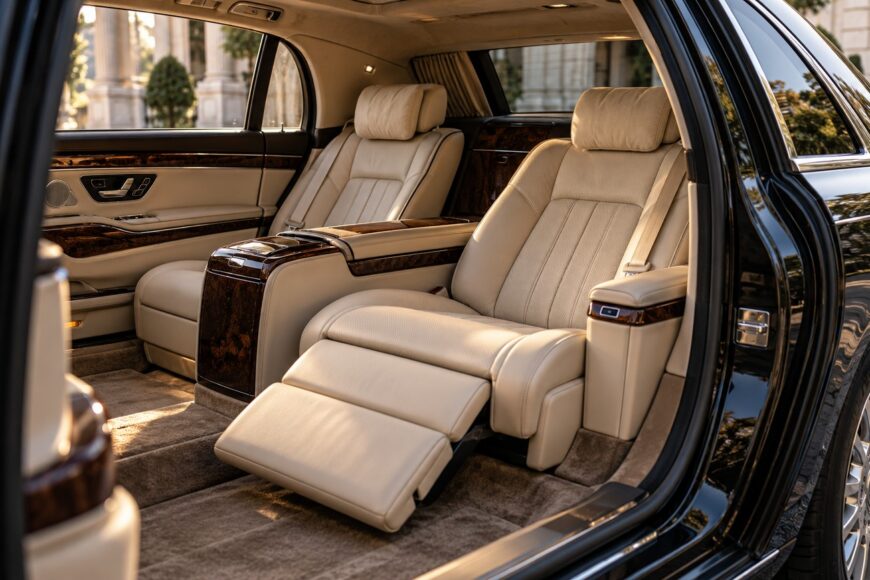
The Maybach 62 was built around a chauffeur-driven proposition: rear passengers could recline their individual seats, extend leg support, and travel in a cabin designed more like a private lounge than a conventional sedan. The feature was central to the model’s identity, and the reclining rear seats were standard equipment rather than an unusual option.
That comfort depended on substantial hardware. According to the factory brochure, each rear seat used seven electric motors for adjustments that included the seatback, cushion, seat length, headrest, lumbar support, and calf rest. The result can be exceptional when every system works. It can also be difficult to assess and service in a used car because a visually perfect cabin may conceal faults in motors, memory functions, control modules, or restraint components.
The Maybach 62 therefore rewards a skeptical inspection. Factory descriptions establish what the system was designed to do, while the individual vehicle determines whether it still does so correctly. A working engine and clean upholstery are only the beginning of the evaluation.
- What the Maybach 62 Rear Seat Actually Does
- Why the Rear Cabin Feels Like a Private Lounge
- Safety in the Reclined Position: Factory Claim Versus Assumption
- Buying a Used Maybach 62: The Reclining-Seat Inspection
- Hidden Trade-Offs and Common Myths
- Frequently asked questions
- How much does a Maybach 62 cost today?
- How much did the Maybach 62 limousine cost when new?
- How many Maybach 62 cars were made?
What the Maybach 62 Rear Seat Actually Does
The Maybach 62’s reclining rear seats were standard equipment. They were separate executive-style chairs rather than a conventional bench, and their movement was designed as a coordinated system. The seatback, cushion, seat length, headrest, lumbar support, calf support, and footrest all contributed to the passenger’s final position.
The factory brochure identifies seven electric motors per rear seat. The seatback adjusts approximately from 25° to 47°, although the exact usable range depends on the version and settings. The calf rest extends up to 240 mm, while the footrest angle reaches up to 110°, giving the passenger support under the lower legs as the backrest moves rearward.
This arrangement explains why describing the seats as ordinary reclining chairs is misleading. The passenger does not simply tilt a backrest and leave the rest of the seat unchanged. The cushion, calf support, and footrest must work together, and the available space ahead of the seat becomes part of the operating requirement.
“Fully reclining” is best treated as marketing language. The published adjustment range describes a deeply reclined automotive seat, not a horizontal bed-like surface. The position can make long journeys more restful, but it does not transform the Maybach into a sleeper compartment or remove the requirements of an automotive restraint system.
Why the Rear Cabin Feels Like a Private Lounge
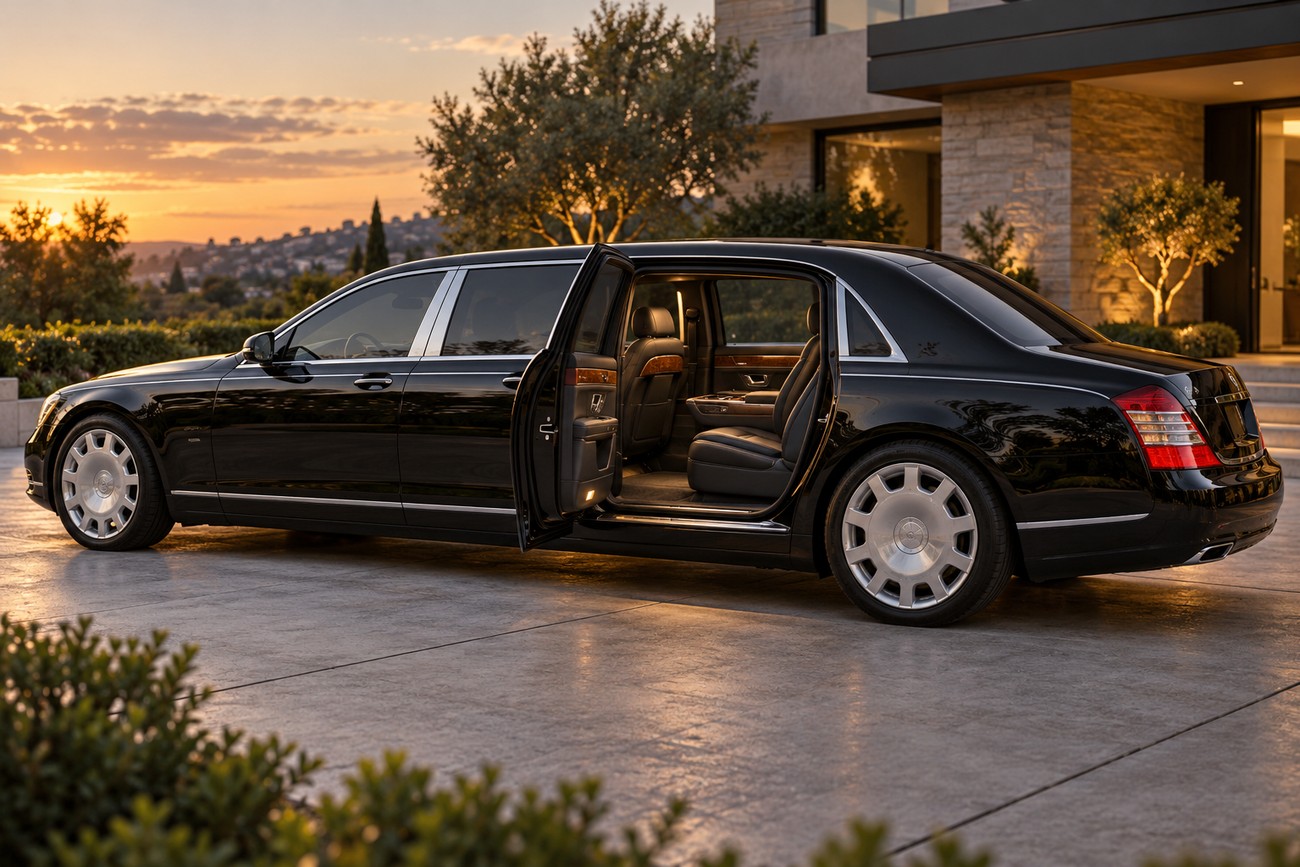
The rear-seat experience depends on both the furniture and the proportions of the car. The Maybach 62 is approximately 242.5 inches long, or about 6.16 meters, with a 150.7-inch wheelbase, or about 3.83 meters. That length creates the physical separation and legroom expected of a chauffeur-driven limousine, while the reclining mechanism uses the available cabin volume more deliberately than a fixed rear bench.
Published legroom figures should be read with care. Edmunds lists 40.1 inches for a 2005 version and 57.2 inches for a 2006 version. The difference shows why a single universal number can be misleading: model year, specification, seat position, and measurement method can all affect the published result.
Comfort adjustments extend beyond the main seat movement. The headrest has separate adjustment for height, extension, and angle, while lumbar support allows the occupant to tune the contact with the lower back. Memory positions make it possible to return to stored settings, and multiplayer heating adds more control over seat warmth than a simple on-off element.
The 2007 model received 19-inch wheels, a detail that matters to buyers comparing cars from different years and specifications. Wheel size alone does not define rear-seat comfort, but it is a reminder that equipment and published descriptions can change across the production period. The cabin should be judged from the exact car being inspected, rather than from a generic Maybach 62 specification sheet.
Safety in the Reclined Position: Factory Claim Versus Assumption
The factory described a restraint architecture intended to support the passenger in the reclined position. Its description includes a belt system, pretensioner, load limiter, and side airbag integrated into the seatback. The factory also stated that passenger protection was provided with the seat reclined.
That design is more specific than simply fitting a normal seat with a powered backrest. The restraint components are part of the seat assembly, so the seat’s structure, wiring, control systems, and belt arrangement all matter. A replacement seat, repaired harness, or modified interior component must therefore be assessed for compatibility rather than assumed to be interchangeable.
The phrase “first-class” describes the intended comfort experience, not a certification standard. It does not prove that the Maybach seat provides identical safety to an aircraft passenger seat, and it does not turn a reclined automotive seat into a separate class of transport restraint.
Factory capability also does not certify the condition of a surviving vehicle. A buyer should verify the restraint components, warning systems, wiring, seat mounting, and diagnostic status on the individual car. Damage history, previous interior work, and incompatible replacement parts can change the safety picture even when the leather and trim appear original.
Buying a Used Maybach 62: The Reclining-Seat Inspection
Begin with the car stationary, the ignition system operating correctly, and sufficient clearance in front of each rear seat. The complete movement cycle should include the seatback, cushion, seat length, headrest, lumbar support, calf rest, and footrest. Move each function through its available range, then return the seat to its normal position without forcing a switch or continuing if the mechanism becomes noisy.
The calf rest and footrest need particular attention because they occupy space ahead of the seat. A seller may demonstrate the backrest in isolation while avoiding the part of the cycle that exposes restricted movement, interference, or a damaged linkage. Check both sides independently and observe whether the movement is smooth, synchronized, and repeatable.
Next, test every stored memory profile rather than accepting one impressive demonstration position. The seat should recall its stored settings and return consistently; separately check the headrest, lumbar support, cushion, backrest, and leg supports. Test multiplayer heating at its available settings, and check the rear multimedia controls and other passenger functions while monitoring for warning messages or intermittent operation.
A diagnostic scan is essential because a seat that moves may still have stored faults or incomplete functions. The engine can run normally while rear-seat motors, memory, heating, multimedia, or control modules remain defective. The inspection should include the relevant body, seat, restraint, and passenger-comfort modules available on the vehicle, with fault codes documented rather than cleared without explanation.
Inspect the intended belt arrangement during the seat test. The factory-described protection system is integrated into the seatback, so the belt, pretensioner, load limiter, side-airbag wiring, connectors, and seat structure deserve specific attention. Do not treat an apparently comfortable reclined position as acceptable if the restraint warning system, emergency return function, or seat wiring has not been verified.
No reliable failure-rate statistic, average repair cost, or confirmed owner-complaint dataset is available here for these reclining mechanisms. That absence makes a documented inspection more valuable, not less. A buyer should obtain the vehicle’s service records, identify previous interior or restraint work, and have a specialist explain any unresolved diagnostic fault before agreeing to a purchase.
Hidden Trade-Offs and Common Myths
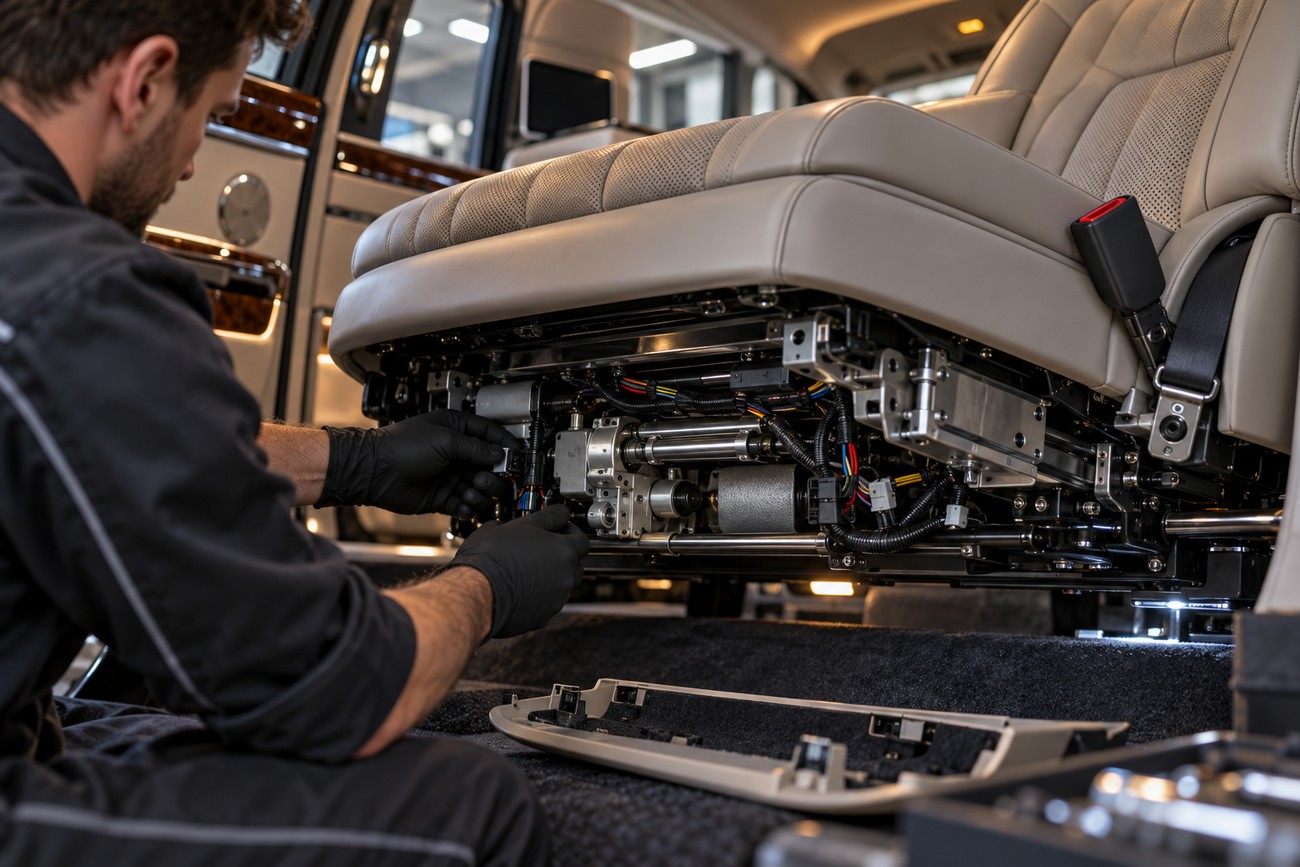
The first misconception is that the rear seat is simply a powered version of an ordinary reclining chair. Seven electric motors, coordinated supports, memory positions, heating, and integrated restraint equipment create a system with multiple mechanical and electrical dependencies. The factory material describes the functions, but it does not state service life or restoration cost for the individual drives and control components.
The second misconception is that reclining automatically makes the seat unsafe. The factory specifically described a belt system, pretensioner, load limiter, and side airbag integrated into the seatback for protection in the reclined position. That is a design claim supported by the intended architecture, while the safety of a particular used car still depends on its condition, repairs, compatibility, and diagnostic status.
The third misconception is that the seat becomes a flat sleeping surface. Its approximately 25°–47° seatback range, extending calf rest, and adjustable footrest create a supported lounge posture, not a horizontal bed. The word “fully” in sales descriptions should therefore be interpreted as fully adjustable within the system’s designed range.
The physical size of the car adds another trade-off. At approximately 242.5 inches long and with a 150.7-inch wheelbase, the Maybach 62 offers the proportions needed for its rear cabin, but parking, turning, narrow access roads, and enclosed transport become more demanding. The same dimensions that improve separation and passenger space can complicate ownership outside the chauffeur-driven setting.
Frequently asked questions
The Maybach 62’s reputation rests partly on a rear cabin that was unusually elaborate even among large luxury cars. The answers below separate documented specification details from market information that varies by vehicle, year, country, and source.
How much does a Maybach 62 cost today?
There is no reliable single current price for every Maybach 62. Asking prices depend on model year, mileage, condition, documentation, market, ownership history, and whether the rear-seat systems operate correctly.
A car with functioning reclining seats, memory profiles, heating, multimedia, and verified restraint components should not be evaluated like one that merely has attractive upholstery. No current market average or verified repair-cost average is established here, so a specific listing requires a vehicle-by-vehicle inspection.
How much did the Maybach 62 limousine cost when new?
The original new-car price requires a clearly identified market, currency, model year, and specification. Equipment, taxes, delivery charges, and regional pricing can affect the figure, so a general number without those details would risk confusing list price with an advertised or converted amount.
Original list-price information is also separate from current collector-market pricing. The reclining rear seats were standard equipment on the Maybach 62, while other specification details changed by year and market. A reliable historical answer should therefore cite the relevant factory price list or period-market source for the exact car.
How many Maybach 62 cars were made?
A production total should be quoted only from a clearly sourced figure specific to the Maybach 62. General Maybach production numbers can be confused with model-specific totals, and no verified production count for the 62 is established here.
For buyers, rarity claims are less useful than the condition of the individual limousine. Documentation, original restraint equipment, complete seat operation, and access to appropriate diagnostic support have a direct effect on ownership risk, regardless of an unverified production total.







