
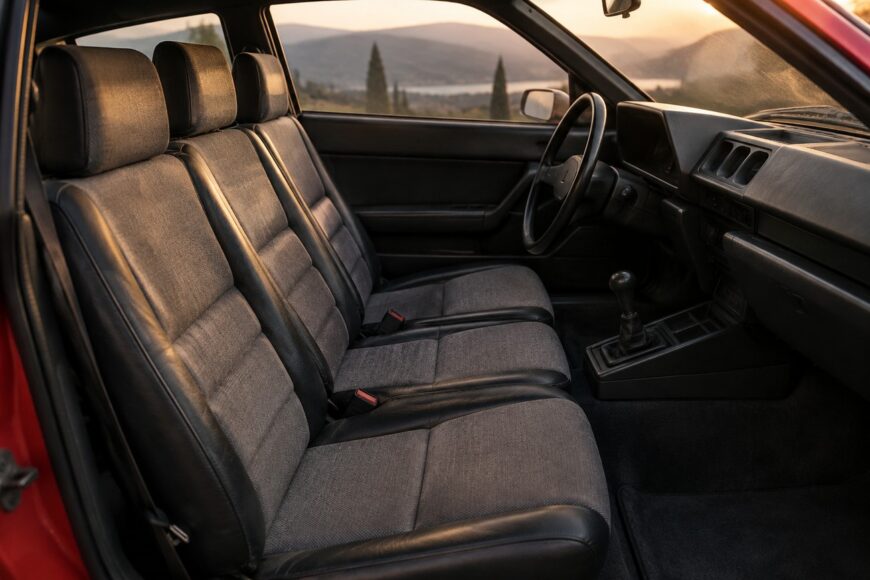
The Matra Murena puts three seats across a low, mid-engined coupé and covers its steel chassis with composite panels. Built from 1980 to 1983, it offers a third place without adding a rear bench, while hot-dip galvanizing gives the underlying structure a useful defense against corrosion.
Those choices solve specific problems, though neither makes ownership simple. The extra seat changes how you can use the car; the zinc protects the chassis, not every part attached to it. A buyer still has to weigh passenger comfort, repair access, and the condition beneath the bodywork.
- Three seats across: clever packaging, real compromises
- What the galvanized chassis does—and does not—protect
- How the 1.6 and 2.2 change the driving experience
- The inspection that matters more than the rarity
- Frequently asked questions
- How can I check whether a Murena 2.2 really has the S-kit?
- What paperwork should I check before importing a Murena?
- What should I inspect underneath a Murena before buying?
Three seats across: clever packaging, real compromises
The Murena has three seats in one row, a mid-mounted engine, and rear-wheel drive. That layout gives you room for a second passenger that a conventional two-seat coupé cannot carry. The driver does not sit in the center: the three-place arrangement is a packaging choice, not a central-driving-position experiment.
At approximately 4.07 m long, 1.75 m wide, and 1.22 m high, the car is compact and particularly low. The outer passenger positions can feel tight, and getting in or out demands more effort than the seat count suggests. A third adult may be possible for a short journey without making three-up touring appealing.
Three people also bring more belongings. Cabin storage is limited, so the extra passenger place does not turn the Murena into a practical family hatchback. Check the available luggage space with the sort of bags you would actually carry, rather than judging usefulness from the seats alone.
What the galvanized chassis does—and does not—protect
Composite panels sit over a fully hot-dip-galvanized steel chassis. Sources differ on whether to describe the structure as a spaceframe or a load-bearing structure; either label needs more care than a claim that the Murena has an ordinary steel body. The distinction matters because tidy outer panels reveal little about the metal and attachments underneath.
Galvanizing is a substantial advantage for the chassis, but it does not make the whole car rust-free. Rear suspension arms can corrode, as can vulnerable attachment areas. An accident or earlier repair may also have broken the zinc protection and left exposed steel.
Composite panels pose a separate repair problem. Poor fiberglass work can leave cracks, uneven surfaces, or misaligned panels despite a fresh coat of paint. Inspect panel fit for signs of damage, then establish what was repaired and how; a clean finish cannot answer that on its own.
How the 1.6 and 2.2 change the driving experience
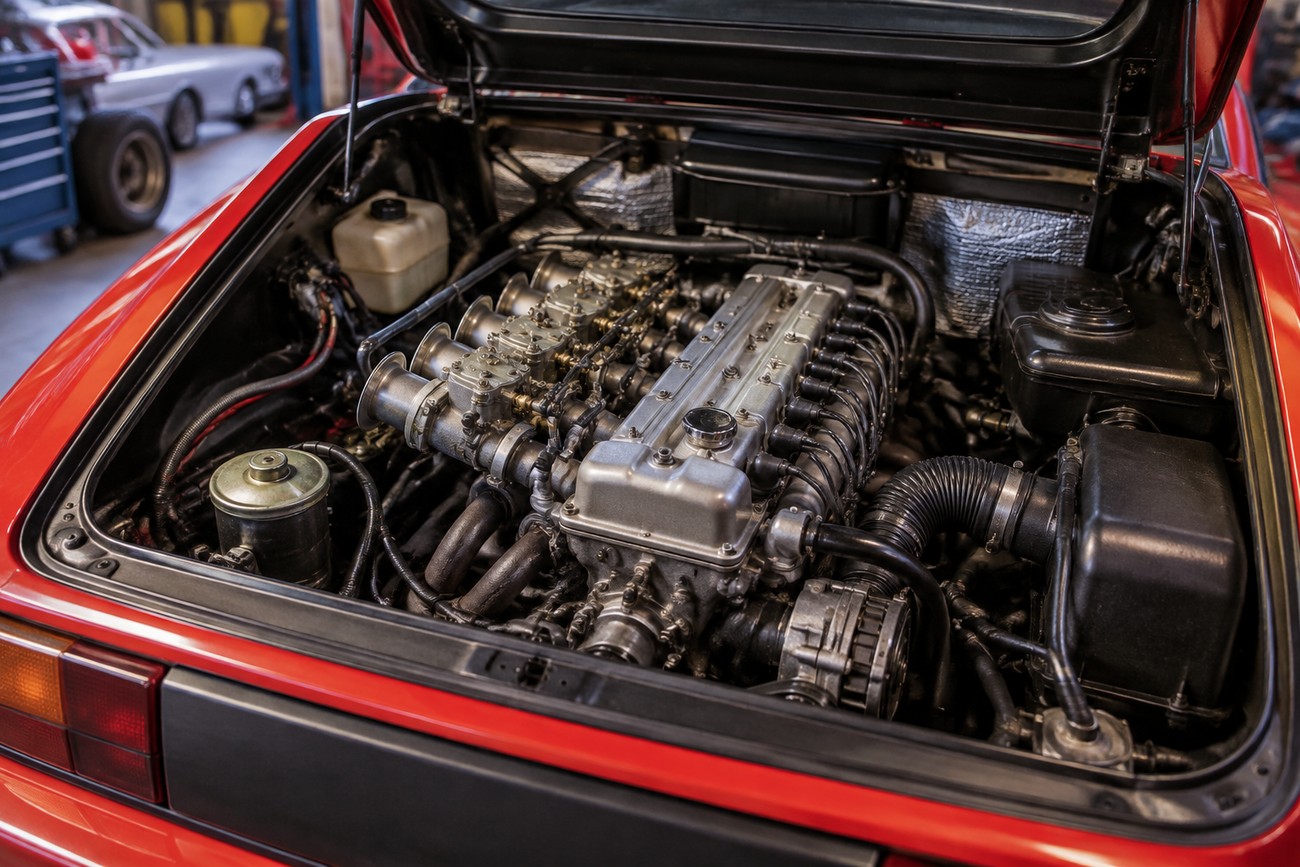
The 1.6-liter inline-four makes approximately 90–92 hp, while the 2.2-liter inline-four makes 118 hp. A 2.2 with an S-kit is quoted at approximately 140–142 hp. All use a five-speed manual gearbox, so the larger engine offers more scope to make progress without implying modern sports-car performance.
Quoted maximum speeds are approximately 180–182 km/h for the 1.6 and up to approximately 197 km/h for the 2.2/S-kit. Those figures say less about a prospective purchase than its mechanical condition. The 1.6 is not automatically an economical daily driver, while a poorly tuned 2.2 can use appreciably more fuel than a period figure might suggest.
The fully independent suspension deserves attention before any verdict on handling. Incorrect tires or wheel alignment can spoil the car’s response and wear the tires unevenly; mismatched wheels can complicate matters further. Drive the specific car you intend to buy and check its tire specifications.
Routine work also takes planning. The mid-mounted engine restricts access to some components, and jobs may require removal of interior or rear-area trim. Allow for that labor when assessing maintenance records, even if the engine itself runs well on a brief test drive.
The inspection that matters more than the rarity
Start underneath, with the rear suspension arms and their attachments, before treating the galvanized chassis as reassurance. Look for corrosion, previous welding, and repairs around mounting points. A sound-looking composite exterior cannot establish the condition of parts hidden behind or beneath it.
Next, examine evidence of accident damage and ask how any structural repair preserved or restored zinc protection. Welding galvanized steel requires appropriate preparation and precautions, so an undocumented repair deserves close scrutiny. The aim is to understand the work, rather than assume that all welding is necessarily poor.
Arrange a lift inspection that exposes the rear arms and their mounting points. Photographs of clean outer panels or accessible chassis surfaces do not show the condition of those assemblies.
Then check the wiring for improvised alterations and test the lights and other electrical equipment. Trace faults before accepting a seller’s description of them as minor. Finally, establish sources for any missing Matra-specific suspension or interior parts; a familiar engine does not make every component easy to replace.
Rarity alone is a weak reason to take on unresolved work. Specialist repairs and a narrow pool of buyers can make both restoration and resale uncertain. A documented, inspectable car is a better prospect than one whose fresh paint leaves the expensive questions unanswered.
Frequently asked questions
Claims about a conversion and the paperwork for an imported car need checking before money changes hands. Both can be harder to settle after purchase. Ask for evidence you can compare with the car itself and with the requirements where you intend to register it.
How can I check whether a Murena 2.2 really has the S-kit?
Compare conversion paperwork with the components fitted to the car, and seek a Murena specialist’s assessment if the evidence is incomplete. The S-kit 2.2 is quoted at approximately 140–142 hp, but a seller’s power claim alone cannot authenticate a conversion, especially where dealer-fitted work has a patchy paper trail.
What paperwork should I check before importing a Murena?
Check that the vehicle identification number matches across the car, ownership documents, and any existing registration record. Before committing, confirm the destination country’s import and registration requirements with the relevant authority. An uncommon model may be absent from a vehicle database or recorded inconsistently, and resolving that discrepancy after arrival can delay registration.
What should I inspect underneath a Murena before buying?
Inspect the rear suspension arms, their attachment points, and any areas with previous welding or accident repairs. A lift inspection is important because clean composite panels do not reveal the condition of hidden metal components or restored zinc protection.







