
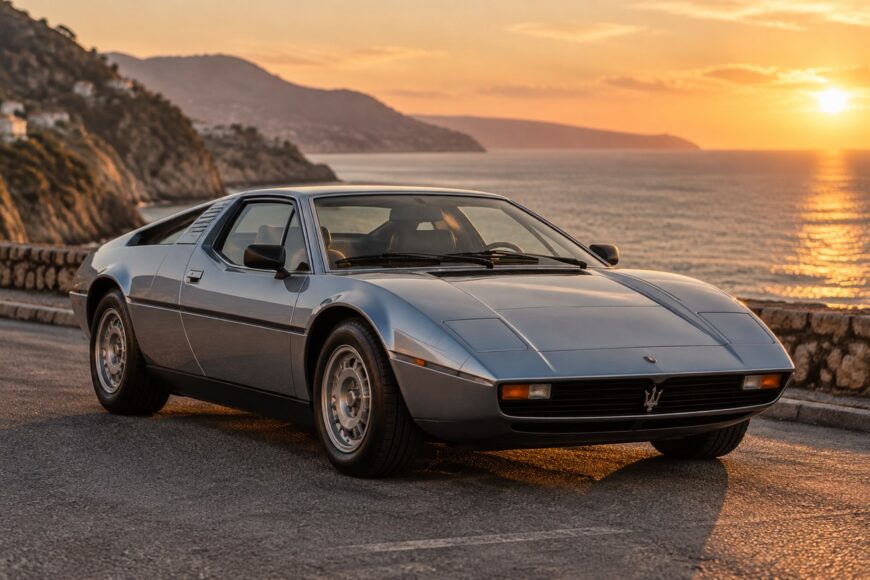
The Maserati Merak has an unusual appeal: a Giugiaro-styled, mid-engined Maserati shaped as much by Citroën engineering as by Italian sports-car convention. Its compact V6 layout places it below the Bora, yet gives it a distinct character rather than simply making it a smaller version of that car.
For a buyer, the engineering connection is the central tension. On early Meraks, high-pressure hydraulics operate the brakes and retractable headlights and may assist the clutch. A healthy car can be engaging and effective; an aging one can turn an apparently minor pressure fault into a serious braking concern. Choosing a Merak therefore means identifying its actual specification and testing its systems, rather than relying on a power figure, model year, or brief drive.
- Why the Merak Was Maserati’s Unusual Baby Supercar
- Merak, Merak SS, and Merak 2000: What Changes
- The Citroën Systems That Make or Break Ownership
- How a Merak Drives—and What Is Actually Normal
- Buying Inspection: Test Pressure, Not Just the Engine
- The Expensive Mistakes, Myths, and Ownership Trade-Offs
- Frequently asked questions
- How many Maserati Merak cars were made?
- What is the average price of a Maserati Merak SS?
- What was the top speed of a Maserati Merak?
Why the Merak Was Maserati’s Unusual Baby Supercar
Produced from 1972 to 1983, the Merak paired Giugiaro’s low, sharp body with a mid-mounted V6 and rear-wheel drive. It occupied a place below the V8-powered Bora in Maserati’s range. The shorter engine also made the Merak a different packaging exercise, with a cabin intended to offer more flexibility than a strict two-seat layout.
Its 90-degree DOHC V6 belongs to the Maserati/Citroën C114 family, while drive passes through a Citroën-linked five-speed manual transaxle. Those components help explain the car’s layout and feel. They also determine which expertise is useful when a transmission or related system needs diagnosis.
The Citroën link extends beyond the drivetrain. Early cars use high-pressure hydraulics for functions that matter every time they are driven, especially braking. Treating that hardware as an incidental French detail misses the main distinction between buying a Merak and buying a more conventional classic Maserati.
The long production period adds another complication. Engineering changes followed Citroën’s exit from Maserati control in 1976, and surviving cars may also have been altered during repairs. A convincing purchase depends on the components fitted to the individual car, backed by inspection and records.
Merak, Merak SS, and Merak 2000: What Changes
The familiar power figures identify broad versions, not a guaranteed specification for every surviving car. Published outputs vary by source and market, so check the engine and supporting documents before using any figure to judge an example.
| Version | Engine and stated power | Specification context | Buying implication |
|---|---|---|---|
| Merak | 2,965 cc, 90-degree DOHC V6; approximately 190 bhp at 6,000 rpm | Original three-liter version | Establish its hydraulic configuration and condition before comparing it with later cars. |
| Merak SS | Three-liter V6; approximately 220 bhp at 6,500 rpm | Higher-output version; quoted figures can vary by source and market | Verify the claimed SS specification rather than paying for a badge or advertised output alone. |
| Merak 2000 | 1,999 cc V6; approximately 159–170 bhp, depending on source and market | Smaller-engined, market-specific version | Confirm that the engine, equipment, and documents match the car being offered. |
Power is only one part of the decision. A sound base Merak with clear maintenance records may be a more usable purchase than an SS needing hydraulic and transaxle work. The version matters, but the condition of its particular systems determines what ownership is likely to demand.
The Citroën Systems That Make or Break Ownership
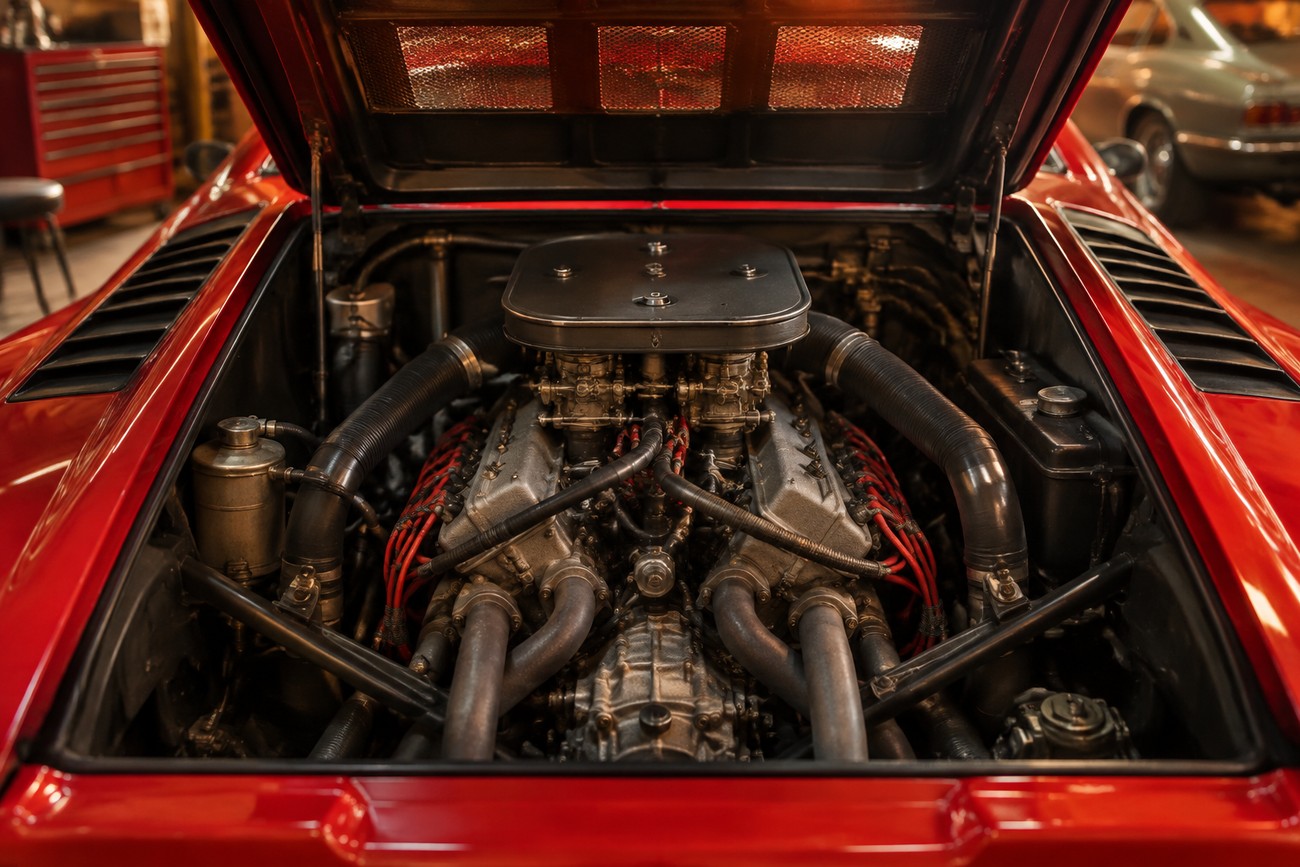
The Merak’s Citroën-linked five-speed manual transaxle sits with the mid-mounted engine and delivers drive to the rear wheels. Its condition deserves attention separate from engine performance: a V6 that starts cleanly says little about shifting quality or the cost of transmission work. Check operation when cold and after the car is thoroughly warm.
Early cars use high-pressure Citroën hydraulics for braking and retractable headlights. Some early examples also have hydraulic clutch assistance, so the clutch arrangement cannot safely be inferred from the badge or model year. These are interconnected inspection subjects, although a problem with one function does not, by itself, identify a failed component.
Pressure build-up and pressure retention after shutdown are useful starting points before blaming a pump, accumulator, or regulator. Identify the fluid specified for that individual car before any top-up; incompatible fluid can damage seals.
The pump, pressure accumulator, regulators, seals, and lines all warrant examination for age, leaks, and proper operation. A car that stops during a short test may still be losing pressure too quickly or struggling to replenish it. Headlights that rise reluctantly on an early car can likewise point toward a pressure problem rather than a simple electrical fault.
After Citroën’s 1976 exit from Maserati control, French components were progressively replaced by more conventional systems. The change was not a reliable single-year dividing line for every car now on the market. Confirm the configuration against the VIN, fitted hardware, and service history, especially before ordering parts or approving work.
How a Merak Drives—and What Is Actually Normal
The mid-engine layout gives the Merak a responsive balance, while the V6 asks to be used through its rev range. It remains a classic car with mechanical weight and feedback, rather than effortless modern transport. A drive should leave room to assess how consistently it behaves, not simply whether it feels exciting for a few minutes.
On an early car with sound hydraulics, braking can be strong. The short, sensitive pedal takes adjustment if you are used to a conventional system; an abrupt first stop is not proof of defective brakes. Weak, inconsistent braking or a pressure warning, however, needs diagnosis rather than an explanation based on “character.”
Steering can feel heavy while parking because it lacks the power assistance a modern driver might expect. Effort should ease as road speed rises. Binding, excessive play, or a sudden change in effort calls for mechanical inspection, even if the seller describes heavy steering as normal for a Merak.
Buying Inspection: Test Pressure, Not Just the Engine
Start with the car cold and observe its first start, idle, and response as it warms. Check for evidence of neglected fuel-system components, particularly after long storage, then assess the gearbox both cold and warm. Inspect the body and structure carefully; a tidy engine bay cannot establish the condition of areas hidden beneath trim or underside protection.
Next, establish exactly which brake, headlight, and clutch systems are fitted. On a hydraulic car, have a knowledgeable specialist assess how quickly pressure builds and how well it is retained after shutdown. Inspect the pump, accumulator, regulators, seals, and lines, and confirm the specified fluid from records and the car itself.
During the drive, observe warning indicators, brake response, and steering behavior. Operate every headlight function rather than accepting that the lamps illuminate: on an early Merak, their movement is also a clue to hydraulic health. Repeat relevant checks after the drive, when faults concealed by a quick demonstration may become apparent.
Low mileage offers little reassurance on its own. Storage can age seals, hoses, accumulators, and fuel-system parts while adding almost nothing to the odometer. Finally, match the engine, carburetors, transaxle, and documents to the claimed version; a specialist familiar with both the Merak and Citroën SM systems is particularly valuable for hydraulic diagnosis.
The Expensive Mistakes, Myths, and Ownership Trade-Offs
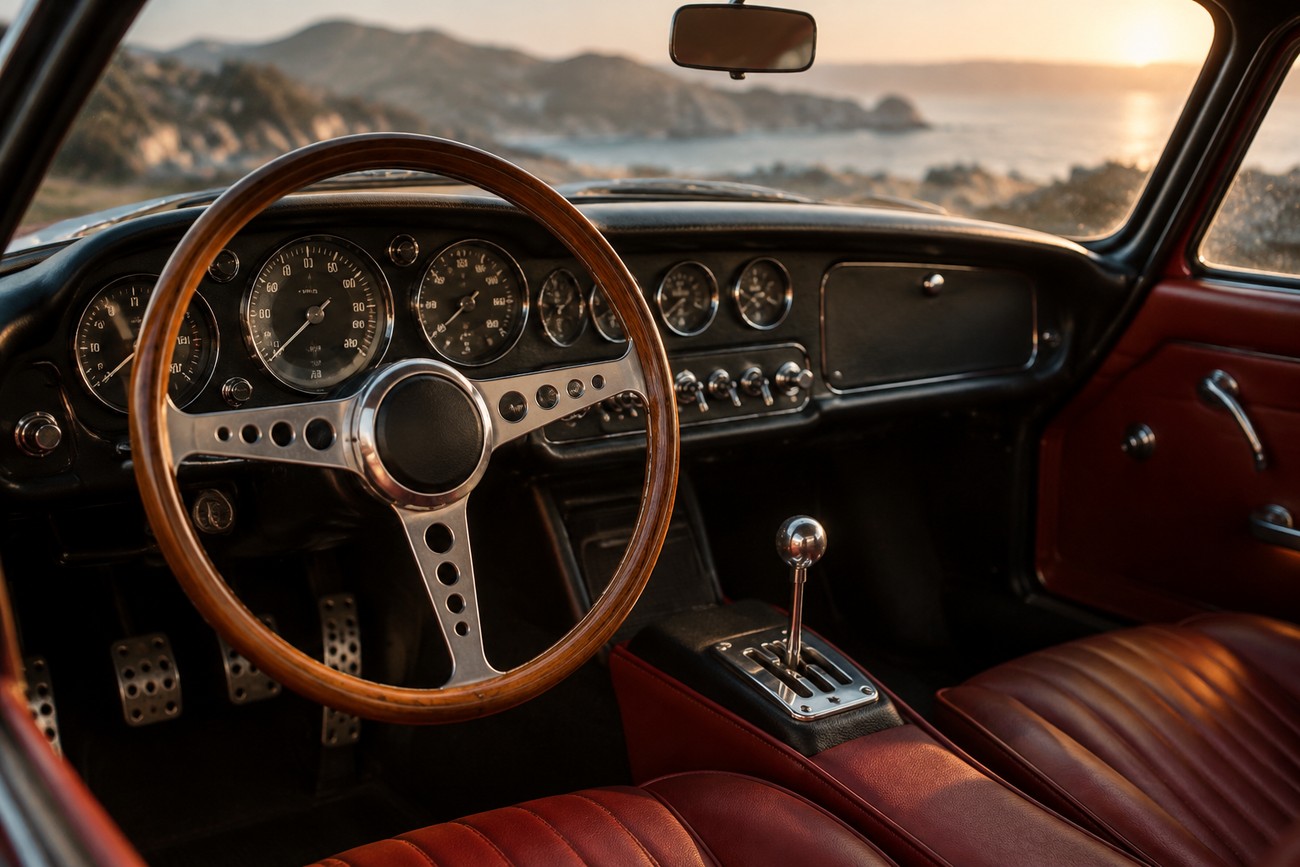
The most costly assumption is that all Meraks share one specification. Early cars made extensive use of Citroën hydraulics, while French components were progressively replaced after 1976. Factory changes and later repairs can leave a mixed configuration, making a parts catalog selected by model year alone a poor substitute for checking the hardware fitted.
Do not add unverified brake fluid to resolve a low level. The correct fluid must be verified for the individual car, since an incompatible one can damage seals and create a wider repair. Pressure warnings also deserve immediate investigation: the same aging system may serve safety-critical braking as well as the headlights.
Other mistakes are subtler. Heavy steering at parking speed can be normal, but binding or excessive play is not. An advertised SS power figure is equally poor evidence of what an individual car contains; its engine, carburetors, transaxle, and paperwork need to support the seller’s description.
The Merak’s hydraulic brakes are not inherently weak: a sound system can stop the car strongly. Aging accumulators, leaks, incorrect fluid, and neglected lines can make their performance deteriorate substantially. Limited specialist parts and qualified labor add to the consequences of buying a car with unresolved faults.
An inexpensive example may therefore cost more to put right than the initial gap to a well-maintained one, particularly if hydraulics, the transaxle, and scarce components all need attention. Service invoices showing what was replaced and which fluid was used carry more weight than assurances that the car “drives fine.”
Frequently asked questions
These figures are useful for placing an advertised car in context, but none replaces evidence about the example for sale. Production totals depend on counting methods, while prices and period performance claims need qualification.
How many Maserati Merak cars were made?
Total production is commonly rounded to approximately 1,830 cars. A version-by-version count gives approximately 1,817, so both figures can appear in credible references without describing different production periods. For a buyer, the discrepancy matters less than establishing the identity and specification of the individual car.
What is the average price of a Maserati Merak SS?
There is no dependable single average price for a Merak SS without defining the market, date, and condition of the cars counted. Originality, documentation, confirmed SS specification, and hydraulic health can substantially change what a particular example is worth. Compare current sales and asking prices only after separating sound, documented cars from those needing specialist work.
What was the top speed of a Maserati Merak?
There is no single top-speed figure that applies equally to the base Merak, Merak SS, and Merak 2000. Period claims vary with version, market specification, and measurement method; the higher-output SS should not be used as the benchmark for every car. Treat any advertised top speed as a claim about a specified version, rather than a performance test of the aging example in front of you.







