

An affordable twin-turbo Maserati has obvious appeal. A Biturbo offers compact proportions, a distinctive V6, and an entry price that can look modest beside other Italian classics. Yet deferred repairs can cost more than the purchase price, especially if several neglected systems need attention at once.
Owning one without financial strain depends less on finding the cheapest running car than on finding a sound, well-documented example. You also need access to someone who knows the particular variant and cash left after purchase for work the inspection cannot rule out. A Biturbo can be a rewarding hobby car; it is a risky choice if the asking price uses up your entire budget.
- First, Know Which Biturbo You Are Buying
- The Mechanical Faults That Can Break the Budget
- What Does Staying Ahead of Maintenance Cost?
- The Hidden Costs Beyond the Engine
- The Pre-Purchase Inspection That Actually Matters
- So, Can You Own One Without Going Broke?
- Frequently Asked Questions
- Why are Maserati Biturbos so cheap second-hand?
- How much is a Maserati Biturbo worth?
- How many Maserati Biturbos were made?
First, Know Which Biturbo You Are Buying
The Biturbo family was produced approximately from 1981 to 1994. Its compact body and twin-turbo V6 give it character that a conventional used coupe rarely offers. That appeal is real, but the name covers more mechanical variation than a casual parts search suggests.
Variants include 2.0-, 2.5-, and 2.8-liter twin-turbo V6 engines; fuel and ignition systems differ. Model year helps narrow the possibilities, yet it does not establish what is installed in a car that may have been altered or repaired over decades. An incorrect assumption here can turn an ordinary service into a hunt for the right components.
A five-speed ZF dogleg manual is common, and automatic variants also exist. Check the transmission in the car rather than treating advice for one drivetrain as applicable to another. The dogleg shift pattern is a useful identifying detail, not a guarantee that the rest of the specification matches a familiar example.
Before ordering parts, verify the engine code, model year, market specification, and actual equipment. Match those details to the relevant documentation and part number. “Biturbo” alone cannot establish compatibility for an injection component, electrical module, or transmission part.
The Mechanical Faults That Can Break the Budget
A smooth start and steady idle tell you that the engine runs, not how it behaves under sustained load. Owners report turbo faults, smoke, overheating, and cooling-system or head-gasket trouble. These are inspection priorities, rather than a diagnosis of every Biturbo for sale.
On a safe road test, check for smoke under load, uneven power delivery, and abnormal boost behavior. A specialist should consider both turbos, their wastegates, and pressure sensing before blaming any single component. Apparent boost on a brief drive does not prove that both sides of the system are controlling it correctly.
Cooling deserves equal attention. Look for leaks, evidence of overheating, and signs that a past cooling fault received a proper repair rather than a temporary fix. Head-gasket work becomes a much larger prospect if overheating has already caused damage; a clean engine bay cannot settle that question.
Ask for documentary evidence of timing-belt replacement. Owner discussions cite an interval around 30,000 km, but that is not a universal factory figure; confirm the applicable schedule for the car. A failed belt can damage valves, and access can make replacement more involved than on a typical everyday car. If its history is unknown, plan the work before regular use.
What Does Staying Ahead of Maintenance Cost?
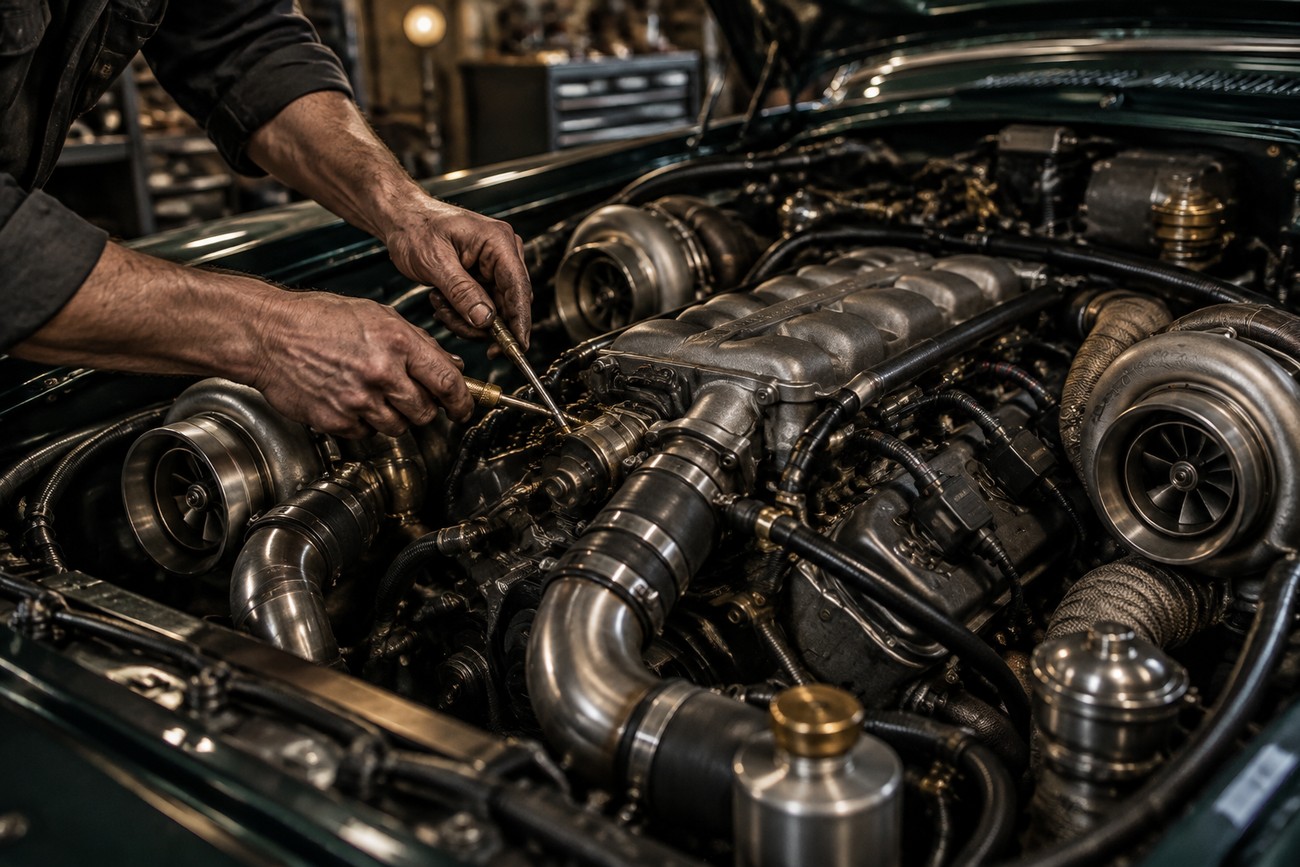
There is no useful guaranteed annual figure for a car whose condition, variant, and labor requirements vary so widely. Separate the budget into routine upkeep, an immediate catch-up service, and a reserve for major faults. The second category is where a cheap purchase often stops looking cheap.
An accessible summary of service information cites oil changes every 5,000–7,500 miles and coolant changes every two years. Treat those as leads to verify against documentation for the specific variant; longer intervals in promotional material may not identify the relevant engine. Suitable, high-quality oil and timely changes matter particularly where turbocharger life is concerned.
Factory documentation treats cooling, turbos, fuel systems, electrics, and other assemblies as distinct service subjects. A workshop applying a generic routine may miss work that matters to this car. Before buying, establish who can maintain its particular fuel and ignition systems and whether that specialist can obtain the parts they may need.
The reserve is for overlap: belt work, cooling repairs, turbo attention, and electrical diagnosis can arrive close together. Specialist labor and scarce parts may push a repair beyond the car’s market value, particularly if you outsource all the work. That does not make every repair irrational, but it does mean the purchase price is a poor measure of affordability.
The Hidden Costs Beyond the Engine
A healthy-sounding V6 can sit in a car with faults that are slower to identify and harder to finish. Age-related electrical problems may involve the fuse box, connectors, instruments, wiring, or electronic modules. An intermittent fault can consume diagnosis time even when the failed part itself appears minor.
Look closely at improvised fuses, wiring splices, and disconnected sensors. Each may conceal a fault rather than cure it, and a later owner must first work out what was changed. Correct electrical diagrams for the actual specification are more useful here than repeated guesses based on symptoms.
Routine consumables are generally easier to find than body panels, glass, turbos, and some suspension components. Inspect corrosion and damage to hard-to-source pieces before focusing on cosmetic details. Deteriorated interior materials also affect the scope of a project: a car can drive well while remaining costly or time-consuming to put right.
Air conditioning is another variant-dependent job. Establish which components and refrigerant arrangement the car has before agreeing to a generic conversion or ordering replacements. Downtime while a suitable part is identified can be as consequential to an owner as the work itself.
The Pre-Purchase Inspection That Actually Matters
Begin with identity and records. Confirm the engine code, market specification, installed fuel and ignition systems, and transmission, then compare the service history with the car in front of you. Request dated invoices for major work, especially the timing belt; a verbal assurance is not a substitute for evidence.
Next, inspect the cooling system for leaks and signs of past overheating, and establish whether previous faults were fully addressed. If belt replacement cannot be documented, include it as an immediate planning item. This approach gives you a clearer starting budget before a test drive adds further concerns.
Where conditions allow, drive the car long enough to assess power delivery and operating temperature, then have a Biturbo-aware specialist investigate anything abnormal. They should check wastegates and pressure sensing rather than replace parts by guesswork. A short idle test or a generic diagnostic scan cannot clear these systems.
Finish with every electrical function, visible wiring repairs, corrosion-prone areas, glass, trim, and suspension condition. If a fault is intermittent, ask for diagnosis using the variant-specific factory information and electrical diagrams. A seller who will not permit a meaningful inspection leaves you carrying uncertainty that no tidy engine bay can remove.
So, Can You Own One Without Going Broke?

Yes, if you buy on condition and documentation, have credible specialist support, and keep a separate repair reserve. A carefully inspected car with evidence of completed maintenance is a more defensible choice than the cheapest example that merely starts and drives. Even a good inspection reduces uncertainty; it cannot remove the risks of an older, complex car.
Your intended use matters. An owner who can accept downtime and arrange specialist work has room to deal with a fault methodically. A buyer who needs predictable, low-cost daily transport may find the same car difficult to live with, even if its initial price seems manageable.
Build the reserve around the possibility that turbo, cooling, timing-belt, and electrical work could overlap. Then consider parts availability for the exact variant, including items outside the engine bay. Paying more for documented work may make sense, although invoices still need to match what an inspection finds.
Walk away from a car with unexplained overheating, persistent smoke, concealed wiring changes, or a seller who blocks proper checks. Unknown belt history is a cost to plan for; combined with several unresolved faults and no specialist nearby, it may be a reason to pass. The Biturbo’s reputation should prompt scrutiny, not replace a verdict on the individual car.
Frequently Asked Questions
The answers below distinguish the Biturbo’s market reputation from what can be established about an individual car. For price or production claims, the relevant variant and the scope of the comparison matter.
Why are Maserati Biturbos so cheap second-hand?
Prices can reflect a smaller pool of buyers willing to accept specialist work, uncertain repair bills, and possible downtime. A low asking price is not proof that one car is defective. Compare its records and condition with other examples before deciding whether it is a bargain or a deferred project.
How much is a Maserati Biturbo worth?
A defensible value requires recent local sales of the same variant and market specification. Adjust those comparisons for documented work, condition, and completeness, including scarce trim or glass. Without current comparable sales, a precise figure would imply more certainty than the evidence supports.
How many Maserati Biturbos were made?
The answer depends on whether “Biturbo” means only the original Biturbo-badged cars or the wider related family. Define that scope first, then use reliable production records for the models included. An unqualified total risks counting different groups of cars as though they were the same.







