

The Mahindra Scorpio is one of India’s clearest homegrown SUV success stories, yet its ownership experience is less polished than its status suggests. The firm ride, large footprint, uneven cabin refinement, and complicated choice between variants can matter more in daily use than the badge’s strong cultural appeal.
Scorpio Classic and Scorpio N are separate propositions rather than simple old and new versions of one vehicle. The Classic remains a basic diesel workhorse on an older chassis, while the N brings a newer platform, more powertrain choices, automatic transmission, and available four-wheel drive. The sensible choice depends on the job you need the SUV to perform.
- Why the Scorpio Became India’s Homegrown SUV Hit
- Scorpio Classic and Scorpio N: Two Very Different Propositions
- Scorpio Classic vs Scorpio N: The Numbers That Change the Decision
- Engines, 4×4, and Fuel Economy: What Ownership Really Costs
- Family Comfort, City Driving, and the SUV’s Hidden Size Penalty
- Safety, Build Quality, and the Parts of the Ownership Story Ads Skip
- The Most Common Scorpio Buying Mistakes
- How to Inspect and Specify a Scorpio Before You Buy
- The Verdict: Who Should Buy the Classic, the N, or Neither?
- Frequently asked questions
- Which car is most loved by Indians, and is the Scorpio a fair answer?
- Which Scorpio is likely to be easier to live with over many years?
- Why do some diesel Scorpio owners say the engine feels better after 10,000–15,000 km?
- Who is the king of SUVs in India: Scorpio, Thar, or a crossover?
Why the Scorpio Became India’s Homegrown SUV Hit
The Scorpio is an Indian-developed ladder-frame SUV that has been produced since the early 2000s. That construction gave it the upright stance, high driving position, and tough visual identity that many Indian buyers wanted from a substantial family vehicle. It also helped the model serve roads and uses where a low-slung passenger car could feel less appropriate.
Its appeal reaches beyond private households. The Scorpio has been visible in rural transport, utility fleets, and police-oriented use, where ground clearance, carrying ability, and a durable-feeling chassis carry practical value. Families also adopted it because the high seating position creates a commanding view, and the available cabin layouts can accommodate large groups.
Mahindra’s continuing investment in the name reflects that acceptance. The Scorpio remains among the company’s top-selling models in India and holds a noticeable share of the ladder-frame SUV segment. Popularity here reflects familiarity, utility, and identity rather than proof of class-leading quietness, ride comfort, or finish quality.
The model’s cultural importance is partly visual. A Scorpio can signal authority, rural capability, or upward mobility in a way that a conventional crossover may not. That symbolism explains why buyers sometimes accept its compromises more readily than they would in an anonymous family vehicle.
Scorpio Classic and Scorpio N: Two Very Different Propositions
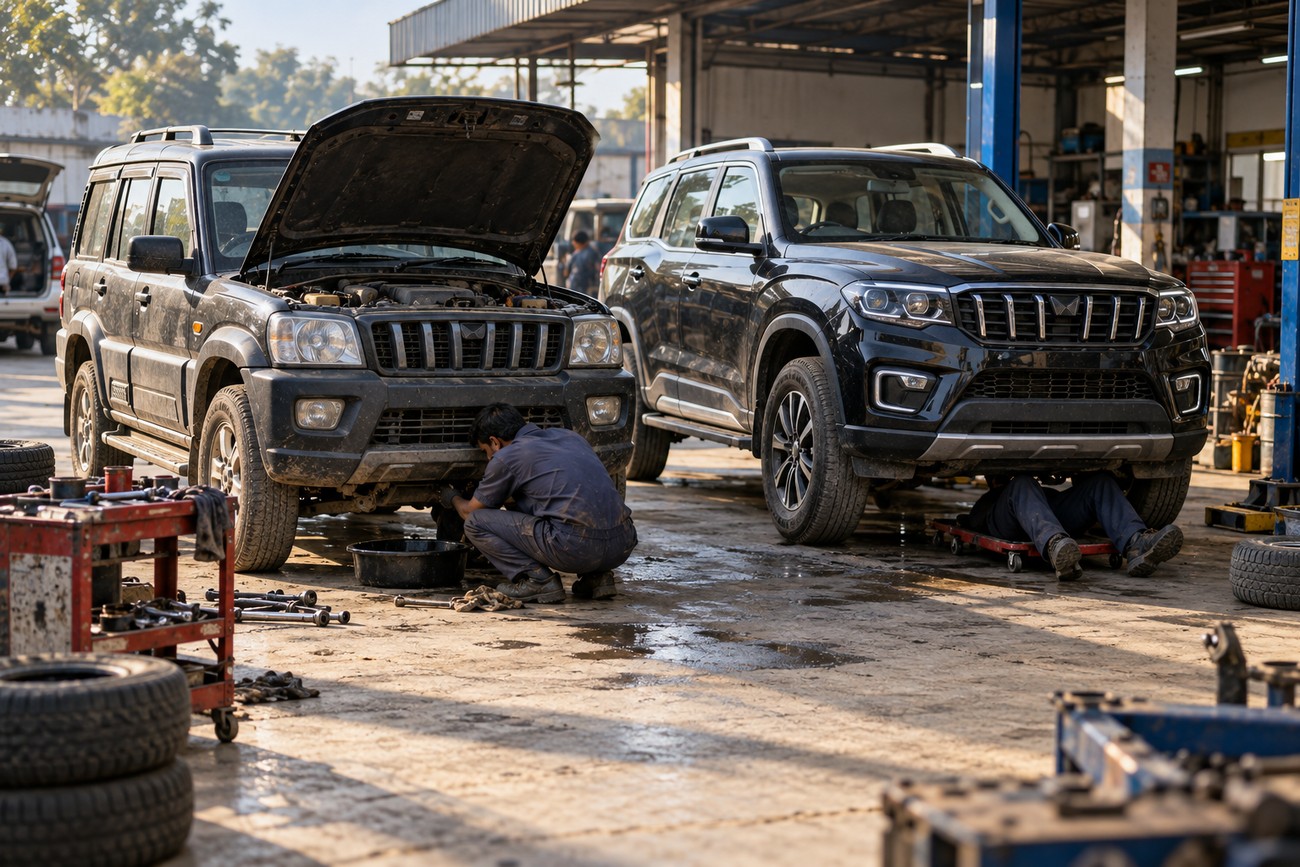
Scorpio Classic uses the older chassis and follows a straightforward formula: a 2.2-litre hawk diesel producing about 130 hp and 300 Nm, a six-speed manual transmission, and rear-wheel drive. Its appeal lies in mechanical simplicity and familiar utility. Buyers must accept a narrower equipment and powertrain range in return.
Scorpio N uses a newer platform and is positioned as the more modern SUV. It offers a 2.0-litre turbo petrol, a 2.2-litre turbo diesel, six-speed manual and automatic transmissions, and rear-wheel drive or four-wheel drive. Its broader specification makes it easier to tailor to highway travel, city traffic, family use, or difficult surfaces.
The difference affects daily life more than the model names suggest. A Classic may suit an owner who values a manual diesel and straightforward rear-wheel-drive utility, especially in areas where its traditional layout remains familiar to local repairers. An N makes more sense for someone who expects stronger performance, automatic convenience, more equipment, or a wider range of seating and drivetrain choices.
Badge loyalty can obscure the decision. A buyer who spends most of the year on paved roads may gain little from four-wheel drive, while someone carrying passengers regularly may care more about the exact seating layout than about headline power. Treat the two Scorpios as different tools with a shared identity.
Scorpio Classic vs Scorpio N: The Numbers That Change the Decision
The figures show why the N is a more flexible purchase, while the Classic retains a clear role as a simpler diesel utility vehicle.
| Category | Scorpio Classic | Scorpio N |
|---|---|---|
| Platform | Older chassis | Newer platform |
| Dimensions | Not specified in the supplied data | 4662 mm long, 1917 mm wide, 1857 mm high; 2750 mm wheelbase |
| Engine options | 2.2-litre hawk diesel only | 2.0-litre turbo petrol or 2.2-litre turbo diesel |
| Power | About 130 hp | Petrol: about 200–203 hp; diesel: about 130–175 hp |
| Torque | About 300 Nm | Up to 400 Nm |
| Transmission | Six-speed manual only | Six-speed manual or six-speed automatic |
| Drive system | Rear-wheel drive only | Rear-wheel drive or four-wheel drive |
| Seating | Seven or nine seats | Six or seven seats |
| Best fit | Simple diesel utility and family transport | Buyers needing more performance, convenience, equipment, or available 4×4 |
Engines, 4×4, and Fuel Economy: What Ownership Really Costs
The Scorpio N’s 2.0-litre turbo petrol produces about 200–203 hp, giving it the strongest performance character in the range. That extra output can make highway merging and full-load driving easier, yet a heavy SUV with a turbo petrol engine can consume noticeably more fuel in traffic. City congestion and frequent acceleration make the gap between official and real-world economy more apparent.
The 2.2-litre turbo diesel produces about 130–175 hp, with torque reaching up to 400 Nm. Its low-rev pulling power suits a loaded vehicle, long-distance travel, and rougher access roads. The Classic’s diesel produces about 130 hp and 300 Nm, which is adequate for its utility-focused role, though its manual-only configuration demands more work in urban congestion.
Official Scorpio N economy is up to about 15–16 km/l under Indian test cycles. Australian data for a diesel 4×4 lists 7.2 L/100 km and an approximate range of 790 km. These figures belong to specific test methods and variants; owner-reported consumption can be higher, particularly with the petrol engine, heavy loads, four-wheel drive, or dense city traffic.
Four-wheel drive deserves a practical justification. It can be valuable on difficult surfaces and genuine off-road routes, but it adds cost, mechanical complexity, and some fuel-use penalty when the vehicle spends its life on asphalt. The N’s diesel versions are also reported by owners as becoming more elastic after roughly 10,000–15,000 km, with slightly lower consumption in some cases; that is an ownership observation rather than a guaranteed change.
Family Comfort, City Driving, and the SUV’s Hidden Size Penalty
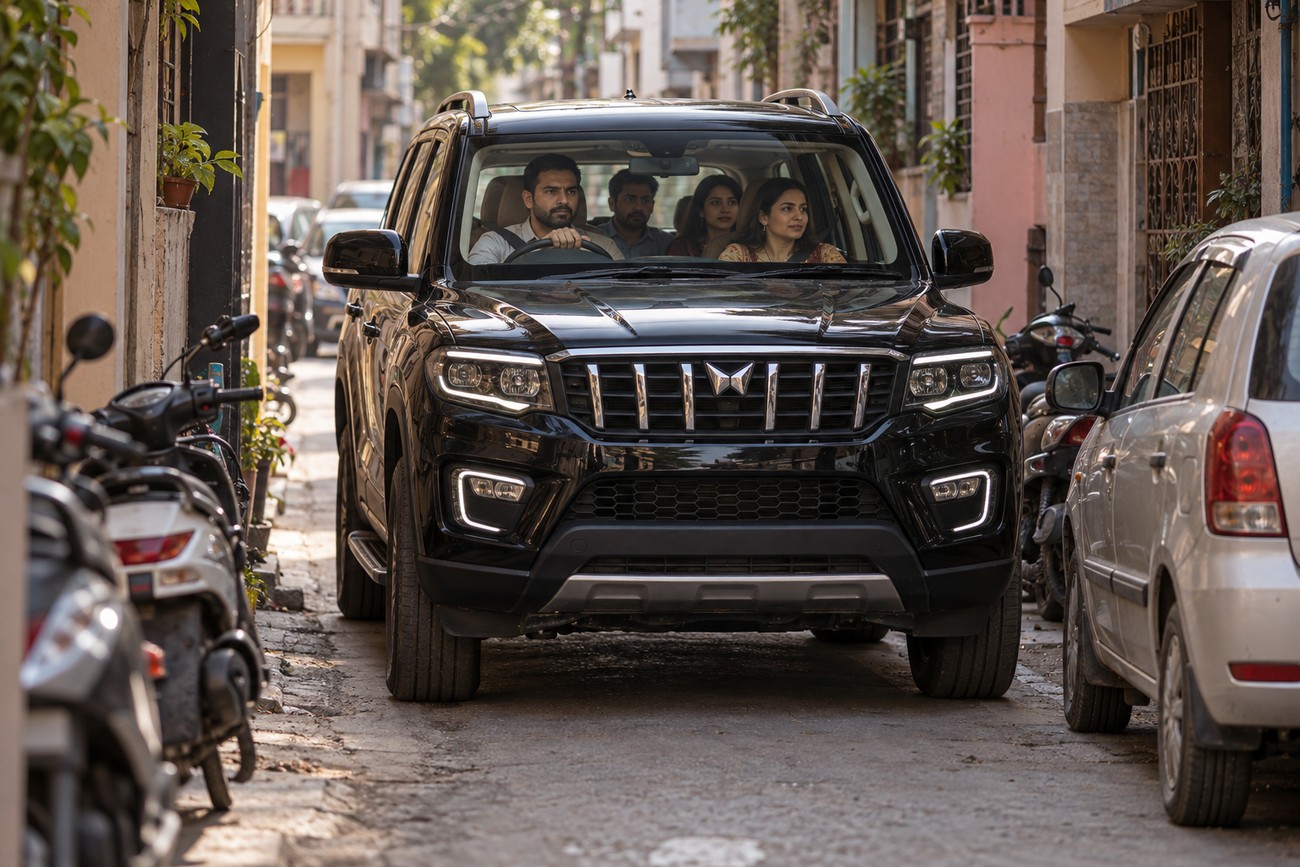
The Scorpio’s high seating position makes traffic easier to survey and gives passengers a commanding view. That advantage comes with a substantial physical footprint. The Scorpio N is 4662 mm long and 1917 mm wide, dimensions that can turn tight lanes, compact parking structures, and crowded courtyards into daily tests.
Ride comfort depends heavily on expectations and passenger position. Owners commonly describe the suspension as firm and truck-like, with noticeable jolts over small imperfections. The front seats may feel acceptable on a smooth road, while passengers in the rear rows can experience more movement and fatigue on a long journey.
Diesel versions can produce noticeable engine noise at higher revs, especially when accelerating hard or climbing with a full load. The noise is part of the vehicle’s utilitarian character, although buyers moving from a quiet crossover may find the difference substantial. Neither model should be selected solely from a short, smooth dealership route.
Seat configuration deserves a careful inspection. Scorpio N offers six- and seven-seat layouts, while Scorpio Classic offers seven- and nine-seat versions. Captain-style seating may improve access and individual comfort, whereas a bench can make better use of the cabin for family transport; the right choice depends on who will occupy the rear rows most often.
Safety, Build Quality, and the Parts of the Ownership Story Ads Skip
Scorpio N has a five-star Global NCAP rating under the updated protocol for the tested specification. That is meaningful evidence of crash-test performance and supports its position as a safer family-oriented choice than the old image of a purely utilitarian Scorpio might suggest.
The result still needs to be read precisely. A rating applies to the tested specification and protocol, and it does not automatically mean every domestic trim has the same active-safety equipment. Buyers should verify the exact version’s airbags, electronic systems, and driver-assistance features instead of treating the five-star result as a universal description of the entire range.
Reported cabin complaints include squeaks, uneven panel gaps, fast-wearing plastics or fabric, and a budget feel relative to the vehicle’s price. These observations do not establish that every Scorpio will develop the same faults, but they show why a detailed delivery inspection matters. Touch points, seat fabric, switchgear, and trim joints deserve more attention than a quick walk-around usually provides.
Electronics are another variable in the ownership story. Owners have reported infotainment freezes, Android Auto or Apple CarPlay lag, and intermittent camera-system glitches, including issues with advanced camera displays. Dealer software updates may resolve some engine-response and multimedia-lag complaints, though support quality varies between outlets.
Corrosion concerns also deserve attention in humid coastal regions and areas where road salt is used. Forum discussions and owner reports mention corrosion on frame or suspension components after exposure. Inspecting the underside and considering additional protection for the frame and underbody can be sensible, especially where moisture and salt are routine conditions.
The Most Common Scorpio Buying Mistakes

Choosing the top-spec 4×4 “just in case” is an expensive form of reassurance if the vehicle will remain on paved roads. Four-wheel drive makes sense for genuine off-road travel, difficult surfaces, or regularly remote routes. Otherwise, the additional purchase and maintenance complexity may deliver little benefit while adding to fuel use.
The petrol N can be appealing because of its output and smoother response, but urban owners need to budget for consumption that may exceed official figures. Stop-start traffic, a full passenger load, and frequent use of the turbo’s performance can raise running costs. A diesel may suit heavy annual use better, provided its operating pattern and local regulations make that choice appropriate.
Parking should be part of the buying decision, not an afterthought. The N’s width and length can make tight turns difficult even with a high driving position and parking cameras. A test drive should include the buyer’s usual garage, a narrow lane, and a realistic multi-point maneuver where possible.
Accessories can change the vehicle’s behavior. Heavy bumpers, roof racks, and oversize wheels add mass and alter suspension loads, which can accelerate wear and affect handling. The Classic also requires an honest assessment of its limitations: its manual-only diesel configuration excludes buyers who need an automatic or prefer a petrol engine.
How to Inspect and Specify a Scorpio Before You Buy
Begin with the version rather than the color or accessory list. Confirm the exact seating arrangement, drivetrain, transmission, and safety equipment on the vehicle you will receive. For family use, take passengers on the test drive if possible and cross uneven urban surfaces to judge rear-seat movement rather than relying on a smooth dealership loop.
Test every electronic feature before delivery. Pair a phone, check Android Auto or Apple CarPlay, operate the infotainment system through several menus, and inspect the camera display from different angles. Intermittent faults may not appear immediately, so a short period of repeated use is more informative than a single demonstration by a salesperson.
Software calibration, camera operation, underbody corrosion, and local parts support can shape ownership more than the factory specification sheet suggests. Verify those areas before delivery, especially when the nearest capable dealer is far away.
Dealer quality and original-parts availability can vary, particularly outside major cities. Ask how warranty work is handled locally, whether common parts are stocked, and how software updates are scheduled. A strong vehicle specification cannot fully compensate for weak support in the area where the SUV will spend its life.
Inspect the frame, suspension, fasteners, and underbody before accepting the vehicle. Additional anti-corrosion treatment is commonly considered in coastal or heavily salted regions, but it should be applied carefully so that drainage points, identification marks, and inspection areas remain accessible.
The Verdict: Who Should Buy the Classic, the N, or Neither?

Scorpio Classic suits buyers who prioritize simple diesel utility, rear-wheel drive, and a manual transmission. Its older chassis and limited specification are part of the package, so it works best for owners who value familiar mechanical character over automatic convenience, modern cabin features, or a wider choice of engines.
Scorpio N is the stronger all-round choice within the Scorpio family for buyers who need more powertrain flexibility. It offers petrol and diesel engines, manual or automatic transmissions, six- or seven-seat layouts, and available four-wheel drive. Its newer platform and safety positioning also make it easier to justify as a modern family SUV, provided the buyer accepts the firm ride and reported electronics variability.
A unibody crossover may be the better answer for someone who values quietness, smoother suspension, a lower center of gravity, and easy urban maneuverability. The ladder-frame layout gives the Scorpio strength and utility, while its high center of gravity can reduce smooth-road agility compared with a crossover during quick direction changes.
There is no universal SUV winner here. The Scorpio’s popularity reflects a distinctive Indian combination of identity, visibility, family usefulness, and utility. That makes it a compelling choice for the right owner, while its compromises make a careful test drive and specification check essential.
Frequently asked questions
Which car is most loved by Indians, and is the Scorpio a fair answer?
The Scorpio is a fair answer if the question refers to one of India’s most recognizable homegrown SUVs. Its long presence, high visibility in rural and institutional use, and strong family appeal have made it part of the country’s automotive culture.
There is no single objective nationwide measure of “most loved.” Affection and recognition differ from sales leadership, and buyers may favor different vehicles for city comfort, off-road use, price, or practicality. The Scorpio’s cultural importance is clear even when its ride and refinement do not suit every owner.
Which Scorpio is likely to be easier to live with over many years?
The Classic has the simpler specification, which may appeal to owners who want a manual diesel vehicle with fewer systems to manage. That simplicity does not guarantee lower repair costs in every location, since parts supply and dealer skill still matter.
The N is easier to tailor to modern use because it offers an automatic transmission, broader engine choices, and more equipment. It also introduces more electronic systems and possible software-related issues. Long-term suitability therefore depends on local service quality, driving conditions, and how much convenience the owner values.
Why do some diesel Scorpio owners say the engine feels better after 10,000–15,000 km?
Some owners report that diesel versions become more elastic and use slightly less fuel after about 10,000–15,000 km. This is commonly understood as a running-in observation as the engine and driveline settle into regular use.
It should not be treated as a guaranteed factory performance change. Driving style, traffic, load, maintenance, fuel quality, and software calibration can all influence the impression. A buyer should evaluate the vehicle as delivered rather than assuming later improvement will correct an unsuitable variant.
Who is the king of SUVs in India: Scorpio, Thar, or a crossover?
Each leads in a different category. The Scorpio represents homegrown utility, family carrying ability, and a long-standing Indian SUV identity; the Thar carries stronger dedicated off-road imagery; and a crossover usually leads on urban comfort, quietness, and easy maneuverability.
Sales relevance, heritage, off-road capability, and family usability are separate measures. Calling one vehicle the overall king hides the decision that matters most: whether the vehicle matches the owner’s roads, passengers, parking conditions, and tolerance for a firm, utilitarian driving experience.







