
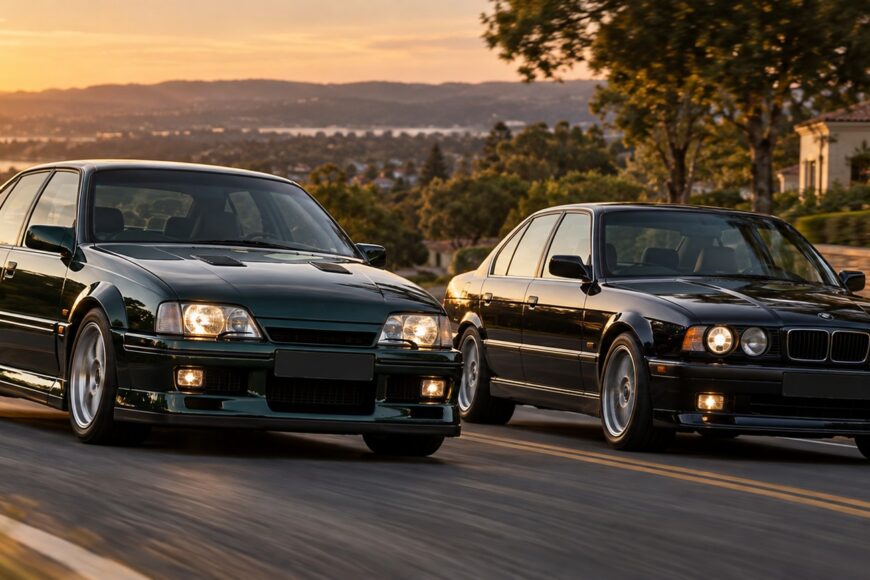
The turbocharged Lotus Carlton is faster in a straight line, while the BMW M5 E34 has the stronger reputation for balance, response, and everyday usability. On paper, the British saloon wins the headline numbers; behind the wheel, the BMW often feels more natural on mixed roads.
The real decision is less simple than a horsepower comparison. Condition, driving environment, access to specialist service, and your tolerance for rare parts matter more than the badge on the trunk. A perfect M5 is a better buy than a neglected Carlton, and a documented Carlton is worth far more than a cosmetically polished car with tired turbos.
- Two Super Sedans, Two Different Ideas of Speed
- Lotus Carlton vs BMW M5 E34: The Numbers That Matter
- Turbocharged Force Versus S38 Character
- High-Speed Stability, Corners and Real Roads
- Ownership Reality: Engines, Heat and Hard-to-Find Parts
- The Pre-Purchase Inspection: Where Buyers Lose Money
- Myths, Market Values and the Cost of Rarity
- Which Super Sedan Should You Buy?
- Frequently asked questions
- Was the Lotus Carlton the fastest production car?
- Which E34 engine is best for a buyer: the 3.6 or the 3.8?
- Which car can defeat the BMW M5 E34 in a straight line?
- Why is the Lotus Carlton also called the Lotus Omega?
Two Super Sedans, Two Different Ideas of Speed
The Lotus Carlton, also sold as the Lotus Omega, was a rare British answer to the question of how far a large executive sedan could be pushed. Lotus transformed the Opel Omega/Vauxhall Carlton formula with a twin-turbocharged engine, revised suspension, stronger brakes, and a six-speed manual gearbox. The result was discreet in appearance but extraordinary in period performance.
Production is commonly cited at approximately 950–1,100 cars, with different enthusiast and club sources quoting different totals. That scarcity gives every surviving example a collector dimension, but it also makes ownership less forgiving. A missing trim piece or damaged lamp can become a sourcing problem rather than a routine parts order.
The BMW M5 E34 followed a different philosophy. It remained a recognizable 5 Series, yet its naturally aspirated S38 inline-six, rear-wheel drive, manual transmission, and carefully developed chassis made it a benchmark for practical sport-sedan performance. BMW built approximately 12,000–13,000 M5 E34s, so the knowledge base and supply of used components are broader.
The Carlton was long regarded as the world’s fastest production four-door sedan, a claim that shaped its legend. The M5 earned its reputation through a wider range of abilities: a communicative chassis, usable cabin, stronger low-speed manners, and a character that works on a winding road as well as a fast highway. They are compared because both made serious performance compatible with four doors, yet they prioritize different kinds of speed.
Lotus Carlton vs BMW M5 E34: The Numbers That Matter
The essential comparison is straightforward, although exact performance depends on specification, test method, condition, and the way each period publication measured the car.
| Specification | Lotus Carlton/Omega | BMW M5 E34 |
|---|---|---|
| Engine | 3.6-litre twin-turbocharged inline-six | Naturally aspirated 3.6- or 3.8-litre inline-six |
| Output | Approximately 377 hp | Approximately 315–340 hp |
| Torque | Approximately 568 Nm | Approximately 360–400 Nm |
| Transmission | Six-speed ZF manual gearbox | Five- or six-speed manual gearbox |
| Drive layout | Rear-wheel drive | Rear-wheel drive |
| 0–100 km/h | Approximately 5.2–5.4 seconds | Approximately 6.1–6.3 seconds for the 3.6; 5.9–6.0 seconds for the 3.8 |
| Top speed | Approximately 281–283 km/h without a limiter | Approximately 250–255 km/h; many cars are electronically limited near 250 km/h |
| Production volume | Approximately 950–1,100 cars | Approximately 12,000–13,000 cars |
These figures establish a clear straight-line advantage for the Carlton. Factory figures and magazine tests can vary, particularly for acceleration and top-speed claims. One magazine measurement sometimes cites 5.7 seconds for the M5 3.8, but most reported tests are closer to 5.9–6.0 seconds, so the isolated number should not be treated as universal proof.
Turbocharged Force Versus S38 Character
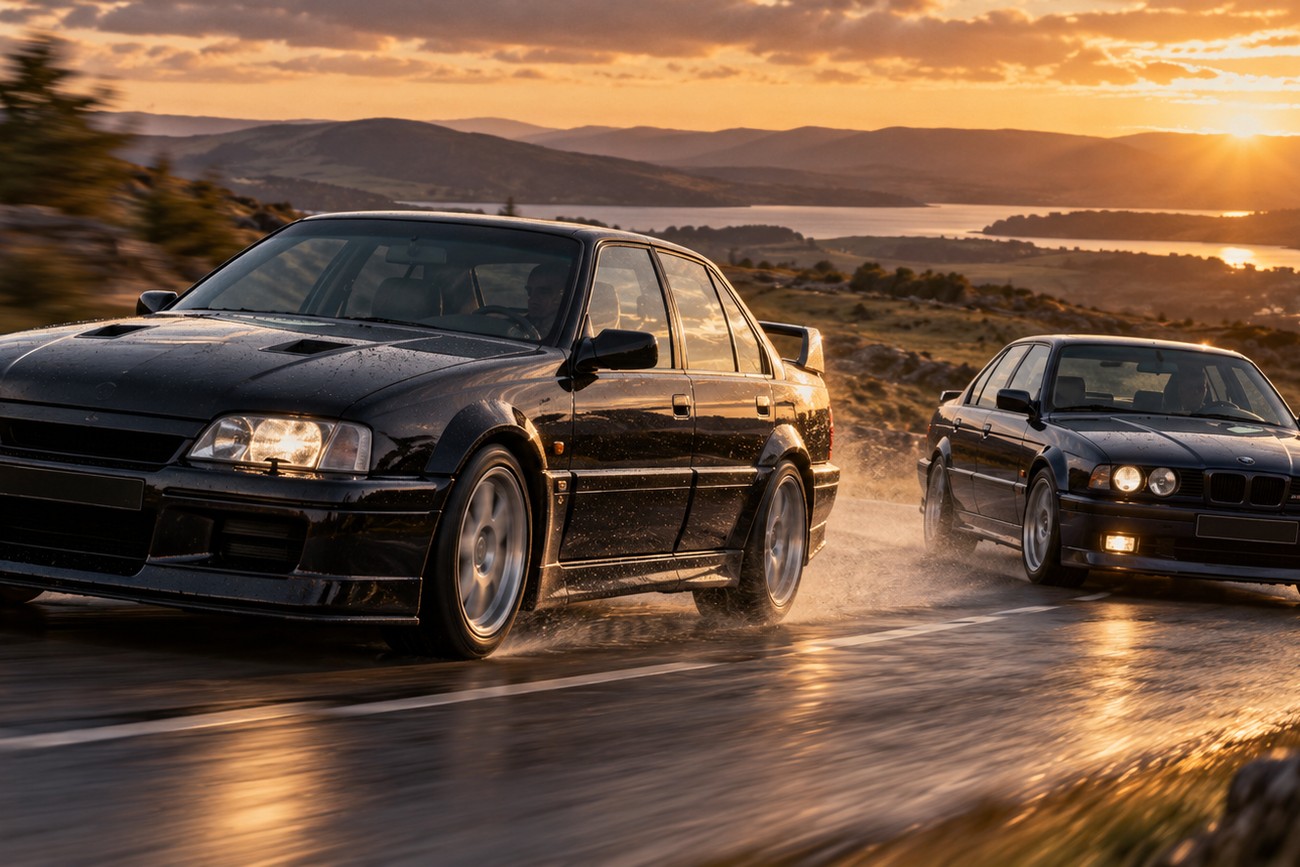
The Carlton’s defining feature is its torque delivery. Approximately 568 Nm gives the car a large reserve in the middle of the rev range, allowing it to build speed with little drama once the turbochargers are working. On an open road, that effortless surge is the quality that separates it from the M5 most clearly.
The M5 E34 uses naturally aspirated 3.6- and 3.8-litre inline-six engines. Its approximately 360–400 Nm arrives through revs rather than boost, so the driver has to work the five- or six-speed manual gearbox more actively. Throttle response is progressive, the engine encourages high-rpm use, and the car communicates its approach to the limit more clearly.
The 3.8 is generally the quicker M5 version, with reported 0–100 km/h times around 5.9–6.0 seconds. A single period measurement of 5.7 seconds is sometimes repeated in enthusiast discussions, but it is not the consensus figure. More important than the last fraction of a second is the engine’s condition: an accurately maintained 3.6 can be more enjoyable and trustworthy than a tired 3.8.
The Carlton’s advantage grows as speeds rise, where its torque and unrestricted top speed have room to work. The BMW feels less overwhelming and more deliberate, which is useful on ordinary roads. You can explore its response without immediately reaching speeds that demand a large empty road and considerable discipline.
High-Speed Stability, Corners and Real Roads
Claims that the Carlton is inherently unstable above 280 km/h need qualification. Owner reports and period tests describe a healthy, correctly set-up car as predictable at high speed, although it demands experience and attention. A worn suspension, poor alignment, unsuitable tires, or incorrect tire pressures can transform that behavior.
Correct tire pressure and fresh, suitable tires are especially important to Carlton stability. On a car with this much torque and a long, fast-geared sixth gear, small compromises in tire condition are felt quickly. A buyer who treats the tires as an afterthought is removing one of the main safeguards against nervous behavior.
The Carlton has a grand-tourer character. It settles into fast cruising with confidence and covers ground quickly, but in tight corners its mass makes it feel heavier and more inert than the M5. The car rewards a clean entry, an accurate line, and patience with the throttle rather than repeated steering corrections.
The M5 E34 is generally more versatile on mixed roads. Its steering and chassis give clearer feedback at moderate speeds, and its naturally aspirated engine makes it easier to meter power between bends. It is still a large, rear-wheel-drive sedan, yet its responses feel closer to a sports car than the Carlton’s more forceful grand-touring approach.
This is why the Carlton does not win every real-world contest despite winning the numbers. On a fast road with long bends, it can be sensational. On a dense sequence of tighter corners, the BMW’s balance and communication often matter more than the extra torque. The result depends heavily on road layout, driver confidence, and the mechanical condition of both cars.
Ownership Reality: Engines, Heat and Hard-to-Find Parts
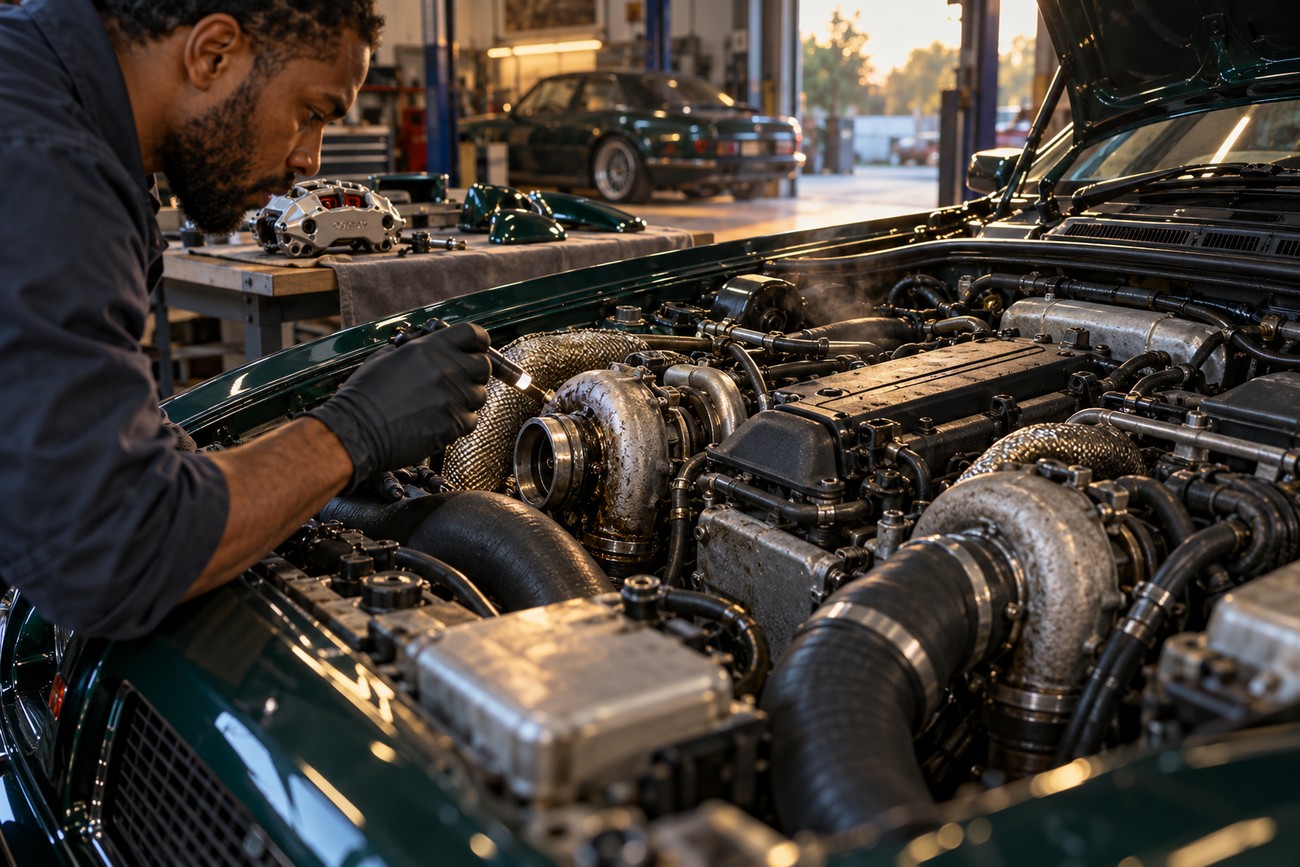
Carlton ownership begins with parts availability. Replacement turbos, brakes, body components, and some lighting parts can be rare, expensive, or difficult to source. Original components may require a long search, used parts may need refurbishment, and some solutions may involve specialist fabrication rather than a simple catalog order.
Tired turbochargers can show oil leaks, shaft play, and lost boost. Heat in the engine bay and marginal cooling during hard use can also affect turbo and gasket longevity, particularly in hot climates or on cars that have been modified without a coherent cooling strategy. A healthy cooling system and sensible heat management are part of the car’s mechanical identity, not optional upgrades.
The original brakes deserve similar respect. A car that feels fine during a short test drive may still suffer from aged or overheated discs and calipers under repeated hard use. Replacement planning should therefore include braking hardware, fluid condition, cooling, and the availability of suitable parts before the purchase is finalized.
The M5’s risks are easier to recognize but no less expensive. S38 and S38B38 engine work is technically demanding and best handled by a specialist familiar with valve adjustment, timing-related work, lubrication, and the engine’s service requirements. An ordinary repair shop may be competent with a regular E34 while still lacking the knowledge needed for an M5.
BMW buyers must also inspect the front suspension and steering, which can develop knocks, play, and a vague front end on poor roads. Rust commonly affects the sills, wheel arches, and lower door edges. Both cars can suffer from aged wiring, sensors, hoses, seals, and other electrical or rubber components, so neither should be maintained like an ordinary executive sedan.
The Pre-Purchase Inspection: Where Buyers Lose Money
Photographs are inadequate for either car and especially dangerous for a Carlton. A clean exterior can hide tuning, overworked turbos, cylinder-head damage, neglected cooling, or a history of hard use. The inspection should begin with documentation: ownership history, invoices, engine work, turbo replacement, brake work, and evidence of modifications should all agree with the car in front of you.
A cold start matters because it exposes noises, smoke, unstable idle, and reluctant oil pressure behavior that may disappear once the engine is warm. Compression or leak-down evidence is valuable, while a specialist should examine the turbochargers for oil leakage, shaft play, boost problems, and signs that the engine has been overworked. The cooling system also needs testing under load rather than a brief look at the temperature gauge.
Inspect the Carlton’s brakes, suspension, alignment, and tires as a complete system. The original brakes may be unsuitable for repeated hard driving if they are aged or overheated, and incorrect tire pressures can disguise a setup problem during a short drive. Look for evidence of chip tuning, non-standard turbo work, track use, or repairs that prioritize power over durability.
On the M5, verify valve adjustment, timing-related maintenance, oil service, and S38-specific work. Preventive replacement of sensors, thermostats, seals, fuel hoses, and other aging components is common after purchase because a collection of minor faults can create difficult-to-diagnose running problems. Inspect the front end on a poor surface if possible, and examine every likely rust area from underneath.
Plan for a recommissioning bill before negotiating the price. Suspension, brakes, hoses, tires, electrical faults, cooling work, and rubber components can consume more money than an optimistic buyer expects. Enthusiasts commonly report that a large share of the market includes track use, chip tuning, or questionable servicing, so the best-looking advertisement may carry the least reliable history.
Myths, Market Values and the Cost of Rarity
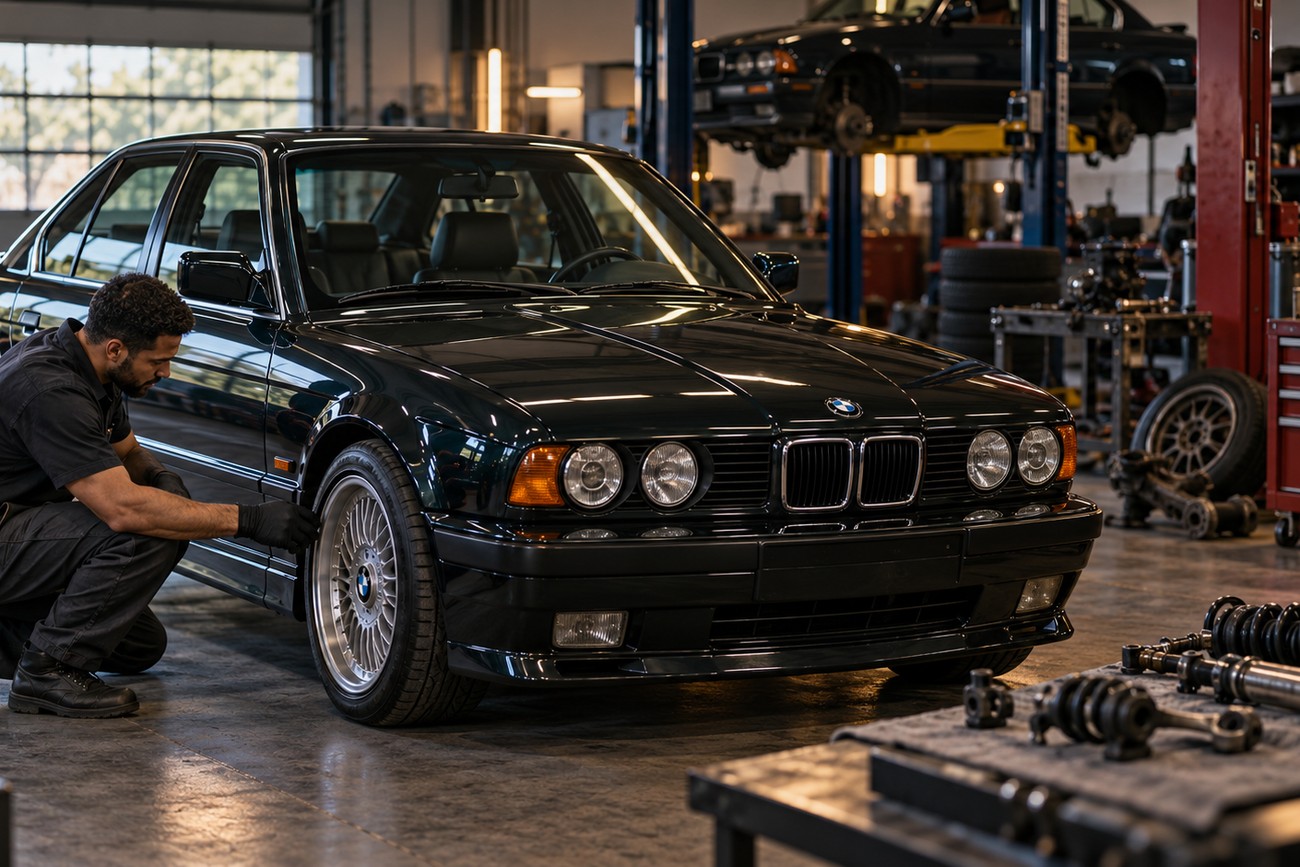
The Carlton is not inherently uncontrollable. A well-maintained example with correct tires, sound suspension, proper alignment, and an experienced driver can be predictable at high speed. The dangerous car is usually the neglected or incorrectly modified one, not the model by definition.
The M5 E34 is also not simply a reliable old E34 with a larger engine. Its S38 powerplant, specialized chassis, and age-related issues demand substantially more care than a standard 5 Series. Repair bills after an accident or major failure can be far higher than normal BMW 5 Series expectations, even when the damaged component looks familiar.
Rarity does not guarantee profit. A Carlton may have greater collector appeal, but concours-level upkeep, rare parts, specialist labor, and recommissioning can consume any increase in market value. Provenance, originality, mechanical condition, and usable documentation matter more than a dramatic sales description.
Owner history provides useful clues. UK cars may have been carefully used, while some continental examples show more tuning or track exposure; neither pattern is a substitute for inspection. The correct purchase is the car whose history can be checked and whose mechanical condition can be demonstrated, regardless of which country supplied it.
Which Super Sedan Should You Buy?
Choose the Lotus Carlton if you want rarity, effortless high-speed performance, and the experience of owning one of the defining super-sedans of its era. Its approximately 5.2–5.4-second 0–100 km/h performance and approximately 281–283 km/h top speed give it the clear headline advantage. You also need specialist support, patience with parts, and a realistic plan for heat management and turbo maintenance.
Choose the BMW M5 E34 if you value a more universal driving character and broader everyday usability. It is more communicative on mixed roads, easier to understand at moderate speeds, and supported by a larger established repair and enthusiast knowledge base. That does not make it cheap: S38 work, front-end wear, rust, and preventive maintenance remain serious financial risks.
Neither car is a sensible purchase for someone who only wants a cheap old executive sedan. Both require an inspection by people who understand the model, a reserve for age-related repairs, and the willingness to reject cars with incomplete records. A lower purchase price can simply be the first installment on a much larger restoration.
The final winner is the healthiest documented example. The Carlton wins the straight-line contest and the rarity contest; the M5 usually wins versatility and service accessibility. Between two surviving cars, condition and maintenance history outweigh nominal model superiority.
Frequently asked questions
Was the Lotus Carlton the fastest production car?
The Lotus Carlton was long celebrated as the world’s fastest production four-door sedan. That wording matters: it does not mean the Carlton was the uncontested fastest production vehicle of every type. Its significance was the combination of a conventional four-door body, usable cabin, and approximately 281–283 km/h top speed.
Which E34 engine is best for a buyer: the 3.6 or the 3.8?
The best choice depends more on condition, maintenance history, intended use, and access to S38 specialist service than on displacement alone. The 3.8 is generally quicker, while a properly maintained 3.6 can offer an excellent balance of response and durability. A documented engine with verified valve, timing, lubrication, and cooling work is the safer purchase.
Which car can defeat the BMW M5 E34 in a straight line?
Within this comparison, the Lotus Carlton is the relevant answer. Its twin-turbocharged 3.6-litre inline-six produces approximately 568 Nm, giving it a clear advantage in acceleration from higher speeds, while its unrestricted top speed is also higher. That does not make it superior on every twisty road, where the M5’s response and balance can reduce the practical gap.
Why is the Lotus Carlton also called the Lotus Omega?
The two names reflect different market naming conventions for the same Lotus-developed super-sedan. Carlton was the Vauxhall name used in the United Kingdom, while Omega was the Opel name used in many continental European markets. Searching both names helps locate service records, specialist parts, period literature, and sale listings that may otherwise appear unrelated.







