
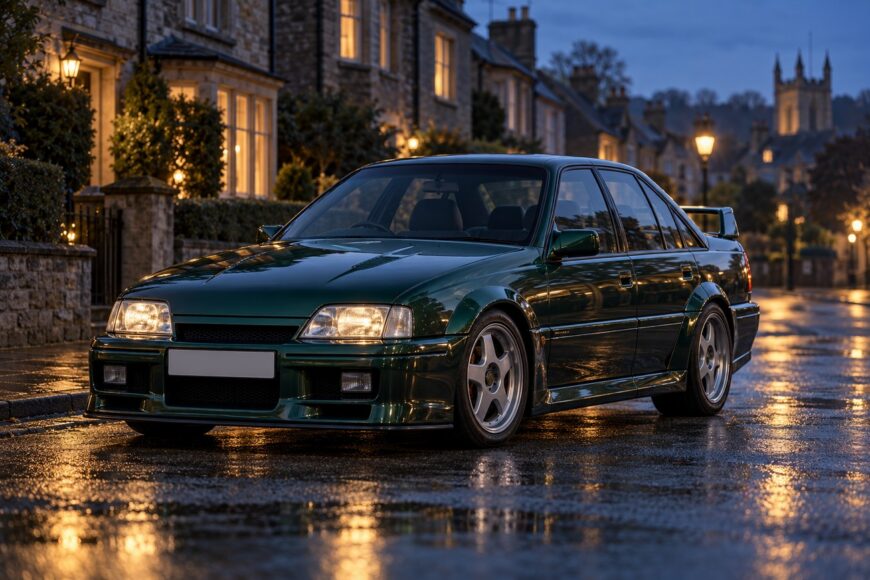
A four-door Vauxhall with supercar speed became the subject of calls for a ban, yet the Lotus Carlton was never formally banned as a model in the UK. Its familiar saloon shape helped make the argument more heated: performance usually associated with an exotic car had arrived in something that looked capable of taking the family shopping.
The “177 mph sedan” headline deserves a closer look. Vauxhall/Stellantis gives the car an official top speed of 176 mph; 177 mph is widespread in later accounts. That small difference matters because the Lotus Carlton’s story is unusually vulnerable to repetition. For an enthusiast, separating factory figures from retelling makes its achievement clearer. For a prospective owner, the same habit is essential when assessing a car’s identity, modifications, and maintenance history.
- Was the Lotus Carlton actually banned?
- What Lotus changed beneath the Carlton body
- 176 or 177 mph? Reading the performance claims
- The sleeper appeal—and the limits of an old super-saloon
- Buying one means buying its history, not just its legend
- Why the controversy still shapes its reputation
- Frequently asked questions
- How much is a Lotus Carlton worth today?
- How can I check whether a Lotus Carlton is genuine?
- What fuel economy should an owner expect?
- What should I tell an insurer before buying one?
Was the Lotus Carlton actually banned?
No confirmed formal UK ban on the Lotus Carlton as a model followed the controversy. The car did attract press criticism and parliamentary calls for a ban, focused on the speed available in a production saloon. Those calls are a real part of its history; treating them as an enacted prohibition changes the story. The distinction matters whenever a sale listing presents “banned” as proof of the car’s rarity or exceptional status.
Vauxhall/Stellantis describes the Lotus Carlton as one of the fastest production saloons of its time. Its performance stood out all the more because it wore the broad outline of an ordinary four-door Carlton. A low, purpose-built sports car announces its intentions; the Lotus retained enough of a familiar family-car shape to make its speed seem more unsettling to critics.
The debate was therefore about more than a number on a speedometer. It brought together concerns about public roads, driver restraint, and the availability of a car with unusually high performance. None of that establishes that owning or selling the model was prohibited. Contemporary controversy can explain a reputation without serving as evidence of a legal ban.
For buyers, the useful historical claim is the narrower one. This was a production car whose capability provoked a public and political reaction, while its continued existence as a collectible car speaks for itself. The dramatic shorthand is memorable, but the documented distinction is more interesting than the myth.
What Lotus changed beneath the Carlton body
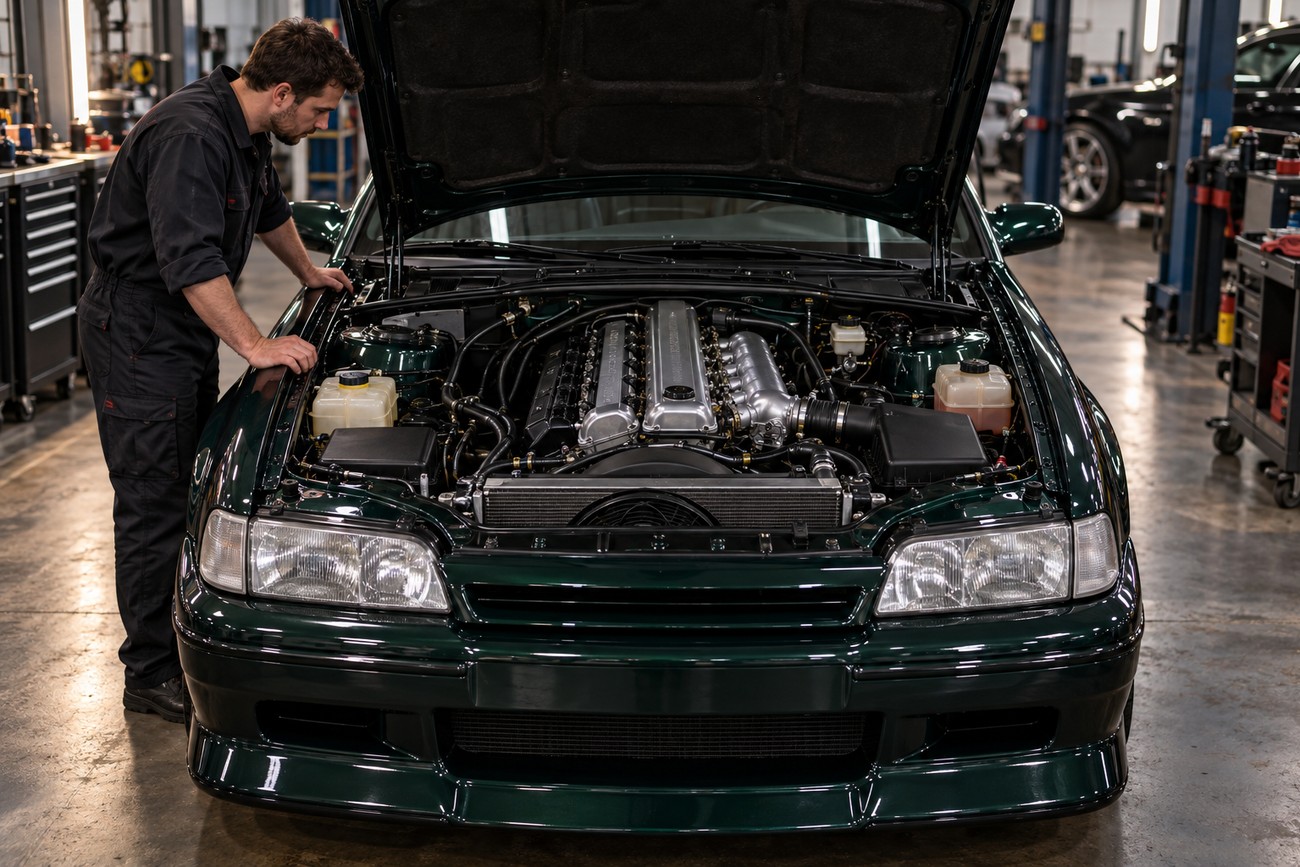
The Lotus Carlton began with the Vauxhall Carlton/Opel Omega, then underwent substantial reworking by Lotus. Calling it a standard Carlton with turbos misses the scale of the project and can mislead anyone comparing parts or repair requirements. Its ordinary-car origins explain the visual surprise, while its engineering explains why it cannot be maintained as an ordinary example of the base saloon.
At its center was a 3,615 cm³ straight-six with two Garrett T25 turbochargers and twin water-cooled intercoolers. Those components formed a matched high-output installation, with cooling as important to reliable operation as the boost hardware itself. Official output was 377 bhp (281 kW) and 419 lb-ft (568 N·m), figures belonging to the Lotus-developed car rather than the standard Carlton.
The work extended beyond the engine. Lotus addressed the drivetrain and the supporting systems needed to put that output to use in a large four-door saloon. That broader scope matters when assessing a modified car: fitting visible Lotus-style pieces, or even adding forced induction to a Carlton, does not reproduce the factory project or its provenance.
It also changes the ownership calculation. A component that appears familiar because the body is familiar may be specific to the Lotus version, while a repair that seems routine on a normal Carlton can require specialist knowledge here. The engineering that made the car remarkable is the same engineering a buyer must account for when checking originality and planning maintenance.
176 or 177 mph? Reading the performance claims
The official Vauxhall/Stellantis top-speed figure is 176 mph. The 177 mph figure used in many headlines and secondary accounts belongs to later reporting rather than the cited official specification. It is reasonable to mention both, provided their sources remain clear. Neither figure should be presented as the result of an independently verified test unless a particular test is identified.
Acceleration claims need the same care. Stellantis press material gives 0–62 mph in 5.4 seconds, while enthusiast sources also report 5.1–5.2 seconds. Those quicker figures may be familiar to readers, but they should not silently replace the press figure. Differences in published numbers are a reason to check what was measured and who made the claim, not evidence that the model faced a ban.
Behind either set of performance figures sits the official output of 377 bhp (281 kW) and 419 lb-ft (568 N·m). This is why the car’s standing among period production saloons does not depend on squeezing an extra mile per hour into its headline. The achievement is a combination of exceptional speed, strong output, and a four-door body recognizable as a Carlton.
Source discipline has a practical use beyond settling trivia. If a description inflates a factory speed claim without qualification, approach its claims about originality, service work, and upgrades with equal care. A well-documented individual car is worth more attention than a listing that relies on the largest number available.
The sleeper appeal—and the limits of an old super-saloon
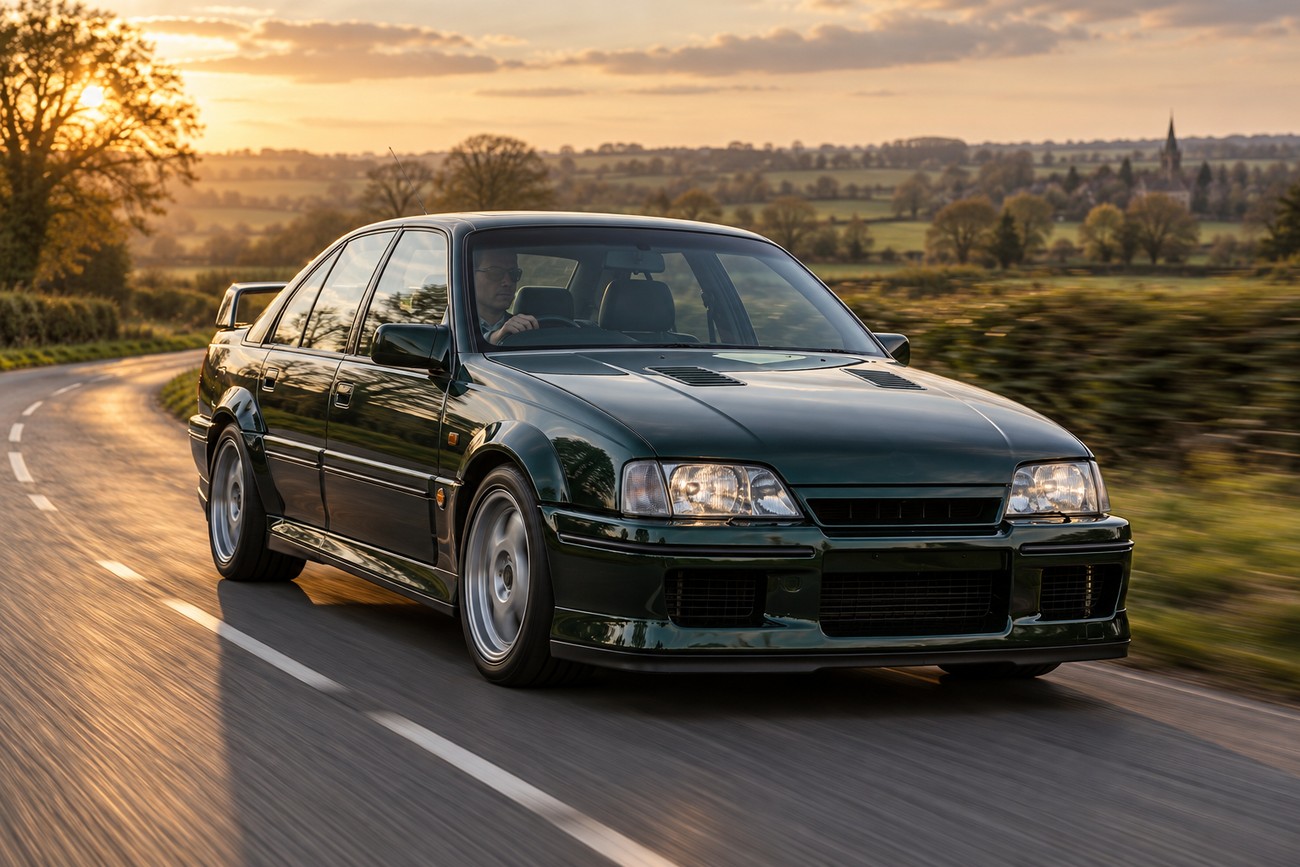
The Lotus Carlton’s appeal lies in the gap between what its body suggests and what it can do. It offers doors and a usable saloon layout while delivering performance exceptional for a production four-door of its time. That understated character helped fuel the original controversy and still distinguishes it from cars designed to look fast at a glance.
The experience is unlikely to feel like that of a modern high-performance saloon. Owners report noticeable turbo lag and a surge of power that is less linear than many current drivers expect. Those accounts describe a character to learn, rather than a flaw that can be inferred from the official output alone. Anyone considering a purchase should allow for the way the engine delivers its performance, not merely its peak figures.
Size also becomes more apparent away from an open road. Owners describe the car as awkward on narrow streets and in confined parking spaces, where a large, valuable saloon demands more room and care than its familiar badge might suggest. Its chassis, electronics, and safety equipment reflect its era rather than modern standards, so outright speed should never be mistaken for contemporary all-round capability.
That distinction helps set realistic expectations for use. The Lotus Carlton can be compelling precisely because it preserves an older, more mechanical sort of high-performance saloon. The same qualities make condition, tires, brakes, and the driver’s familiarity with the car especially important before its speed becomes relevant.
Buying one means buying its history, not just its legend
Production was limited, although reported totals vary enough that an exact figure needs verification rather than repetition. Rarity can support collectability, but it also narrows the supply of Lotus-specific parts and the pool of people equipped to repair the car. A buyer should establish where suitable service and replacement components could be found before treating a clean test drive as sufficient reassurance.
Start with records that connect the car in front of you to its claimed identity and maintenance history. Look for consistent paperwork, evidence of sustained servicing, and a clear account of any modifications. A Carlton wearing Lotus-style trim is not, by itself, evidence of an original Lotus Carlton. Cosmetic condition is only one part of the assessment.
Brakes, cooling, and twin-turbo hardware deserve close attention because deferred work can be difficult to resolve when model-specific parts or expertise are scarce. Ask what has been renewed, who did the work, and whether invoices support the account. Modifications need the same scrutiny: an attractive performance claim is less useful than evidence that the supporting systems were maintained accordingly.
Before committing, consider insurance and repair access alongside the inspection findings. The car’s reputation, rarity, and any changes from standard specification may affect the cover available, while an unsuitable repair route can prolong even a straightforward claim. Buying on the legend alone risks turning a rare saloon into a long-term parts search.
Why the controversy still shapes its reputation
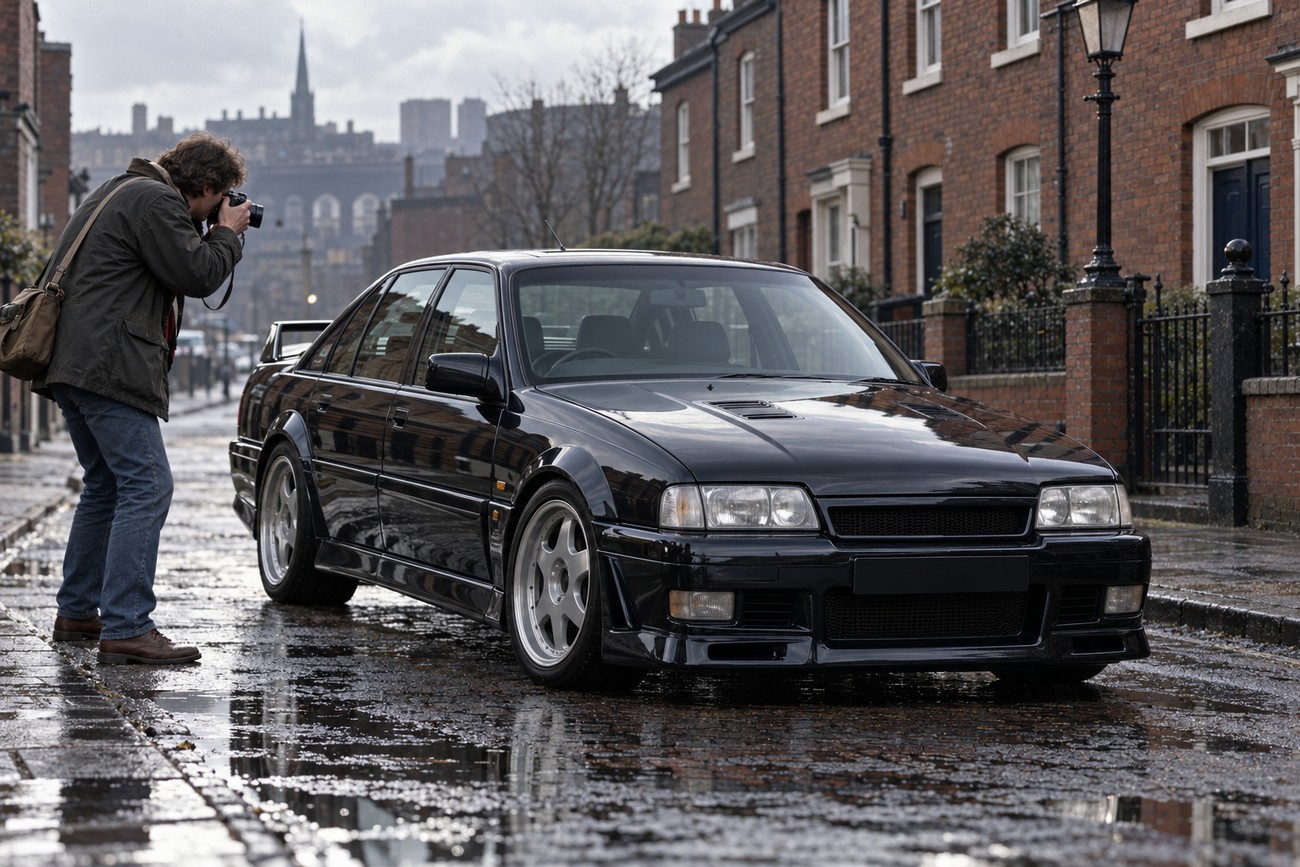
The Lotus Carlton’s lasting story comes from a collision of familiar form and extraordinary performance. Lotus substantially reworked a Carlton/Opel Omega into a car that Vauxhall/Stellantis places among the fastest production saloons of its period. Its four-door shape made that achievement easy to recognize and, for some observers, difficult to accept. Press and parliamentary calls for a ban followed; a confirmed formal ban of the model did not.
Two repeated shortcuts keep the story louder than the evidence. “Banned” turns a debate into an outcome, while “177 mph” presents a common secondary figure as though it were the official one. The Vauxhall/Stellantis top-speed figure is 176 mph. Keeping those claims separate takes nothing away from the car’s performance or from the strength of the reaction it caused.
Rarity adds another layer. Limited production helps explain collector interest, yet the same scarcity can make original parts, informed repairs, and a convincing history harder to secure. The romance of a discreet super-saloon is real; so are the demands of preserving a specialized, aging one.
The most convincing Lotus Carlton is therefore neither the fastest-sounding example nor the one with the most dramatic sales description. It is the car whose identity, condition, and maintenance can be examined without leaning on folklore. Its engineering and the debate it provoked already give it a substantial place in motoring history.
Frequently asked questions
Individual cars can differ markedly in originality, documentation, and future repair needs. These points help turn the model’s broad reputation into questions you can put to a seller, specialist, or insurer. They do not replace an inspection of the particular car.
How much is a Lotus Carlton worth today?
There is no useful single value without considering the individual car and current comparable sales. Compare documented sold cars with asking prices, then account for originality, condition, service records, and the quality of any repairs or modifications. An ambitious advert is evidence of what a seller wants, not necessarily what buyers have paid. A cheaper example may also be the more expensive ownership prospect if essential work lacks documentation.
How can I check whether a Lotus Carlton is genuine?
Reconcile the car’s identity records with its registration documents, ownership history, and supporting paperwork, checking that the details agree with the vehicle you inspect. Review the evidence for Lotus-specific equipment and any recorded changes rather than relying on badges, paint, or body trim. Have a specialist familiar with the model assess the car and its records before paying a deposit, particularly if the seller cannot resolve inconsistencies.
What fuel economy should an owner expect?
Published fuel-consumption figures span 17.5–35 mpg; that range is not a promise of what an individual car will return. Traffic, journey length, vehicle condition, and how often the engine runs under boost can all change consumption substantially. Ask an owner about use that resembles your own, but budget with room for variation. A single quoted figure hides how differently a twin-turbo saloon can be driven.
What should I tell an insurer before buying one?
Describe the car accurately, including documented modifications, its expected use, and any proposed limited mileage. Ask whether an agreed value is available and how the insurer would handle repairs requiring suitable specialists or hard-to-source parts. Clarify those terms before purchase rather than assuming cover designed around an ordinary Carlton will fit. Keep the agreed details and the car’s supporting documents together so its specification is clear if you need to make a claim.







