

Living full-time in a Toyota Prius is possible, but it involves trade-offs between excellent fuel economy and severe limits in space, privacy, ventilation, storage, and legal parking. The car can provide a dry place to sleep and move efficiently between locations. It does not provide the facilities, standing room, insulation, or storage system of a recreational vehicle.
Folding the rear seats does not automatically create a comfortable home. The sleeping surface may be uneven, too short, or too narrow, and the vehicle may become difficult to use once bedding, clothing, water, food, electronics, and work equipment occupy the same small cabin. Your exact Prius generation, body size, climate, and access to showers, toilets, laundry, and lawful overnight parking matter more than the badge on the hatch.
Occasional car camping and permanent residence also create different demands. A weekend setup can tolerate repeated unpacking, condensation, and limited hygiene; a full-time setup must make those problems manageable every day while keeping the car mechanically reliable and legally parked.
- Is Full-Time Living in a Toyota Prius Realistic?
- Which Prius Gives You Enough Usable Space?
- Build a Sleeping and Storage System That You Can Live With
- Ventilation, Climate Control, and Cooking Safety
- The Daily Infrastructure Matters More Than the Car
- Parking, Privacy, and the Legal Reality
- Prius MPG Under Full-Time Living Conditions
- Used-Prius Checks Before You Move In
- The Mistakes and Myths That Make Prius Living Miserable
- Frequently Asked Questions
- What is the triangle of death on a Toyota Prius?
- How can you tell whether a Prius sleeping setup is long enough for you?
- What should you do after condensation makes the inside of a Prius wet?
- How do full-time Prius dwellers handle bathroom and shower needs?
Is Full-Time Living in a Toyota Prius Realistic?
Full-time Prius living is most realistic for one person with modest possessions, flexible routines, and reliable access to facilities outside the car. Someone who can sleep in a compact position, limit stored equipment, and move between lawful overnight locations has a better chance of making the arrangement workable. The car’s efficiency helps control travel costs, but it does not remove the daily labor of living in a very small space.
A Prius is a five-passenger car, not a purpose-built living module. Its official seating capacity says little about whether one person can sleep comfortably, store essential belongings, cook safely, or remain inside for long periods. Limited headroom also prevents normal standing or changing clothes with much privacy.
The usable living area disappears quickly. Bedding takes most of the floor, while clothes, water, food, batteries, and personal equipment compete for the remaining corners. Each night may require moving items from the sleeping area, and each morning reverses the process before you can drive.
People accustomed to occasional car camping often underestimate this conversion work. A few uncomfortable nights can be acceptable during a trip; repeated bed setup, condensation, noise, and hygiene problems become much more significant during permanent residence. Body size, climate, gear volume, access to showers and laundry, and a dependable legal parking strategy should be evaluated before treating the Prius as a full-time home.
Which Prius Gives You Enough Usable Space?
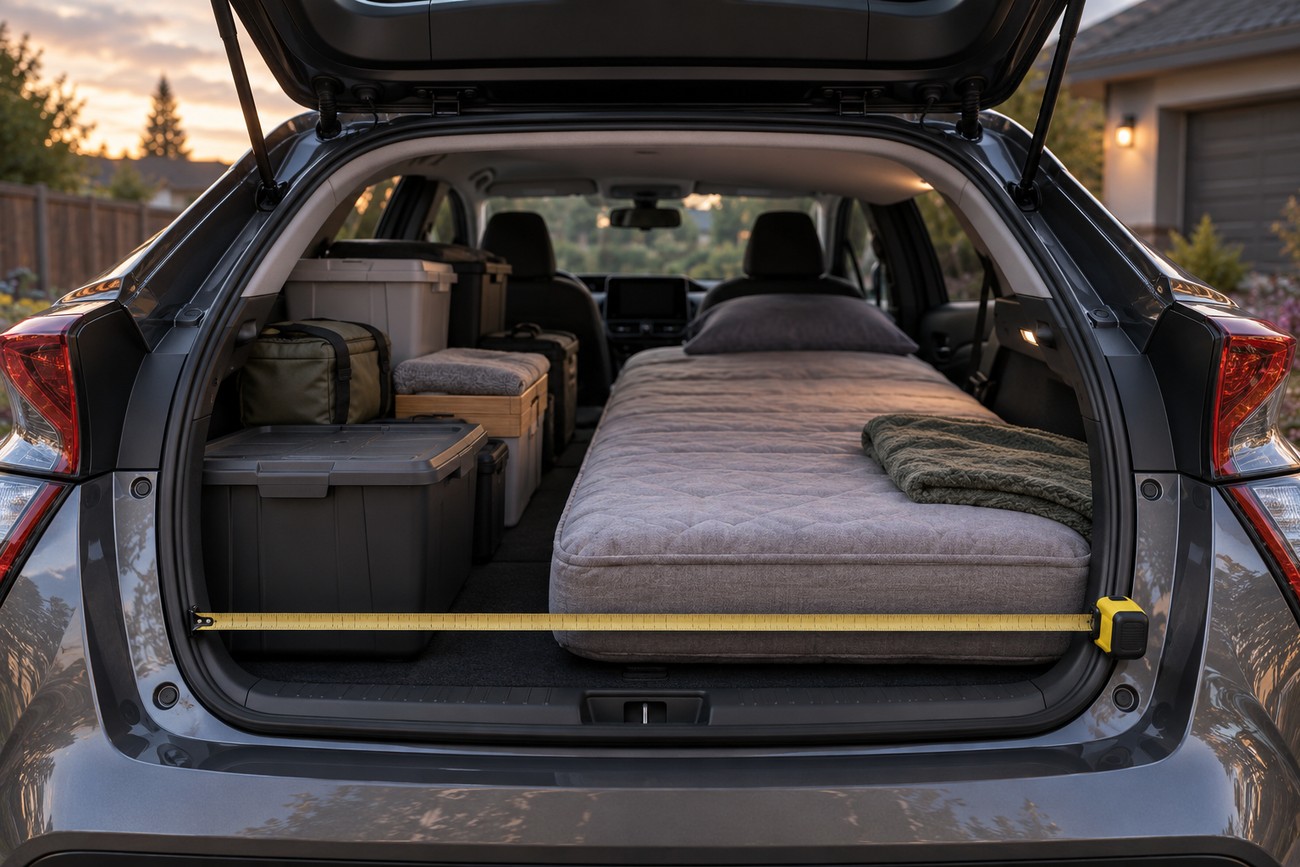
Model year and trim must be identified before you plan a sleeping system. The 2026 Prius is approximately 181.1 inches long, 70.2 inches wide, and 56.3 inches high, with a stated cargo volume of 23.8 cubic feet. Those figures describe a specific vehicle and should not be applied to every Prius.
Older Prius generations are cited at approximately 50.7–65.5 cubic feet with the rear seats folded, depending on generation and configuration. The difference is substantial enough to change whether a person can lie flat, where supplies can be stored, and how much headroom remains above a mattress.
Official cargo volume also does not directly represent usable living space. A sloping roof, wheel arches, seat mechanisms, and changes in floor height reduce the practical rectangular area. A measurement that looks adequate on paper may become uncomfortable once the mattress, trim, hatch, and front seats are included.
Measure the actual vehicle before buying or building anything. Fold the seats, position the front seats as you would for driving, open the hatch, and measure length, width, height, floor transitions, and diagonal space. Repeat the test with the mattress installed, then check whether you can open the hatch from inside and still reach essential items without dismantling the bed.
Build a Sleeping and Storage System That You Can Live With
Folded rear seats can create a useful sleeping platform, but the floor may be uneven. A removable leveling platform can smooth the transitions and protect the mattress from hard edges. It should be light enough to remove when the car is needed for passengers or larger loads, and it should not create a permanent obstruction inside the cabin.
Ventilation matters in the platform itself. Do not cover factory battery ventilation, cooling paths, or other air channels with solid panels, luggage, or insulation. High-voltage components should remain untouched, and the platform should leave access to the hatch, seat belts, and emergency exits as far as the vehicle design allows.
Test-fit the mattress, platform, front-seat position, diagonal sleeping line, hatch access, and battery-airflow clearance before committing to a build. A setup that works empty may fail once bedding and daily luggage are in place.
Mattress thickness involves a direct compromise. A soft mattress improves pressure relief but reduces headroom and usable volume; a thin mat preserves space but can create pressure points at the shoulders and hips. Measure the available height above the mattress, and test whether you can turn, sit partially upright, and reach the hatch without pressing against hard trim.
Separate daily-access items from long-term storage. Keep water, clothing for the next day, medication, hygiene supplies, and electronics where they can be reached without moving the entire load. Store rarely used equipment in fixed, secured locations, and keep loose objects away from the driver’s footwell, sight lines, airbags, and battery ventilation areas.
Ventilation, Climate Control, and Cooking Safety

Sleeping in a sealed cabin quickly exposes the limits of a small vehicle. Breathing adds moisture and carbon dioxide, while wet clothing and damp bedding increase humidity. Windows can fog, fabrics can develop odors, and repeated moisture can contribute to mold risk and corrosion.
Ventilation requires a compromise between airflow, privacy, weather, outside noise, and local rules. Closed windows reduce noise and visibility but make the cabin stuffier and wetter. Open windows can improve air exchange, yet they may expose you to rain, insects, cold, security concerns, or restrictions on window coverings and prolonged parking.
The hybrid system can support climate control while the vehicle is in READY mode. The gasoline engine may start periodically to maintain the battery and temperature, so heating or cooling consumes fuel and is not completely silent. READY mode also does not make an unsuitable or unlawful parking location acceptable.
Never use a gas stove, candle, charcoal device, or other open flame inside the cabin. Cooking in an enclosed vehicle creates carbon monoxide, fire, and burn hazards, even if a window is partly open. Food preparation also adds moisture and odors that are difficult to remove from upholstery and trim.
Use only properly rated electrical equipment, and avoid questionable inverters or improvised wiring. Any added low-voltage circuit should be appropriately protected with a fuse and kept separate from the vehicle’s high-voltage hybrid system. If you cannot verify the wiring and ventilation, do not use it while sleeping.
The Daily Infrastructure Matters More Than the Car
A workable routine depends on facilities as much as on cargo capacity. Showers, toilets, laundry, drinking water, food storage, electronics charging, waste disposal, and safe places to park determine whether the arrangement remains tolerable after the novelty disappears.
The Prius has no built-in residential sanitation or dedicated living infrastructure. A small hygiene kit can cover immediate needs, but it cannot replace dependable bathroom access. Water, waste containers, food, batteries, and luggage also add mass and occupy the same limited interior volume needed for sleep.
Plan each basic task before moving in. Identify dependable places for bathing and laundry, establish how drinking water will be replenished, and decide where food can be stored without creating leaks, odors, or unsafe temperatures. Keep a backup option for essential facilities because a closure, schedule change, or access problem can disrupt the entire day.
Charging electronics may require driving, a permitted public facility, or another reliable power source. Waste should be contained and disposed of lawfully and discreetly. A fuel-efficient car can reduce travel expenses, but it cannot compensate for an unstable hygiene or parking routine.
Parking, Privacy, and the Legal Reality
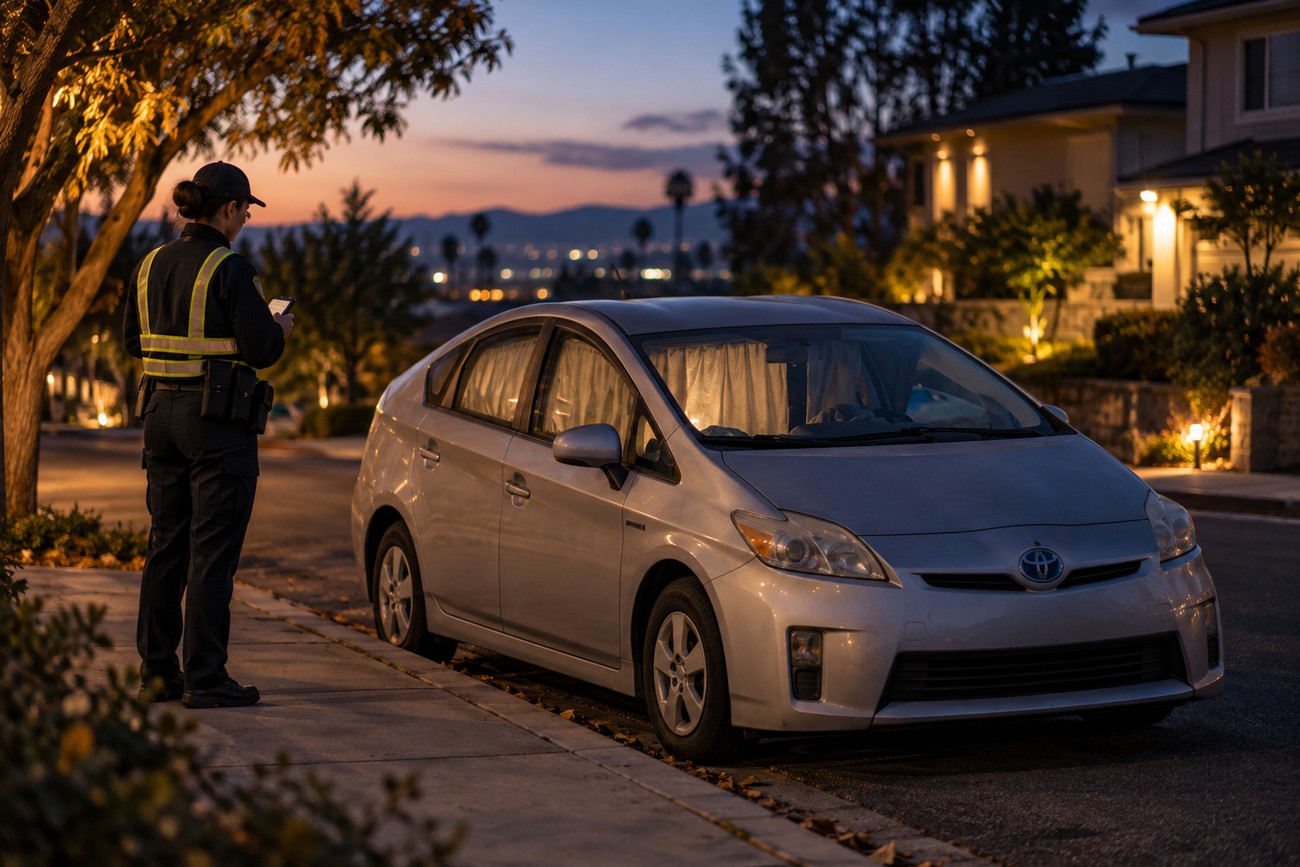
There is no universal legal permission to live in a Prius or remain parked overnight. Rules for sleeping in vehicles, overnight parking, idling, window coverings, and public-land use vary by city, state, country, and property. A location that permits daytime parking may prohibit overnight occupancy or extended stays.
Check the rules that apply to the specific street, lot, campground, public land, or private property. Engine-idling restrictions can matter if you rely on READY-mode climate control. Tint, curtains, open windows, and visible storage can create separate safety, property, or compliance concerns.
Discreet, non-obstructive behavior can reduce conflict, but it does not guarantee legality or safety. Keep the vehicle clean, avoid blocking access, follow posted limits, and leave when required. Do not assume that an inconspicuous sleeping setup is permitted simply because nobody has challenged it yet.
A comfortable bed cannot compensate for the absence of a lawful and safe place to stay. Build the parking plan before the interior conversion, and treat local rules as a condition of the lifestyle rather than a detail to solve later.
Prius MPG Under Full-Time Living Conditions
The current Prius is EPA-rated at up to 57 mpg combined with front-wheel drive and up to 54 mpg combined with AWD, depending on the specific version and test conditions.
Actual fuel economy varies with temperature, speed, terrain, tires, cargo, driving pattern, and climate use. Cold weather can increase consumption, while hills, high speeds, heavy loads, and frequent short trips can move real-world results well away from an EPA estimate.
Full-time living adds weight through bedding, water, food, tools, batteries, and personal equipment. It may also increase climate use while parked or during long periods of low-speed driving. AWD and heavier configurations can reduce fuel economy and may alter available space, so compare the exact version rather than relying on the model name alone.
Use the EPA figures as a reference for comparing versions, not as a promise of operating cost. Track fuel use over several tanks in the conditions you actually face, including weather, load, and climate-control habits. A small efficiency advantage can be outweighed by unnecessary driving to find facilities or legal parking.
Used-Prius Checks Before You Move In
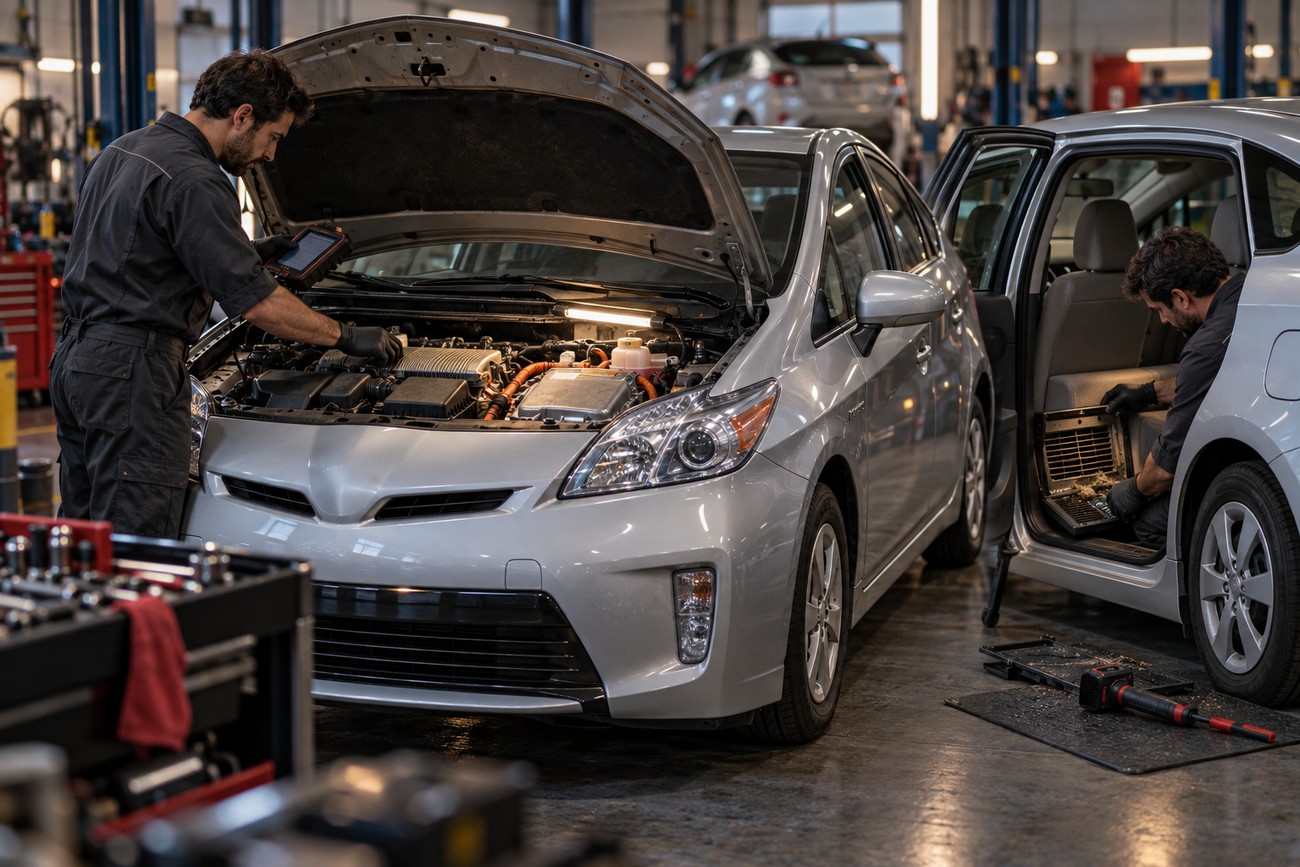
Buying a used Prius as a dwelling means buying a complex hybrid system and a daily shelter at the same time. Arrange a pre-purchase inspection before committing, especially if the vehicle will be used full-time. A short test drive cannot establish the condition of every system that supports reliable long-distance use.
The inspection should include traction-battery condition, inverter condition, battery cooling, service history, warning lights, and evidence of neglected maintenance. The battery cooling intake and related air paths should be clear and functioning. Do not accept a vehicle with unexplained hybrid warnings simply because it still drives.
Also check tires, seals, hatch operation, water intrusion, window operation, and the condition of the folded-seat mechanism. A leaking hatch or damaged seal can make bedding and stored clothing damp. Cargo must be secured without obstructing battery ventilation or reducing driver visibility.
Overloading affects handling, braking, tire requirements, and fuel economy. Keep heavy water containers and batteries low and secured, and verify the vehicle’s load limits in its documentation. Mechanical problems, unsafe tires, or a failing hybrid component can erase fuel savings quickly and make the car unsuitable as a full-time base.
The Mistakes and Myths That Make Prius Living Miserable
The first mistake is treating every Prius as though it has the same interior. Older Prius generations are cited at approximately 50.7–65.5 cubic feet with the rear seats folded, while the 2026 Prius is stated at 23.8 cubic feet of cargo volume. Generation, trim, configuration, and battery placement affect the usable result, so measure the actual car before purchasing a mattress or platform.
The second mistake is assuming that folded seats equal a finished bed. The surface may have gaps or height changes, and the available length, width, headroom, and hatch clearance may fail a full-body test. Lie on the installed mattress in your normal sleeping position, including on your side, and check whether your feet, knees, shoulders, or head press against hard trim.
The third mistake is treating 57 mpg as guaranteed. That figure applies to a specific EPA-rated front-wheel-drive version; cold weather, speed, hills, tires, cargo, heating, and driving patterns change actual results. AWD and heavier configurations can also reduce fuel economy.
READY mode does not provide unlimited free climate control. The gasoline engine may start periodically, fuel is consumed, and the vehicle is not completely silent. Running climate control for comfort also does not solve condensation, legal parking, or the need for ventilation.
Other avoidable failures include overpacking, cooking with an open flame, blocking battery airflow, and buying an older Prius without a proper inspection. Test the body fit, storage routine, electrical setup, and vehicle systems before moving in. Early measurements and diagnostics cost less than rebuilding the interior or discovering a serious hybrid fault after your living arrangement depends on the car.
Frequently Asked Questions
These questions address practical decisions that are easy to miss during a general vehicle assessment.
What is the triangle of death on a Toyota Prius?
“Triangle of death” is an informal term used for a serious combination of warning lights; it is not the name of an official Toyota component or diagnostic system. The exact fault can involve different parts of the hybrid or vehicle control systems, so the phrase alone does not identify the repair.
If those warnings appear, stop treating the Prius as a dependable overnight base and obtain professional diagnostics. Continuing long trips or sleeping in the car while ignoring the warnings can leave you stranded and may allow a manageable fault to become more expensive.
How can you tell whether a Prius sleeping setup is long enough for you?
Use the actual mattress, not an empty cargo-area measurement. Install it with the front seats positioned for driving, then lie down in your usual position and test both straight and diagonal lines. Check whether you can stretch without pressing your head, feet, knees, or shoulders against hard trim.
Also test hatch clearance, the space above your chest, and whether the mattress shifts when you turn. If you must bend your legs continuously or cannot reach the hatch from inside, the setup may work for occasional nights but is a poor candidate for full-time use.
What should you do after condensation makes the inside of a Prius wet?
Remove bedding and other damp items, dry them outside the vehicle, and ventilate the cabin when weather and local conditions allow. Wipe visible moisture from glass, trim, and hard surfaces, then inspect areas beneath the mattress and inside storage pockets where water may remain hidden.
Repeated condensation requires a change in ventilation, drying, or moisture control rather than repeated wiping alone. Check hidden fabric and trim for odors or early mold, and address persistent dampness before it contributes to mold, corrosion, or electrical problems.
How do full-time Prius dwellers handle bathroom and shower needs?
Identify dependable facilities before moving in, including a primary option and a backup for closures or schedule changes. Carry basic hygiene supplies, drinking water, and a discreet method for managing unavoidable waste, and dispose of waste according to local rules.
A routine is more reliable when bathing, laundry, water collection, and toilet access are planned together rather than handled as emergencies. If those facilities are uncertain, the Prius may remain a useful travel shelter, but full-time living will be difficult regardless of its fuel economy.







