
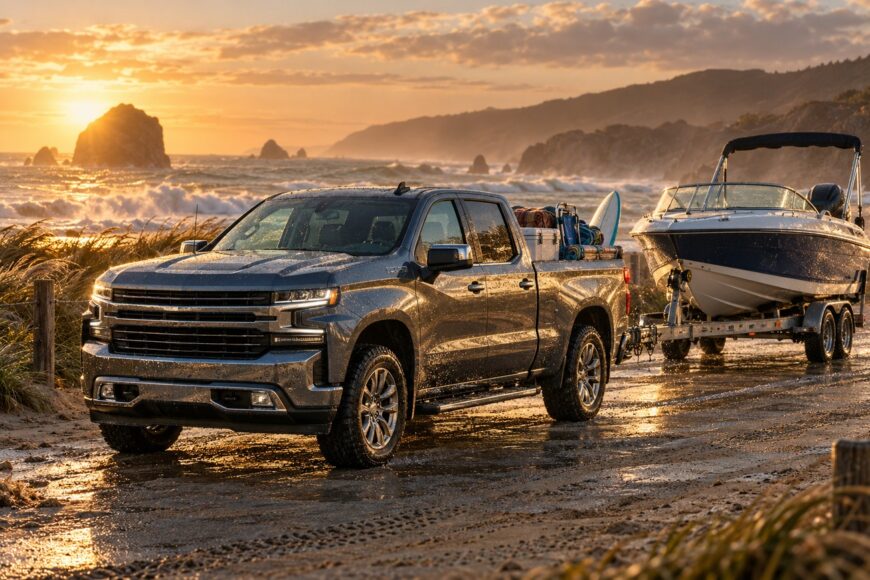
Living near the ocean gives a Silverado a useful role. It can carry wet gear, tow a boat, handle rough access roads, and make short trips with more confidence than a typical passenger vehicle. The same environment that makes the truck useful also creates a maintenance burden that inland owners may underestimate.
Salt spray reaches the frame, brake lines, fasteners, connectors, wheel hubs, and trailer hardware. Boat ramps add standing water, repeated braking, and electrical exposure, while short coastal trips may leave the truck damp without allowing much heat to dry it. A clean exterior therefore says little about the condition of the chassis underneath.
The sensible approach is to manage the specific truck in front of you. Silverado models do not share one universal towing limit or one guaranteed level of corrosion resistance. Storage history, washing habits, trailer use, configuration, and underbody condition matter more than the badge or the largest number in a brochure.
- What Coastal Living Really Demands From a Silverado
- Salt, Corrosion, and the Warranty Question
- A Coastal Maintenance Routine That Actually Works
- Towing and Payload: The Numbers You Can Actually Use
- Which Silverado Setup Fits Coastal Life?
- How to Inspect a Used Silverado Near the Ocean
- Frequently asked questions
- What Silverado should you stay away from?
- What is the best car for beach living?
- How do you verify a Silverado’s real towing limit?
What Coastal Living Really Demands From a Silverado
A Silverado suits coastal life because its strengths match the work. The bed can take sandy equipment and wet lines, the cabin can carry passengers and supplies, and the chassis is designed for towing. Four-wheel drive may help on loose access roads, although it does not remove the need for sensible tire choice, recovery equipment, or local knowledge.
Beach access is harder on a truck than ordinary coastal commuting. Driving near the shoreline exposes the vehicle to salt aerosol, while launching a boat adds splash, standing water, and repeated contact with damp trailer components. Wind can increase the effort required to control a trailer, especially when the load has a broad profile.
Salt aerosol accelerates electrochemical corrosion. Exposed steel fasteners, brake lines, electrical connectors, the frame, and areas where paint or protective coating has been damaged are common targets. Corrosion can also begin behind wheel liners, inside closed frame sections, and around mounting points where a casual inspection cannot see it.
The contrast between appearance and condition is particularly important with used trucks. Shiny paint and a tidy bed may coexist with weakened brake tubing, swollen fasteners, or corrosion around body mounts. A Silverado kept inland and stored under cover may be a better coastal purchase than a newer truck that spent years beside the water with limited washing.
Salt, Corrosion, and the Warranty Question
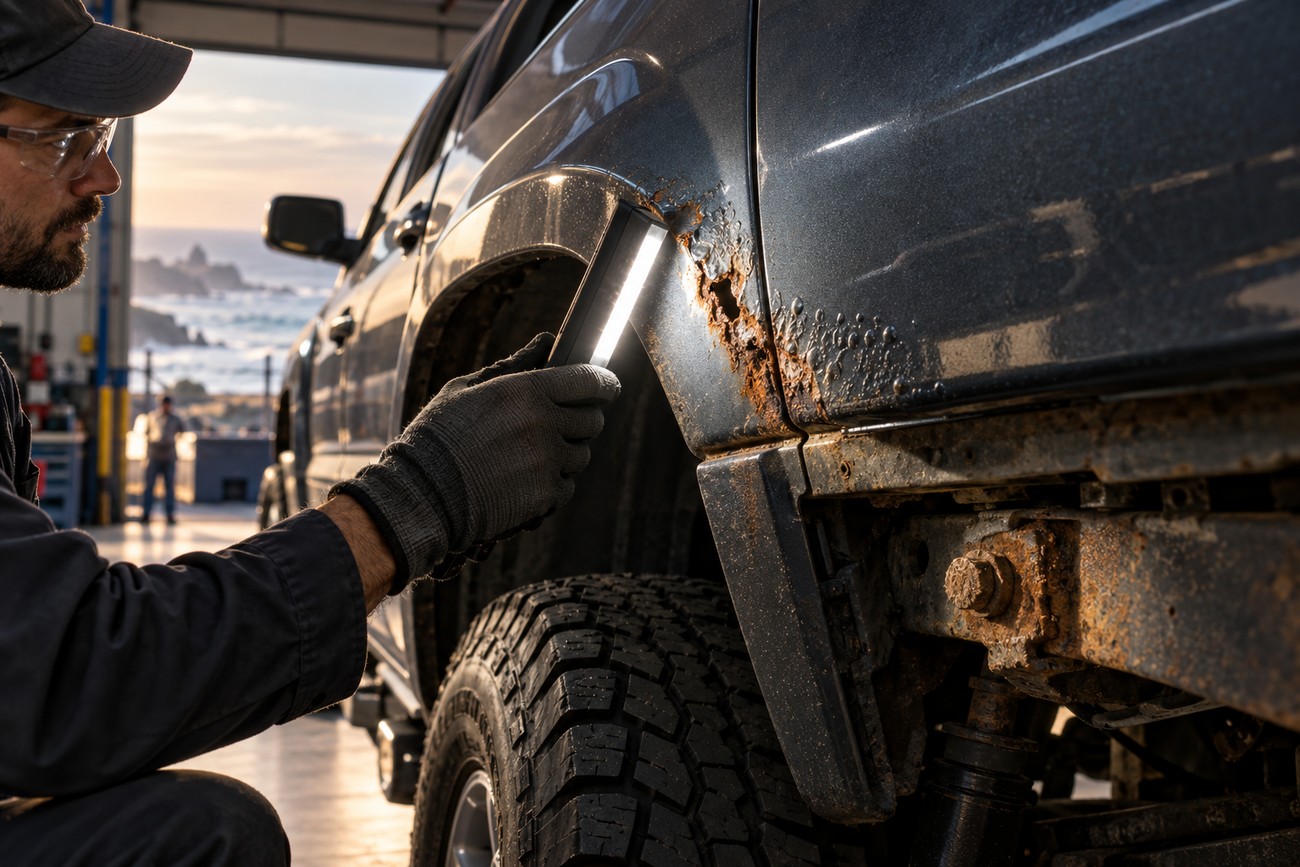
Factory corrosion protection helps, but it is not a promise that every rusty component will be repaired under warranty. Chevrolet commonly provides three years or 36,000 miles of coverage for qualifying corrosion defects in body sheet metal. The qualification matters: surface rust, environmental damage, external impact, and corrosion caused by neglected maintenance may not be treated as manufacturing defects.
Body-panel perforation and a rusty bolt are different warranty questions. A hole caused by corrosion in qualifying sheet metal may receive different consideration from a brake line affected by road salt, a chipped panel, or a frame component exposed to marine conditions. The exact warranty terms for the vehicle and market should be read before relying on coverage.
GM states that additional aftermarket corrosion treatment is not necessary. It also warns that some rust inhibitors and coatings can interfere with factory protection or affect coverage for related repairs. That warning makes indiscriminate application of a thick product a poor default, especially when the truck has already collected salt, dirt, or active rust.
Owners in coastal areas often reach a different practical conclusion. They may consider targeted cavity protection and frequent underbody washing worthwhile because they see fasteners and connectors deteriorate earlier than expected. Both positions contain a useful lesson: a product applied over contamination can trap moisture, while a clean, dry inspection followed by a compatible treatment may address a specific exposed area.
Warranty protection should therefore influence maintenance decisions, not replace them. Keep records of washing and repairs, follow the owner’s maintenance guidance, and ask the dealer or product maker how a coating affects factory protection before applying it. A heavy layer that hides the frame may make the next inspection more difficult.
A Coastal Maintenance Routine That Actually Works
Fresh water is the basic defense against salt, provided it reaches the places that collect it. After a coastal drive, rinse the underside, wheel wells, suspension areas, frame surfaces, and the rear bumper mounting area. A quick wash of the doors and fenders can leave the most important salt deposits untouched.
Boat use requires a separate routine. Rinse the trailer hubs, brakes, frame, winch, coupler, hitch hardware, plugs, lights, and electrical contacts. On the truck, direct fresh water around the receiver, trailer connector, rear suspension, wheel liners, and any exposed wiring. Use enough time and access to move residue out of seams rather than simply wetting the surface.
Visible body washing is cosmetic maintenance; connectors, trailer hardware, and hidden underbody areas need their own rinse and drying routine because salt can remain active after the outside panels look clean.
Drying is part of the process. After washing, drive a short distance and apply the brakes several times in a safe area to help remove water from the braking surfaces. Open or disconnect trailer plugs only when appropriate, allow them to dry, and inspect them for residue before reconnecting.
Regular fresh-water rinsing followed by drying is generally more useful than an infrequent application of an unknown heavy coating. Do not seal dirt, salt, or active rust beneath dense rustproofing. Clean and assess the metal first, then use only a product and application method that are compatible with the manufacturer’s guidance.
Do not drill concealed frame sections simply to inject a treatment. New holes can create entry points for water and remove part of the protection around a structural component. Existing access points, careful inspection, and professional advice are safer than turning the frame into an improvised spray cavity.
Towing and Payload: The Numbers You Can Actually Use
A 2026 Silverado 1500 can tow up to 13,300 lb with the diesel in a specific configuration. That figure belongs to a particular combination of engine, cab, drivetrain, axle ratio, hitch equipment, and other details. It should not be treated as the capacity of every Silverado 1500 or as a comfortable everyday target for a coastal boat-and-gear setup.
The 2026 Silverado 1500 payload range is approximately 1,520–2,260 lb, depending on configuration. Payload includes more than cargo in the bed. Passengers, a canopy, fuel, fishing equipment, tools, hitch hardware, and trailer tongue weight all consume that allowance.
A trailer can remain below the advertised tow limit while the truck exceeds its payload or axle rating. Tongue weight sits on the truck, and a full crew plus wet equipment can use the remaining capacity quickly. Wind, hills, rough ramps, and repeated braking also make a conservative setup easier to control than one built around the last available pound.
Use the vehicle identification label, owner’s manual, axle ratings, hitch rating, and trailer information together. Confirm the actual truck’s engine, axle, drivetrain, and equipment rather than relying on a model name. If the documents conflict, stop and resolve the conflict before towing.
Silverado HD models serve a different class of work. Silverado HD can reach up to 36,000 lb only in a specific heavy-duty configuration, while Silverado 2500 has a maximum towing figure of up to 22,430 lb in a qualifying configuration. Those figures describe selected combinations, not a universal limit for every HD or 2500 truck.
Which Silverado Setup Fits Coastal Life?
The largest towing figure is useful only when it matches the load and the way you use the truck. Coastal ownership adds corrosion checks, trailer maintenance, short trips, and storage concerns to the specification decision.
| Setup | Advertised capability | Coastal-use implication | Verify before towing |
|---|---|---|---|
| 2026 Silverado 1500 diesel | Up to 13,300 lb in a specific configuration; payload approximately 1,520–2,260 lb depending on configuration. | Can suit many boat and utility trailers, while payload can disappear quickly with passengers, gear, accessories, and tongue weight. | Engine, cab, drivetrain, axle ratio, vehicle label, hitch rating, axle ratings, and trailer requirements. |
| Silverado 2500 | Up to 22,430 lb in a qualifying configuration. | Provides more heavy-trailer capacity in the right specification, but larger size and coastal exposure increase the importance of underbody inspection and storage. | Exact configuration, axle ratings, hitch equipment, payload label, trailer weight, and tongue weight. |
| Maximum-capability Silverado HD | Up to 36,000 lb only in a specific heavy-duty configuration. | Designed for demanding work; it may be unnecessary for a smaller boat and less convenient as a daily coastal vehicle. | Complete factory configuration, ratings, hitch system, trailer brakes, and the actual loaded trailer. |
How to Inspect a Used Silverado Near the Ocean
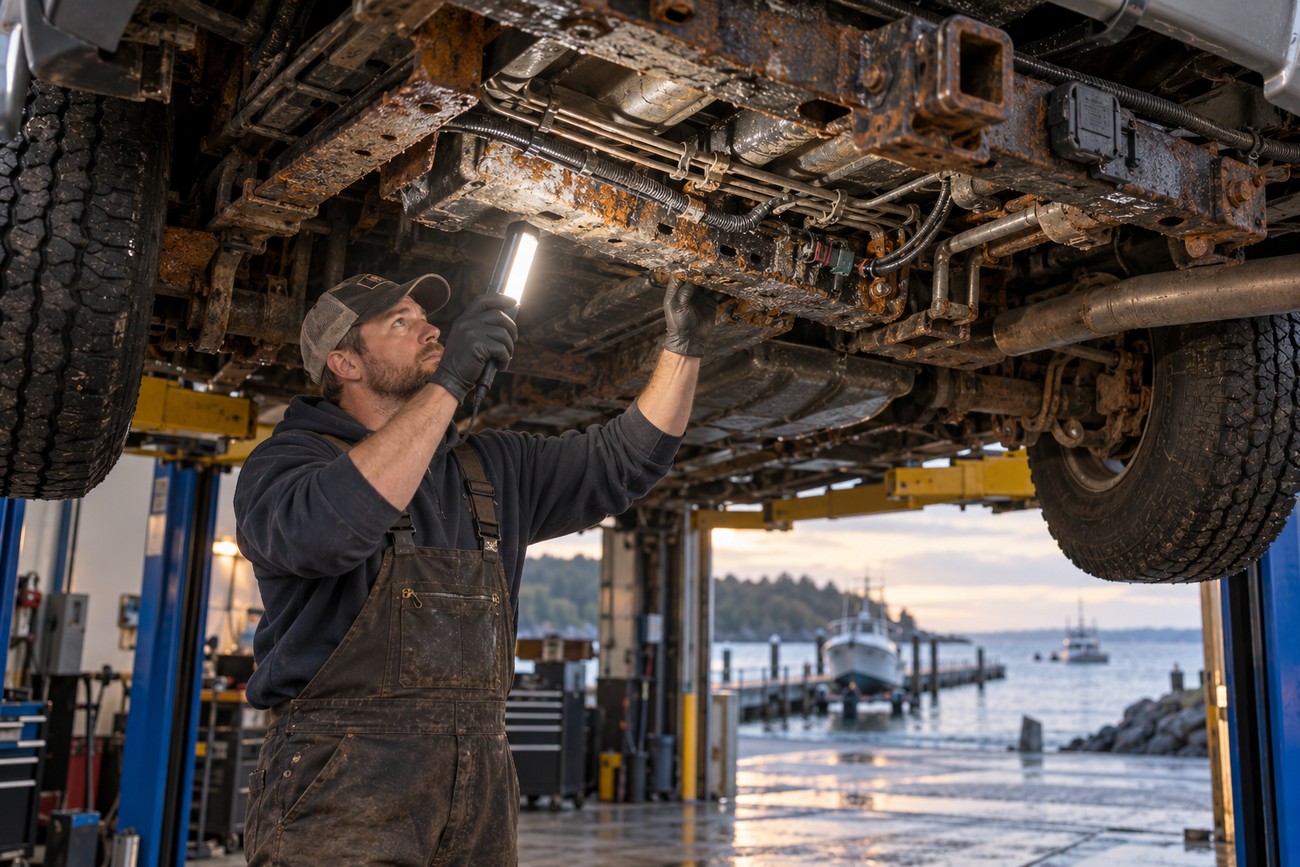
Begin underneath the truck on a lift. Examine the frame, crossmembers, brake and fuel lines, suspension points, body mounts, exposed fasteners, and areas behind wheel liners. Look for flaky rust, deep scaling, damaged coating, wet deposits, and repairs that conceal rather than remove corrosion.
Check the trailer wiring, receiver, electrical connectors, rear bumper mounts, and the condition of the hitch hardware. Inspect the hubs and brakes if the truck regularly launched a boat or pulled a trailer. Salt-related damage may affect electrical contacts and sensors even when the surrounding metal looks acceptable.
Pay attention to signs of long-term shoreline storage. Corrosion around fasteners, seized adjustments, rust at body mounts, and deposits inside frame openings can reveal a harsher history than the paint suggests. Corrosion may begin inside closed frame sections or beneath plastic trim, so an exterior walk-around is weak evidence.
Diesel trucks deserve particular caution where fasteners are rusty. A routine service operation can become drilling, extraction, or component replacement when a critical bolt will not move. That possibility should affect the purchase price, inspection decision, and willingness to accept an undocumented coastal history.
Before purchase, check the individual VIN through the official NHTSA recall database. Repeat the check periodically after ownership because recall status is specific to the vehicle, not merely to the Silverado model name. Combine that result with service records and an independent lift inspection; neither a clean VIN search nor a polished body proves that the chassis is healthy.
Frequently asked questions
What Silverado should you stay away from?
Stay away from an individual truck with unverifiable history, heavy salt exposure, neglected maintenance, or corrosion that cannot be properly assessed, regardless of trim or advertised capability. A lower-specification truck with clear records and a sound frame can be a safer purchase than a high-capability truck that spent years near the shoreline without documented care.
Rejecting a truck should be based on evidence such as weakened brake lines, severe frame scaling, damaged body mounts, persistent electrical corrosion, or inaccessible repairs. Have the vehicle lifted and inspected before purchase, and treat missing records as a risk rather than assuming the clean exterior tells the full story.
What is the best car for beach living?
The best vehicle depends on whether you live near the beach or regularly drive on sand. Ordinary coastal living calls for washable surfaces, accessible underbody areas, dependable corrosion maintenance, suitable traction, and trailer compatibility. Regular sand driving adds ground clearance, tire, recovery, and local-access requirements that a normal commuter may not need.
A Silverado can be a practical choice when its size and towing ability match the work. Its usefulness declines if the owner cannot rinse the underside, store it away from constant salt exposure, or recover it safely from soft ground. For any vehicle, service access and condition are more important than a rugged appearance.
How do you verify a Silverado’s real towing limit?
Reconcile the vehicle identification label, owner’s manual, axle ratings, hitch rating, and published trailer requirements. Confirm the exact engine, cab, drivetrain, axle ratio, and factory equipment, then account for passengers, fuel, accessories, cargo, and trailer tongue weight.
Use the lowest applicable rating when the documents do not agree, and resolve uncertainty with Chevrolet or a qualified towing specialist before loading the trailer. The maximum figure for a specific configuration cannot be transferred to another Silverado simply because the trucks share the same model name.







