
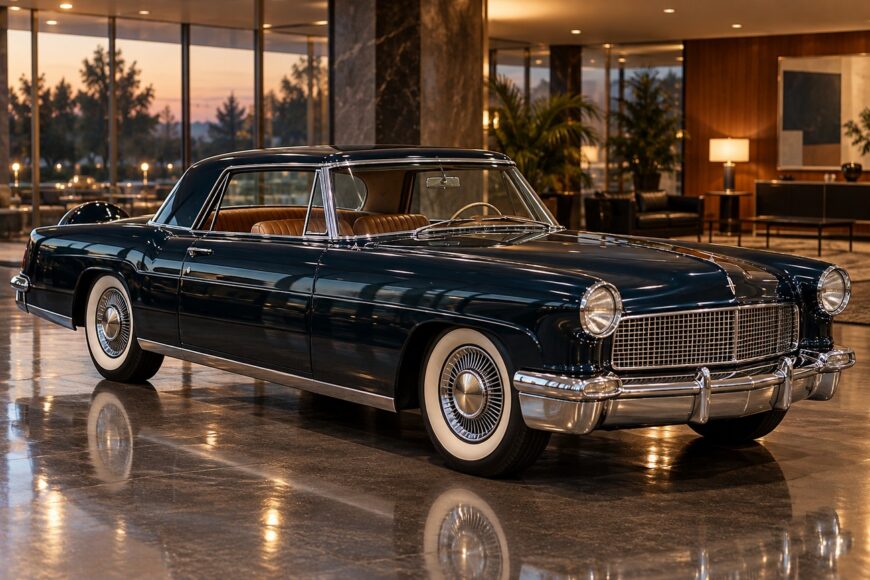
The Continental Mark II cost approximately $9,966 in the United States when new, a figure commonly rounded to “$10,000.” The striking contradiction is that Ford Motor Company reportedly lost money on the project despite charging a price beyond the reach of most buyers. The car was expensive to purchase because it was expensive to build, and its limited production made the economics even harder to justify.
Built in 1956–1957, the Mark II belonged to a separate Continental ultra-premium marque or line within Ford Motor Company. Only 3,005 cars were produced. Significant hand assembly, hand-finished trim, and unusually detailed interior work gave it an exclusivity that an ordinary Lincoln sedan could not provide.
That same exclusivity creates ownership risks today. Corrosion, scarce glass and trim, difficult upholstery work, and specialist servicing can turn an apparently affordable project into a restoration commitment. The Mark II is an important mid-century design statement, yet its rarity makes mistakes expensive and its market narrower than its prestige suggests.
- Why the Mark II Became the $10,000 Car
- A Hand-Finished Luxury Car, Not Just a Big Lincoln
- The Business Contradiction Behind the Price
- What Ownership Actually Demands
- Restoration: Condition Is Not the Same as Completeness
- The Mark II Myth: Prestige, Risk, and Real Value
- Frequently asked questions
- Was the $10,000 figure the Mark II’s original price or a modern equivalent?
- What does “matching numbers” mean on a Lincoln Continental Mark II?
- What’s the best car I can buy for $10,000?
- What are some reliable classic cars under $10,000?
Why the Mark II Became the $10,000 Car
The nickname came directly from the original U. S. catalog price. At approximately $9,966, the Continental Mark II was commonly described as the “$10,000 car.” This was a period price, not an inflation-adjusted modern figure, and it reflected the car’s position at the top of Ford Motor Company’s range.
Production lasted only from 1956 to 1957, with 3,005 cars built. Such a small run prevented the company from spreading tooling, development, and assembly costs across a normal high-volume model. Buyers were paying for scarcity from the beginning, even though the manufacturer still faced the burden of producing each car to a demanding standard.
The Mark II was therefore deliberately separate from a regular Lincoln sedan. Continental functioned as an ultra-premium marque or line within Ford Motor Company, with its own identity, restrained styling, and close attention to finish. The design avoided many of the era’s more extravagant decorations, which made the workmanship easier to notice without reducing its cost.
A high catalog price did not prove commercial success. The Mark II’s role was closer to a prestige project than a mass-market business case. It demonstrated what Ford could build at the luxury frontier, while its low production volume and labor-intensive construction made profitability difficult.
A Hand-Finished Luxury Car, Not Just a Big Lincoln
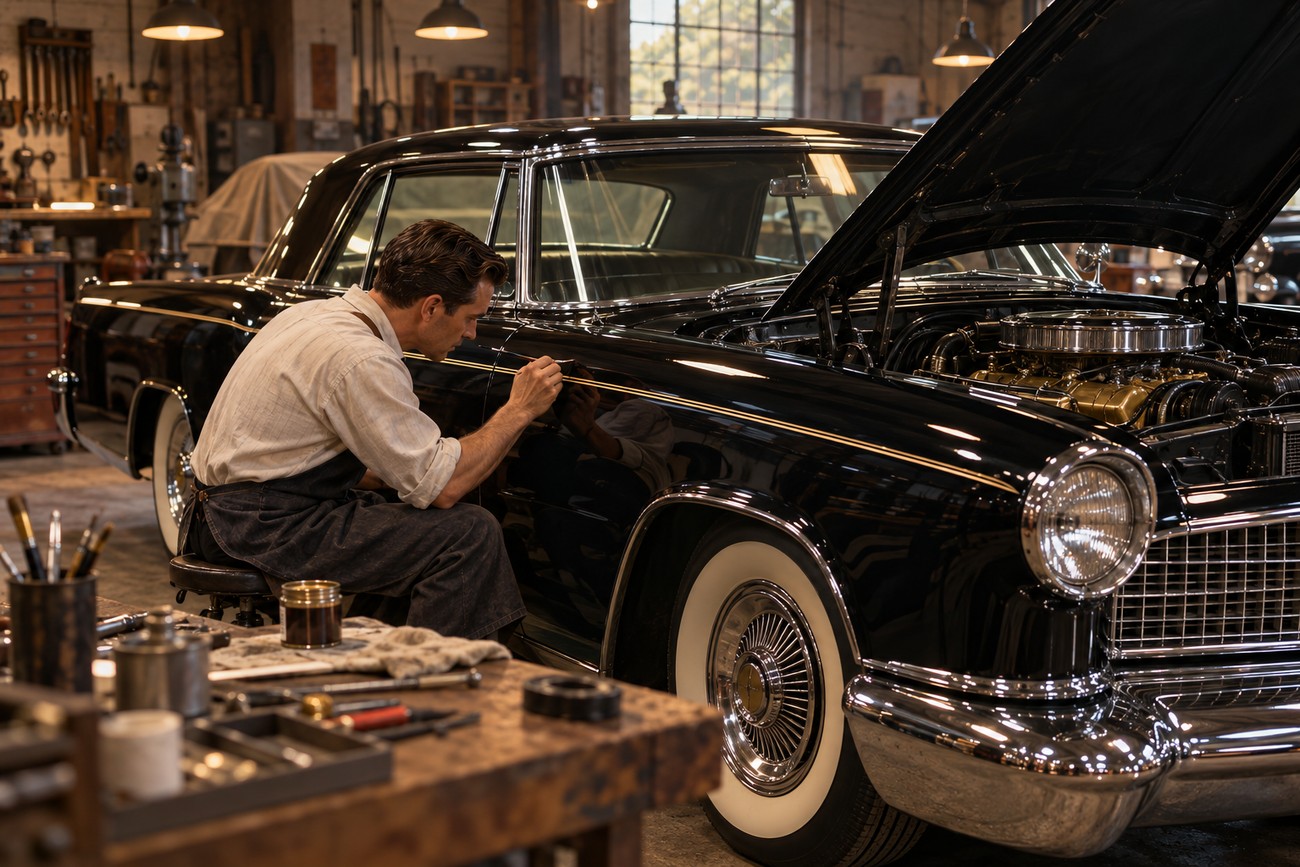
The mechanical specification suited a substantial luxury car of the mid-1950s. Power came from a Lincoln 368 cu in (6.0-liter) Y-block V8, rated at approximately 285 hp SAE gross. That figure belongs to the period’s testing system and should not be compared directly with modern net horsepower ratings.
A 126-inch wheelbase gave the Mark II a long, stable stance and generous cabin proportions. Approximately 2.3 tonnes of curb weight helped create the quiet, planted character expected of a flagship automobile, while also affecting braking, fuel use, tire loading, and the feel of acceleration.
Significant hand assembly and hand-finished trim contributed substantially to the cost. Decorative parts, upholstery, fittings, and finishing details required more labor than a conventional production Lincoln. The result was a car whose value in the 1950s depended as much on execution and atmosphere as on engine output.
Modern owners should judge the Mark II as a heavy luxury cruiser rather than a quick grand tourer. Its V8 provides period-appropriate authority, yet the car’s weight and older chassis design make performance feel slow by current standards. Fuel consumption, braking distances, cooling demands, and electrical behavior all require realistic expectations.
The Business Contradiction Behind the Price
A car can be expensive for its buyer and still be economically burdensome for its maker. The Mark II combined a low production volume with substantial hand assembly, detailed finish work, and a separate luxury identity. Those costs continued whether the factory built thousands of cars or only a small number.
The approximately $9,966 retail price reflected the product’s exclusivity, yet it did not necessarily cover the real cost of producing it. The project was financially loss-making or economically burdensome for its manufacturer. Its importance lay in image and engineering ambition as much as in direct financial return.
The Mark II is often regarded as the most expensive regular-production American car of its era by catalog price. That description needs a qualification. Custom-bodied cars, one-off bodies, and special commissions could cost more, so the Mark II was not automatically the most expensive American car in every possible sense.
This distinction matters to collectors because the car’s historical significance does not eliminate practical economics. A prestige project can become valuable as an artifact while remaining costly to preserve. The same hand-finished details that made it special also make inaccurate repairs and missing parts unusually consequential.
What Ownership Actually Demands
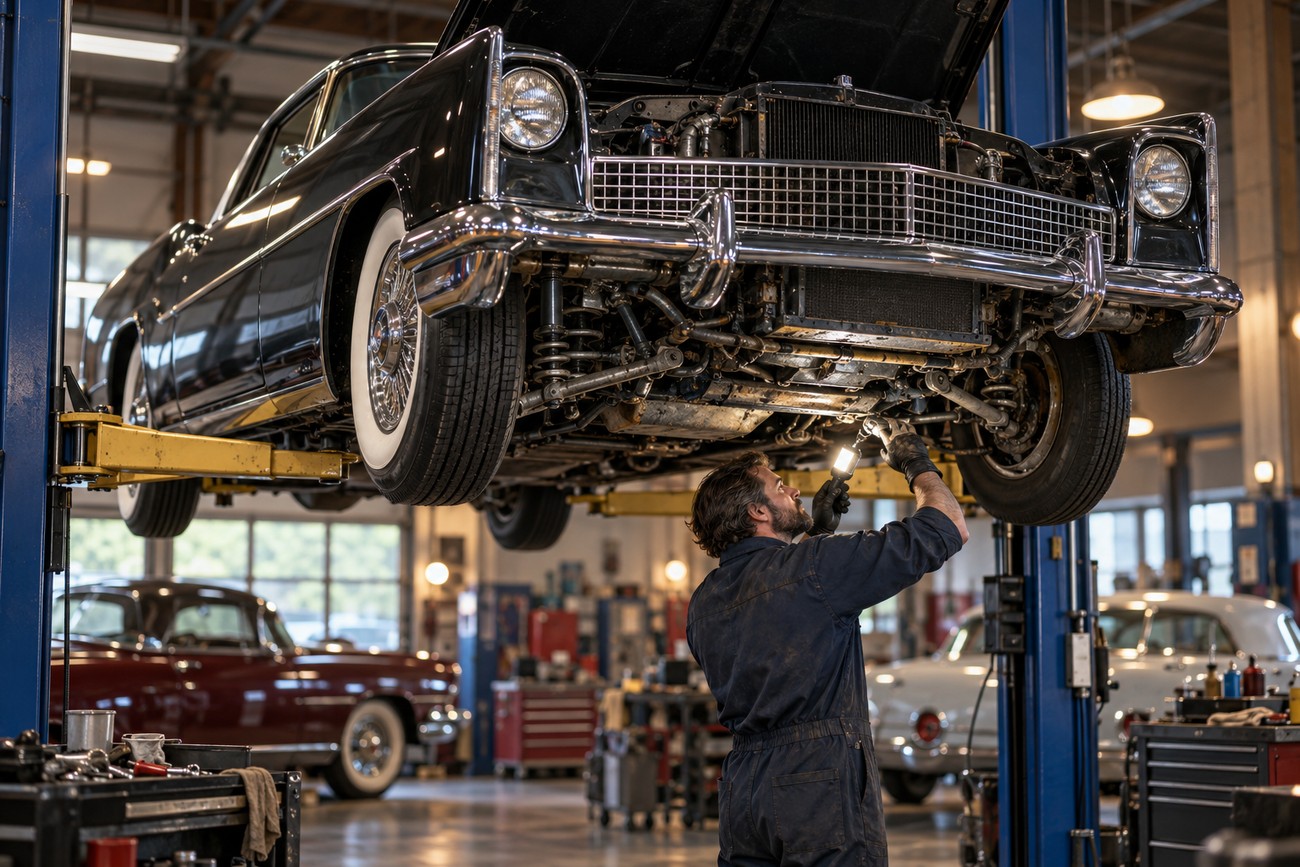
Owners commonly report high fuel consumption and performance that feels slow by modern standards. The Mark II’s mass places continuous demands on the engine, transmission, brakes, suspension, and cooling system. It is better suited to deliberate touring than to frequent urban use or modern traffic expectations.
Period brakes, cooling systems, and electrical systems deserve a full inspection before regular driving. A car that starts easily in a workshop may still have marginal cooling under load, aging wiring, or braking performance that feels inadequate beside a contemporary vehicle. Upgrades may improve usability, but they can also reduce historical authenticity if carried out without a clear plan.
Corrosion is a major structural and financial risk. Lower panels, floors, and hidden cavities can conceal damage beneath attractive paint and brightwork. Surface repairs may only postpone the real work, especially when rust has reached mounting points, seams, or areas that are difficult to inspect without removing interior and exterior trim.
Parts supply adds another layer of difficulty. Original interior components, chrome, glass, upholstery, and model-specific fittings can be scarce, expensive, and difficult to reproduce correctly. A general classic-car mechanic may understand Ford-era engines yet lack the knowledge needed for Mark II trim, specifications, or restoration methods.
The cheapest project can become the most expensive ownership route when its missing parts are rare. Before buying, inspect the car as a collection of components rather than as a running engine with attractive paint. A complete, documented car often saves more money than a low-priced shell whose interior and brightwork must be reconstructed.
Restoration: Condition Is Not the Same as Completeness
Restoration cost is driven by correctness as much as by mechanical condition. An engine that runs does not compensate for missing seat materials, damaged glass, incorrect trim, or an incomplete instrument panel. Rare details can exceed the apparent value of a project car, particularly when they must be sourced individually or remade.
Buyers often underestimate bodywork because the visible damage looks cosmetic. Lower panels, floors, and hidden cavities may require extensive disassembly before a reliable estimate is possible. Paint and chrome can conceal previous repairs, while a straight-looking body may contain incompatible replacement sections or poorly executed structural work.
Restorers verify hidden trim, upholstery patterns, fasteners, glass markings, and year-specific details before quoting bodywork. A visually complete Mark II may contain costly non-original substitutions that only become obvious during disassembly.
Interior restoration can be harder than expected. Correct materials, textures, colors, patterns, and stitching are difficult to reproduce, and a later substitute may look convincing in photographs while failing close inspection. The Mark II’s cabin is part of its historical identity, so incorrect upholstery can affect both authenticity and collector value.
Some apparently perfect cars may have been assembled from multiple donor vehicles. That does not automatically make a car worthless, but it changes what can honestly be claimed about its history and originality. Matching numbers, documented history, completeness, year-correct specification, and restoration quality may matter more than superficial cosmetics.
A careful inspection should record every missing or substituted detail before money changes hands. Compare major components and trim with reliable model references, examine repair history, and establish whether later comfort upgrades have altered the car. Returning a modified Mark II to authentic condition can cost more than accepting an imperfect but original example.
The Mark II Myth: Prestige, Risk, and Real Value
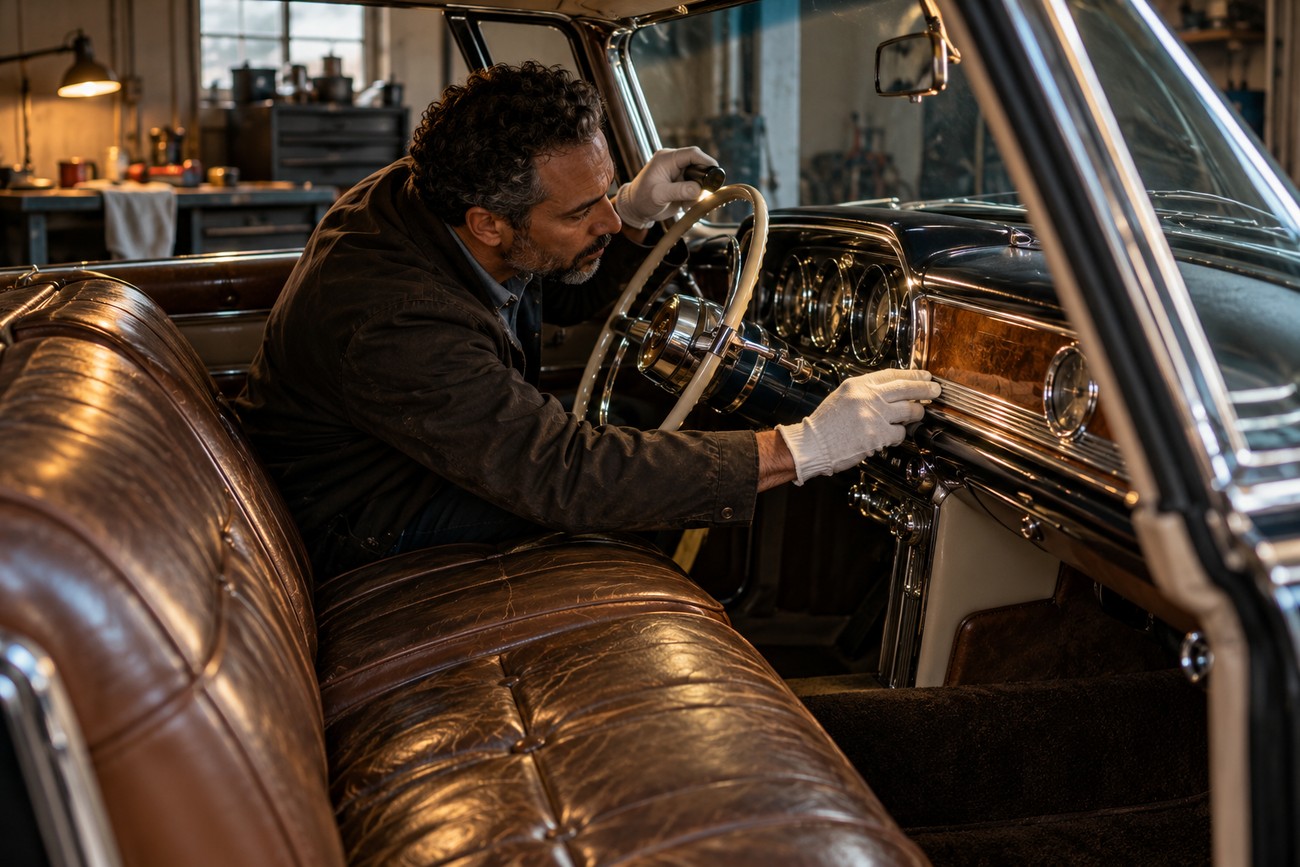
The first myth is that the Mark II was merely a standard Lincoln with extra decoration. It was a distinct ultra-premium project with a separate Continental identity, a tiny production run, and a level of hand-finished work that set it apart. Its importance lies partly in Ford’s attempt to create a distinct American luxury statement.
The second myth is that a $10,000 price guaranteed profitability. The price signaled status to the buyer, yet low volume and labor-intensive construction made the project financially difficult. Historical glamour should therefore be separated from the manufacturer’s business result.
Rarity also fails to make every surviving example equally valuable. It creates prestige, but it narrows the buyer pool and can reduce liquidity when the owner needs to sell. Cars with poor documentation, extensive modernization, missing trim, or questionable donor parts may be harder to place than their rarity suggests.
The strongest purchase is usually the most complete, authentic, and documented Mark II available within a realistic restoration budget. A visually polished car with uncertain history can be a greater risk than an honest, imperfect example. Collector value depends on originality, completeness, history, matching numbers, and restoration quality, rather than appearance alone.
Frequently asked questions
The Continental Mark II combines a famous price, unusual construction, and demanding ownership requirements. These answers clarify the points that most directly affect buying decisions and long-term value.
Was the $10,000 figure the Mark II’s original price or a modern equivalent?
It was the original new-car price in the United States, approximately $9,966 during the Mark II’s production era. The figure was commonly rounded to “$10,000,” and it is not an inflation-adjusted present-day valuation.
That distinction matters because the nickname describes the car’s historical market position. It does not indicate what a restored Mark II should cost today, nor does it measure current collector value. Present value depends on condition, authenticity, completeness, documentation, and restoration quality.
What does “matching numbers” mean on a Lincoln Continental Mark II?
“Matching numbers” means that the car’s documented original major components correspond with the identity and history associated with that particular vehicle. The evidence may include original identification records and component documentation, depending on what survives for the car.
This evidence can support authenticity even when the paint, upholstery, or chrome is imperfect. A cosmetically attractive car with undocumented major replacements may deserve greater caution than an original, less polished example. Matching numbers are one part of the assessment, alongside year-correct details, completeness, and a credible ownership history.
What’s the best car I can buy for $10,000?
For a buyer considering a Mark II, the best purchase at that budget is usually the most complete car with the clearest history, rather than the car with the lowest asking price. A running example with original trim, sound floors, usable glass, and documented major components can be a better starting point than a cheaper restoration shell.
Set aside money for inspection, transport, storage, brakes, cooling, electrical work, and parts research before committing. The purchase price is only one part of the budget, and a Mark II with missing interior or brightwork can consume funds quickly.
What are some reliable classic cars under $10,000?
Common, mechanically straightforward classics with strong parts availability are generally safer choices than a Continental Mark II at this budget. Examples may include widely produced Ford, Chevrolet, or Volkswagen models, depending on local supply and condition.
The key test is supportability: inspect the body for structural rust, verify parts availability, and choose a car with an intact interior and documented maintenance. A common model in sound condition usually offers easier servicing and better liquidity than a rare luxury car that needs specialized trim and restoration work.







