
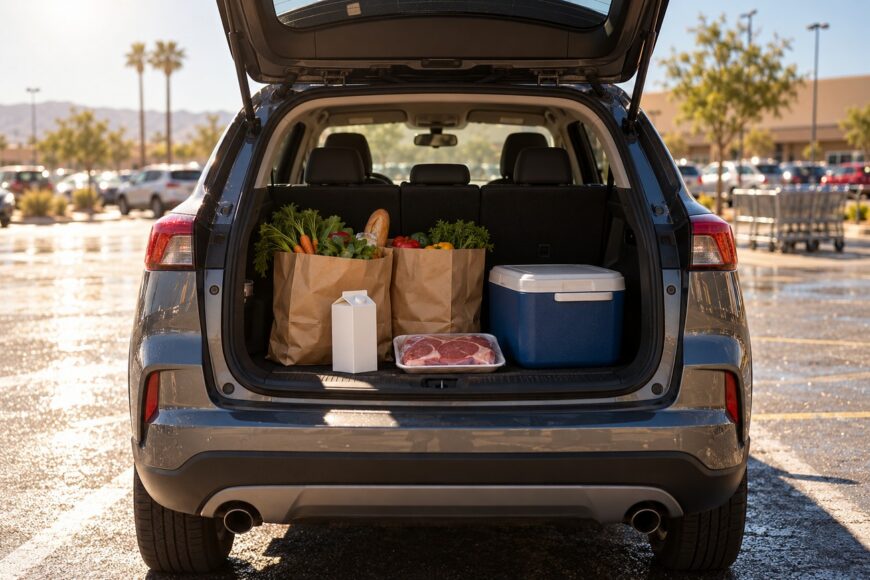
At 100°F, one more stop after grocery shopping can turn a short drive into a long wait for meat, milk, and other perishables. A parked Ford Escape is not cold storage, even if you leave it in the shade or put the bags in the cargo area. The practical choice is to take cold groceries home promptly or transport them in a cooler that keeps the food at a safe temperature.
The distinction is between time without effective temperature control and time spent at a verified safe temperature. A regular grocery bag does not stop that clock. An insulated cooler can help, but its advertised cooling time cannot tell you what is happening inside a package of food.
- How long can groceries stay in a Ford Escape at 100°F?
- Why the Escape’s cargo area heats groceries unevenly
- Pack cold groceries for the trip, not just the checkout line
- Make the drive home the last errand
- What to do when groceries have already sat in the heat
- Why shade, cracked windows, and a cooler promise fall short
- Frequently asked questions
- What should I avoid leaving in my Escape in freezing weather?
- How long can groceries stay in a car on a cold day?
- How should I handle a raw-meat leak in the Escape’s cargo area?
How long can groceries stay in a Ford Escape at 100°F?
When the ambient temperature is above 90°F, perishable food should not remain without temperature control for more than 1 hour. That is the relevant limit for meat, seafood, milk, and other foods that require refrigeration in an Escape on a 100°F day. Under ordinary conditions, the limit is 2 hours; the hotter-weather limit applies here.
Count the time from when an item leaves effective refrigeration, including time in your cart, at checkout, during loading and driving, and at any stops. A quick trip to another store does not reset the clock. If the groceries wait in the parked Escape while you have lunch, that wait counts too.
Keep cold perishable food at or below 40°F. The bacterial danger zone is approximately 40–140°F, though briefly entering that range does not make food instantly unsafe. A cooler can maintain safe storage if it actually holds the food at or below 40°F; its presence alone does not grant extra hours. A closed Ford Escape at 100°F outdoors cannot be treated as refrigerated storage.
Why the Escape’s cargo area heats groceries unevenly
Sunlight warms the surfaces and air inside a parked vehicle, while closed windows limit heat escape. In one published vehicle-heating example, an outdoor temperature of 80°F was associated with approximately 99°F inside after 10 minutes and 109°F after 20 minutes. Those figures show how quickly a vehicle can heat; they are not Ford Escape measurements or predictions for a 100°F day.
The Escape’s actual interior temperature depends on sunlight, vehicle color, glazing, ventilation, and cargo placement. Bags high in a load or near glass may receive more heat than items lower down. Neither position provides reliable refrigeration, so a shaded corner of the cargo area is no substitute for a cooler.
Cabin air temperature also cannot establish the temperature inside a grocery package. A dense, chilled item may warm differently from a small container beside it, and the two may be exposed to different conditions within the same load. Use the food’s temperature when assessing whether cooling worked, rather than treating the dashboard display as a food-safety reading.
Pack cold groceries for the trip, not just the checkout line
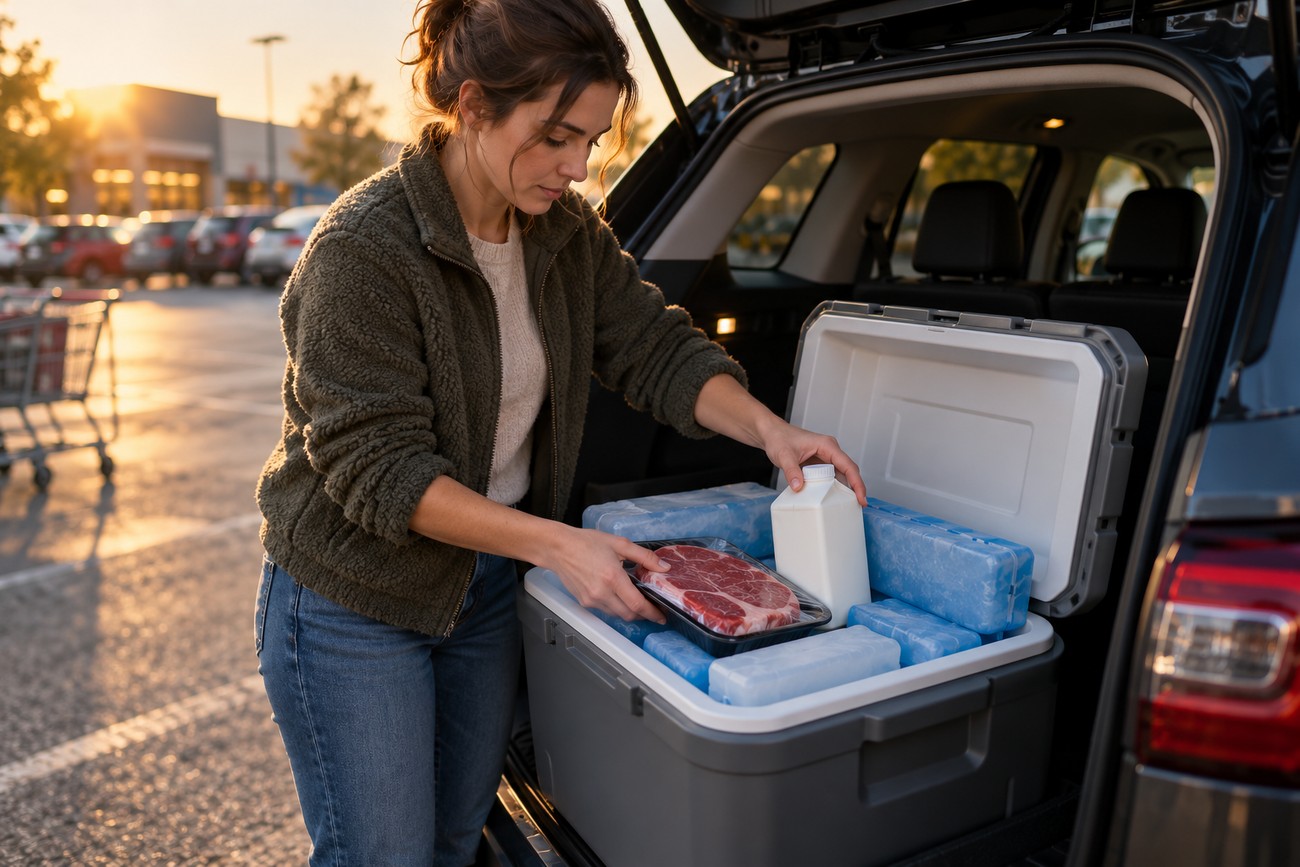
Shop for perishables last, then put them promptly into a pre-chilled insulated bag or cooler. USDA recommends using an insulated container with ice or cold packs when transporting perishable food and checking food temperature. Paper and ordinary plastic grocery bags offer no dependable way to keep cold food at or below 40°F.
Arrange enough cold sources around the groceries, and reduce empty space inside the container. Keep hot prepared food separate from chilled purchases. If you expect to open one bag during the trip, pack frozen items in another so each opening does not disturb their cooling.
Cold packs placed only on top can leave gaps around milk or meat underneath. Arrange the cold sources alongside and below the food as well, while keeping raw meat sealed against leaks.
Check perishable food with a food thermometer when you need to assess how the cooler performed. An insulated bag without adequate cold sources only slows warming, and a claim of “several hours” does not verify that the food stayed at or below 40°F. A cabin temperature reading does not provide that verification either.
Make the drive home the last errand
Once chilled food leaves the store’s refrigeration, load it promptly and make home your next destination. At temperatures above 90°F, the 1-hour limit for perishables without temperature control includes loading, driving, and stops. An extra errand can use up the remaining time even when the drive itself is short.
Set coolers where they will remain stable during braking, and contain packages that might leak before juices reach the cargo carpet or other groceries. Keep raw meat away from ready-to-eat food. At home, carry perishables inside first and refrigerate them promptly; sorting shelf-stable goods can wait.
Secure the load, distribute its weight appropriately, and check the specific Escape’s door-jamb label for applicable load limits. Ford’s cargo guidance addresses loading the vehicle, not how long groceries stay safe inside it. Safe transport still depends on keeping cold perishable food at or below 40°F or observing the hot-weather time limit when cooling is ineffective.
What to do when groceries have already sat in the heat
Start by separating foods that require refrigeration from shelf-stable groceries. For each perishable item, work out its full time without effective cooling, beginning when it left refrigeration rather than when you parked. If that time exceeds 1 hour while the ambient temperature is above 90°F, discard it unless you have reliable evidence that it was kept at a safe temperature.
Where reliable measurements are available, check the food itself with a food thermometer; keep cold perishable food at or below 40°F. Warm meat or milk warrants particular caution. A cool-feeling package, normal smell, or unchanged appearance cannot reliably establish safety, and the cabin thermometer cannot tell you the temperature inside the package.
Handle leaking frozen goods so their contents do not contaminate other purchases or the Escape’s cargo area. Softening alone does not settle the safety of every frozen item: consider its temperature and time without control. If those cannot be established and a perishable food has exceeded the hot-weather limit, the safer decision is to discard it rather than rely on how it looks.
Why shade, cracked windows, and a cooler promise fall short
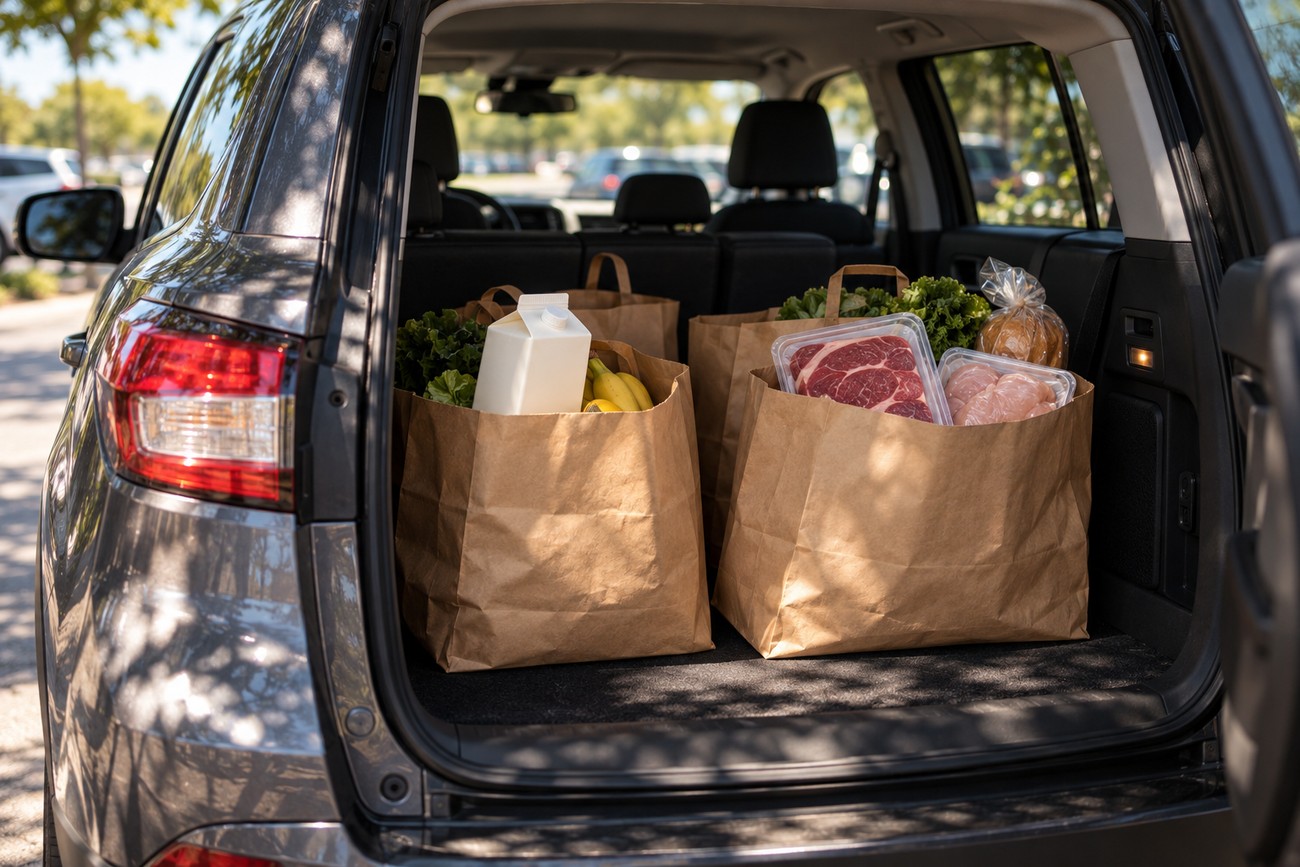
Shade and partially open windows may change how quickly an Escape heats, but they do not make a parked vehicle refrigerated storage. The cargo area is not a protected cold compartment, and bags placed there still need effective cooling. At 100°F outdoors, plan around the food’s condition rather than a preferred parking spot.
Air conditioning cools the vehicle while it is operating; it does not keep groceries cold after the engine is switched off. A recently cooled cabin can therefore give a misleading impression during a stop. Nor can a cabin display confirm that meat or milk inside a bag remains at or below 40°F.
Some insulated-bag claims promise several hours of cooling. Actual performance depends on the cold sources, the load, and how the bag is used, so judge it by the food’s temperature instead. Without effective temperature control, the limit for perishables remains 1 hour when the ambient temperature is above 90°F.
Frequently asked questions
Temperature can create different problems on a freezing day, while a mild day can still allow a sunlit car to warm. The practical check for refrigerated groceries is their temperature, rather than the season or the feel of the car. Spills require a separate cleanup decision because raw juices can reach food and cargo surfaces.
What should I avoid leaving in my Escape in freezing weather?
Avoid leaving liquids in glass bottles or tightly sealed containers where freezing and expansion could damage the packaging and cause leaks. Some produce also loses quality after freezing. Bring temperature-sensitive purchases indoors instead of using the vehicle as temporary storage.
How long can groceries stay in a car on a cold day?
There is no reliable cold-day allowance based on outdoor temperature alone. A car parked in sun can warm above the surrounding air, so check that refrigerated perishable food remains at or below 40°F. If you cannot verify effective cooling, use the applicable time limit for food without temperature control rather than assuming the weather kept it safe.
How should I handle a raw-meat leak in the Escape’s cargo area?
Keep the leaking package and its juices away from ready-to-eat food, and discard any food contaminated by raw juices that cannot be safely cleaned. Remove the spill promptly, clean affected cargo surfaces, and follow the cleaning product’s label for any sanitizing step. Check nearby bags and packaging before putting the remaining groceries away.







