
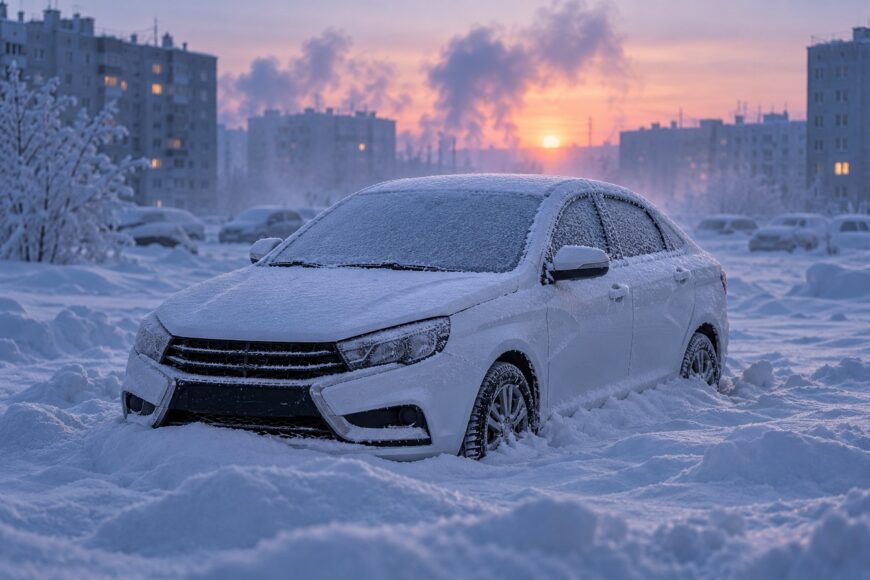
Will a Lada Vesta left outside in Yakutsk for one month still start? It may, if the battery, fluids, oil, and electrical system are in good condition and the car is properly protected. At the same time, a month is long enough for deep battery discharge, low tire pressure, sticking brakes, frozen locks, and starting trouble in Yakutsk’s severe cold.
The car remains exposed to low temperatures throughout the storage period, even when it is not being driven. Outdoor parking, a canopy, and a dry, ventilated garage offer different levels of protection: a canopy limits snow and precipitation, while a suitable garage can reduce exposure to extreme cold. A damp, poorly ventilated space can create a separate corrosion problem.
- Why One Month in Yakutsk Is Not Ordinary Storage
- What to Do Before Leaving the Vesta for a Month
- What Can Go Wrong While It Sits
- Choosing Between Open Parking, a Canopy, and a Garage
- How to Bring the Vesta Back After a Month
- The Storage Mistakes That Create Most Problems
- Frequently asked questions
- What changes if a Lada Vesta sits for three months instead of one?
- What should I do if the battery is already deeply discharged after storage?
- How do people in Yakutsk stay warm?
Why One Month in Yakutsk Is Not Ordinary Storage
Yakutsk has an average annual temperature of about −8.8 °C, but that figure understates the conditions during winter storage. The average January temperature is about −39 °C, and winter lasts approximately from early October through late April. A parked vehicle can therefore spend a month exposed to conditions that place continuous strain on its battery, fluids, seals, and tires.
From mid-November through the end of February, temperatures remain below −30 °C. At that level, starting can become very difficult or impossible, even if the vehicle was running normally before storage. Cold thickens engine oil and other fluids, while the battery loses useful starting capacity, so the starter has to work under poorer conditions.
Inactivity adds another layer of risk. A connected battery can lose charge through alarms, dashcams, chargers, trackers, and the car’s own standby systems. Tires gradually lose pressure in the cold, and brakes can freeze or stick after prolonged exposure, especially when moisture was present before the vehicle was parked.
A correctly maintained Vesta may still start after a month, particularly if it has been kept in a suitable space and prepared beforehand. The practical mistake is treating the storage period as harmless simply because the car is relatively new. Yakutsk’s climate makes the condition of individual components more important than the vehicle’s age or marketing claims about winter readiness.
What to Do Before Leaving the Vesta for a Month
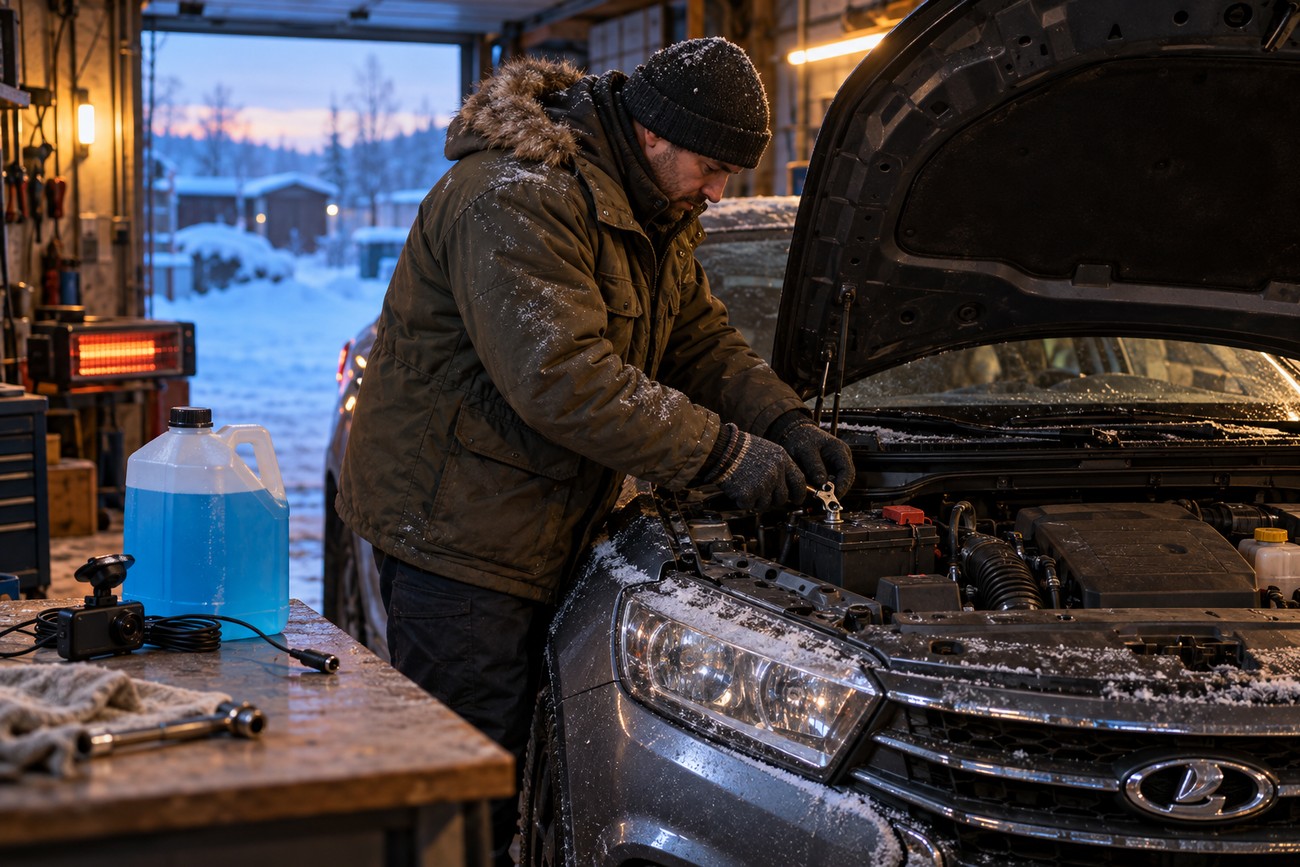
Start with the battery because a small electrical drain becomes a serious problem over several weeks of severe cold. Disconnect the negative terminal, then remove or unplug hidden electrical consumers such as alarms, dashcams, chargers, and trackers. A battery that remains connected can suffer parasitic drain and become deeply discharged before you return.
Replace summer washer fluid with winter-grade fluid before storage. Summer fluid can freeze in the reservoir, pump, lines, or spray nozzles, leaving the system blocked and potentially damaging components when the pump is operated. Check the coolant level and freeze protection before cold weather; an unknown or unsuitable mixture creates a risk of freezing the cooling system.
Fill the fuel tank before extended storage and inspect the tires after parking on a firm, suitable surface. Cold lowers tire pressure and may contribute to deformation, particularly when the vehicle stands on a weak or uneven surface. Record the normal pressure before leaving so you have a clear reference when the car returns to service.
Preparation should reflect the actual battery, oil, coolant, washer fluid, and tires fitted to the car. A general statement that the Vesta is winter-ready cannot confirm the condition of a particular battery or the freeze protection of its coolant. If the vehicle is staying outdoors, choose a level location away from accumulating snow and avoid parking where meltwater can refreeze around the wheels.
What Can Go Wrong While It Sits
The most common failure point is a deeply discharged battery. Electrical consumers continue operating in standby, and cold reduces the battery’s ability to deliver current. After a month, the starter may turn slowly or not at all, even though the engine and electronics were functioning normally before the vehicle was parked.
Temperature itself also changes the starting conditions. Engine oil and other fluids become thicker, increasing the load on the starter and the engine during cranking. Below −30 °C, starting can become very difficult or impossible without warming the vehicle or using a suitable heated space.
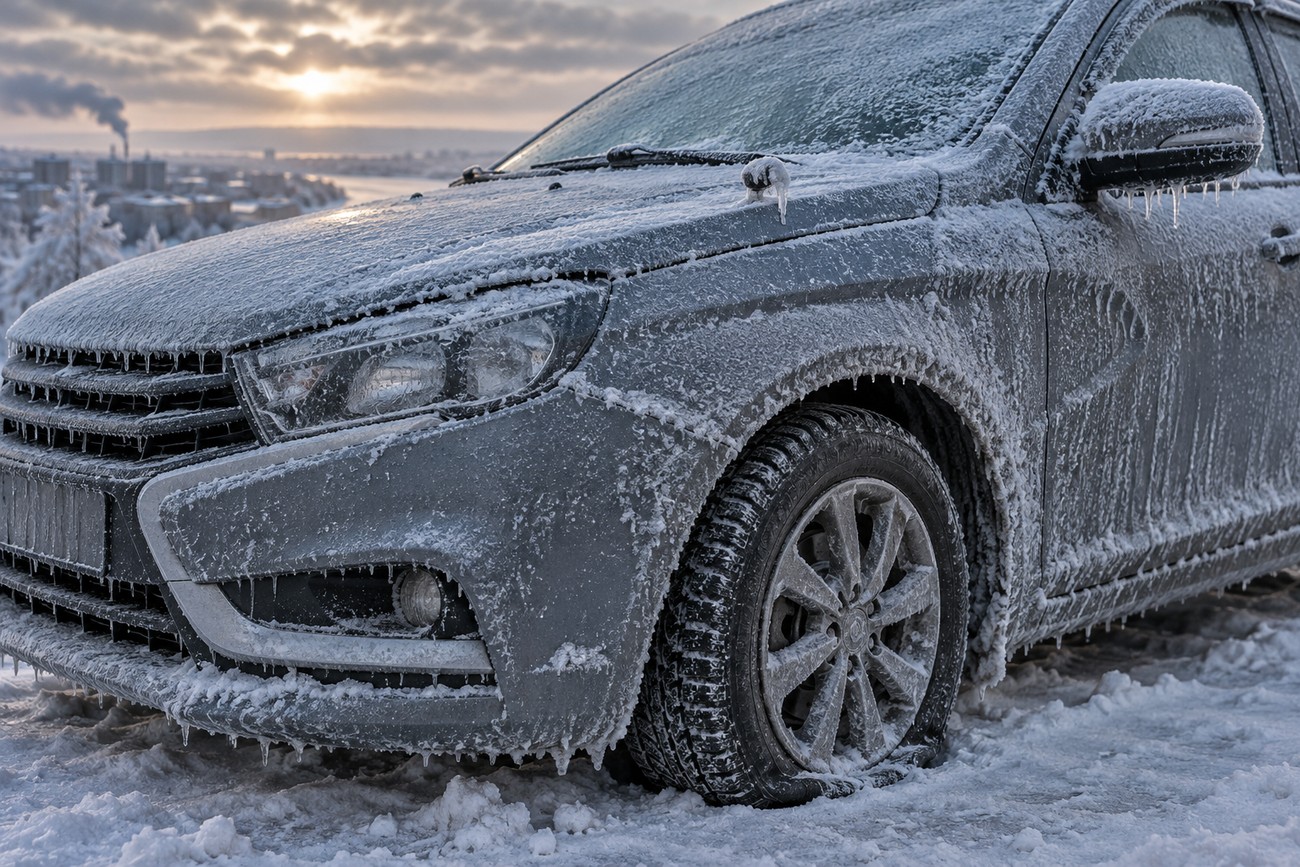
Brakes may freeze or stick after prolonged exposure, especially if moisture reaches the pads, discs, or parking-brake mechanism before storage. Tires lose pressure as the temperature falls and can leave the vehicle visibly lowered. Glass, locks, seals, and interior plastics may also become coated with ice or turn stiff and brittle in the cold.
The Vesta’s front-wheel drive helps transmit power on prepared winter roads, but it does not solve battery, fluid, brake, or starting problems. Models sold in Yakutsk are front-wheel drive rather than dedicated off-road vehicles, so drivetrain layout offers limited help if the car is immobilized by a discharged battery or frozen brakes.
Choosing Between Open Parking, a Canopy, and a Garage
Open parking exposes the Vesta to snow, precipitation, wind, and the full depth of the local cold. It is the simplest option, but it leaves the glass, locks, seals, wheels, and body exposed throughout the storage period. Preparation becomes especially important because there is little protection from weather-related deterioration.
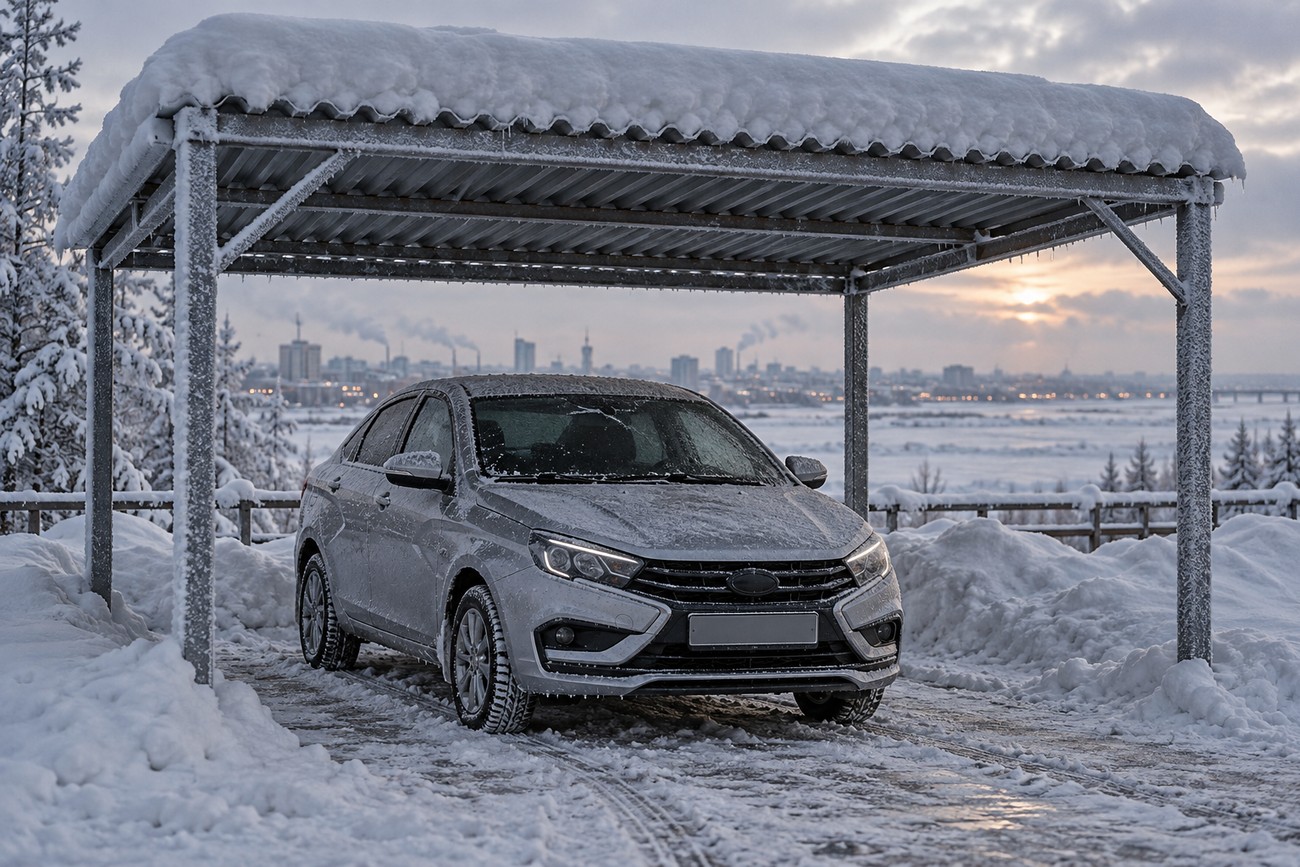
A canopy is better than fully exposed parking for reducing snow and precipitation exposure. It can make the return-to-use inspection easier and reduce the amount of ice around the vehicle. Deep cold remains a problem under a canopy, however, so it does not remove the risk of battery failure or difficult starting.
A cold garage offers shelter from wind and precipitation, yet it is not automatically safe storage. A poorly ventilated garage can accumulate moisture, particularly when a vehicle enters with snow or wet residue. That moisture raises corrosion risk and may later freeze around brakes, locks, and door seals.
A dry space with reasonable airflow is generally more useful than a warmer but damp enclosure. Avoid bringing a heavily snow-covered car into a warm, closed room and leaving the moisture there. The best storage location limits precipitation, stays dry, and provides enough access for checking the vehicle without creating a condensation trap.
How to Bring the Vesta Back After a Month
Begin with an exterior inspection before turning the key. Clear snow and ice from the roof, hood, lights, mirrors, windshield, and door areas without forcing frozen seals or wipers. Check for obvious damage, confirm that the locks move normally, and make sure no ice has formed around the wheels or under the vehicle.
Check tire pressure before driving. Cold can lower pressure enough for the Vesta to appear visibly lowered, and driving on underinflated tires can damage them or reduce control. Inspect the brakes and release the parking brake carefully; if a wheel remains stuck, avoid forcing the car forward with high engine power.
Assess the battery before attempting a start. A fully discharged battery may leave the starter turning slowly or not at all, and repeated attempts can further reduce the remaining charge. Confirm the coolant level, engine oil level, and washer fluid, then use a suitable charging or warming procedure if the battery or engine is too cold.
An intact vehicle may still fail to start after a month without warming or a suitable heated space. Briefly starting the car several times during severe cold is not a reliable substitute for preparation. If the engine does start, allow it to reach a proper operating condition before driving, and pay attention to warning lights, unusual noises, brake operation, and steering feel.
The Storage Mistakes That Create Most Problems
The first mistake is assuming that one month is too short to matter. In Yakutsk, one month of extreme cold is long enough to cause battery discharge, low tire pressure, and starting problems. Leaving the car untouched can be reasonable only after the battery, fluids, tires, and parking conditions have been prepared.
Another mistake is leaving summer washer fluid in the system because the car will not be driven. Summer fluid can freeze and damage the washer system, while frozen fluid also prevents the driver from clearing the windshield safely after storage. Replace it with winter-grade fluid before parking the vehicle.
Unknown coolant is another avoidable risk. The level may look correct while the mixture lacks adequate freeze protection. Checking both the level and freeze protection before cold weather reduces the chance of a frozen cooling system and gives you time to correct the mixture before the car is left unattended.
Brief starts during severe cold can sound helpful but may achieve little. A short run can leave the engine and exhaust system cold while adding starter, battery, and engine stress. If the vehicle cannot be warmed properly or driven long enough to reach normal operating conditions, repeated short starts are a poor replacement for battery isolation and proper storage preparation.
Frequently asked questions
These answers cover longer storage, a battery that has already failed, and practical winter conditions that affect ownership in Yakutsk.
What changes if a Lada Vesta sits for three months instead of one?
Three months increases the importance of battery isolation, tire checks, brake inspection, and protection from moisture. A battery left connected has more time to suffer parasitic drain, while tires remain under pressure loss for longer and may develop more noticeable deformation on an unsuitable surface.
Fuel condition, corrosion, and stuck brakes also deserve closer attention after the longer idle period. Before driving, plan for a proper inspection and charging process rather than assuming that a successful engine start means the car is ready for the road.
What should I do if the battery is already deeply discharged after storage?
Do not keep turning the starter until the battery is completely exhausted. Check the battery for damage, charge it with appropriate equipment, and have it tested if it will not accept or retain a charge. A deeply discharged battery may have lost useful capacity even if it can be revived temporarily.
If the battery is frozen, do not attempt to charge it while frozen. Move it to a suitable warmer location and allow it to thaw safely, then follow the charger’s instructions or seek professional assistance. After the engine starts, inspect the cause of the drain, including alarms, dashcams, chargers, and trackers.
How do people in Yakutsk stay warm?
People rely on insulated buildings, dependable heating, suitable winter clothing, and careful planning for time outdoors. Vehicles require the same practical approach: shelter helps, but reliable winter operation also depends on battery condition, fluids, tires, and access to warming or service facilities.
For a parked Vesta, the useful principle is simple: reduce exposure where possible and remove avoidable failure points before the cold arrives. A dry garage, isolated battery, correct fluids, and a firm parking surface provide more protection than a generic claim that the car is winter-ready.







