
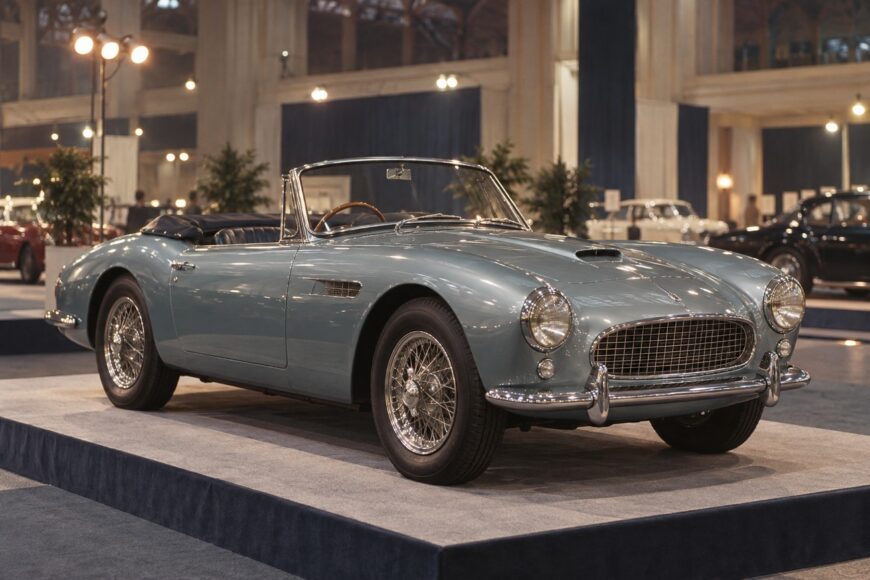
The Lea-Francis Lynx was a 1960 British roadster that reached a motor show but never entered production. Only three cars were built, leaving a machine that is easier to document in outline than to judge as a normal classic.
Its Ford six-cylinder engine, Triumph gearbox, and Lea-Francis chassis make the specification appealing. Power figures, originality, and even the practical meaning of ownership are less certain. Today, the Lynx matters as a rare failed revival whose surviving examples demand evidence rather than enthusiasm.
- A Revival Built on an Old Chassis
- Ford Power, Triumph Gears, Lea-Francis Chassis
- Why the Lynx Never Reached Production
- Owning One: Condition Beats the Badge
- Frequently Asked Questions
- How many Lea-Francis Lynx cars were actually sold?
- What does the Lynx’s 2+2 seating layout mean in real use?
- What engine did the Lea-Francis Lynx use?
- Why did the Lea-Francis Lynx fail to enter production?
A Revival Built on an Old Chassis
Lea-Francis presented the Lynx at the 1960 Earls Court Motor Show after approximately six years away from car production. The appearance suggested a return to the sports-car market, yet the company had no established production stream behind the display car. Series production never began.
The Lynx used an open 2+2 body on a tubular steel chassis based on a 1948 design. That detail places the car in a more complicated historical category than a clean-sheet 1960 roadster. Its later engine, brakes, and running gear updated an older structural idea.
Three Lynx cars were built, and all three known cars are reported to survive. Their survival gives the model unusual documentary value, although it does not guarantee that every surviving component, alteration, or item of trim is original to the period.
Ford Power, Triumph Gears, Lea-Francis Chassis
Power came from a 2,553 cc Ford Zephyr inline-six, while a four-speed Triumph TR3 gearbox handled transmission duties. Dunlop disc brakes and rack-and-pinion steering gave the roadster contemporary sporting hardware. The wheelbase was 8 ft 3 in, with a 4 ft 4 in track.
The engine specification is easier to identify than the output. One historical Motor Sport account cites 102 bhp, while the Lea-Francis club lists a range of 107–149 bhp for Lynx specifications. No single figure is confirmed for all three cars.
That difference may reflect individual engine preparation, carburetion, or changing descriptions of the cars. It makes advertised performance figures unsafe evidence for a particular example. A surviving Lynx needs its own engine and specification checked before any power claim is accepted.
The mixed mechanical ancestry is significant for restoration. Ford or Triumph parts may look familiar, yet their mounting, cooling, drive, and electrical arrangements can be specific to the Lynx rather than interchangeable factory-standard installations.
Why the Lynx Never Reached Production
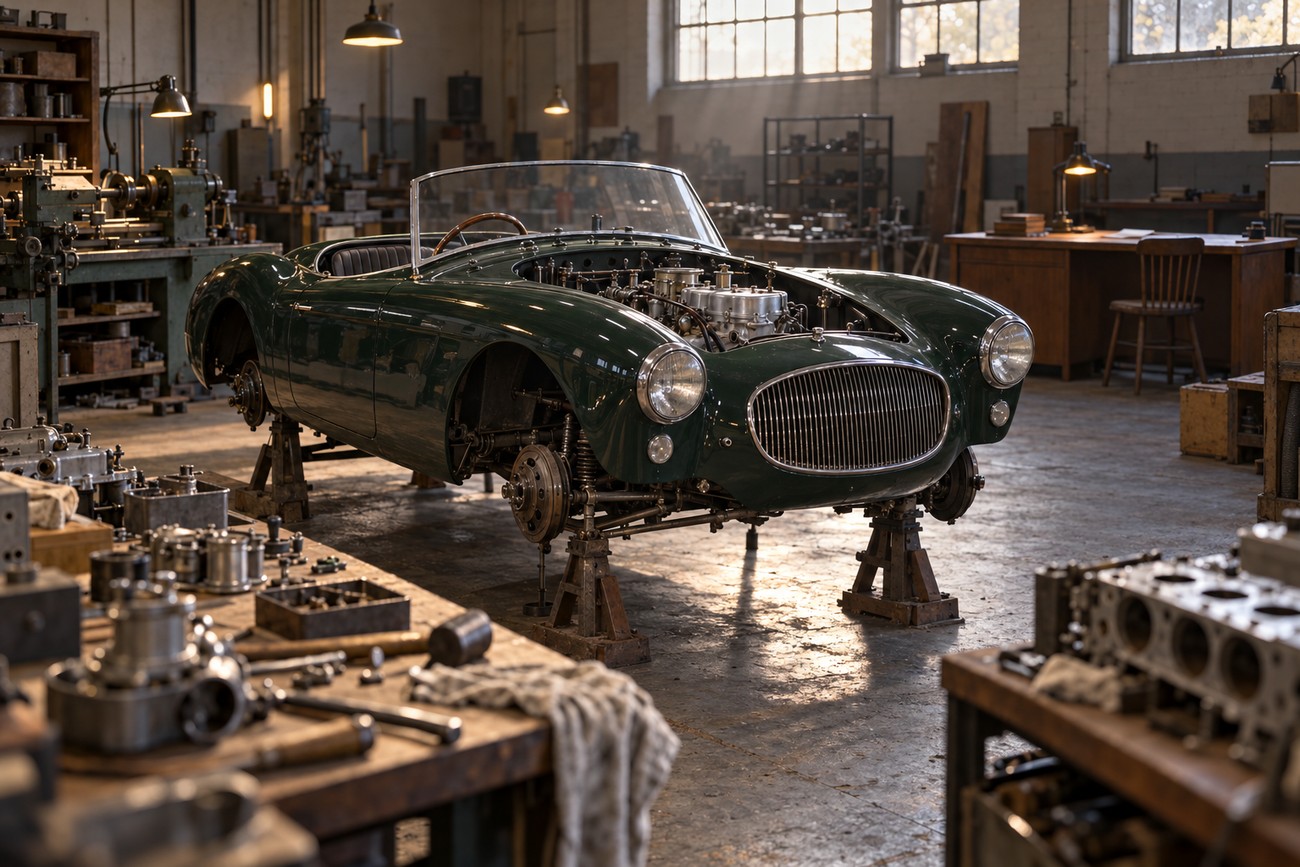
No orders followed the motor-show presentation. Lea-Francis lacked the financial capacity to build cars without advance orders, so the project failed commercially before series production started.
This explanation is stronger than the familiar claim that the Lynx disappeared solely because its styling failed to attract buyers. The company needed committed customers to finance construction, and those customers did not appear. A promising specification could not solve that cash-flow problem.
Nor is there evidence for one universal mechanical flaw that doomed every car. One source describes the vehicle as assembled in a rush over six months, but that isolated claim does not establish a common factory defect across the three cars.
Owning One: Condition Beats the Badge
Owning a Lynx means supporting a unique combination of Lea-Francis, Ford, and Triumph components. Body panels, chassis parts, and other original items have no normal mass-market replacement supply. Specialist help may therefore depend on careful measurement, fabrication, and knowledge of related donor systems.
The 1948-derived tubular chassis deserves close inspection. Weld quality, corrosion, and later adaptations matter more than a low odometer reading. The same applies to the engine installation, cooling system, gearbox mounting, brake plumbing, and electrical work.
Verify the chassis identity and adaptation details before ordering Ford or Triumph parts. A familiar donor component may still require Lynx-specific mounting, cooling, drive, or electrical work.
Provenance should include the chassis number, ownership history, restoration records, and comparison with the known surviving cars. Similar bodywork or a later modification does not prove factory originality. The three known cars are generally regarded as surviving, while the exact specification and originality of each must be established separately.
Open bodywork also raises practical concerns. Corrosion control, dry storage, and restrained seasonal use protect scarce structure and trim. A buyer who treats the Lynx like a common British roadster may budget for routine consumables and discover that the difficult part is proving what the car actually is.
Frequently Asked Questions
The Lynx’s tiny production run leaves several useful distinctions that ordinary model summaries tend to flatten. Built, sold, surviving, and original are separate claims.
How many Lea-Francis Lynx cars were actually sold?
Three Lynx cars were built, while one historical account says that two were sold to customers. The distinction matters because a completed show or development car is not automatically a customer sale.
All three known cars are reported to survive, but their individual histories and specifications still require verification. A chassis record, ownership trail, and physical inspection are more useful than a simple total quoted in a sales description.
What does the Lynx’s 2+2 seating layout mean in real use?
The 2+2 layout means two main seats accompanied by limited occasional rear seating. It offers extra passenger capacity for short journeys, luggage, or children, rather than the space and comfort of a full four-seat touring car.
That arrangement also helps explain the Lynx’s character: it was conceived as an open sporting car with a little added versatility. Buyers should inspect the actual rear space and trim, since the label alone says little about usability in a surviving, possibly modified example.
What engine did the Lea-Francis Lynx use?
The Lynx used a 2,553 cc Ford Zephyr inline-six. Its output is disputed: one historical source cites 102 bhp, while the Lea-Francis club gives a range of 107–149 bhp. The engine and preparation of each surviving car should therefore be checked individually.
Why did the Lea-Francis Lynx fail to enter production?
Lea-Francis did not receive enough orders to finance series construction. The company lacked the financial capacity to build the cars without advance orders, so the project ended after three examples.







