
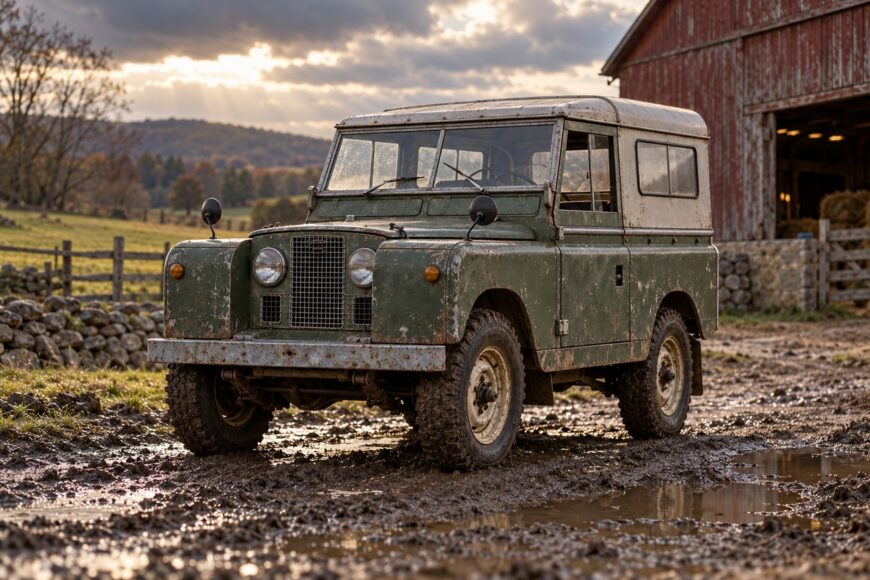
The Land Rover Series IIA looks simple enough to repair at home: a ladder frame, aluminum body panels, leaf springs, and a mechanical drivetrain with little electronic complexity. That apparent simplicity can conceal expensive work. A polished body may sit over a weak chassis, tired bulkhead, improvised wiring, or years of repairs that make the vehicle difficult to understand.
Expect modest performance even from a good example. The Series IIA is noisy, lightly insulated, slow by modern standards, and usually fitted with drum brakes on all four wheels. Steering without power assistance takes effort during parking, while leaks, rattles, and vibration are common ownership complaints. Its appeal comes from mechanical accessibility, genuine utility, and a character that modern SUVs cannot reproduce.
Condition, repair quality, and intended use matter more than a shiny finish or a romantic idea about a particular model year. A sound chassis and correctly operating safety systems make a Series IIA usable; attractive paint alone does not.
- What the Series IIA Was—and Why It Is Not an Old Defender
- The Mechanical Package: Simple, Capable, and Slow by Modern Standards
- What Ownership Really Feels Like: Noise, Leaks, and Work Behind the Wheel
- The Hidden Failure Points: Chassis, Bulkhead, Brakes, and Wiring
- Series IIA Inspection Priorities: Chassis Before Cosmetics
- Making a Series IIA Usable Without Losing Its Character
- Frequently asked questions
- What is the difference between a Series II and a Series IIA Land Rover?
- What year should you stay away from when buying a Series IIA?
- How much is a Series IIA Land Rover worth?
- How many Series IIA Land Rovers were made?
What the Series IIA Was—and Why It Is Not an Old Defender
The Series IIA was produced approximately from 1961 to 1971, occupying the space between Series I and Series III in the Land Rover lineage. It brought a more civilian-looking appearance and broader usefulness while retaining the basic work-vehicle formula: a separate chassis, simple running gear, aluminum body panels, and a cabin shaped around function rather than comfort.
Common wheelbases are 88 inches and 109 inches. The shorter version suits tighter trails, farm work, and easier storage, while the longer chassis offers more load space and was available in several utility and station-wagon configurations. Body style matters to buyers because a restored short-wheelbase truck and a long-wheelbase station wagon can have very different practical value, even when their mechanical condition is similar.
Calling the Series IIA an old Defender creates the wrong expectations. The Defender came later and differs materially in chassis, body construction, ergonomics, and road manners. A Series IIA has a more agricultural driving position, less refinement, and older mechanical systems; its strengths are accessibility and simplicity rather than modern stability or long-distance comfort.
That distinction also affects restoration decisions. A Series IIA can be improved for regular use, yet excessive conversion work may erase the qualities that make the vehicle desirable. Buyers should identify whether they are viewing an original truck, a sympathetically repaired example, or a heavily modified platform wearing Series IIA bodywork.
The Mechanical Package: Simple, Capable, and Slow by Modern Standards
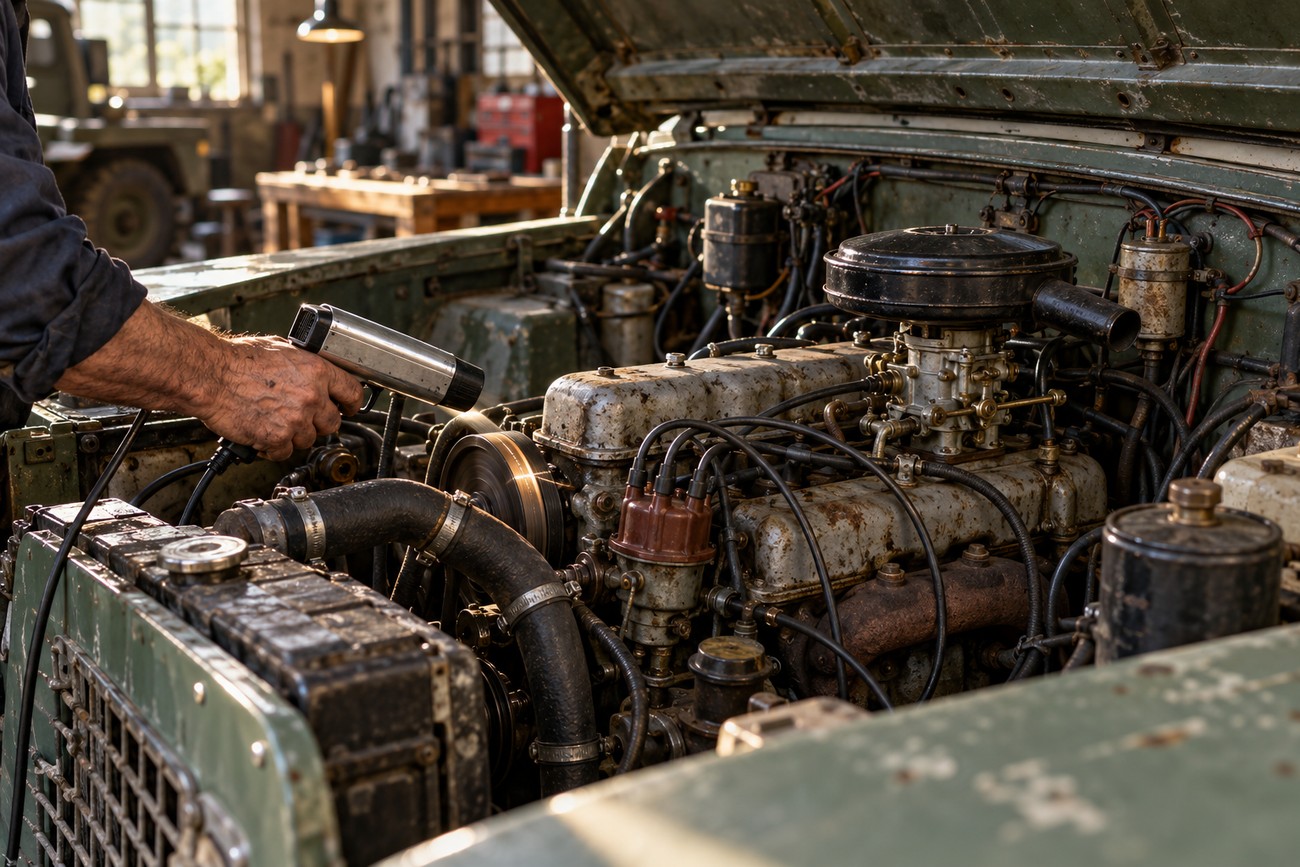
The common petrol engine is a 2.25-liter inline-four producing about 70–72 hp SAE, or approximately 62 hp net depending on market and year. The common diesel is a 2.25-liter inline-four producing about 62 hp SAE. Earlier 2.0-liter variants exist but are noticeably less common, so the engine number and actual specification deserve confirmation rather than assumption from a sales description.
Both engines deliver their useful work at low speeds, and the vehicle’s pace depends heavily on tune, gearing, tire size, axle condition, and load. A frequently quoted maximum speed for the 2.25-liter petrol is about 70 mph, or approximately 112 km/h. That figure describes a published limit rather than a sensible everyday target; many owners find a lower speed more comfortable because noise, vibration, steering effort, and braking demands rise quickly.
The four-speed manual gearbox generally has an unsynchronized first gear, while second through fourth are generally synchronized. First gear therefore calls for deliberate technique, especially during a downshift: matching engine and road speed helps avoid a graunch and reduces wear on the transmission. A driver accustomed to modern manuals may initially mistake this behavior for a fault.
Four-wheel drive is selectable rather than permanent. The front axle is engaged manually, and there is no modern center differential to accommodate different front and rear axle speeds on high-grip surfaces. Used correctly, this system is effective and mechanically straightforward; used carelessly on pavement, it can place unnecessary stress on the drivetrain.
Most Series IIA examples use drum brakes on all four wheels. Properly adjusted drums can provide dependable stopping, but they have less reserve and stability under heat than a modern disc-brake system. Adjustment, clean friction surfaces, sound wheel cylinders, and correct geometry matter more than simply seeing recently installed brake parts on an invoice.
What Ownership Really Feels Like: Noise, Leaks, and Work Behind the Wheel
Owners commonly describe the Series IIA as slow, noisy, and shaky on faster roads. The reasons are mechanical: short-travel leaf-spring suspension, limited sound insulation, a separate body and chassis, agricultural gearing, and decades-old components that may have developed play. A healthy truck can feel purposeful and composed at its intended pace, while a worn one becomes tiring within a short drive.
Unassisted steering can be heavy during low-speed maneuvering, particularly with incorrect tire pressures, wide tires, worn steering components, or suspension modifications. Excessive effort is not simply a charming period feature. It can indicate poor alignment, tired swivels, damaged steering joints, or a vehicle lifted without considering how the changes affect steering geometry.
Oil may appear around the engine, gearbox, transfer case, or axles. Some seepage is familiar on old Land Rover units, yet a growing drip can lower lubricant levels, contaminate brakes, or signal worn seals and bearings. Treating every leak as harmless tends to turn a small service job into a larger drivetrain repair.
Cold starting depends heavily on carburetor condition, choke operation, ignition timing, plugs, battery capacity, connections, and the quality of the grounds. Weak heating and window misting are also common complaints, especially in wet climates. These problems are often blamed on age when careful electrical repair, cooling-system service, or ignition tuning would substantially improve daily use.
The Hidden Failure Points: Chassis, Bulkhead, Brakes, and Wiring
The aluminum outer body panels do not make a Series IIA rust-proof. The chassis, floors, bulkhead, brackets, fasteners, and many other components are steel, and they can suffer ordinary corrosion as well as galvanic corrosion where dissimilar metals meet. Water trapped between panels and steel supports can keep working long after the visible paint still looks presentable.
Pay particular attention to leaf-spring mounts, areas carrying steering loads, and body-support mounts. These locations transfer suspension and steering forces into the chassis, so corrosion or fatigue there has structural consequences. A clean-looking frame can still be weak on its upper surfaces or inside boxed sections, where a casual inspection with a flashlight will reveal little.
The bulkhead deserves the same seriousness. Its condition affects the structure around the doors and windshield, the position of the controls, and the cost of a proper restoration. Floors and footwells may have been patched repeatedly, and a repair that covers corrosion without restoring the surrounding metal can create a tidy appearance with little long-term strength.
Old wiring and poor grounds create intermittent faults that are difficult to trace. Flickering lights, inconsistent gauges, and starting problems may involve several corroded connections rather than one failed component. Drum brakes bring their own hidden risks: adjustment, ovality, contamination, and uneven operation can undermine stopping performance even when shoes, drums, or wheel cylinders are new.
Series IIA Inspection Priorities: Chassis Before Cosmetics
Inspect the structure and safety systems before judging paint, upholstery, or accessories. The following checks should shape the buying decision and the price you are prepared to pay.
| Inspection area | What to inspect | Why it changes the decision |
|---|---|---|
| Chassis and spring mounts | Probe around leaf-spring hangers, steering-load areas, crossmembers, and body supports. Look for scale, cracks, thin metal, distorted mounts, and fresh underseal. | Structural corrosion can require extensive fabrication and may compromise safe use. A sound chassis usually matters more than excellent paint. |
| Bulkhead and floors | Check footwells, door pillars, windshield supports, seams, floor edges, and previous patches from both sides. | Bulkhead repairs are labor-intensive. Hidden corrosion can turn a usable-looking vehicle into a major restoration project. |
| Drivetrain | Check cold starting, oil pressure behavior, smoke, gearbox selection, transfer-case operation, axle noise, and the source and severity of leaks. | Minor seepage may be manageable; low lubricant levels, jumping out of gear, or multiple worn units point to substantial mechanical cost. |
| Brakes and steering | Test pedal feel, pulling, wheel-cylinder operation, drum condition, steering play, alignment, and low-speed effort. | New parts do not guarantee correct adjustment or geometry. Safety-system faults should be resolved before cosmetic work. |
| Wiring and grounds | Operate every lamp, gauge, switch, wiper, and starting circuit. Inspect terminals, ground straps, fuse arrangements, and non-factory additions. | Intermittent electrical faults consume time and may expose undocumented modifications or poor previous repairs. |
| Modifications and originality | Record engine swaps, altered wiring, suspension lifts, axle changes, non-standard controls, and replacement body panels. | Modifications can be useful, yet undocumented or incompatible parts make future servicing and originality-based valuation harder. |
A beautiful body can conceal a costly rebuild because the panels are easier to clean, paint, and photograph than the chassis or bulkhead. Look underneath, lift carpets where possible, inspect both sides of repaired metal, and compare the condition of fasteners with the claimed restoration history.
Probe spring-mount and steering-load areas before judging paint. A tidy patch can hide a structurally weak repair if the surrounding chassis metal was never restored.
Repair quality deserves more weight than apparent originality. Some vehicles advertised as original have already received several non-standard repairs, while a carefully restored truck may contain discreet replacement sections and improved wiring. Establish which parts are original, replaced, or modified before assigning value or planning future work.
Making a Series IIA Usable Without Losing Its Character
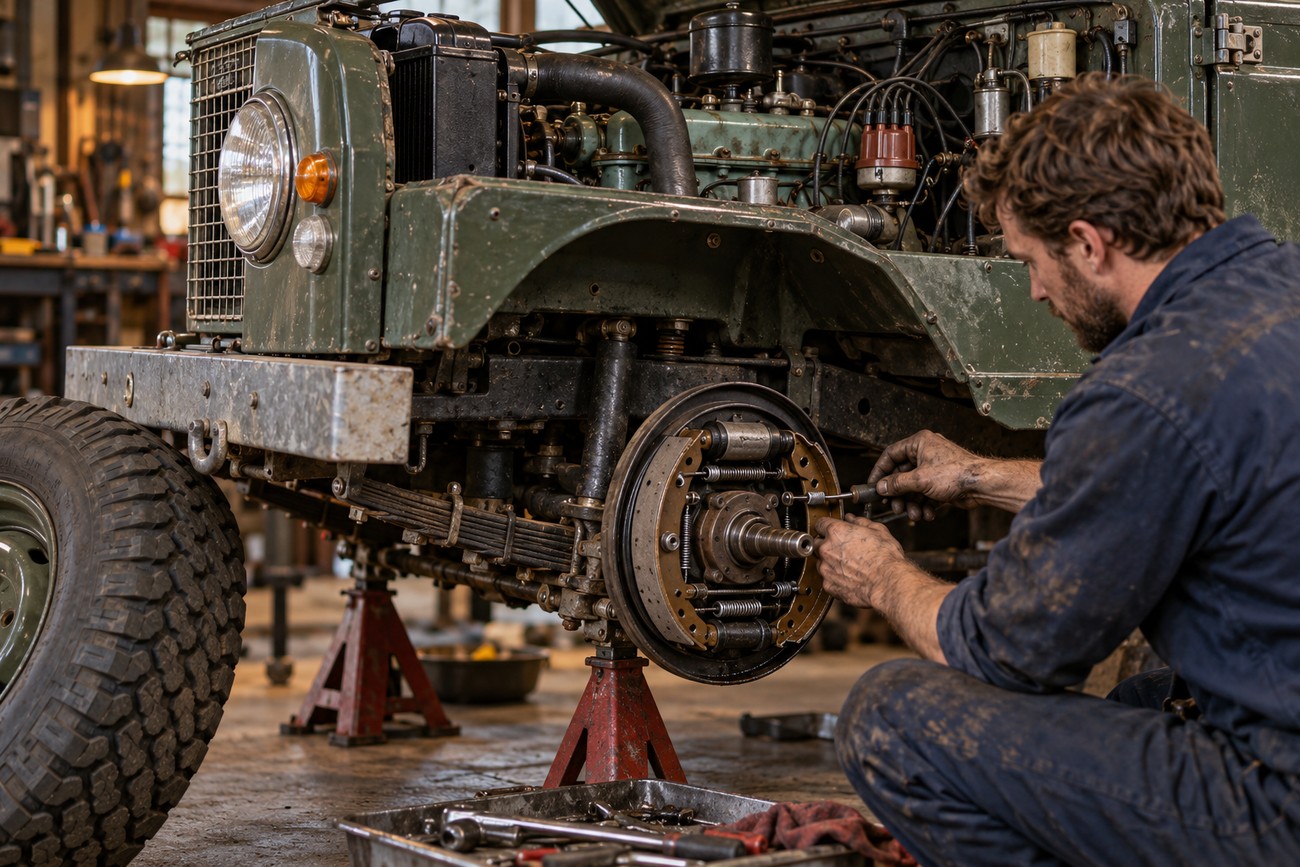
Start with the systems that affect control and reliability. Correct brake adjustment, a properly tuned ignition, a healthy cooling system, clean electrical grounds, and suitable tires for the intended roads will improve ownership more than fresh paint or a dramatic suspension lift.
Cooling and ignition faults deserve diagnosis rather than automatic blame placed on an old engine. Incorrect timing, a restricted radiator, poor connections, weak charging, or a worn distributor can make a sound engine run badly. Fixing the cause preserves the original mechanical character and usually produces a more coherent result than adding unrelated upgrades.
City use makes tire choice, steering condition, and braking consistency especially important. Aggressive tires and excessive lift can increase steering effort, alter geometry, and worsen road manners. A standard-height vehicle with sound bushes and correctly inflated road-oriented tires may be easier and safer to drive than a heavily modified example.
Series owners value originality, and that preference has practical merit: correct parts are easier to understand and maintain. Carefully executed, reversible safety and usability improvements can still be appropriate, particularly when they leave the original components recoverable. A documented repair is easier to trust than a conversion whose wiring, brackets, and parts sources are unknown.
Frequently asked questions
What is the difference between a Series II and a Series IIA Land Rover?
Series IIA is a development within the broader Series II family, with the name commonly used for the generation produced approximately from 1961 to 1971. Listings sometimes use “Series II” loosely, so the badge, chassis details, engine, gearbox, lighting, and market specification should be checked rather than relying on the seller’s wording.
The distinction matters for parts and identification, yet it does not change the central buying rule. Chassis condition, bulkhead integrity, drivetrain state, and repair quality remain more important than a label used in an advertisement.
What year should you stay away from when buying a Series IIA?
No single model year automatically makes a Series IIA a poor purchase. Market-specific lighting, instruments, electrical details, engine combinations, previous repairs, and undocumented modifications can matter more than the date stamped on the vehicle.
Buy the best documented structure and repair work you can verify. A later example with a weak chassis is a worse prospect than an earlier vehicle with sound metal, coherent mechanical systems, and careful maintenance records.
How much is a Series IIA Land Rover worth?
Value depends primarily on chassis integrity, bulkhead condition, drivetrain operation, brake and steering performance, repair quality, originality, and usable specification. A vehicle with attractive paint but major structural corrosion may be worth less in practical terms than a less polished example that is mechanically sound.
Allow for the cost of correcting hidden work. A complete, well-documented vehicle with sensible reversible improvements can justify a stronger valuation than a project assembled from incompatible parts, even if both appear similar in photographs.
How many Series IIA Land Rovers were made?
Production totals should be treated carefully because published figures can vary according to whether a source counts global production, market-specific versions, or related Series II and IIA classifications. A single unverified total can give false precision.
For a buyer, production rarity is less useful than confirming the identity and condition of the individual vehicle. Parts compatibility, market-specific electrical equipment, and the quality of previous repairs will affect ownership far more directly than an uncertain production figure.







