
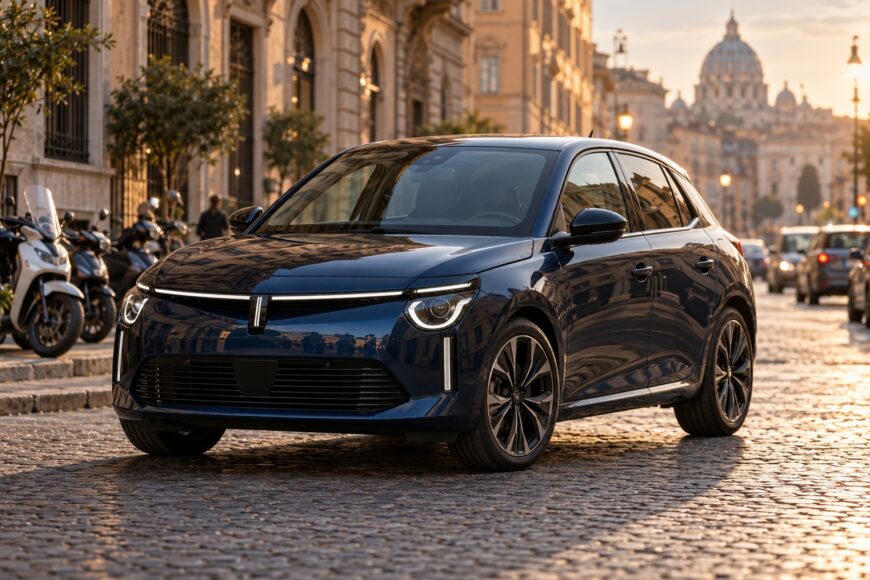
The Lancia Ypsilon sells Italian fashion and Lancia heritage in a class where buyers usually prioritize price, low running costs, and useful space. That tension defines the car: its design-led identity gives it character, while its supermini dimensions impose familiar compromises for rear passengers, luggage, and long-distance comfort.
The accessible European range centers on petrol and mild-hybrid versions, while the electric Ypsilon HF takes the name into serious hot-hatch territory. Research becomes complicated because online adverts frequently mix older generations with the 2024–2026 car, using different engines, transmissions, prices, and trim names. The first buying task is therefore identifying the actual Ypsilon being offered.
- What the New Lancia Ypsilon Actually Is
- Fashion Design Versus Supermini Practicality
- Lancia Ypsilon Powertrains Compared
- Ypsilon HF: Genuine Hot Hatch Hardware or Fashion Statement?
- Range, Comfort and Ownership: The Hidden Trade-Offs
- Price, Availability and the Lancia Network Problem
- The Buying Mistakes That Make Ypsilon Research Misleading
- Who Should Buy the Lancia Ypsilon?
- Frequently asked questions
- Which Italian brand makes the Ypsilon?
- What are the best Lancias ever made?
- How can I tell whether an online Ypsilon advert is for the new generation?
What the New Lancia Ypsilon Actually Is
The current car belongs to the 2024–2026 generation. It is a five-door hatchback with front-wheel drive, positioned in the B segment alongside other compact European city cars. Its approximate dimensions are 4075 × 1755 × 1435 mm, so the Ypsilon remains easy to place in urban traffic while presenting a more substantial visual presence than older examples.
Lancia is using this generation to rebuild its identity around design, interior atmosphere, and the revived HF performance image. The Ypsilon is therefore carrying a brand strategy as well as passengers. Its styling and equipment are expected to do more of the emotional work than a conventional value-focused supermini.
Older Ypsilon listings belong to a much broader marketplace. Previous generations used different bodies and a wide range of petrol, diesel, gas, and LPG powertrains, with different transmissions and equipment. A used advert carrying the Ypsilon name may therefore describe a fundamentally different car from the current five-door model.
The distinction matters for every practical decision. Dimensions, cabin packaging, service requirements, driving character, and resale expectations cannot be transferred from an older Ypsilon to the new generation. Check the model year, body style, engine description, and vehicle documents before comparing prices or specifications.
Fashion Design Versus Supermini Practicality
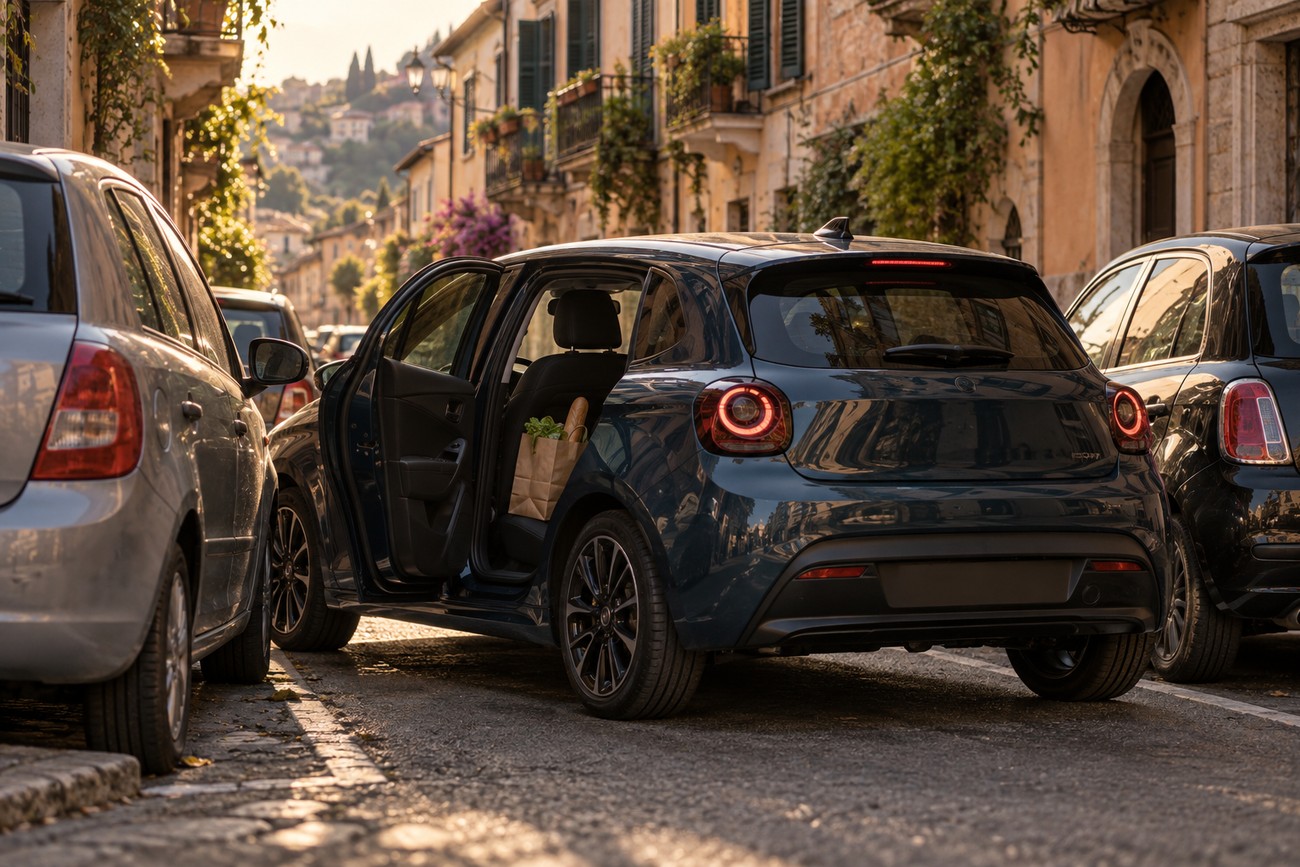
The Ypsilon’s compact format makes sense in dense cities. Its five-door body supports everyday access, and the relatively narrow footprint should be easier to position in tight streets and parking areas than a larger family hatchback. That advantage is most convincing for buyers whose routine consists of short urban trips, school runs, errands, and occasional longer journeys.
Approximate dimensions of 4075 × 1755 × 1435 mm place the car firmly within the small-car class. The cabin and luggage area consequently retain the usual B-segment limits. Adults in the rear may find legroom and shoulder room restrictive, particularly when front occupants sit comfortably, and luggage capacity should be assessed in person rather than inferred from the car’s fashionable presentation.
Long-distance comfort also depends on expectations. A small hatchback can handle motorway travel, yet its compact cabin, limited rear space, and city-oriented proportions may become tiring on extended trips. The Ypsilon’s visual sophistication does not change the physical constraints of its class.
That is the central usability trade-off. You gain maneuverability and a distinctive shape, while larger mainstream superminis may offer a simpler ownership proposition or more convincing everyday versatility. A high trim can improve the perceived cabin experience, but it cannot create additional rear-seat space.
Lancia Ypsilon Powertrains Compared
European listings describe several different versions, and availability, equipment, and prices vary by country and sales channel. The Ypsilon Turbo 100 reference is separate from the specified 1.2 mild-hybrid e-DCT figures.
| Version | Powertrain | Output and torque | Performance | Emissions, range, or battery | Price or availability |
|---|---|---|---|---|---|
| Ypsilon Turbo 100 | 1.2-litre petrol | 100 hp reference in the model name | Not specified in the supplied European listing | Not specified | European listings reference a price from €22,200; 2026 dealer and aggregator listings may differ |
| Ypsilon mild hybrid | 1.2 mild hybrid e-DCT | 110 hp, 205 Nm | 0–100 km/h in 9.3 seconds; 190 km/h | 105 g/km CO₂; Euro 6e-bis | Market-dependent equipment and availability |
| Ypsilon HF | Fully electric; 54 kWh battery | 280 hp, 345 Nm | 0–100 km/h in 5.6 seconds; 180 km/h | 370 km WLTP | Higher-priced performance version; availability varies by market |
The mild-hybrid version is the most easily understood compromise for drivers who need a conventional refueling routine with some degree of electrification. Its 110 hp and 205 Nm are accompanied by a quoted 9.3-second 0–100 km/h time, which gives a clearer picture of usable performance than the power figure alone.
The HF occupies a separate part of the market. Its 280 hp and 345 Nm transform the Ypsilon’s performance envelope, although the electric powertrain, battery, and chassis hardware also raise the price and ownership stakes. Country-specific specification sheets should be checked before assuming that a trim or powertrain advertised elsewhere is available locally.
Ypsilon HF: Genuine Hot Hatch Hardware or Fashion Statement?
The Ypsilon HF is a fully electric hot hatch with a 54 kWh battery. It produces 280 hp and 345 Nm, reaches 100 km/h from rest in 5.6 seconds, and has a stated top speed of 180 km/h. Those figures place it well beyond the image-only performance package often associated with cosmetic hot-hatch trims.
Its hardware supports that claim. The HF uses a Torsen limited-slip differential, four-piston Alcon brakes, and 355 mm front discs. These components are relevant to repeated acceleration and braking, corner-exit traction, and driver confidence, especially when the car is used enthusiastically rather than treated as a fashion accessory.
Evaluating an HF requires more than checking 280 hp or the 370 km WLTP claim: inspect tire and brake specifications, battery condition, and charging history before judging the car’s real value.
The quoted 370 km range is measured under the WLTP laboratory cycle. Actual range depends on speed, temperature, tires, and terrain, with motorway speeds and cold weather generally placing greater demands on the battery. The figure remains useful for comparing official specifications, yet it should not be treated as a universal trip distance.
Electric performance also brings physical compromises. The electric version can weigh up to 1584 kg, and that extra mass affects tires, brakes, energy consumption, and the load placed on suspension components. Specialist braking hardware and performance tires may cost more to replace, while charging access becomes part of the ownership calculation.
That makes the HF a genuine enthusiast choice with practical limitations. It offers unusual technical depth for a small Lancia, especially alongside the brand’s HF and rally positioning, but its price, weight, charging requirements, and range sensitivity demand a more careful assessment than a standard city hatchback.
Range, Comfort and Ownership: The Hidden Trade-Offs
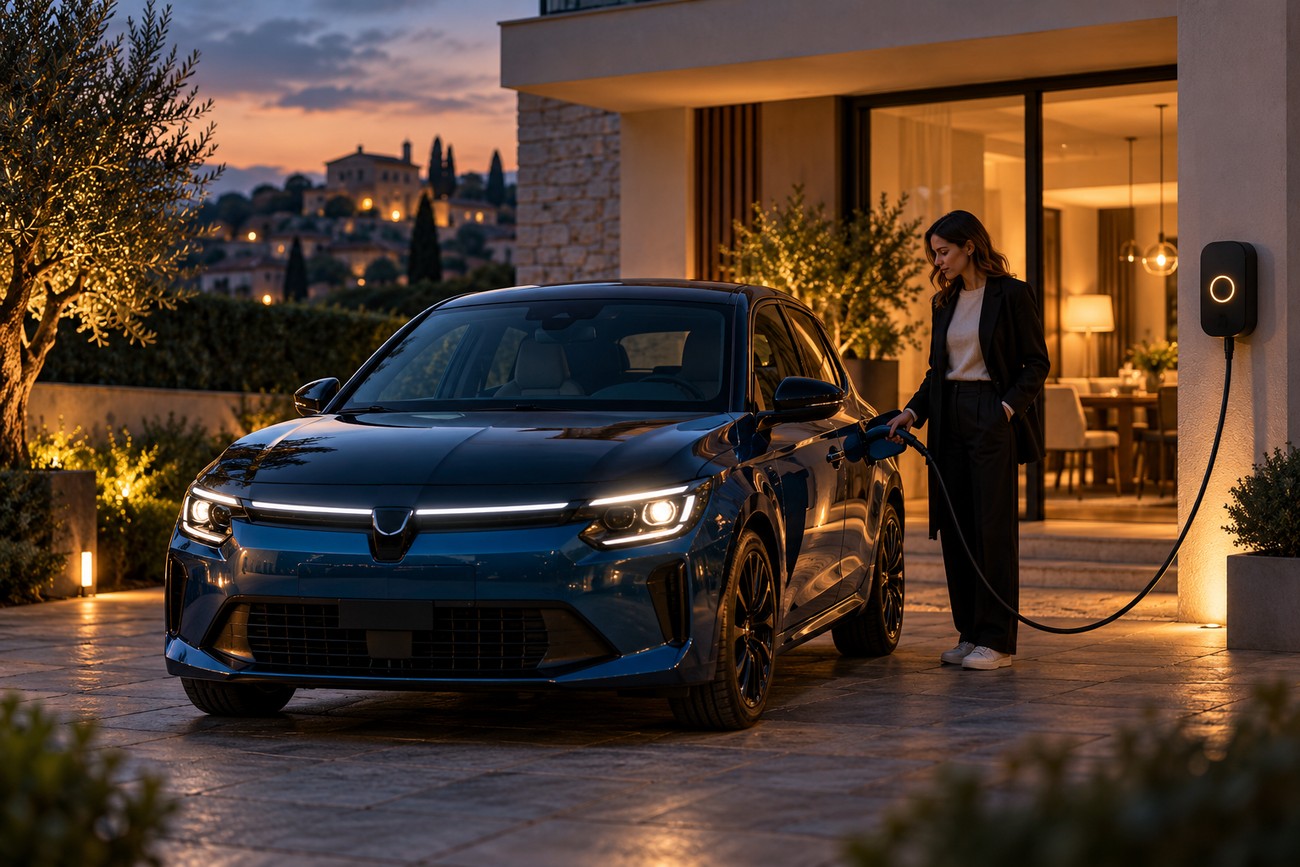
The 370 km WLTP range is a laboratory-cycle figure, not a guarantee of real-world distance. Speed, temperature, tires, and terrain can all change the result, so a buyer who regularly drives long motorway distances should leave a sensible charging margin. Urban use may suit the HF better because lower speeds can reduce energy demand, while regenerative braking can recover some energy.
Charging access is therefore part of the car’s practicality. A driver with reliable home or workplace charging can use the electric version in a predictable routine. Someone dependent on public chargers may experience more planning, particularly in cold weather or on journeys where the available infrastructure is sparse.
The HF’s additional mass and performance equipment can influence ownership costs beyond electricity. Tires, brake components, and specialist repairs may require a larger budget than the standard versions, even though electric drivetrains can reduce some routine servicing needs. Actual costs depend on local labor rates, parts availability, driving style, and warranty coverage.
Comfort remains tied to the Ypsilon’s B-segment dimensions. The design-led cabin may feel more special than a basic commuter car, yet rear-seat space and luggage flexibility still follow small-hatchback logic. Buyers who regularly carry adults, bulky items, or luggage for long trips may find a more practical mainstream supermini easier to live with.
Price, Availability and the Lancia Network Problem
The objection that the Ypsilon is expensive for a small car has a reasonable basis. A European listing for the Ypsilon Turbo 100 references a starting price from €22,200, while dealer and aggregator listings for 2026 may show different prices, trims, and equipment. These figures should be treated as market references rather than a universal price for every country.
Powertrain availability also changes by market. One country may emphasize the petrol or mild-hybrid car, while another gives greater prominence to electric versions or imports. Equipment names can be inconsistent across sales channels, which makes a direct comparison difficult unless the advertised specification is checked line by line.
Lancia’s historically narrower dealer and service network outside Italy adds another ownership consideration. A cheaper imported car may look attractive until routine servicing, warranty administration, diagnostic work, or model-specific parts require travel beyond the nearest local workshop.
Before buying, confirm who will honor the warranty, where scheduled maintenance can be completed, and whether the advertised car is officially supplied to your market. This matters especially for the HF, whose battery, charging system, brakes, and performance hardware deserve access to technicians familiar with the specification.
The Buying Mistakes That Make Ypsilon Research Misleading
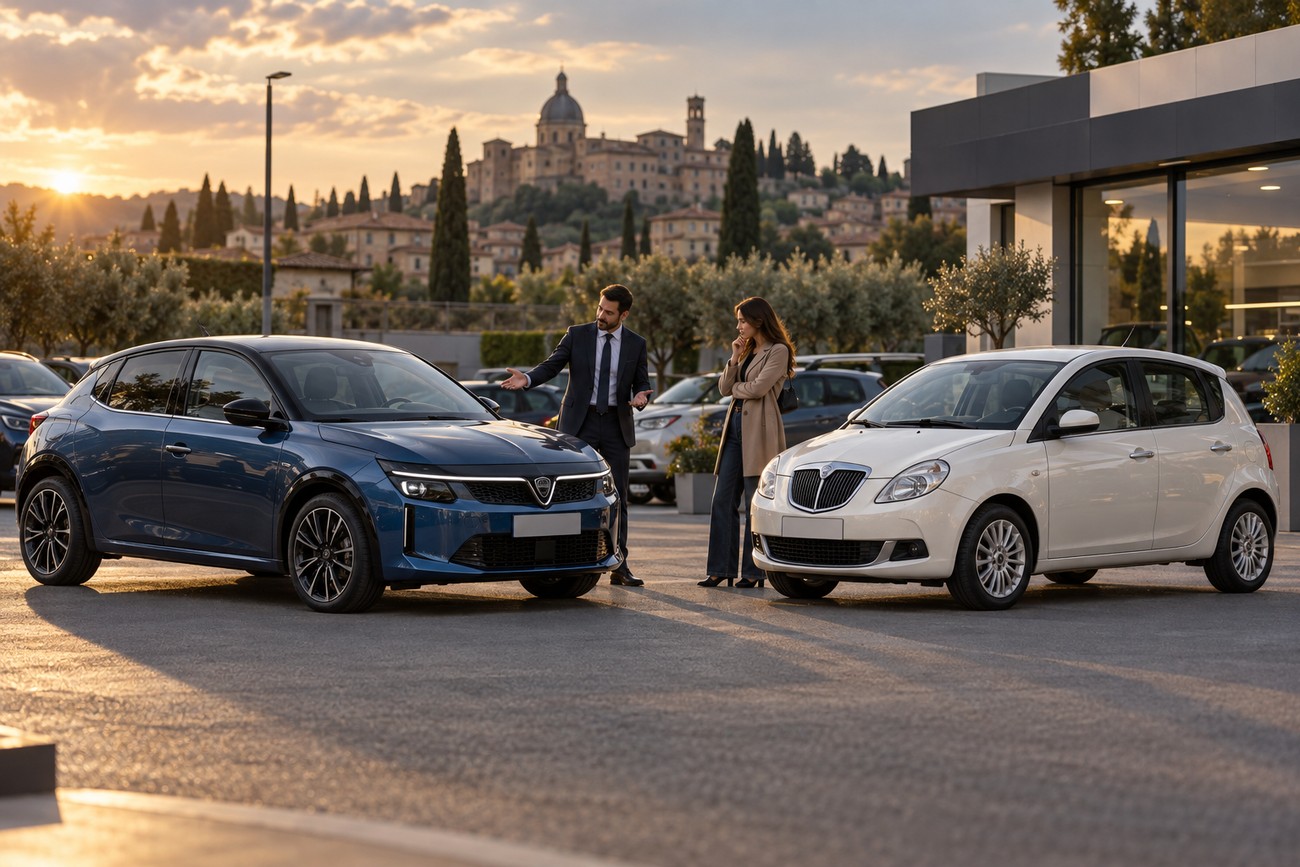
Start by separating generations. The old and new Ypsilon cars use different bodies, engines, and transmissions, while older examples may run on petrol, diesel, gas, or LPG. A marketplace search based only on the model name can place a much older car beside a 2024–2026 example and make both price and equipment comparisons unreliable.
Power figures also need context. Horsepower alone does not explain acceleration or everyday response without considering vehicle mass, transmission type, torque delivery, and traction. The 110 hp mild-hybrid e-DCT and 280 hp electric HF serve different purposes, so their quoted outputs should never be read as a simple measure of value.
High trim levels deserve a careful equipment check. Buyers sometimes pay for a stronger visual identity while overlooking rear-seat space, luggage limitations, tire costs, or features that are absent from the specific car being advertised. Read the original equipment list and inspect the cabin rather than assuming that a premium-looking presentation means broad practicality.
Finally, match the powertrain to your routine. The mild hybrid may suit drivers who want familiar refueling and mixed urban use, while the HF makes more sense when charging is dependable and its performance is genuinely valued. City mileage, motorway frequency, climate, terrain, and local charging access should guide the decision more than the WLTP number or the badge.
Who Should Buy the Lancia Ypsilon?
The standard Ypsilon makes the strongest case for an urban driver who values distinctive Italian design, compact dimensions, and a less anonymous alternative to a mainstream supermini. Its appeal is emotional as well as functional, yet the buyer should accept the usual limits on rear-seat comfort and luggage flexibility.
The HF is aimed at a narrower audience. It is a technically serious electric hot hatch with a Torsen limited-slip differential, Alcon braking hardware, and performance that its 280 hp output supports. That makes it more than a cosmetic package, although its price, charging needs, weight, and potential tire and brake costs weaken its case as a simple range-focused commuter.
A more practical mainstream supermini may make better sense for families, frequent motorway travelers, or buyers who prioritize cabin space, dealer coverage, and predictable running costs. The Ypsilon earns its place through style and character, so its compromises are easier to accept when those qualities genuinely matter to you.
Buy the car that matches the actual market listing, the local service situation, and your daily driving pattern. The Ypsilon can be an appealing small Lancia, provided its fashionable image does not replace a proper check of space, specification, charging, and ownership support.
Frequently asked questions
Which Italian brand makes the Ypsilon?
Lancia is a distinctive Italian small-car brand with a design-led identity and a strong historical connection to performance engineering. The Ypsilon represents its effort to make that identity relevant in the modern B segment through styling, cabin presentation, and the HF badge.
Its position differs from the broader mass-market role associated with larger-volume Italian marques. Lancia traditionally trades on elegance, heritage, and a more individual character, so buyers are paying for a particular brand experience alongside the basic transport provided by a small hatchback.
What are the best Lancias ever made?
A subjective shortlist would include the Aurelia for its engineering importance and refinement, the Stratos for its rally-bred design and competition legacy, and the Delta Integrale for turning a compact hatchback into one of the most celebrated performance cars of its era.
The modern HF badge draws on that sporting history. The Ypsilon HF does not replicate those cars mechanically, yet its 280 hp electric powertrain, Torsen differential, and serious braking hardware show how Lancia is translating the performance idea into a contemporary electric format.
How can I tell whether an online Ypsilon advert is for the new generation?
Check the model year, confirm the five-door body, and read the powertrain description carefully. A current listing should identify the 2024–2026 generation and may refer to the 1.2 mild hybrid e-DCT or the fully electric HF, while older adverts may mention diesel, gas, LPG, or different automated transmissions.
Request the VIN and compare it with the registration documents, build information, and photographs. The VIN and official paperwork provide stronger identification than a marketplace title, especially where imported cars, leftover stock, and older Ypsilon generations appear under similar names.







