
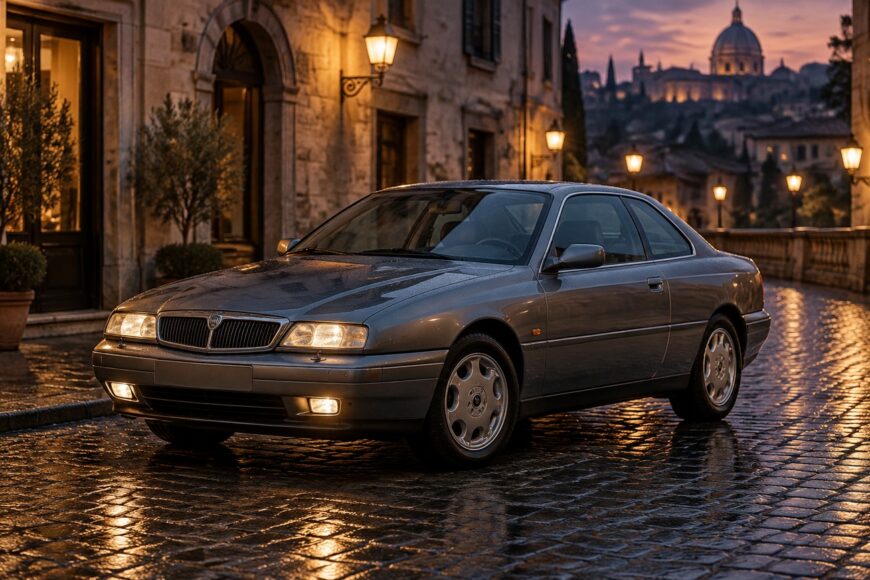
The Lancia Kappa Coupé sits in an awkward place in the classic-car market. It is genuinely rare, with published production estimates ranging from slightly more than 3,200 cars to approximately 3,260, yet rarity alone does not make a car valuable, liquid, or easy to own. A small production run can create interest while making body panels, trim, sensors, and specialist repairs harder to arrange.
Usually dated to 1996–2000, the Coupé has a Pininfarina-developed body and enough visual distinction to attract attention immediately. The buyer’s dilemma begins after that first impression: an attractive example may be a carefully maintained grand tourer, or it may be an inexpensive car carrying deferred belt work, corrosion, electrical faults, and missing parts. The difference is established by evidence underneath the car and in its paperwork, rather than by polish or a low asking price.
- Why the Lancia Kappa Coupé Is So Rare
- Pininfarina Design, Tipo 838 Engineering, and Everyday Character
- Kappa Coupé Engines: What Changes by Year and Market
- Maintenance Traps: Timing Belts, Oil, and Aging Electrics
- Rust, Suspension, and the Defects a Clean Car Can Hide
- How to Inspect and Buy a Lancia Kappa Coupé
- Is Rarity Enough to Make the Kappa Coupé Collectible?
- Frequently asked questions
- What should I do if the Kappa Coupé’s engine, year, or market specification is unclear?
- Which parts should a buyer try to locate before starting a restoration?
- How should two apparently similar Kappa Coupés be compared?
- What evidence is strong enough to support a seller’s claim that the timing belt was recently changed?
Why the Lancia Kappa Coupé Is So Rare
Kappa Coupé production is usually dated to 1996–2000, when Lancia offered a two-door interpretation of the Kappa range. The car was never produced in the volumes associated with an ordinary executive model, and the published total is often simplified to “3,000.” That figure is too precise for the available evidence. Published estimates include slightly more than 3,200 cars and approximately 3,260 cars.
The difference between those estimates matters less than the broader conclusion: the Coupé was built in limited numbers. It is hardly seen today because the original population was small, many cars have disappeared through corrosion or neglect, and surviving examples are spread across different markets. A car can be uncommon at shows while remaining difficult to value consistently.
Scarcity gives the Kappa Coupé a clear identity. It also narrows the pool of replacement parts and experienced repairers. A missing mirror, a damaged trim piece, or an unavailable electronic component can consume more time than a mechanical repair shared with the Kappa sedan.
That combination explains why the car attracts enthusiasts and cautious inspectors at the same time. A well-documented example may offer unusual design and a relatively familiar mechanical base. A neglected example can turn its limited production into an ownership penalty, especially if the buyer assumes that rare automatically means collectible or expensive.
Pininfarina Design, Tipo 838 Engineering, and Everyday Character
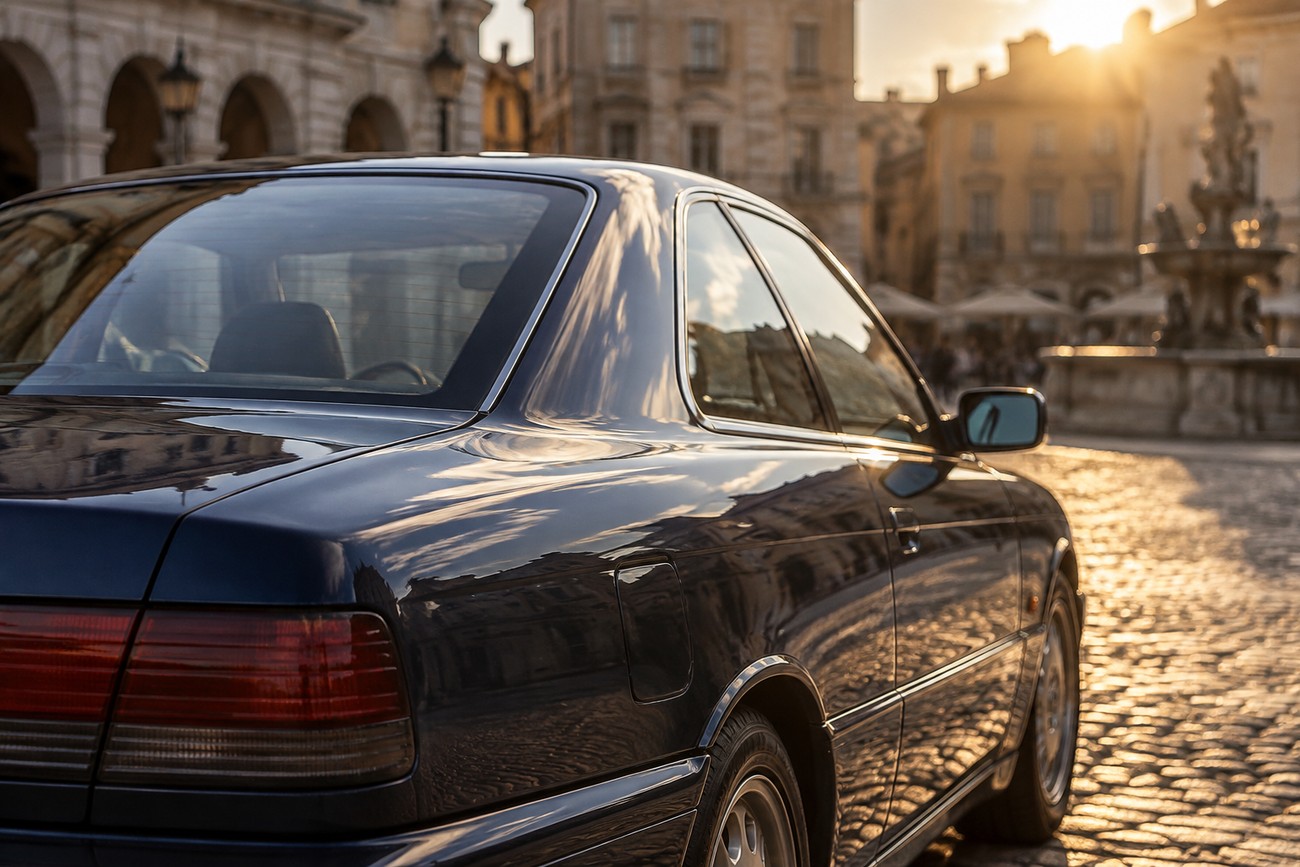
The Coupé body carries the Tipo 838 designation and was developed by Pininfarina. Its proportions give the Kappa a more individual presence than the related saloon, with a long nose, extended rear bodywork, and a cabin set into a relatively short wheelbase. The design has real character, although its visual appeal should not obscure the practical consequences of those proportions.
Technically, the Coupé is close to the Kappa sedan. It shares the basic powertrains and suspension architecture, which is useful when assessing mechanical serviceability. Common engineering between the two models can make routine chassis work more manageable than the rare bodywork suggests, provided the required components are still available and the car has not suffered structural corrosion.
Long overhangs and a relatively short wheelbase affect clearance around curbs, ramps, and workshop lifts. The front and rear ends deserve attention when maneuvering into driveways or positioning lifting arms. Incorrect lift placement can damage vulnerable sill areas, while repeated contact with steep ramps may leave evidence beneath the bumpers or floor.
On the road, those proportions also influence how the car needs to be driven in confined spaces. A test drive may reveal no major mechanical fault, yet it cannot establish whether the underside has been repeatedly struck or whether a previous repair concealed damage. An inspection facility familiar with long-bodied cars is preferable, with the lifting points confirmed before the vehicle is raised.
Kappa Coupé Engines: What Changes by Year and Market
The principal engine families are the 2.4 20V, 2.0 Turbo, and 3.0 V6. Availability varied by production year and market, so an advert’s engine description should be checked against the vehicle identification, engine markings, and market-specific documentation before maintenance assumptions are made.
| Engine family | Specification context | Timing-belt relevance | What to verify |
|---|---|---|---|
| 2.4 20V | Listed at 125 kW/170 hp and 225 Nm; distributed fuel injection | Uses a timing belt; failure can cause severe engine damage | Exact engine identity, belt history, oil use, leaks, and service records |
| 2.0 Turbo | Turbocharged four-cylinder family; availability depended on year and market | Confirm the belt arrangement and factory service schedule for the exact engine | Boost behavior, cooling, oil leaks, ignition, and specification |
| 3.0 V6 | V6 family; availability depended on year and market | Verify the engine-specific belt procedure and documented replacement history | Cooling system, belt service, electronics, and parts access |
The 2.4 20V is commonly listed at 125 kW/170 hp and 225 Nm. It uses distributed fuel injection and a timing belt, making belt service one of the first ownership questions rather than a detail to resolve after purchase. The engine may be familiar to specialists, but age, storage, and maintenance quality matter more than the badge on the cam cover.
Owners report increased oil consumption on aging five-cylinder engines, sometimes after about 60,000 km. This is an owner report rather than a universal rule, so it should prompt measurement and inspection rather than an automatic diagnosis. Check the cold start, exhaust after extended idling and acceleration, oil deposits, crankcase symptoms, and the distance between required top-ups.
Engine availability and service requirements should be treated as version-specific. Two cars that look identical in photographs can need different belt procedures, sensors, diagnostic approaches, and parts searches. Confirming the engine before ordering components avoids a common and expensive mistake: buying parts for the model name instead of for the actual car.
Maintenance Traps: Timing Belts, Oil, and Aging Electrics
The Kappa Coupé can be inexpensive to buy and expensive to put right. The timing belt illustrates the difference clearly. A belt failure can cause severe engine damage, and an undocumented claim that the belt was “recently changed” has little value without a date, mileage, invoice, and confirmation that the rollers and water pump were addressed where required.
Published and owner guidance does not provide one safe number that can be transferred across every Coupé. Owner reports cite approximately 60,000 km, while some publications cite approximately 94,000 km. The correct interval must be checked against the exact engine, production year, and factory schedule. Time elapsed since replacement also matters on a low-mileage car because a vehicle that covers few kilometers can still carry an old belt.
Oil maintenance deserves the same evidence-led approach. Reports of increased oil consumption on aging five-cylinder engines are useful warning signs, although they do not establish a universal failure point. One source gives an interval of approximately 5,670 km for a 1997 version, but without the factory manual that figure should not be presented as a universal rule. Use the correct documentation for the individual engine and record consumption over actual driving.
Aging electrics can imitate mechanical failure. Central locking faults, tired sensors, ignition coils, wiring, connectors, and other electronic components may produce rough running, warning lights, starting problems, or intermittent behavior. A diagnosis that replaces parts at random can become expensive quickly, especially where original sensors are difficult or impossible to source.
The handbrake cable may also require replacement more often than an owner expects from a mainstream car. It should be checked for smooth operation, proper release, and even braking at the rear wheels. Electrical diagnosis and basic mechanical inspection belong together: a poor connection can create a false engine diagnosis, while a seized cable can be mistaken for a broader brake problem.
Rust, Suspension, and the Defects a Clean Car Can Hide
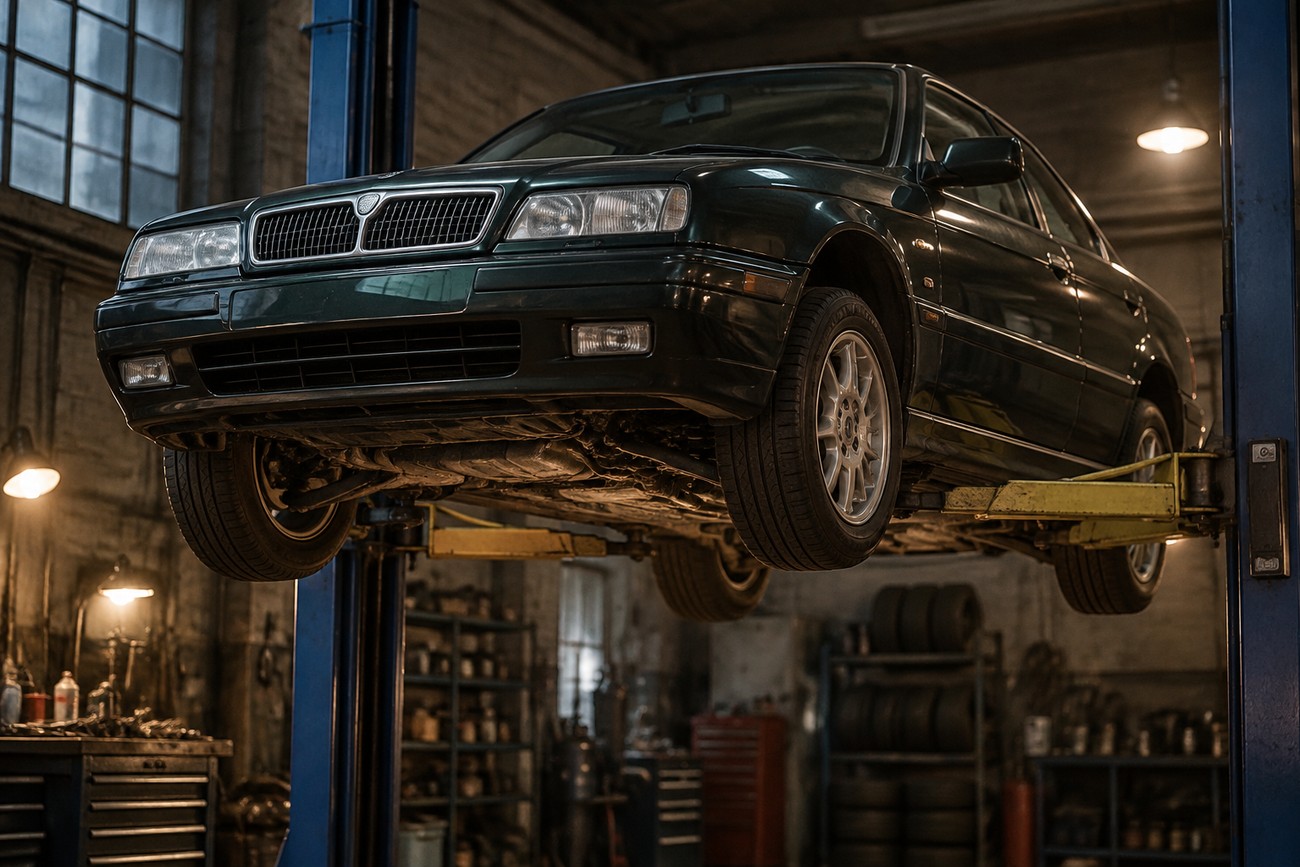
A clean exterior is weak evidence of structural health. Corrosion can affect the sills, floor, wheel arches, suspension elements, and the areas where the suspension is mounted. Rust around a suspension mounting area has a different significance from a small surface blemish because it can affect alignment, repair cost, and the structural integrity of the body.
The underside should be inspected on a lift, with the lifting points selected carefully because the car’s long overhangs and body geometry demand sensible workshop handling. Look for fresh underseal, uneven repairs, trapped moisture, distorted metal, and corrosion that continues behind apparently sound surfaces. A recently washed engine can remove evidence of oil leaks, while infrequent use can make a car look cleaner than its maintenance history warrants.
Tyres provide useful evidence before the wheels are removed. Uneven wear can indicate incorrect alignment or worn suspension components, and the pattern may help distinguish a simple adjustment from a deeper problem. Inner-edge wear, mismatched tyres, and a steering wheel that sits off-center deserve investigation rather than being dismissed as ordinary age-related wear.
Suspension play should be checked with the car safely raised and with attention to the condition of joints, bushes, mounts, and fasteners. CV joints and their dismantlable connections may suffer from seizure or corrosion, so the inspection should cover more than audible clicking on a short drive. A connection that cannot be separated during repair can add labor and delay even when the replacement part itself is available.
These checks explain why a clean Kappa Coupé can still be a poor purchase. Cosmetic presentation can conceal a weak underside, and a quiet engine can coexist with worn suspension or damaged mounting areas. The lift inspection has greater buying value than another walk around the paintwork.
How to Inspect and Buy a Lancia Kappa Coupé
Start by identifying the production year, market, engine, and specification. Compare the vehicle identification number with the paperwork, inspect the engine identification, and treat conflicting advert descriptions as a reason to pause. Parts catalogs and maintenance schedules are often version-sensitive, so assumptions made at this stage can affect every later repair.
Next, establish the timing-belt history. The useful record includes the replacement date, mileage, invoice, engine identity, and the work carried out on the rollers and water pump. If the evidence is incomplete, price the car as though the service is due. A verbal assurance should never be allowed to determine the purchase decision.
A documented belt replacement, a lift inspection, and an electrical diagnosis form one buying gate. Treating them as separate optional checks can leave the buyer negotiating over the price of a car whose main risks have not yet been established.
After the paperwork, use a lift and inspect the sills, floor, arches, suspension elements, mounting areas, brake lines, exhaust, and lifting points. Check for structural corrosion, poor repairs, and evidence of repeated grounding. The underside should also be assessed alongside the tire patterns and suspension play, because these clues often point to work that a static engine inspection will miss.
Electrical diagnosis should cover central locking, sensors, warning systems, ignition components, wiring, connectors, and intermittent faults. Pay particular attention to the availability of original components, including cited examples such as a cylinder-head temperature sensor. A fault that appears minor can become a restoration blocker if the required part has no practical replacement route.
Only after those checks should the test drive begin. Check cold starting, temperature stability, clutch and gearbox operation, braking, steering, suspension noise, engine response, and handbrake operation. Before agreeing on a price, investigate scarce exterior, interior, trim, and electronic parts; an exterior mirror alone can become a separate sourcing project. Low purchase cost has little meaning when an unavailable component determines whether the car can be completed.
Is Rarity Enough to Make the Kappa Coupé Collectible?
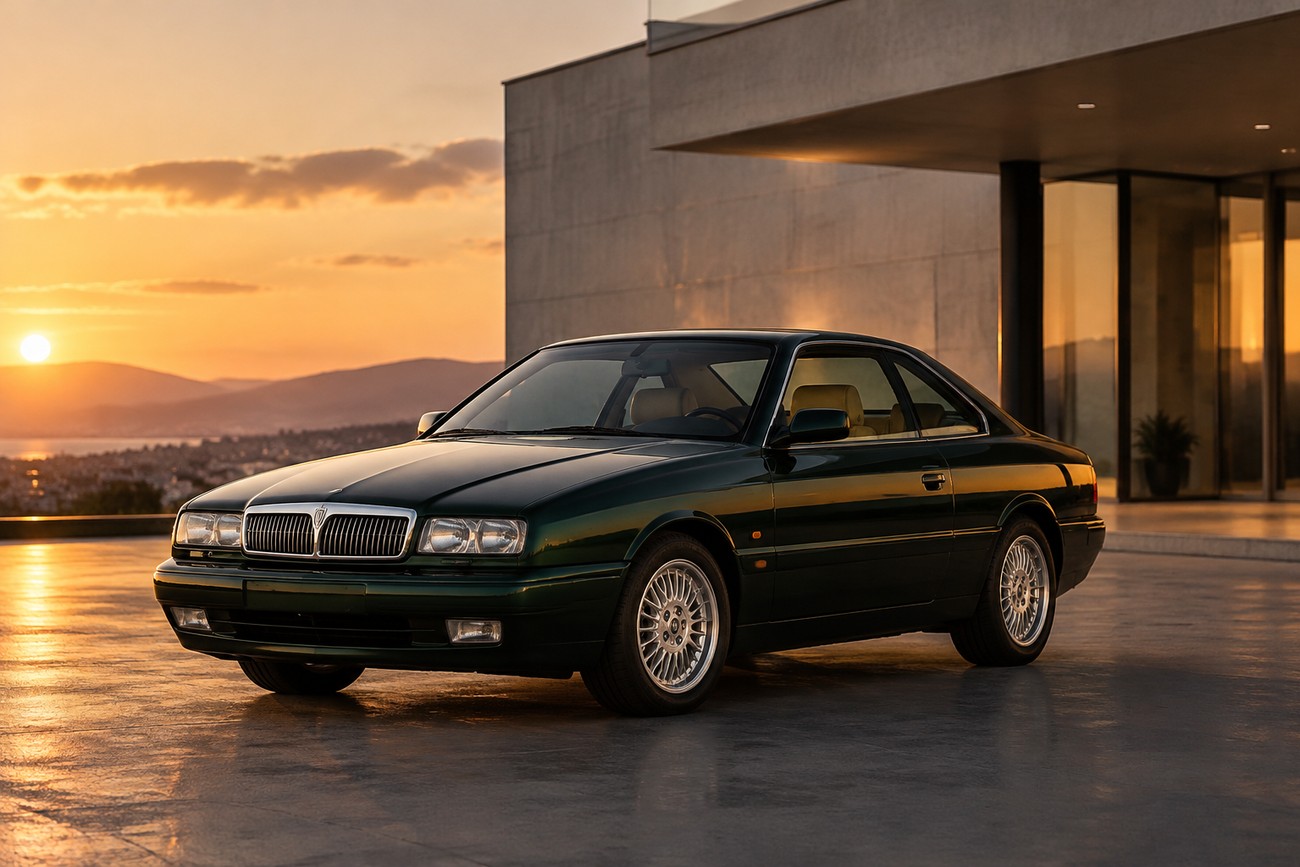
The limited production run supports historical interest. It does not prove strong liquidity, future price appreciation, or an easy resale. Published totals are estimates rather than a universally agreed exact figure, and reliable current data on surviving examples and real price trends is limited.
Rarity works in two directions. It can make a well-preserved Coupé stand out at an event and help a genuine example find an informed audience. The same scarcity can make restoration slower, restrict the choice of replacement parts, and reduce the number of buyers prepared to take on a difficult car.
Condition therefore carries more weight than the production story. Structural integrity, corrosion status, documented service, electrical health, correct specification, and access to parts should determine the price. A rare car with poor records and extensive corrosion is still a poor foundation, regardless of how few were built.
The sensible ownership test is practical: buy the best-supported example you can verify, rather than the cheapest or the most dramatic advertisement. A sound Kappa Coupé can justify its unusual place in the market through design and character. Its rarity becomes an advantage only when the underlying car is complete, maintainable, and honestly documented.
Frequently asked questions
What should I do if the Kappa Coupé’s engine, year, or market specification is unclear?
Pause parts and maintenance assumptions until the VIN, engine identification, and market-specific documentation agree. Compare the vehicle’s paperwork with the physical engine and available factory or specialist information. An advert description is not sufficient evidence when engine availability varied by production year and market.
If the discrepancy cannot be resolved before purchase, treat the car as a specification-risk project and budget accordingly. This affects timing-belt procedures, service intervals, sensors, diagnostic equipment, and parts compatibility. A seller who cannot establish the basic identity of the car should expect a more cautious valuation.
Which parts should a buyer try to locate before starting a restoration?
Prioritize parts that are specific to the Coupé and difficult to substitute: exterior panels and mirrors, trim, interior pieces, and electronic components. Confirm availability and condition before dismantling the car. A mechanically repairable vehicle can remain unfinished if a visible body part or a required sensor cannot be sourced.
Make a parts list from the actual car, then separate items into safety-critical, structural, body, trim, and electrical groups. Secure rare items first, especially those with no clear reproduction or alternative. Routine service components can usually be researched later because the Coupé shares basic engineering with the Kappa sedan.
How should two apparently similar Kappa Coupés be compared?
Compare them in this order: structural condition, documented maintenance, electrical integrity, exact specification, and parts access. The car with better paint may still be the weaker purchase if its sills, suspension mounting areas, belt history, or wiring are uncertain. Cosmetic presentation should enter the decision after the expensive risks have been established.
Then compare the quality of the records and the completeness of each car. A documented, structurally sound example with modest cosmetic wear is usually easier to own than a polished car with missing history. Rarity should be a tie-breaker rather than the main measure of value.
What evidence is strong enough to support a seller’s claim that the timing belt was recently changed?
Look for an invoice or workshop record showing the date, mileage, engine identity, and parts fitted. The record should identify the belt work clearly and indicate whether rollers and the water pump were included where appropriate. A handwritten note, a verbal statement, or a clean-looking belt cover does not establish the service interval.
If the evidence is incomplete, budget for a complete belt service regardless of the seller’s assurance. The exact engine, year, and factory schedule must be checked because published guidance differs, with owner reports citing approximately 60,000 km and some publications citing approximately 94,000 km. The cost of preventative work is easier to control than the consequences of belt failure.







