
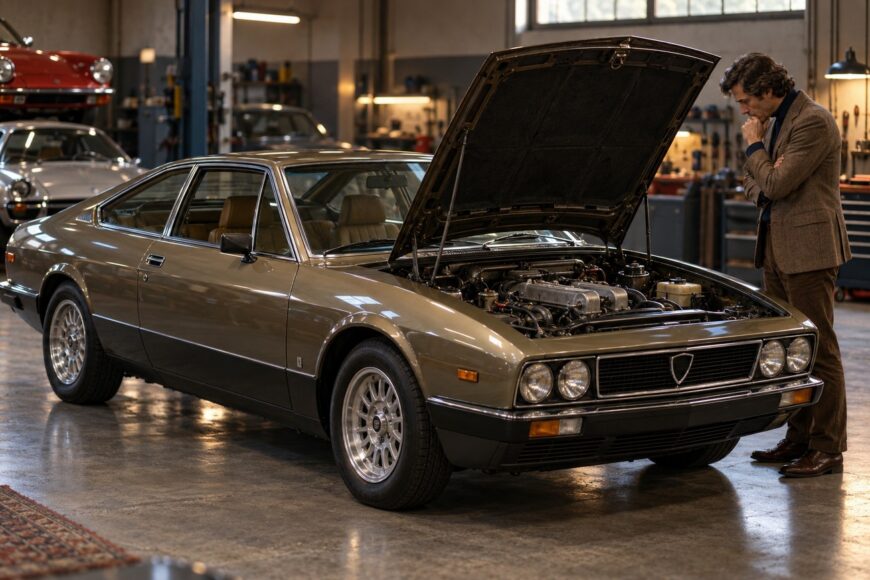
The Lancia Gamma Coupé has the understated elegance of a car designed to cover distance without drawing attention to its engineering. Its low, clean-lined body and unusual flat-four make it appealing to collectors who want something beyond a familiar grand tourer. Yet an overlooked timing-belt or power-steering fault can end a drive abruptly and leave the engine needing serious repair.
That risk deserves attention without becoming a verdict on every Gamma Coupé. A sound example with documented work and access to knowledgeable repair support is a different proposition from a polished car whose mechanical history is uncertain. The useful question for a buyer is whether the individual car can be inspected, maintained, and repaired where it will live.
- Why the Gamma Coupé remains compelling
- The timing-belt and power-steering connection
- What to inspect before buying
- Bringing a long-stored Coupé back to the road
- Reputation versus the car in front of you
- Frequently asked questions
- What should I do if a Gamma Coupé’s timing belt fails while driving?
- How can I assess whether a mechanic understands the Gamma Coupé?
- How should I care for a Gamma Coupé that is driven only occasionally?
Why the Gamma Coupé remains compelling
The Gamma Coupé pairs an elegant two-door shape with a distinctive layout: front-wheel drive, a longitudinally mounted flat-four engine, and a five-speed manual gearbox. Those details are central to its identity, rather than trivia for a specification sheet. They also mean that a buyer should seek someone familiar with the car’s particular engine installation.
The smaller engine displaces 1,999 cm³ and produces approximately 115–120 hp. The 2.5 displaces 2,484 cm³ and is commonly quoted at approximately 140 hp, although specifications vary by series. These are useful reference points when checking an ad, not substitutes for identifying the engine actually fitted.
The 2.5 appeared with carburetors and with electronic fuel injection. A description that treats every 2.5 as mechanically identical can therefore lead to the wrong parts or diagnostic information. Confirm the car’s series, engine, and installed fuel equipment before planning work.
Much of the Coupé’s attraction lies in that combination of restrained styling and unconventional engineering. It rewards a buyer willing to look past the cabin and paintwork to the systems that keep it usable. The following inspection priorities matter more than a small difference between published performance figures.
The timing-belt and power-steering connection
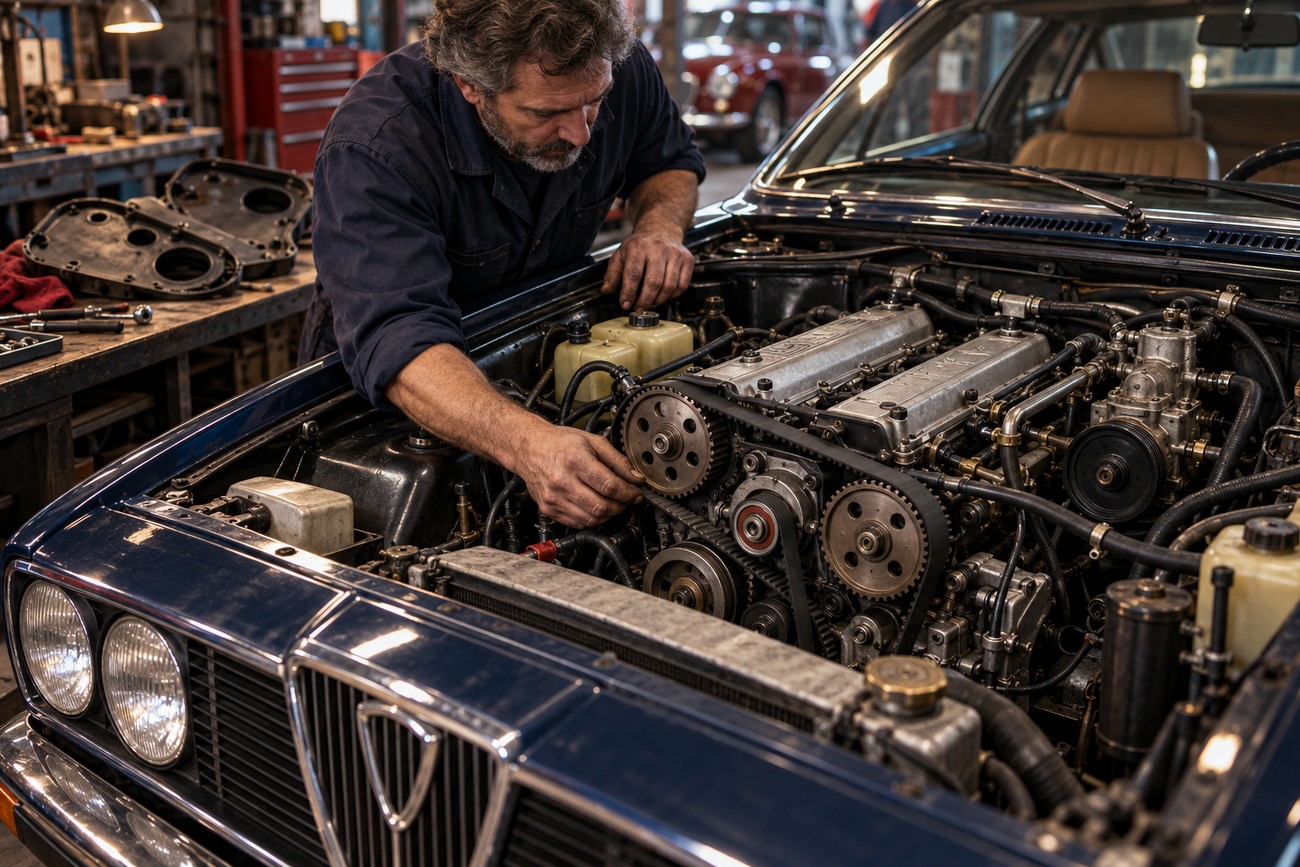
The Gamma’s flat-four uses timing belts, not a timing chain. A belt failure can stop the car without warning and may cause serious engine damage. Belt history should therefore be treated as a central part of the engine’s condition, even if the car starts and drives well during a short viewing.
The power-steering pump drive is linked to the rear of a camshaft. Excessive steering load can add stress to this arrangement and contribute to a timing belt jumping or failing. Starting the engine with the wheels turned sharply, or holding the steering at full lock, is best avoided; neither habit is a substitute for mechanical inspection.
Other belt-related faults can also cause failure, so a broken belt should not automatically be blamed on the steering. A specialist needs to assess belt condition and adjustment, associated components, and whether the pump operates freely. A belt that looks fresh from the outside cannot establish that its tension is correct.
Ask what was done, who did it, and whether the work can be documented. Records of the wider belt job offer stronger reassurance than an undated claim that “the belt is new.” If the evidence is thin, plan and budget for a proper assessment before relying on the car for a long journey.
What to inspect before buying
Begin with the maintenance file rather than the upholstery. Look for documented timing-belt work, including the associated components and correct adjustment, then check the power-steering drive and pump operation. A recently fitted belt without a clear account of the wider job is weak reassurance, however tidy the engine bay appears.
Next, put the car on a lift. Corrosion can extend beyond visible panels into the underside, hidden box sections, and areas where components mount to the body. Paint shine and a clean cabin reveal little about those points; repairs there can be more consequential than cosmetic blemishes.
The widely cited subframe problem chiefly concerned early Beta saloons. It should not be transferred wholesale to the Gamma Coupé or used as an automatic diagnosis. Equally, correcting that misconception is no reason to skip a close structural inspection of the actual car for sale.
Check that the seller’s description matches the engine and fuel equipment present, particularly on a 2.5. Missing or altered components can complicate both diagnosis and parts ordering. An inspection that establishes the car’s configuration is more useful than one that simply confirms it runs.
Before committing, establish whether a suitable specialist and scarce body or engine parts are realistically accessible in your region. Some components may need restoration rather than straightforward replacement. That practical support can determine whether a promising Coupé remains enjoyable after purchase.
Bringing a long-stored Coupé back to the road
A low odometer reading does not protect a stored Gamma Coupé from age. Rubber, seals, fuel hoses, wiring insulation, and brake lines can deteriorate while the car is standing still. Treat a car emerging from storage as a recommissioning project until its safety-critical systems have been checked.
Start with the brakes, tires, fuel lines and delivery, and cooling system before attempting a substantial drive. Then check ignition, wiring, and seals for faults that may only become apparent as the car runs and warms up. Short, controlled tests after each stage give you a better chance of finding leaks or poor operation than an immediate long road test.
A no-start complaint needs diagnosis against factory information for the car’s series. The 2.5 came with carburetors and with electronic fuel injection, so generic advice for a modern injected engine may send the investigation in the wrong direction. Establish the fitted system, then work methodically through fuel delivery, ignition, and the relevant wiring.
Keep track of what has been tested and changed. Old cars can present several faults at once, and replacing parts without a clear diagnosis makes the next problem harder to trace. The goal is a car whose brakes, fuel system, cooling, and electrics have earned confidence before normal use resumes.
Reputation versus the car in front of you
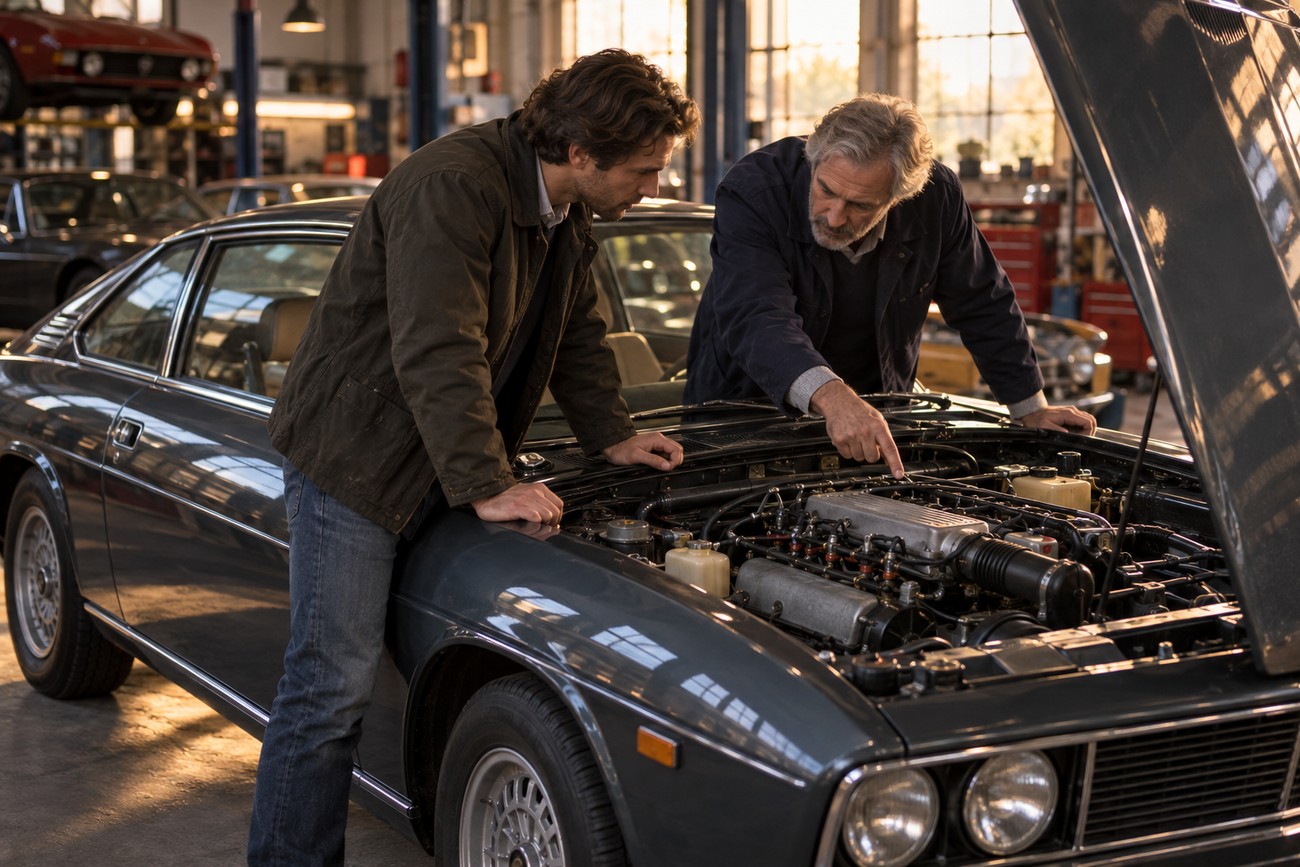
Several shortcuts in the Gamma’s reputation can mislead a buyer. Its engines use timing belts, not a low-attention timing chain, and the camshaft-linked power-steering drive makes belt care particularly important. A running engine does not erase uncertainty about either system’s condition.
Nor is every 2.5 the same specification. Carburetor and electronic fuel-injection versions existed, and quoted output varies by series. Identifying the fitted equipment matters more to future servicing than choosing between slightly different figures in old specifications.
The early Beta saloon subframe story is another poor substitute for inspecting a Gamma Coupé. Judge its structure on evidence from underneath, including concealed sections and mounting points. That approach avoids both an unfair rejection and an expensive assumption that this particular body is sound.
The Coupé’s design remains a strong reason to seek one out. Uncertain belt maintenance, structural rust, or limited repair support can nevertheless outweigh its cosmetic appeal, especially when scarce parts require restoration. The best purchase is the car whose condition and upkeep you can verify, rather than the one whose reputation you find easiest to believe.
Frequently asked questions
Unexpected failures and occasional use call for decisions that differ from a pre-purchase inspection. The immediate priority after a breakdown is to avoid further damage; for an infrequently driven car, it is to prevent small age-related faults from going unnoticed. These answers focus on those ownership decisions.
What should I do if a Gamma Coupé’s timing belt fails while driving?
Stop safely, switch off the engine, and avoid repeated attempts to restart it. A reported belt failure can leave the car unable to drive under its own power, and further cranking may complicate an already serious engine problem. Arrange recovery and have a qualified specialist assess the belt system and engine before it is run again.
How can I assess whether a mechanic understands the Gamma Coupé?
Ask which factory diagrams they would use for your car’s series and how they would identify its fitted fuel system. They should also be able to explain the camshaft-linked power-steering drive, how they check belt adjustment and pump operation, and how they source difficult parts. Specific answers are more reassuring than a general claim to work on classic cars.
How should I care for a Gamma Coupé that is driven only occasionally?
Keep a record of maintenance and regularly monitor the belt system, tires, brakes, fuel hoses, fluid leaks, seals, and wiring condition. Occasional mileage does not stop these materials from aging, so avoid letting the car sit neglected between drives. If it has been stored for an extended period, repeat safety and fluid checks before returning it to normal use.







