
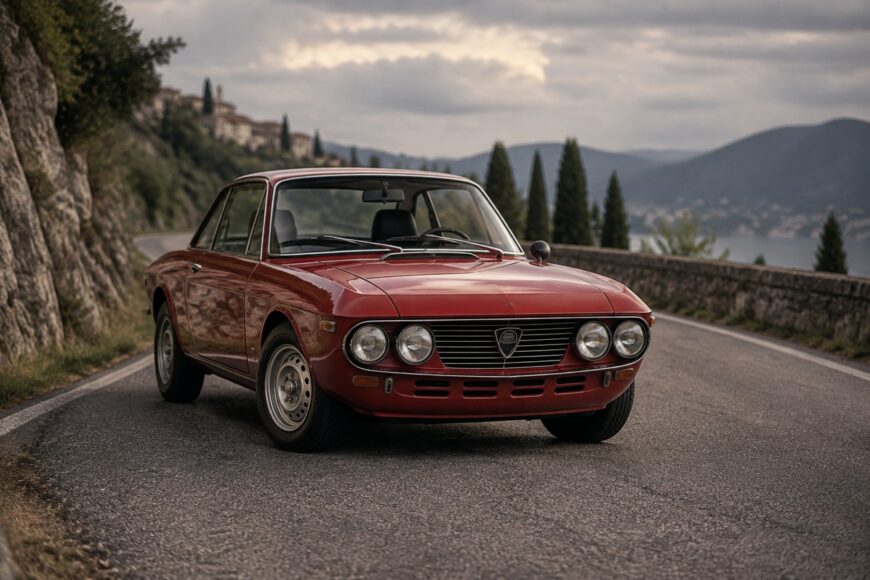
The Lancia Fulvia Coupé wears its rally reputation well, and fresh paint can make one look ready for another special stage. Beneath that finish, however, rust may have reached the sills, floors, or structural members. A running V4 is reassuring; a sound shell can matter more to the purchase because extensive metalwork may demand skills and parts that are harder to secure than routine mechanical repairs.
Built from 1965 to 1976, the Coupé combines front-wheel drive, a compact narrow-angle V4, and a competition history with genuine substance. It also asks its owner to accept period noise, careful tuning, and persistent attention to corrosion. The rewarding cars are those whose metal, repairs, and specification stand up to the same scrutiny as their appearance.
- Why the Fulvia Coupé Earned Its Rally Reputation
- What the Narrow-Angle V4 Is Like to Drive and Maintain
- Inspect the Shell Before You Fall for the Paint
- Rust-Proofing That Protects a Sound Fulvia
- Standard Coupé or HF: Buy the Car, Not the Badge
- Budget for the Work You Cannot See on a Test Drive
- Frequently asked questions
- How many Lancia Fulvia Coupés were made?
- What was the top speed of a Lancia Fulvia Coupé?
- What brand of car rusts the least?
- How many Lancia Fulvia were made?
- What is the top speed of the Lancia Fulvia?
Why the Fulvia Coupé Earned Its Rally Reputation
The Fulvia Coupé was produced from 1965 to 1976 as a distinct two-door model in the Fulvia family. Its front-wheel-drive layout and narrow-angle V4 gave it a character quite different from the rear-drive coupes that often dominate classic-car conversations. On a winding road, its appeal lies in the way those engineering choices work together, rather than in a performance figure detached from the particular version.
The Fulvia Coupé HF is the best-known rally version. Lancia’s competition program gave the shape its enduring credibility, and the company won the 1972 International Championship for Manufacturers. That achievement belongs to a manufacturer’s campaign, not to every Fulvia on the road or to one car credited with delivering an entire title.
That distinction matters in a classified listing. A standard Coupé shares the model’s identity and much of its charm, but an HF badge alone cannot establish HF specification, let alone competition history. Variants differ in equipment and performance, so the exact car deserves more attention than the familiar silhouette.
Period photographs explain why people want a Fulvia; records and inspection establish what they are buying. An individual car may have been restored faithfully, altered for road use, or repaired after hard driving. Its history adds interest when it is documented, while sound metal and honest repairs determine whether that history is enjoyable to own.
What the Narrow-Angle V4 Is Like to Drive and Maintain
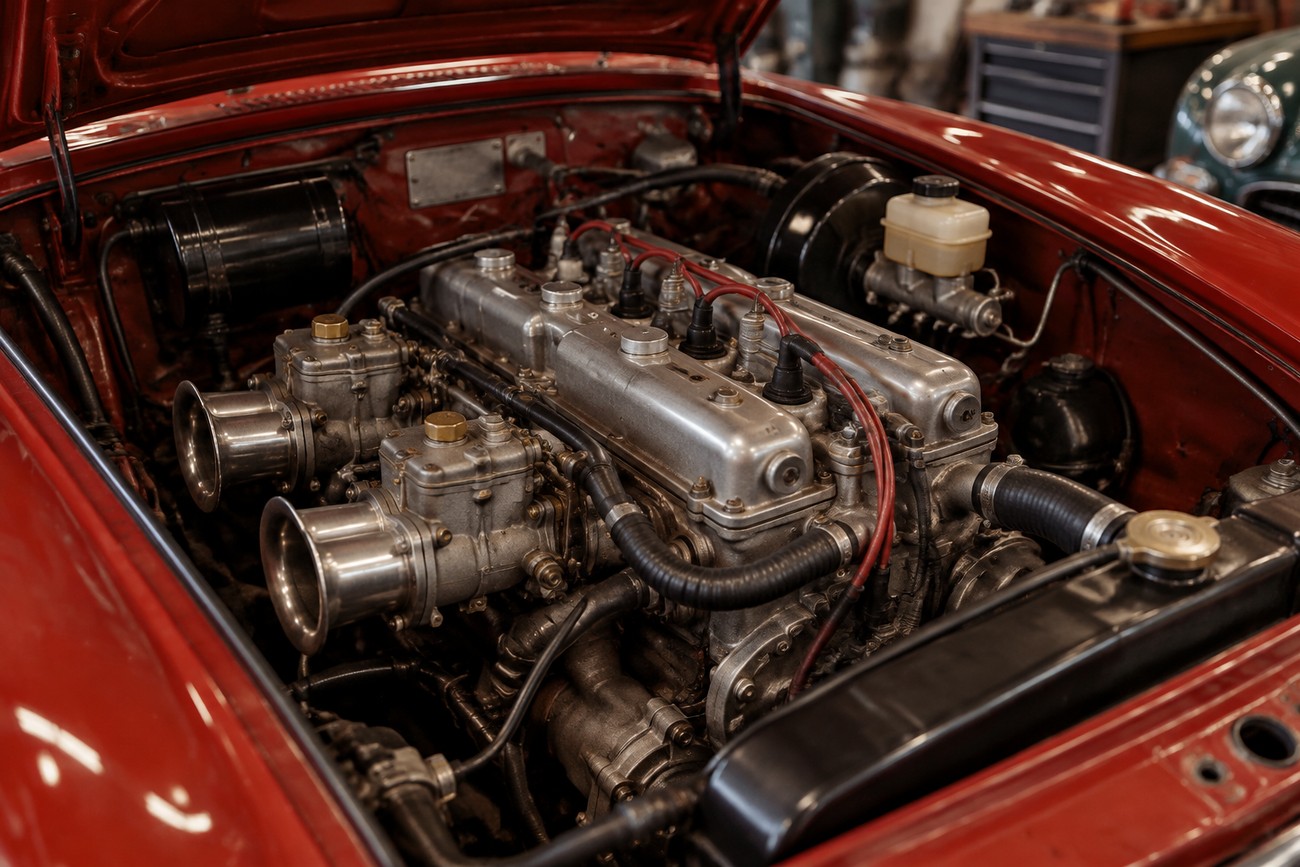
The Fulvia V4 places its cylinder banks at an unusually narrow angle, commonly around 12 degrees, although the angle varies by engine specification. The compact arrangement is central to the car’s character, yet it does not make every service operation straightforward. Access and adjustment can be less familiar than on a conventional inline engine, which is one reason model-specific knowledge pays off.
Coupé variants include 1.1-, 1.2-, and 1.3-liter engines, while 1.6-liter HF variants also exist. Output depends on the particular specification, including its carburetor setup; displacement alone will not tell you how two examples should perform. A healthy, correctly adjusted smaller-engined car can be more satisfying to drive than a more ambitious version whose tune has been neglected.
Before considering performance changes, establish that the cooling system, fuel delivery, ignition, and oil system are in good order. Carburetor and ignition settings need to work together, and a brief test drive may conceal a fault that appears after the engine is fully warm. Ask what work has been done, who did it, and whether the car starts, idles, and pulls consistently under ordinary use.
Front-wheel drive works with independent front suspension and a non-driven rear axle to give the Coupé its period handling character. It remains a small classic car: mechanical noise, limited space, and less isolation on a long highway trip are part of the experience, even in a well-kept example. Separate those inherent compromises from rattles, poor running, or wandering that warrant investigation.
Inspect the Shell Before You Fall for the Paint
Begin a Fulvia inspection with the body, even if the engine starts immediately and the paint photographs well. Check the visible panels and lower door edges, then move to the wheel arches, sills, floors, seams, and structural members. Look beneath seals and underneath the car, where a polished exterior offers no evidence of the metal’s condition. A seller willing to show these areas makes a more useful first impression than a stack of beauty shots.
Surface corrosion on an accessible panel is a different proposition from weakened metal around a sill or structural area. The latter calls for proper assessment and repair, including the condition of adjoining metal, rather than a cosmetic clean-up. Dampness, blistering, uneven sealant, or fresh coating should prompt closer inspection; none is a diagnosis on its own, and photographs cannot settle what lies behind a repair.
A tidy weld is only part of a repair assessment. Check both sides of a previous sill or floor repair and the seams around it: strong-looking new metal is of little reassurance if it joins weakened original metal.
Old welds and accident repairs deserve particular attention because corrosion is only one threat to a sound shell. Check whether doors fit consistently, panels sit as expected, and repairs make sense from underneath as well as above. A specialist can assess geometry and the quality of previous metalwork, especially where a car’s claimed rally or track use raises the possibility of damage beneath later restoration.
Decades of use can also leave fatigue or compromised seams that a mileage reading cannot explain. An inspection should therefore establish what was replaced, how it was joined, and whether concealed areas remain accessible for checking. A sound, well-documented shell can be a better starting point than a running engine surrounded by serious corrosion; that principle does not imply that every V4 repair is cheap.
Rust-Proofing That Protects a Sound Fulvia
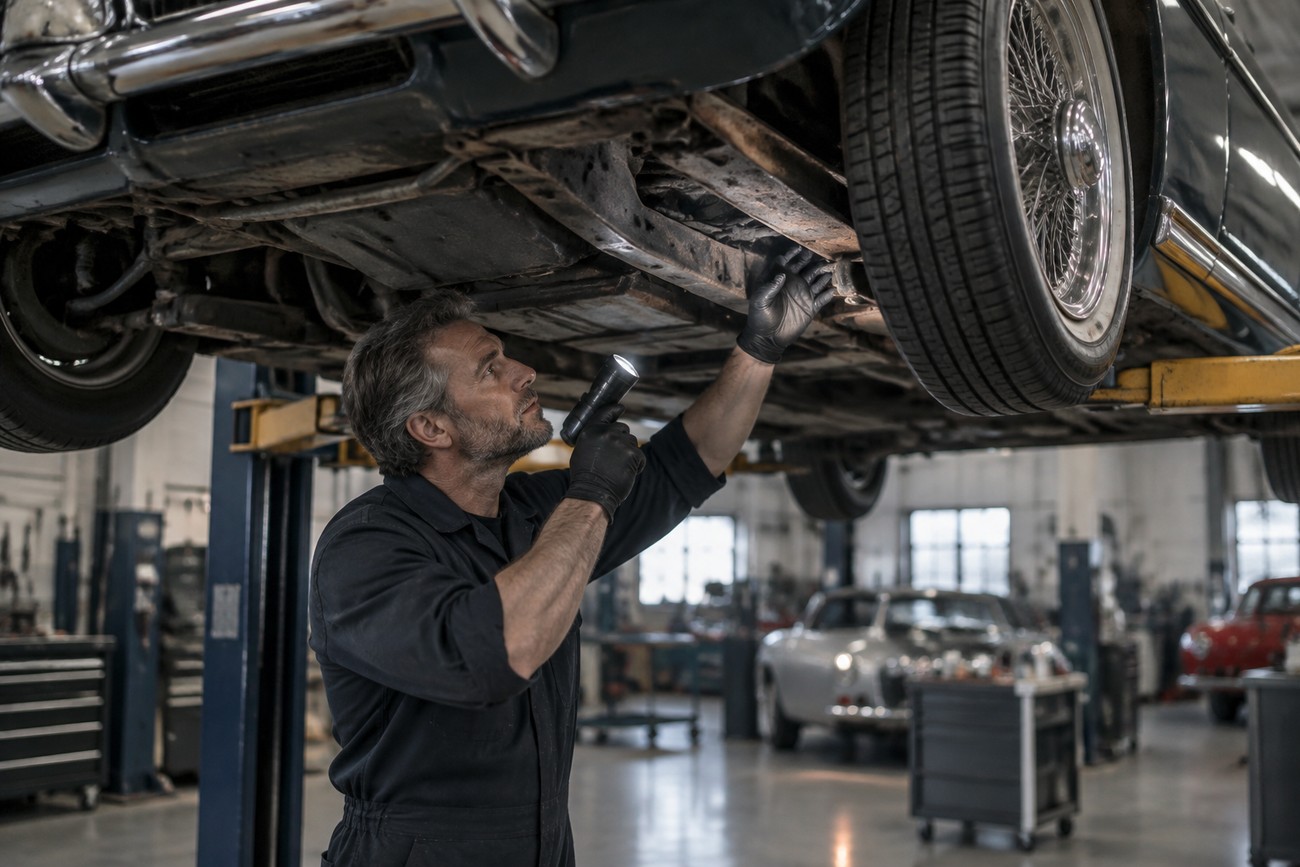
Effective rust-proofing starts with knowing what metal you have. Inspect exposed and concealed areas, repair corrosion properly, and only then protect the finished work. Coating over active rust, damp seams, or poor welding may make a car look orderly for a while, but it can also hide the evidence needed to judge its condition later.
Protection needs to reach the places moisture reaches. That means checking access to cavities, keeping drainage paths open, and treating vulnerable seams and undersides with materials suited to the surface and existing finish. A careful job should leave future inspections possible; an opaque layer that conceals every joint gives a buyer or mechanic little help in spotting a developing problem.
Use and storage determine how much follow-up a car needs. After wet driving, cleaning accumulated dirt and allowing the car to dry are more useful than assuming a previous treatment will last indefinitely. Dry storage helps, provided the car was put away clean and moisture is not trapped in its cavities or under its covers. Revisit arches, door bottoms, floors, and repaired areas as part of ownership rather than waiting for paint to bubble.
This work can have a greater effect on the cost of owning a Fulvia than choosing between engine versions. A stronger specification does not compensate for a shell that must be opened up repeatedly, while preserved original metal saves difficult decisions about fabrication and scarce panels. Rust-proofing earns its place in the budget when it protects sound repairs and makes their condition easier to monitor.
Standard Coupé or HF: Buy the Car, Not the Badge
Not every Fulvia Coupé is an HF, and the differences go beyond lettering on the body. Engine specification, equipment, and authentic HF components all matter when assessing what a car is. Compare its stated variant with the car itself and its paperwork before assigning value to a sporting description.
For a collector, a documented car that remains complete and faithful to its specification may be more desirable than one with more power but a confused identity. Correct trim and body details deserve attention because suitable replacements may be difficult to find. Fresh paint can improve presentation, yet it says little about whether rare pieces were retained or whether the underlying restoration was faithful.
A thoughtfully modified driving project can make equal sense for someone who wants to use the car regularly. The important point is clarity: understand what has changed, whether the work was completed competently, and what would be involved in reversing it. Buying such a car as though it were an untouched HF risks disappointment, while dismissing every sensible modification overlooks a different, legitimate kind of ownership.
Competition stories need evidence that connects the specific shell to the claimed history. A matching-number claim, where relevant, addresses only one part of identity; it does not certify accident repairs, structural condition, or the quality of a restoration. Rally use may enhance a car’s story and coexist with hard use, so documentation and a physical inspection should support each other.
Budget for the Work You Cannot See on a Test Drive
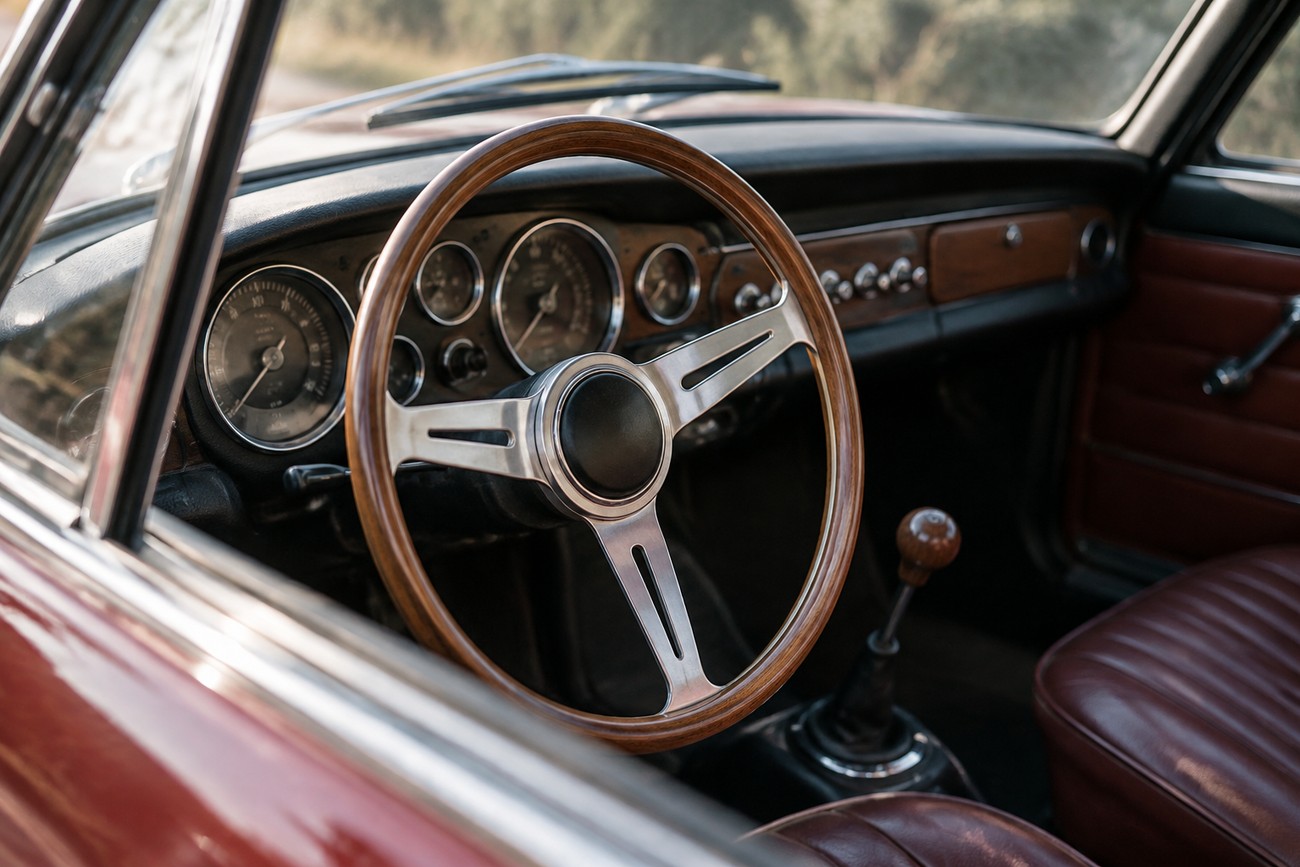
A purchase budget should follow the inspection findings, not the excitement of hearing the V4 run. Prioritize the shell and its repair history, then assess the brakes, wiring, and mechanical condition as separate commitments. An engine that starts readily cannot show whether an old brake system is dependable or whether hidden metalwork was finished properly.
Aging electrical contacts, grounds, and switches can create intermittent faults that disappear during a short viewing. Restoration does not automatically remove them: a car may have excellent paint and compromises in its wiring, brakes, or fasteners. Ask for evidence of completed work and allow enough time to see the lights, switches, and other equipment operate, ideally with a specialist involved.
Plan for the people and parts a project will require before committing to it. Correct body panels and trim can be harder to source than routine mechanical items, and a capable body specialist may be essential if the shell needs repair. The V4 also benefits from a mechanic familiar with Fulvia carburetor setup and its particular service requirements; general experience with old Italian cars is a useful start, not a guarantee.
A cheap-looking car can become costly once inaccessible corrosion, incomplete trim, and unfinished restoration work are counted. Conversely, a sound, documented Coupé with unglamorous paint may leave its owner free to maintain and drive it rather than fund a prolonged rebuild. The Fulvia’s rally legacy is worth preserving, but it does not make every rusty shell a sensible rescue.
Frequently asked questions
How many Lancia Fulvia Coupés were made?
There is no production total given here that can be stated reliably for Coupés alone. The Coupé was built from 1965 to 1976, but a quoted count should say whether it includes only that two-door body style, particular Coupé variants, or other Fulvia models. Check the scope of the source before using its figure to judge rarity.
What was the top speed of a Lancia Fulvia Coupé?
There is no single top speed for every Fulvia Coupé. Ordinary road versions and HF variants differ in engine specification and output, so a speed figure is meaningful only when tied to an exact version and a reliable source. The condition and setup of a surviving car also affect what it can achieve today.
What brand of car rusts the least?
No brand can be named the least prone to rust across all models, years, and climates. Corrosion protection, previous repairs, road-salt exposure, storage, and maintenance vary too widely. For a classic-car purchase, an inspection of the individual shell is more useful than a brand ranking.
How many Lancia Fulvia were made?
A total for all Lancia Fulvias would need to define which body styles, production years, and variants it includes; it is broader than a Coupé-only count. Without a clearly scoped, reliable source, giving a single number risks mixing unlike totals. Confirm which cars are counted before comparing any published figures.
What is the top speed of the Lancia Fulvia?
“Lancia Fulvia” covers more than one body style and engine specification, so it has no universal top speed. Even within the Coupé range, 1.1-, 1.2-, 1.3-, and 1.6-liter HF versions should not be assigned the same figure. Identify the precise model first, then use a speed claim documented for that specification.







