
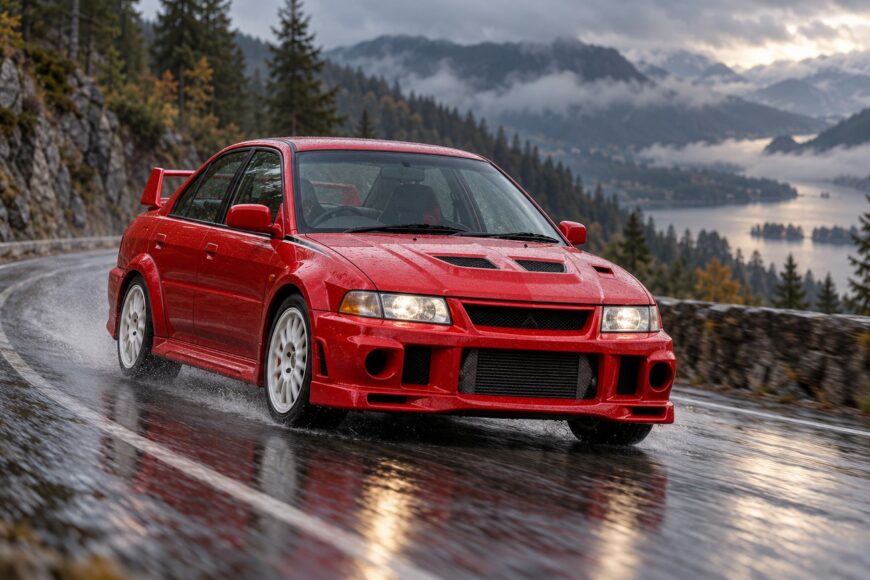
The Lancer Evolution VI Tommi Mäkinen Edition carries a rally-bred reputation, yet any example for sale today is a performance car more than two decades old. Many have been tuned, repaired, or driven hard, and a polished exterior says little about the condition of the drivetrain beneath it. The badge makes the car interesting; its history determines whether it is worth owning.
The appeal reaches beyond a distinctive livery or a headline power figure. The TME combines sharper chassis responses with the provenance of Tommi Mäkinen’s four World Rally Championship titles in a specification that has become increasingly difficult to find intact. Understanding those changes is the enjoyable part. Establishing that a particular car still delivers them is the essential part.
- What the Tommi Mäkinen Edition Really Is
- Evo VI vs. TME: The Specification Differences That Matter
- Performance: Official Numbers Versus the Way It Feels
- The Ownership Compromise: Ride, Reliability, and Age
- How to Check an Authentic, Usable TME
- Collectible Icon or Overpriced Driver’s Car?
- Frequently Asked Questions
- How many Evo VI Tommi Mäkinen Editions were made?
- Which Mitsubishi Lancer Evolution is the rarest?
- What is the average price of a Mitsubishi Lancer Evolution VI Tommi Mäkinen Edition?
What the Tommi Mäkinen Edition Really Is
TME stands for Tommi Mäkinen Edition, a factory version of the Lancer Evolution VI dedicated to the four-time WRC champion. Presented in late 1998, around the 1999 model year, it tied a road car to Mitsubishi’s contemporary rally success. Its name describes a specific Evolution specification rather than a decorative package added to an ordinary sedan.
That distinction matters because the changes reach into the way the car drives. Suspension, steering, and drivetrain-related revisions gave the TME a more immediate character than the standard Evo VI. Factory-specific cooling and aerodynamic details also formed part of the package, although appearance alone cannot establish that a surviving car is authentic.
There is no reason to assume every TME on the international market has identical equipment. Japanese-market and export cars can differ in specification, and decades of imports or alterations can obscure what a car had when it left the factory. A buyer needs to establish the market of origin before treating a missing or unfamiliar detail as proof of anything.
The edition’s significance is therefore partly historical and partly mechanical. Mäkinen’s name gives it provenance; the factory setup explains why drivers seek it out. Both depend on the car in front of you being correctly identified and sufficiently intact to represent that setup.
Evo VI vs. TME: The Specification Differences That Matter
The TME retained the Evo VI’s core layout while changing several elements that govern response. The comparison below describes the factory concept rather than promising that every surviving car still carries its original parts. Market-specific equipment should be checked against the individual car’s documentation.
| Area | Standard Evo VI | Tommi Mäkinen Edition |
|---|---|---|
| Engine and layout | 2.0-liter turbocharged inline-four with permanent all-wheel drive | Same basic layout, using the 4G63/4G63T engine; officially 280 hp and 373 Nm |
| Transmission | Five-speed manual as the comparison baseline | Five-speed manual with a revised transmission-related setup |
| Suspension | Standard Evo VI settings | Lowered, firmer settings |
| Steering | Standard Evo VI response | Quicker steering rack |
| Exterior and cooling | Standard Evo VI details | Factory TME-specific aerodynamic and cooling details |
These differences are most apparent in how readily the car changes direction and settles after an input. Firmer, lower suspension and quicker steering can make a sound TME feel eager on a smooth road, while the familiar turbocharged, all-wheel-drive layout supplies traction on the way out of a bend. Peak power alone does a poor job of describing that combination.
The same comparison explains why incorrect replacement parts matter. An engine capable of making the quoted power does not recreate TME steering or suspension behavior if the relevant hardware has been changed. For a driver, the result may simply feel less cohesive; for a collector, it also weakens the claim that the car remains a correct factory example.
Performance: Official Numbers Versus the Way It Feels
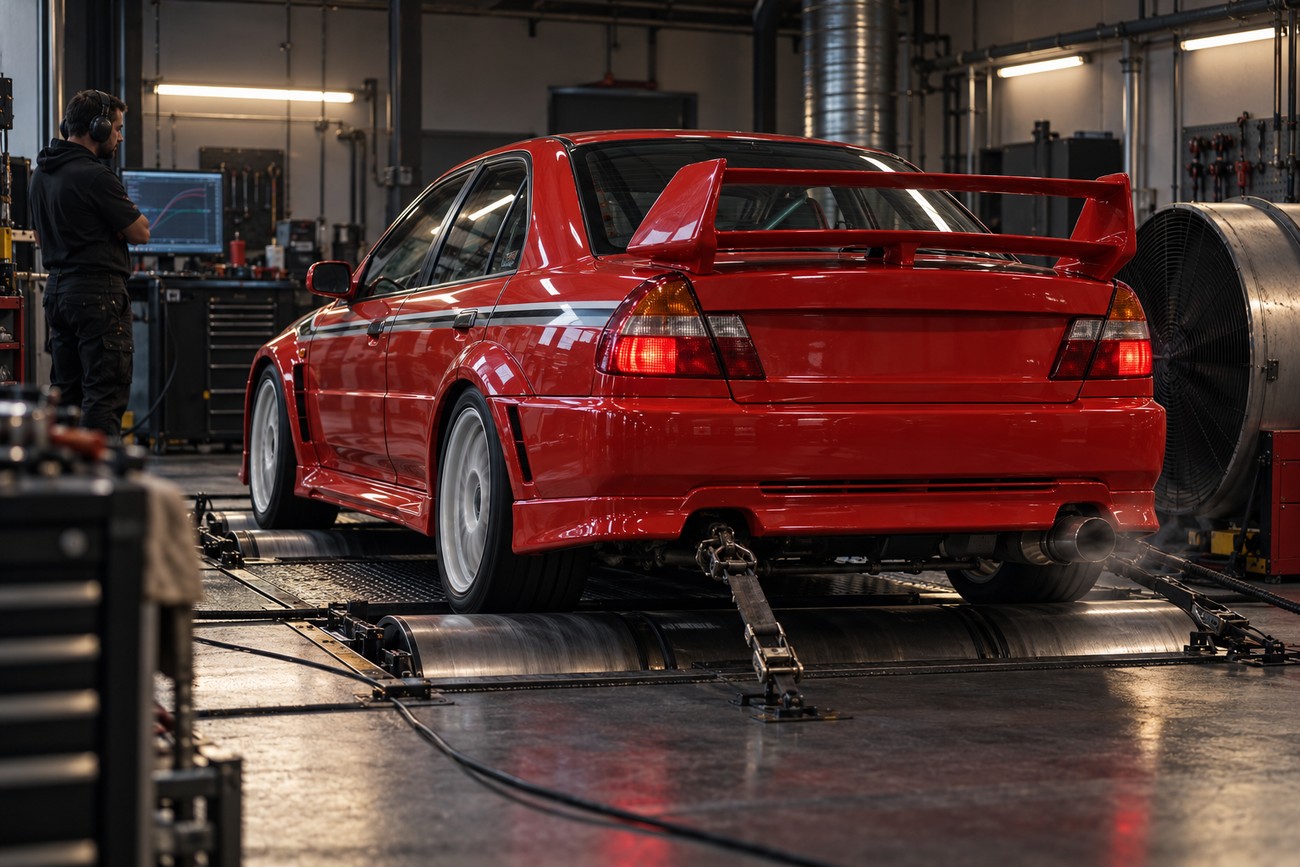
The TME uses a 2.0-liter turbocharged 4G63/4G63T inline-four. Its official figures are 280 hp and 373 Nm; some sources express the power figure as 276 bhp. Claims that every factory car made more than 300 hp are unsupported. A higher reading on an individual car may reflect measurement differences, its condition, or modifications.
Published estimates put acceleration from 0–100 km/h at approximately 4.4–4.7 seconds, depending on the source and method. Reported top speed is approximately 240–250 km/h, with source and market differences to consider. Neither range is a reliable health certificate for an older example, especially one with an uncertain tune or tires that no longer suit its setup.
A healthy TME can feel quicker than the official output suggests. Prompt steering, strong traction, and the delivery of turbocharged torque make speed build with little sense of delay once the car is working well. That sensation is a useful description of its character, not evidence that Mitsubishi concealed a universal 300-plus-hp factory rating.
Condition can change the experience as much as a power modification. A car that hesitates under boost or struggles to put its power down may still carry the right badge and a persuasive dyno sheet. A well-maintained, correctly set-up example is more likely to demonstrate why the TME earned its reputation in the first place.
The Ownership Compromise: Ride, Reliability, and Age
The lowered, firmer suspension has a cost on damaged pavement. Where a smooth road lets the TME respond cleanly, bumps can make it feel busy and nervous. Its quick steering demands attention in traffic, and the cabin offers little of the isolation expected from a modern performance sedan.
Tires, alignment, and suspension condition have an outsize effect on that impression. Uneven wear or tired components can turn an already alert car into one that requires constant correction. Before calling its behavior “rally character,” establish whether it follows the road consistently and whether its suspension has been set up and maintained properly.
The 4G63/4G63T has a strong reputation for durability among enthusiasts, but reputation is no substitute for service records. Turbocharger and cooling-system faults can be costly, particularly when previous tuning has raised the demands on both. A clean engine bay tells you little about maintenance intervals or how the car behaves under load.
Clutch, gearbox, differentials, and other drivetrain components also deserve close attention. They transmit the force of every hard launch and can reveal age or sustained hard use even when the engine still feels strong. On an older TME, drivetrain condition may be more important to the buying decision than an impressive power claim.
Keeping the car correct can add another layer of expense. Original parts may be scarce, and specialized all-wheel-drive work calls for careful diagnosis rather than guesswork. The TME rewards regular use when it is properly maintained, but it is neither an effortless daily driver nor a car to buy on the assumption that its mechanical reputation will cover deferred repairs.
How to Check an Authentic, Usable TME
Begin with identity. Check the identification and number plates, confirm the claimed factory specification, and compare the paperwork with the car’s market of origin and ownership history. Replaced exterior parts or a familiar color scheme are insufficient on their own; imports and conversions make a documented chain of identity particularly valuable.
Next, inspect the structure before discussing performance. Corrosion, fatigue, accident repairs, and signs of rally or track use can have greater consequences than worn trim. Look for evidence of repairs that explains how the car was used and repaired, rather than accepting a fresh finish as evidence that its underlying structure is sound.
A clean engine bay and a claimed dyno figure can coexist with a worn gearbox, slipping clutch, or noisy differential. Driving the car through varied loads and having those components inspected often exposes hard use that presentation cannot.
Modifications need the same scrutiny as the factory identity. Establish what has been tuned, swapped, or removed, who did the work, and whether supporting records exist. During inspection, pay attention to cooling behavior, turbocharger response, clutch engagement, gearbox operation, differential noises, and the condition of suspension components; a specialist assessment is worthwhile when the history is incomplete.
Finally, price the work the car needs against the specification you actually want. A cheaper, tired TME can become an expensive route back to correct stock form when original parts are scarce. If originality matters, an intact car with convincing documentation may offer better value than a more powerful example whose missing factory components are difficult to replace.
Collectible Icon or Overpriced Driver’s Car?
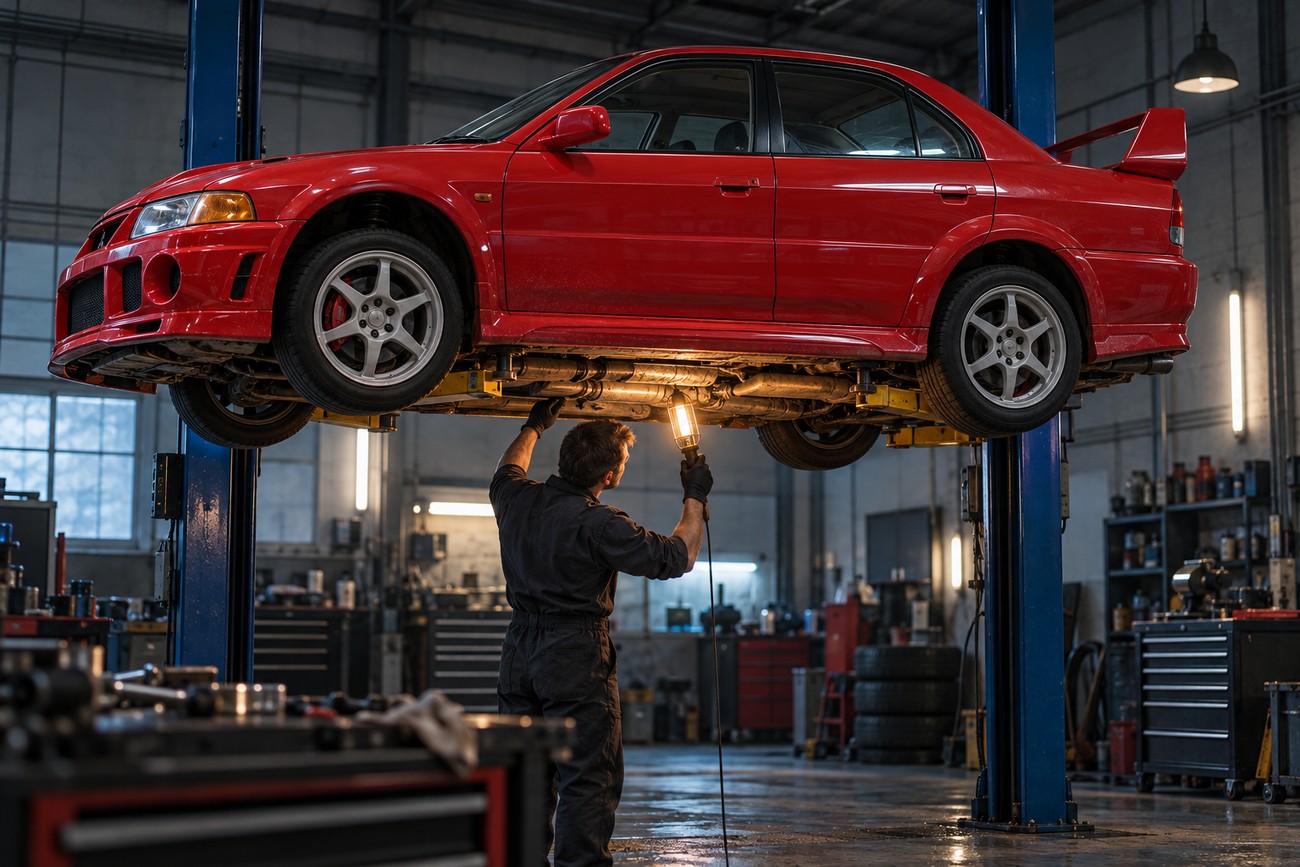
Rarity, the Mäkinen connection, and demand for correct factory specification all influence TME asking prices. None guarantees a sound shell or healthy drivetrain. A seller can price a car as a collectible while its mechanical needs still make it a restoration project.
A modified TME can be an engaging driver, and some changes may suit an owner who has no interest in preserving factory form. It should be valued for the quality and documentation of that work rather than automatically receiving the premium attached to an original example. Conversely, a low-use appearance does not excuse weak records or unresolved corrosion.
The strongest case for the TME rests on its integrated chassis response: steering, suspension, and all-wheel-drive traction working together in a road car shaped by rally priorities. That also explains its limitations. Noise, firm ride quality, and sensitivity to setup are part of the ownership proposition, particularly on poor roads.
The right example feels special because its factory logic remains legible from behind the wheel. The wrong one can consume substantial money merely reaching that point. Buy the condition and provenance first, then decide how much the badge and the driving experience are worth to you.
Frequently Asked Questions
Production, rarity, and price claims need context before they help with a purchase. Figures may describe different markets or different populations of cars. The questions below set out what to compare before relying on a single number.
How many Evo VI Tommi Mäkinen Editions were made?
There is no single verified global production figure established here. Published totals can differ because sources may count a particular market or specification rather than worldwide factory production. Ask what a quoted figure covers, and keep production separate from surviving cars, imports, and current registrations.
Which Mitsubishi Lancer Evolution is the rarest?
No one Evolution can be named the rarest without defining the comparison. Market, homologation status, special-series specification, and the number of original survivors can all change the answer. A locally scarce TME is not necessarily the rarest factory Evolution worldwide, and rarity alone says little about an individual car’s condition.
What is the average price of a Mitsubishi Lancer Evolution VI Tommi Mäkinen Edition?
A universal average would be misleading because markets and cars differ substantially. Compare examples with similar originality, documented provenance, rust condition, modifications, market of origin, and drivetrain health. An asking price becomes useful only after those differences—and the cost of correcting them—are accounted for.







