
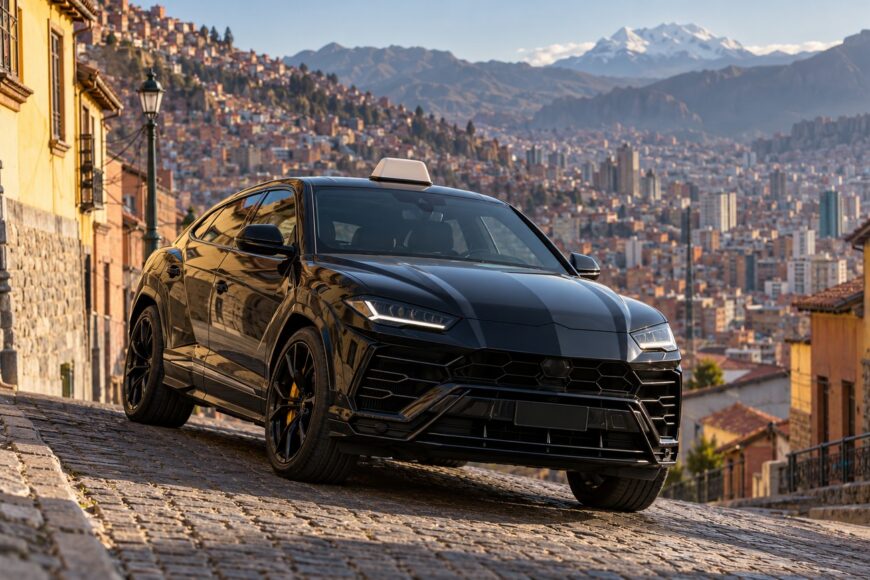
A Lamborghini Urus dressed as a taxi draws attention, but La Paz’s steep, high-altitude streets pose a less photogenic test. A quick launch says little about how a loaded SUV will behave through traffic, repeated climbs, and long descents. For passenger service, sustained usability matters more than one burst of acceleration.
Images or clips of an Urus presented as a taxi or shuttle do not establish a regular service. They could show a promotion, private hire, or an individual ride. The useful question is therefore conditional: if an operator put one to work in La Paz, how would altitude affect its engine, cooling, brakes, tires, and running costs?
- Is the Lamborghini Urus Really a La Paz Taxi?
- Thin Air, Twin Turbos, and the Power You Can Actually Use
- Where a City Shift Tests Cooling and the Gearbox
- The Downhill Problem: Brakes, Tires, and Rough Streets
- Can the Spectacle Pay for Itself?
- The Practical Verdict for a High-Altitude Ride
- Frequently asked questions
- How far can a Lamborghini Urus go on a full tank in La Paz?
- Is there a maximum altitude at which you can drive a Lamborghini Urus?
- How far can a Lamborghini Urus go on a full tank?
- Which car is called the “poor man’s Lamborghini”?
- What is the maximum altitude at which you can drive a Lamborghini?
Is the Lamborghini Urus Really a La Paz Taxi?
La Paz sits approximately 3,650 m above sea level, or about 12,000 ft. The 13,000-foot figure more closely fits the higher El Alto area: its airport is approximately 4,061 m above sea level, or about 13,300 ft. Both elevations make this a meaningful high-altitude driving question, even though a vehicle’s exact route would determine its exposure.
Social media and local media portrayals may show an Urus described as a taxi or shuttle. Without evidence of routine availability and repeated paid trips, they cannot establish a widespread, regular La Paz taxi fleet. A photographed vehicle and an operating transport business are different claims.
That distinction changes the standard of proof. One Urus completing a journey would show that the trip is possible; it would say little about how the vehicle performs over successive shifts with passengers and luggage. Regular service also has to absorb wear, maintenance time, and unpredictable traffic. No particular route, fare, or booking option can be inferred from a clip.
Thin Air, Twin Turbos, and the Power You Can Actually Use
At approximately 3,650–4,000 m, air density is roughly 35–40% lower than at sea level. An engine drawing in a given volume of that air receives less oxygen, which limits combustion unless it can compensate. That density figure is an environmental estimate, not a measured percentage loss of Urus horsepower.
The Urus uses a 4.0-liter twin-turbo V8, although specifications and electrification vary by version and market. Its turbochargers can compress intake air and generally soften the altitude penalty relative to a naturally aspirated engine. They cannot guarantee identical response or sustained output at every elevation: available boost, intake temperatures, and cooling capacity still set limits.
Modern engine controls typically adjust fueling, ignition, and boost in response to sensor readings. A driver might notice less immediate response or more engine effort on a climb without that sensation proving a fault. Equally, strong short acceleration does not establish how much performance remains after prolonged load. There is no basis here for assigning the Urus a measured high-altitude power loss or a special factory altitude calibration.
Where a City Shift Tests Cooling and the Gearbox
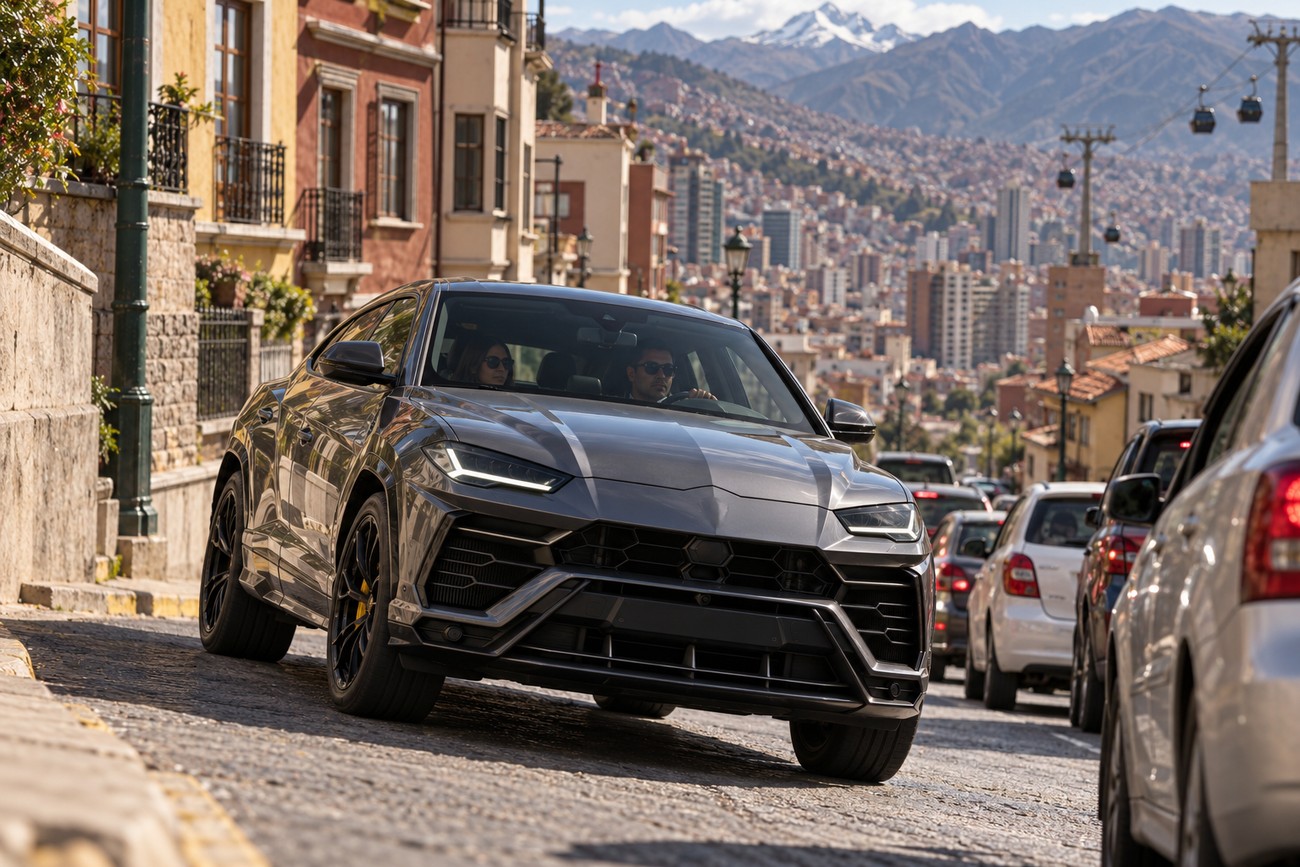
A loaded SUV in slow traffic gets little vehicle-speed airflow across its heat exchangers. At altitude, the thinner air also carries less cooling mass through them for a given volume of flow. Short accelerations followed by sustained climbs can add engine and transmission heat faster than a brief demonstration run suggests.
The automatic transmission may change gears more often as speed, gradient, and load vary. Extra revs, audible fans, or hesitant response can be operating symptoms under those conditions rather than evidence of a defect in a particular Urus. Repeated behavior, especially alongside warnings or abnormal temperatures, deserves more attention than noise alone.
Track temperature indications and shift behavior over successive loaded climbs under comparable conditions. A repeatable change tells an operator more about usable duty-cycle capacity than one hard acceleration.
Driving style matters because turbocharging’s altitude advantage remains subject to boost and temperature limits. Smooth throttle inputs and avoiding unnecessary high-load runs give the cooling system a better chance to keep up. For city passenger work, that consistency is more valuable than the SUV’s top-speed capability.
The Downhill Problem: Brakes, Tires, and Rough Streets
Enough power to climb a hill does not settle how a heavy SUV will descend it with passengers aboard. Brakes turn the vehicle’s motion into heat, and repeated downhill stops can leave less time for that heat to dissipate. Any claim of brake fade in a specific La Paz Urus would require evidence; the underlying demand is a general mountain-driving concern.
Selecting an appropriate lower gear on a sustained descent can reduce reliance on the service brakes, within the vehicle’s operating guidance and road conditions. An operator should also watch pad condition, brake-fluid service, and changes in pedal feel. Those checks matter more to repeat trips than a sporting brake specification on paper.
Ground clearance can help on uneven pavement, yet it does not shield wheels and tires from potholes or prevent brake heat. Large wheels with low-profile tires leave less sidewall to absorb sharp impacts. Tire choice should reflect road conditions and temperature as well as handling; a damaged tire can take a vehicle out of service regardless of how well it climbed the previous hill.
Can the Spectacle Pay for Itself?
An Urus can make a passenger ride memorable, particularly as private hire or a promotional vehicle. That appeal does not establish a workable ordinary taxi business. A one-off ride can justify costs for reasons that a vehicle earning its keep on repeated urban trips cannot.
Fuel, tires, brakes, servicing, and downtime all belong in the calculation for a heavy premium SUV. Short journeys and idling give it fewer steady cruising miles over which to spread fuel use, while climbs, descents, and uneven roads add wear. The important cost is not only a replacement part; it is also the time the vehicle cannot carry passengers.
A private-hire operator might price a distinctive vehicle differently from a metered taxi, but no fare or earnings figure follows from an online clip. To judge viability, an operator would need actual local trip records, maintenance history, and time out of service. Until then, the spectacle is visible; the business case is unverified.
The Practical Verdict for a High-Altitude Ride
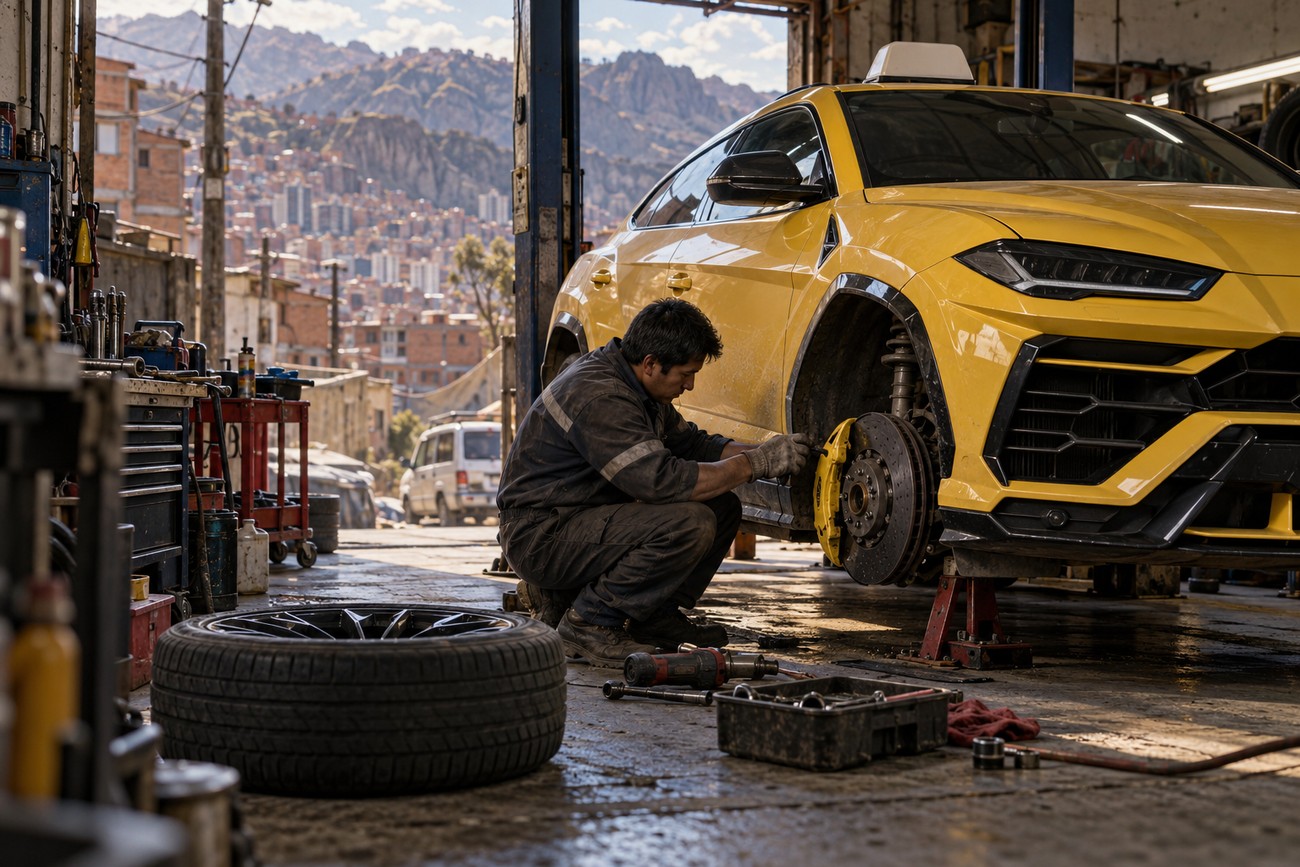
An Urus can operate on roads around La Paz, approximately 3,650 m above sea level, and in the higher El Alto area, where the airport is approximately 4,061 m above sea level. Its 4.0-liter twin-turbo V8 helps mitigate altitude-related engine constraints. It does not remove the limits imposed by heat, thin cooling air, or repeated heavy use.
For regular passenger work, priorities would be measured throttle use on climbs, attention to temperature indications, suitable tires, and well-maintained brakes. A driver should treat a change in shift behavior or pedal feel as a reason to check the vehicle, rather than assume its performance credentials cover every condition. Sustained climbs and descents are the harder test than peak speed.
What remains unknown is equally important. Evidence from a real local operator would be needed to assess reliability, maintenance intervals, and operating costs across a genuine taxi duty cycle. A promotional outing can demonstrate that the Urus attracts attention and completes a trip; it cannot prove that routine service is practical or profitable.
Frequently asked questions
Altitude, fuel use, and the meaning of a “maximum” vary with the vehicle and the journey. These answers separate usable planning information from figures that cannot be established without a specific car or measured trip.
How far can a Lamborghini Urus go on a full tank in La Paz?
There is no dependable La Paz full-tank distance without the exact Urus version, its tank specification, and measured local fuel consumption. Idling, short trips, traffic, and climbs can make a published range a poor dispatch figure. An operator would record fuel added and distance covered across representative local shifts before planning refueling around passenger bookings.
Is there a maximum altitude at which you can drive a Lamborghini Urus?
No manufacturer-certified maximum driving altitude is established in the available facts. El Alto airport’s approximately 4,061 m elevation provides context, not a certified vehicle ceiling. Whether a particular Urus operates acceptably depends on conditions, its maintenance state, load, and thermal performance; a fixed cutoff should not be inferred from a successful trip.
How far can a Lamborghini Urus go on a full tank?
A single full-tank range cannot be given accurately for every Urus. Tank specification and powertrain vary by version and market, while driving speed, load, terrain, and idling change consumption. For a particular vehicle, check its specification and calculate range from fuel used over representative journeys, leaving a reserve rather than treating the result as a guaranteed distance.
Which car is called the “poor man’s Lamborghini”?
The Audi R8 is sometimes given that informal nickname because some versions share engineering with Lamborghini sports cars. It is an Audi, however, and the label has no official definition or consistent price meaning. It offers no useful comparison with an Urus used for passenger transport, where seating, running costs, and duty cycle matter more than a sports-car nickname.
What is the maximum altitude at which you can drive a Lamborghini?
There is no single stated maximum driving altitude for every Lamborghini. The name covers different vehicles and powertrains, so one universal ceiling would be misleading. For a specific trip, assess road access, vehicle condition, load, weather, and cooling performance. Do not treat the elevation reached by one Lamborghini as a certified limit for another.







