
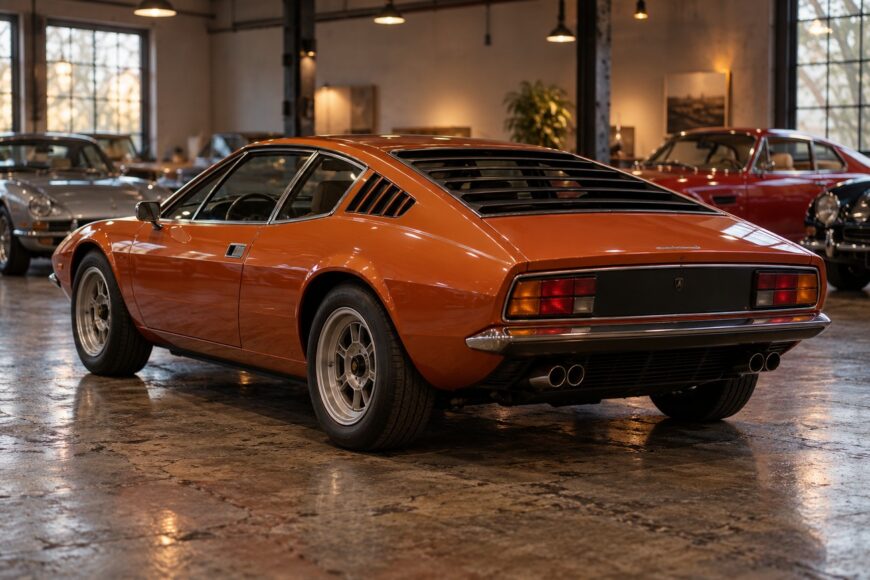
The Lamborghini Urraco offered a striking proposition: a relatively attainable, mid-engine Lamborghini with room for more than two occupants. It was also difficult to sell and could be harder to maintain than its place in the range suggested. That tension still shapes its reputation among classic-car buyers.
Was the Urraco a failed idea, or an appealing car undermined by its execution? Its compact V8 layout, sharp Bertone styling, and 2+2 cabin gave it a purpose distinct from Lamborghini’s larger sports cars. The question is how much of that original promise survives in a well-kept car today.
- A smaller Lamborghini with a larger ambition
- What the engineering promised—and what the cabin delivered
- P200, P250, and P300: how the versions differ
- Why the baby bull struggled to sell
- The ownership costs hidden behind the purchase price
- Buying one without inheriting someone else’s shortcuts
- A failure in the showroom, but not on the right road
- Frequently asked questions
- How much does a Lamborghini Urraco cost today?
- Which car is called the “poor man’s Lamborghini”?
- How can I verify a Urraco’s original specification?
A smaller Lamborghini with a larger ambition
Produced from 1972 to 1979, the Urraco was a mid-engine 2+2 coupe positioned below Lamborghini’s larger sports cars. Its rear seats broadened the car’s appeal on paper, even if they could not give a compact mid-engine body the space of a conventional grand tourer. The concept made sense for buyers who wanted Lamborghini engineering in a less imposing package.
Marcello Gandini at Bertone gave the Urraco a wedge profile and distinctive rear-quarter louvers. The shape made the smaller car unmistakably part of Lamborghini’s design world, while its short cabin and mid-engine proportions kept it visually separate from a front-engine tourer. Those louvers remain one of its defining features, though the styling also limited rearward visibility.
The Urraco entered a market with credible alternatives, including the Ferrari Dino and, later, the 308. Its more attainable pitch had to withstand comparison with those cars while persuading customers that a 2+2 Lamborghini would be usable beyond an occasional drive. Competition mattered, but it cannot by itself explain the Urraco’s disappointing sales; quality concerns and service demands also shaped the decision to buy.
What the engineering promised—and what the cabin delivered
A transverse mid-mounted V8 drove the rear wheels through a five-speed manual gearbox. Packaging the engine across the car helped Lamborghini pursue a compact 2+2 without abandoning the balance expected of a mid-engine sports car. In sound condition, the Urraco can reward a driver who values responsive handling as much as straight-line performance.
The cabin makes the limits of that packaging plain. A low roof, an awkward relationship between seat and pedals, and restricted rear visibility deserve attention during a proper test drive, particularly if you expect to use the car regularly. Steering can feel heavy at low speeds, while heat, noise, and prominent plastic trim weaken the impression of an effortless grand tourer.
Performance claims also need period context. The P300 was credited with a top speed of approximately 240 km/h, while some contemporary tests and owner reports suggest roughly 220–230 km/h in real-world conditions. Neither figure predicts what an individual car will achieve: specification, tune, and condition matter more to a buyer than the highest number in a brochure.
P200, P250, and P300: how the versions differ
The three main versions share the Urraco’s layout, but their engines give buyers different priorities to weigh.
| Version | Engine | Approximate reported power | Camshafts | Buyer-relevant character |
|---|---|---|---|---|
| P200 | 2.0-liter V8 | Approximately 182 hp | Two | The smallest engine makes condition and careful setup especially important to the driving experience. |
| P250 | 2.5-liter V8 | Approximately 220 hp | Two | A middle ground for buyers who want more performance without choosing by output alone. |
| P300 | 3.0-liter V8 | Approximately 250–265 hp, depending on market and specification | Four | Often favored by drivers for its more flexible engine. |
These are approximate reported outputs, not a promise that every car in a given version left the factory with identical power. Market specification and subsequent work can complicate comparisons. Verify the engine and its documented specification before treating a model badge as a complete description.
The P300’s reputation as the driver’s choice is understandable, but it should not override an inspection. A sound, well-maintained smaller-engine car may be more satisfying than a P300 carrying deferred mechanical work. Across all three versions, the quality of maintenance determines how much of the engineering you can enjoy.
Why the baby bull struggled to sell
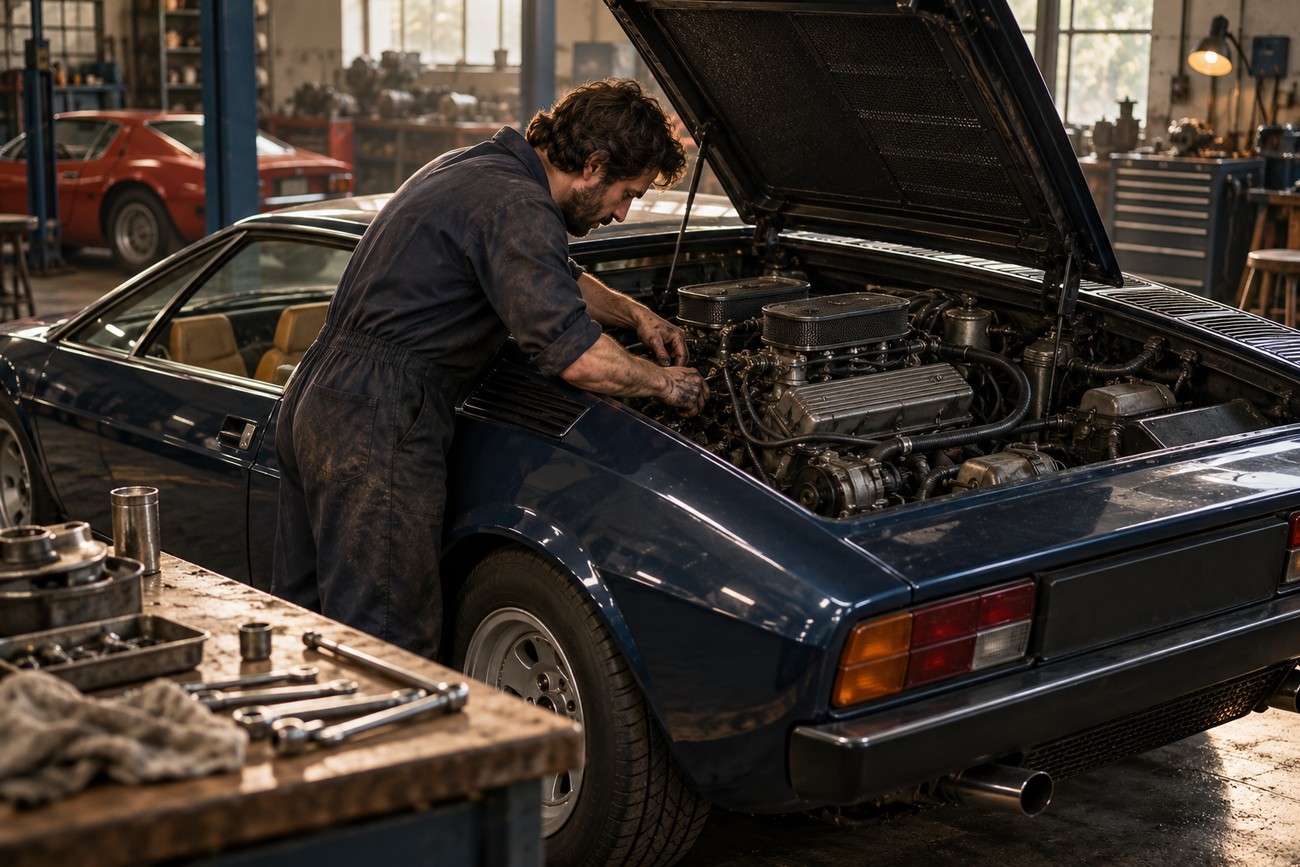
The Urraco’s commercial problem began with an ambitious promise. It offered a more attainable route into a mid-engine Lamborghini and the apparent flexibility of a 2+2, yet its layout still brought the compromises of a compact sports car. Buyers expecting easy everyday use could find the seating, visibility, and cabin environment less accommodating than the body style implied.
Nor did a lower position in Lamborghini’s range make the car inexpensive to maintain. A specialized V8, limited model-specific components, and a need for knowledgeable service narrowed its practical appeal. Those demands became harder to overlook when customers could also consider the Ferrari Dino and later 308.
Period concerns about build quality added another pressure. An owner might admire the Urraco’s design and handling while still facing inconsistent electrical operation or time-consuming mechanical adjustment. Sales were disappointing amid these interacting factors; there is no need to assign the outcome to one rival or one recurring fault.
A poor showroom result is a limited verdict on a car. It tells us that Lamborghini struggled to turn this combination of price, usability, quality, and support into sustained demand. It does not establish that the underlying mid-engine 2+2 idea lacked engineering or driving merit.
The ownership costs hidden behind the purchase price
Weber carburetors are a familiar inspection priority because difficult setup can show up as an uneven idle or hesitation under acceleration. A buyer should resist treating every such symptom as a simple adjustment. Ignition condition and fuel delivery also influence how a carbureted V8 runs, so a specialist needs to diagnose the system rather than tune around a fault.
Cooling and electrical condition can make the picture less straightforward. Early cars have attracted reports of overheating in slow traffic, while poor connections or grounds can lead to unreliable instruments and lights. These are reasons to test a candidate thoroughly when cold, warm, and in traffic, not grounds for assuming that every surviving Urraco behaves the same way.
Corrosion can be the more consequential expense because fresh paint may conceal poor earlier repairs. The underside and areas behind trim need close inspection, especially on cars that have lived in damp conditions. Photographs and invoices from a restoration help establish what was actually repaired; appearance alone cannot do that work.
Sun-damaged plastics and faded upholstery present a different parts problem. The Urraco uses body and interior pieces specific to the model, so replacing missing or deteriorated items may take far longer than a new owner expects. Rebuilding an original component can sometimes be more realistic than finding a replacement, provided a suitable classic-car specialist is available.
These costs explain why an apparently affordable example can become an expensive project. Carburetors, cooling, wiring, corrosion, and trim should be assessed as separate repair commitments, even when their symptoms overlap. A purchase budget that leaves no room for diagnosis and corrective work is a poor fit for this car.
Buying one without inheriting someone else’s shortcuts
Start with a pre-purchase inspection by a specialist willing to examine the whole car, rather than judging it from its paint and a short drive. Ask for service records, invoices, and restoration photographs, then compare them with what is visible on a lift. Gaps in the record do not automatically condemn a car, but they increase the importance of checking for concealed corrosion and undocumented repairs.
Have the engine assessed from a cold start through full operating temperature. The inspection should cover idle quality, acceleration, hot restarting, cooling behavior, and evidence of leaks or improvised fuel-system work. A car that runs acceptably for a brief viewing may still reveal problems once heat builds in traffic.
Electrical checks deserve time because improvised wiring can turn a small fault into a persistent one. Confirm that instruments, lights, and other fitted equipment operate consistently, and have unexplained changes traced against an appropriate wiring diagram. Repeated splices and unrecorded alterations should affect both the repair estimate and your confidence in the work already done.
Tires, alignment, and suspension condition also shape the test drive. Unsuitable tires or incorrect settings can make an otherwise capable Urraco feel unpredictable and accelerate wear, so poor behavior should be investigated before it is dismissed as part of the model’s character. Inspect the condition of unique trim at the same time; a missing original piece may be harder to resolve than a conventional service item.
Finally, establish exactly what has changed. Documented, reversible work intended to improve reliability can be a reasonable choice for a car driven regularly. Engine, suspension, brake, or electrical changes presented as factory-original are a different matter: they complicate provenance and valuation, even if the car appears to drive well.
A failure in the showroom, but not on the right road
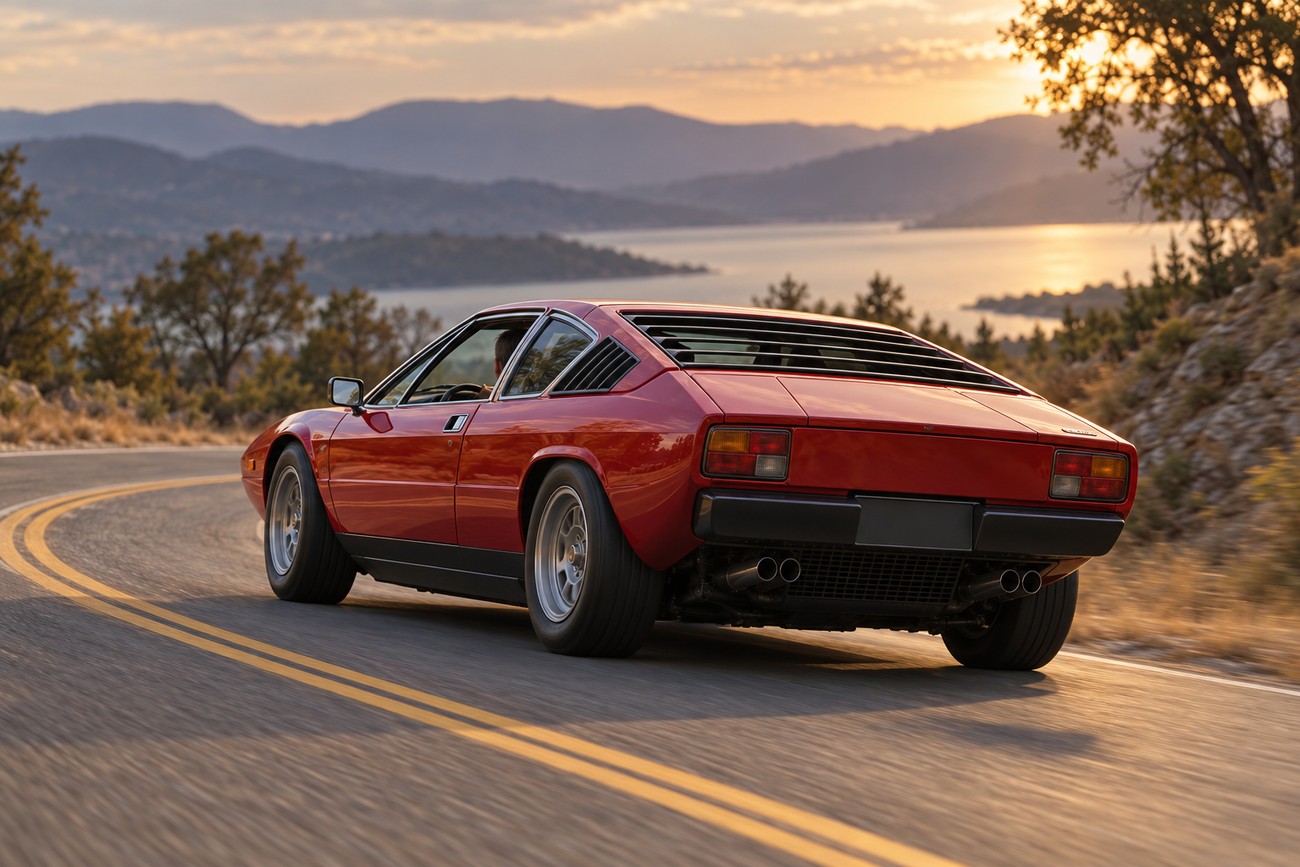
The Urraco earned its difficult reputation through disappointing sales and genuine ownership demands. Yet a properly maintained example retains the attraction of a compact, mid-engine Lamborghini with distinctive styling and engaging handling. Its market history and its driving qualities deserve separate judgments.
Drivers often favor the P300 for the flexibility of its 3.0-liter V8. That preference makes sense on a clear road, where a healthy engine and well-sorted chassis can work together. Condition, correct setup, and access to specialist support still matter more than choosing the preferred badge on an otherwise neglected car.
The strongest case for a Urraco is as a classic used deliberately and maintained with care. Its rear seats do not erase the heat, visibility, service, and parts compromises that come with the design. Buy the car for the experience it can deliver in good order, rather than for the low-effort everyday 2+2 suggested by its original pitch.
Frequently asked questions
Urracos vary enough in condition and history that broad labels offer limited help to a buyer. Current value requires current evidence, while originality requires evidence tied to the individual car. The answers below set out what to check before relying on either claim.
How much does a Lamborghini Urraco cost today?
There is no defensible single current price without a market, date, and comparable cars. Look for recent completed sales of the same version in the market where you intend to buy, then compare condition, documentation, specification, and the extent of completed repairs. Asking prices show what sellers hope to receive; they do not establish what buyers paid.
Keep the purchase price separate from a repair reserve based on a specialist inspection. A cheaper car with corrosion, missing trim, or unresolved running faults may require more total spending than a better-documented example.
Which car is called the “poor man’s Lamborghini”?
“Poor man’s Lamborghini” is an informal nickname rather than a factory model name, and people apply it to different Lamborghinis. The Urraco may attract the label because it occupied a more attainable position in the range, but the phrase describes an impression of entry price, not the cost of ownership.
For a buyer, service history and parts condition are more useful than the nickname. An inexpensive Urraco needing specialist mechanical work or scarce interior pieces can be costly to put right.
How can I verify a Urraco’s original specification?
Begin with the car’s chassis and engine identification, then compare them with its registration history, period records, and any available factory documentation. Check whether the recorded version and market specification agree with the engine, equipment, and components fitted today. A badge or seller’s description alone cannot settle those questions.
Ask for restoration photographs and invoices that identify replaced or rebuilt parts. A specialist inspection should then examine components claimed to be original and record any modifications separately. This gives you a car-specific account of provenance without treating undocumented work as factory specification.







