

A Kia with the pace and shape to draw comparisons with German performance cars was an unexpected sight. The Stinger GT paired a 3.3-liter twin-turbo V6 with a long, low roofline and a badge few buyers associated with this kind of car. Its arrival challenged assumptions about what Kia could build, even if the “German car killer” label asked it to win a contest it was never likely to win in every category.
The choice is more interesting than that slogan suggests. The GT offers strong acceleration and the useful opening of a five-door liftback, often loosely called a sedan. In return, buyers have to weigh its substantial feel, variable rough-road comfort, refinement gaps, and running costs. Its character makes most sense when judged as a distinctive grand tourer rather than a substitute for every sport sedan.
- Why the Stinger GT made German rivals take notice
- Kia Stinger GT specifications: published figures and their limits
- Fast on the open road, less effortless everywhere else
- Where the premium-car comparison breaks down
- The costs that can surprise a GT buyer
- Buying a used Stinger GT without buying someone else’s hard miles
- The verdict: an alternative, not a replacement
- Frequently asked questions
- Why was the Kia Stinger GT discontinued?
- What is the rarest Kia Stinger?
- How can I verify that a used Stinger is a genuine GT?
Why the Stinger GT made German rivals take notice
The Stinger GT put a 3.3-liter twin-turbo V6 rated at 370 hp and 510 Nm in a body shaped more like a fastback than a conventional family car. That combination was unusual for Kia, particularly in a European and German market where buyers had established alternatives for rapid long-distance travel. The surprise lay in seeing the brand compete for those buyers on performance and presence.
Its proportions reinforced the point. The low roofline and broad stance gave the Stinger the visual intent expected of a performance car, while the Kia badge made it stand apart from familiar premium choices. That distinction remains part of its appeal for an owner who wants something recognizably different without giving up serious straight-line pace.
The body style matters beyond appearance. The Stinger GT is a five-door liftback with five seats: its rear hatch gives access that a conventional sedan’s smaller trunk opening cannot match. Bulky luggage may be easier to load, though the sweeping roofline and large exterior dimensions do not automatically translate into exceptional rear-seat space.
That was the credible challenge to German rivals. Kia offered a persuasive mix of power, styling, and usable access in a segment where the badge was rarely part of the conversation. It did not establish that the Stinger matched premium competitors for cabin finish, quietness, or chassis polish in every situation.
Kia Stinger GT specifications: published figures and their limits
These figures describe the 3.3-liter GT in commonly cited specifications; equipment and published performance claims can differ by market and source.
| Item | 3.3-liter Stinger GT specification or published claim |
|---|---|
| Body and seating | Five-door liftback; five seats |
| Engine and output | 3.3-liter twin-turbo V6; 370 hp and 510 Nm in the supplied GT specifications |
| Transmission and driven wheels | Eight-speed automatic and all-wheel drive in commonly cited GT specifications; verify the individual car and market |
| 0–100 km/h | Frequently cited at 4.9–5.3 seconds; published claims across sources span 4.39–5.4 seconds, depending on source, market, and measurement method |
| Top speed | Published at 267–270 km/h; 270 km/h is commonly cited, while some listings give 267 km/h |
| Dimensions | Approximately 4,830–4,831 mm long, 1,869–1,870 mm wide, and 1,400 mm high; 2,905 mm wheelbase |
| Fuel tank | Commonly listed at 60 liters |
| Published fuel consumption | Approximately 10.6–11.0 L/100 km in cited listings; figures vary by source and do not promise real-world city economy |
A single acceleration figure can look definitive while concealing differences in test procedure or vehicle specification. Compare claims only when the market, version, and measurement method are clear. For a used car, its original specification is more useful than a figure copied from an unrelated listing.
The consumption range also needs context. It is a set of published figures, not a prediction for congested streets or a particular driver. Treat it as a reference point when budgeting rather than a guaranteed result.
Fast on the open road, less effortless everywhere else
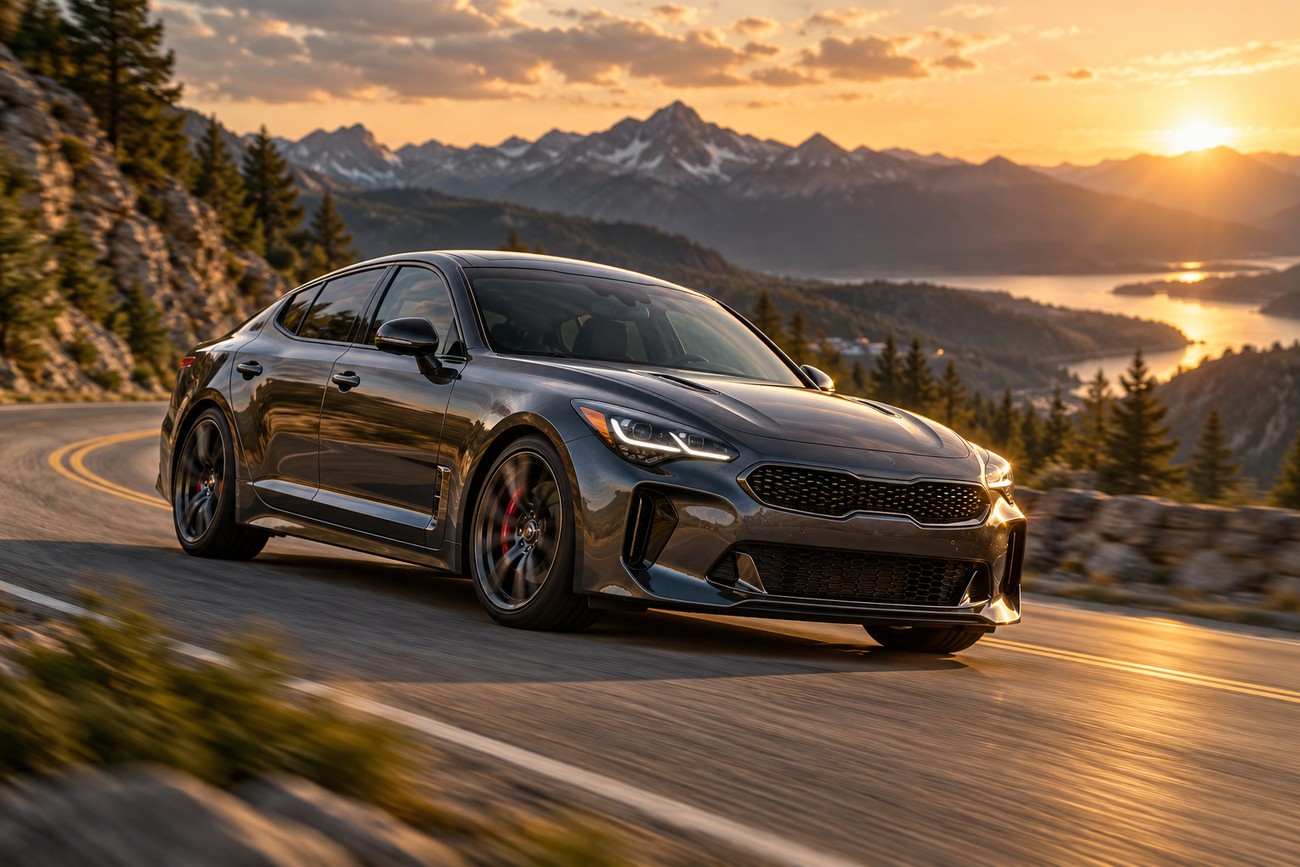
The V6 gives the GT the kind of acceleration that suits a clear stretch of road and an unhurried long-distance journey. Its strong output makes overtaking central to the car’s character. A 2.0-liter Stinger has a materially different performance character, so an impression of one should not stand in for a drive in the other.
Owners also describe a car whose mass makes itself known in fast corners and under braking. That does not erase its pace, but it changes the way you use it: a flowing road suits it better than repeated, abrupt changes of direction. Buyers expecting the light response of a compact sport sedan should account for the Stinger’s larger liftback format.
Wheel and road choice can alter the impression further. Owners report reduced comfort on rough surfaces with 19-inch wheels, where sharp bumps and speed humps can interrupt the long-distance composure. The point is worth testing on the roads you actually use, rather than assuming every example rides identically.
The distinction is one of temperament. The GT can cover distance quickly and convincingly, yet its weight and firmer setups may demand more compromise in town or on broken pavement. A test drive that includes both smooth and poor surfaces reveals more than a brief acceleration run.
Where the premium-car comparison breaks down
The Stinger looks capable of competing in premium company from across a parking lot, but the cabin comparison is more demanding. Materials and finishing touches may not deliver the same sense of polish a buyer expects from a premium German rival. Appearance alone is a poor basis for deciding whether its interior meets your standards.
Some owners also report more road and tire noise than they expected after driving those competitors. The difference matters most over a long trip, when a cabin’s background noise becomes harder to overlook. Tires and road surfaces affect what you hear, so listen on familiar pavement before drawing conclusions about an individual car.
The liftback hatch provides a genuine practical advantage over a conventional sedan trunk opening. It makes loading awkwardly shaped items easier, even though the rear seats and cargo area may not feel as generous or as richly finished as the exterior size suggests. Check access, passenger space, and luggage fit with the people and items you regularly carry.
Limited owner reports mention interior creaks or inconsistent assembly, but they do not establish a model-wide defect. On a used example, a quiet drive over uneven pavement and a close look at trim fit are sensible checks. They tell you more about the car in front of you than an isolated complaint does.
The costs that can surprise a GT buyer
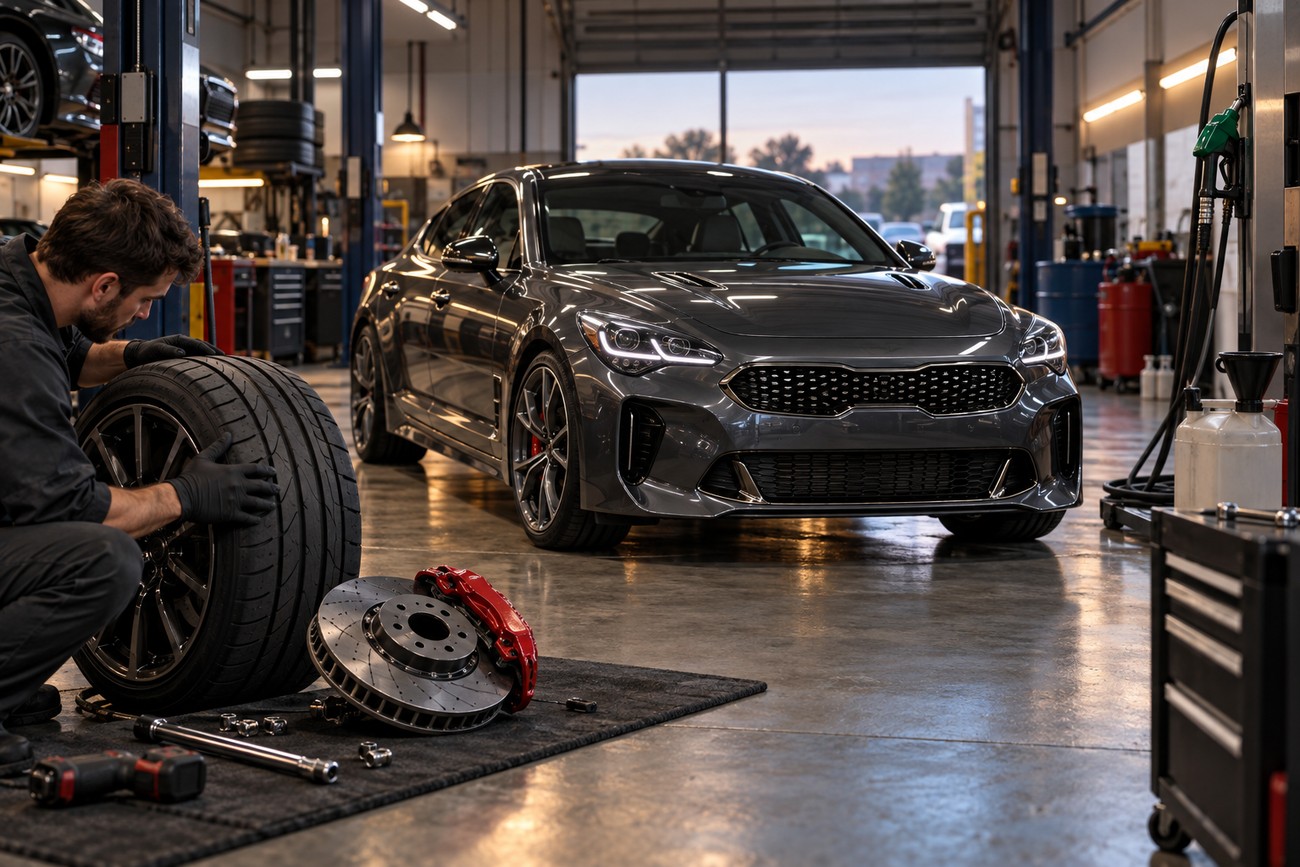
The GT’s purchase price is only one part of its financial picture. Fuel, performance tires, and brakes can make it substantially costlier to run than an ordinary Kia. Insurance and applicable local taxes add another variable, so obtain estimates for your location and the specific car before committing.
Published fuel-consumption figures of roughly 10.6–11.0 L/100 km vary by source and are not a promise of real-world city economy. Stop-and-go use can leave an owner spending more on fuel than those figures initially suggest. If most of your driving is urban, budget around your likely use rather than the most appealing listing.
Wheel choice carries two costs at once. Owners report less comfort on poor roads with 19-inch wheels, and damaged pavement can also increase the risk of rim damage. Inspect the wheels carefully and price replacement tires in the fitted size; the attractive stance may carry a less attractive recurring bill.
Resale deserves a plan as well. Buyers report a narrower used-car audience for the Stinger GT, which can make finding the next owner less straightforward. That is not a basis for inventing a depreciation rate, but it is a reason to avoid assuming you can sell quickly whenever your needs change.
Buying a used Stinger GT without buying someone else’s hard miles
Begin with the car’s identity rather than its badges. Confirm the market-specific specification and engine, then compare the seller’s description with its records and the equipment on the car. Published GT figures vary by source and market; a mismatch is a prompt to investigate, not proof that the car is misrepresented.
Next, reconstruct its history. Check accident and service records, look for modifications or signs that tuning has been removed, and inspect tires and brakes for wear consistent with the mileage and claimed use. Cosmetic condition alone cannot show how often a performance car was driven hard.
When tuning or repeated launches are possible, compare modification history with service records, then assess cooling condition, transmission behavior, and brake wear together. A reassuring result in one area does not settle the others.
Aggressive driving and frequent launches make the transmission and cooling system particularly important to inspect; they do not mean either has failed. During a thorough test drive, pay attention to how consistently the transmission operates as the car warms up, and have the cooling system assessed for its condition rather than relying on a glance at the temperature display. Any concern warrants a closer independent check before money changes hands.
The drive should also cover uneven roads, braking, and steady cruising. Those conditions help reveal wheel damage, unwanted noises, and the ride and refinement you would live with daily. An independent inspection brings these observations together with a physical assessment of the car.
Finally, judge the evidence as a whole. A low odometer reading does not compensate for unexplained modifications, gaps in records, or neglected consumables. A well-documented example that drives consistently is a stronger prospect than one sold chiefly on its GT badge.
The verdict: an alternative, not a replacement
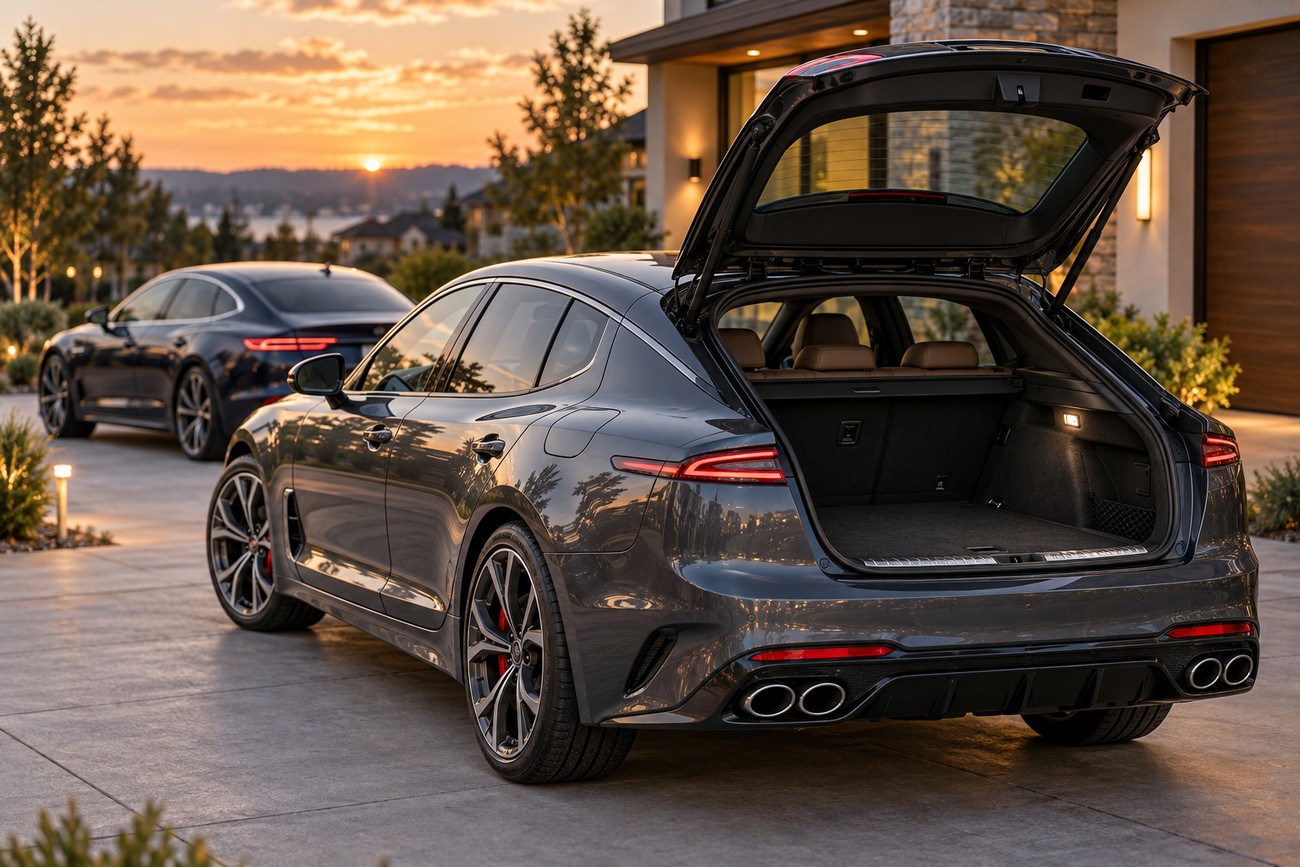
The Stinger GT makes a clear case for itself: a 3.3-liter twin-turbo V6 rated at 370 hp and 510 Nm, distinctive styling, and the useful opening of a five-door liftback. It suits a buyer who wants rapid long-distance performance in a car that does not follow the familiar premium script. Those strengths remain tangible after the novelty of the badge wears off.
The compromises are tangible too. Owners report a sense of weight, reduced rough-road comfort on 19-inch wheels, and more road or tire noise than some premium German alternatives. Fuel and consumable costs, along with a narrower resale audience, also belong in the decision.
Someone whose priority is cabin quietness and finish may be happier in a premium rival. A driver who prizes light, agile responses may prefer a smaller sport sedan. Neither preference diminishes what the Stinger does well; it clarifies the kind of buyer it rewards.
The Stinger GT made German competitors worth comparing against a Kia on serious terms. Challenging them did not require matching every strength. Its achievement was to offer a convincing, distinctive alternative with compromises a careful buyer can identify in advance.
Frequently asked questions
Production history and model identity need different checks from a driving assessment. The answers below separate what can be established from claims that require market-specific records.
Why was the Kia Stinger GT discontinued?
The supplied facts do not establish a single verified reason for the Stinger GT’s discontinuation. Claims that one sales result or corporate strategy decision alone caused it should be treated as speculation unless supported by a manufacturer statement. To confirm when production or sales ended for a particular market, consult Kia’s market-specific announcements and model-year records; a local end-of-sales date may differ from a production date.
What is the rarest Kia Stinger?
No universally rarest Stinger variant can be identified from the supplied facts. Rarity depends on the market, model year, and whether the count covers a trim, engine, color, or limited edition. A credible claim needs a clearly defined variant and verifiable production or registration figures for that same scope.
How can I verify that a used Stinger is a genuine GT?
Match the vehicle identification number (VIN) to its original market specification and confirm that it identifies a car built with the 3.3-liter twin-turbo V6. Check the registration and original vehicle documentation against that identity. Badges, trim pieces, and a seller’s description are easier to change than the car’s recorded specification.







