
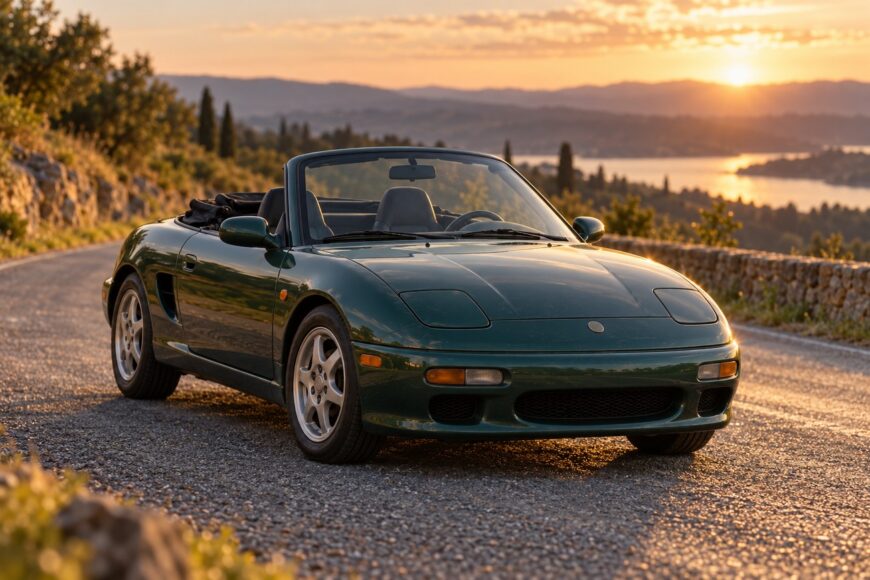
The Kia Elan is a rare Korean-built interpretation of the Lotus Elan, developed as a two-seat, front-wheel-drive roadster with a manual gearbox. It carries the lightweight sports-car idea into a Kia context, using a Kia 1.8-liter engine and revised lighting and front-end details rather than reproducing the British car unchanged.
That combination gives the Elan a distinctive appeal, yet it also creates the central buying problem. Specifications vary between markets and catalogues, trim parts are scarce, and age-related electrical, rubber, and interior faults can consume more time than the basic mechanical layout suggests. It is an engaging specialist car for a careful buyer, with almost no practical justification as ordinary transportation.
- Kia Elan: what it is and why it exists
- Kia Elan specifications: what the numbers really mean
- The Lotus connection: shared character, different car
- The real ownership problem is finding a good one
- How to inspect a Kia Elan before buying
- Kia Elan myths, compromises, and final verdict
- Frequently asked questions
- How can I verify that a Kia Elan is Korean-built?
- What should I do if the VIN, engine, and advert specifications disagree?
- How many Lotus Elans were built?
- How much is a Lotus Elan worth?
Kia Elan: what it is and why it exists
The Kia Elan sits in an unusual place in Kia history. It was a serial-production sports project rather than a mainstream sedan derivative: a compact, two-seat roadster with front-wheel drive and a manual transmission. Its low body, short wheelbase, and limited cabin space make the purpose clear. This is a recreational car designed around lightness and open-air driving.
The Lotus connection is fundamental, yet the relationship is often described too simply. Kia’s car is a Korean interpretation of the Lotus Elan, with a Kia engine, different lighting, and revised front-end and component details. Calling it an unchanged rebadge hides the engineering and styling decisions that separate the two cars.
Production dates also need careful wording. Catalogues commonly list the Kia Elan as a 1995–1999 or 1996–1999 model, while some sources place the end of production in 2000. Those differences may reflect market registration, production records, or catalogue conventions. A buyer should therefore use the individual car’s VIN and registration documents instead of treating a database year as definitive.
The badge can mislead in the other direction as well. The Kia Elan was never a mass-market model with a deep supply chain of dedicated parts. Its rarity affects ownership, resale, and restoration, so the condition of one specific car matters more than the general reputation of the model.
Kia Elan specifications: what the numbers really mean
The following figures describe the commonly listed 1.8-liter manual car while preserving the market and source differences that appear in published data.
| Item | Published specification |
|---|---|
| Engine | 1.8-liter petrol four-cylinder |
| Power | 136 to 151 hp, depending on market and source |
| Transmission and drive | Manual transmission, front-wheel drive |
| 0–100 km/h | Approximately 8.7–9.1 seconds |
| Top speed | Approximately 197–205 km/h |
| Length | 3,880 mm |
| Width | 1,730 mm |
| Height | 1,270 mm |
| Wheelbase | 2,250 mm |
| Kerb weight | Approximately 997–1,070 kg; some listings specify about 1,015 kg |
The power discrepancy is too large to dismiss as rounding. Catalogue entries mention 136 hp, 140 hp, and figures up to 151 hp, while weight listings range from approximately 997 to 1,070 kg. Market specification, equipment, test method, and database errors may all contribute. The correct figure for a purchase is the one supported by the VIN, engine identification, and period documentation.
The performance range should be read in the same way. A claimed 8.7-second 0–100 km/h time and a claimed 9.1-second time do not necessarily describe the same test conditions or specification. These numbers establish the character of the car: brisk and lightweight, rather than a universally defined high-output sports model.
The Lotus connection: shared character, different car
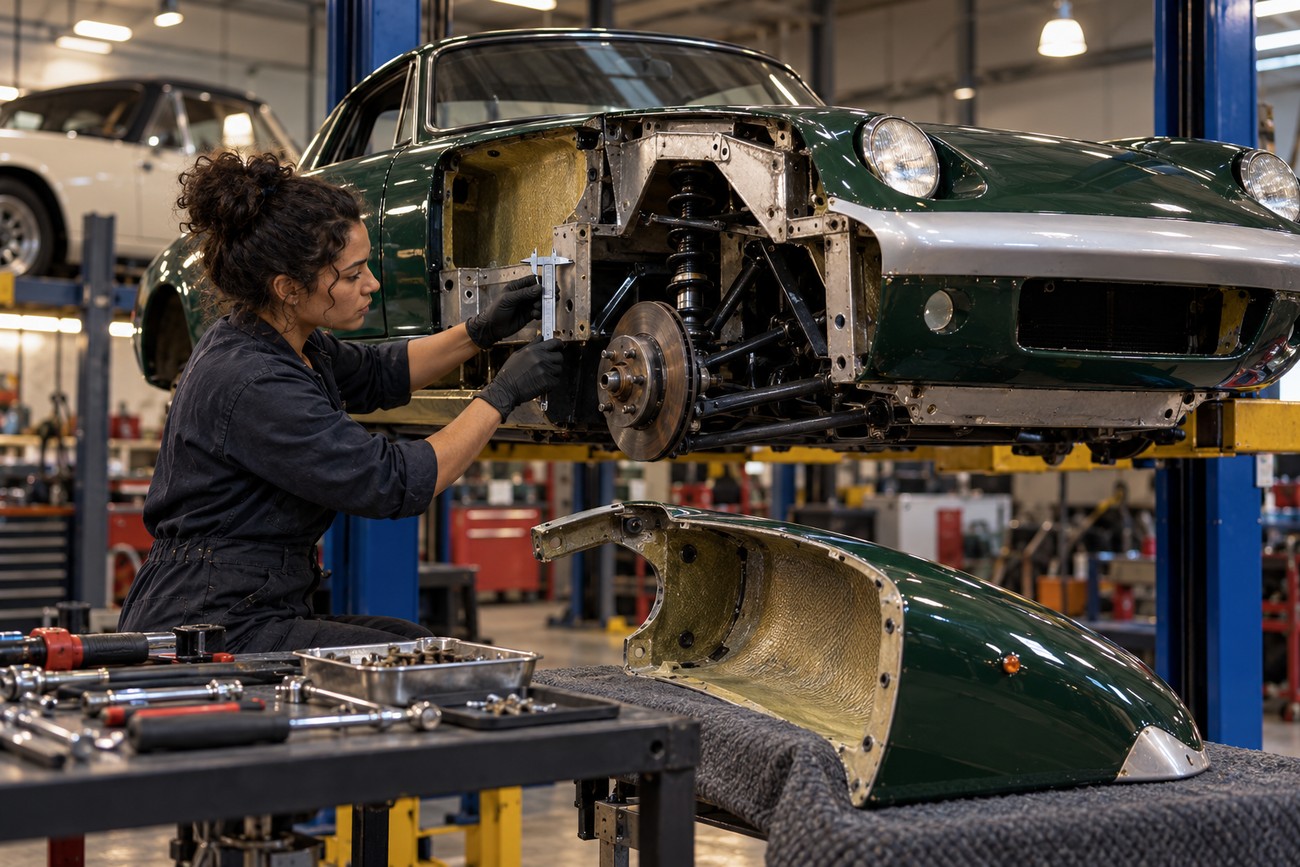
Descriptions of the Elan commonly refer to a lightweight body, a steel frame, a backbone frame, and composite panels. The backbone-and-composite description is repeated widely, but it deserves verification against primary factory documentation for any technical or restoration decision. It should not be used as a shortcut for assuming that every structural or body component is interchangeable with a Lotus part.
Low mass is central to the car’s appeal. A 2,250 mm wheelbase keeps the roadster compact and responsive, while the front-wheel-drive layout gives it a different balance from a traditional rear-wheel-drive sports car. The same dimensions that help it feel lively can make it more sensitive to broken surfaces, steep ramps, and careless parking maneuvers.
Low ground clearance is especially relevant outside smooth roads. A car that looks complete in photographs may have underside damage, stressed mounting areas, or worn protection from repeated contact with ramps. Inspecting the underside on a lift is more informative than judging the body from standing height.
Kia’s own powertrain and revised styling are important parts of the identity. The Elan shares a design lineage and character with the Lotus, yet it remains a Kia-built interpretation with its own specification. Treating it as a pure Lotus clone creates false expectations about parts, chassis interchangeability, and driving behavior.
The real ownership problem is finding a good one
Most ownership complaints are less dramatic than a failed engine, but they are persistent. Owners report small electrical faults, irritating ergonomic details, and problems involving steering-wheel buttons. Each issue may be minor in isolation; together, they can make a rare roadster feel unfinished and can be difficult to resolve when replacement trim is unavailable.
The cabin is deliberately simple, though buyers will interpret that simplicity differently. Some will value the limited equipment and low visual clutter. Others will see plain materials, aging switchgear, and inexpensive-looking surfaces. Missing or damaged interior pieces can be harder to replace than a service item because the model’s production volume does not support a broad aftermarket.
Age affects the whole car, including rubber seals, weatherstripping, bushes, wiring, connectors, and soft interior components. A roadster can start, move under its own power, and still require substantial preventive work. Water ingress, wind noise, poor switch operation, and deteriorated seals can undermine ownership more quickly than the headline specifications suggest.
Completeness is therefore a major buying criterion. A mechanically usable example with missing lights, trim, cabin panels, or body details may be a worse proposition than a less attractive car with an intact specification. Claims of low ownership cost appear in some owner reviews, but they are not systematic evidence; parts scarcity and restoration labor can change the calculation.
The sensible interpretation is that the Kia Elan can be affordable to maintain when its basic systems are healthy and parts are identified correctly. It is not reliably cheap to revive after neglect. Rarity makes small missing pieces disproportionately important.
How to inspect a Kia Elan before buying
Start with identity, not the test drive. Record the VIN from the vehicle, compare it with the VIN plate and stamped identification points, and check the registration documents. Confirm the engine code, gearbox, front-wheel-drive layout, market specification, and production information before relying on the advertisement.
Compare the advertised power with the documented car. Listings may describe the engine as producing 136 hp, 140 hp, or as much as 151 hp, while kerb weight may be shown as approximately 997, 1,015, or 1,070 kg. Such differences are a reason to investigate, not an opportunity to select the most attractive number.
Inspect the steel structure and underside for corrosion, impact damage, poor repairs, and evidence of neglected drainage or water exposure. Examine composite panels for cracks, distortion, careless repairs, and missing fasteners. Check door alignment, hood and trunk fit, lighting, seals, and the condition of every small exterior piece because these items may be difficult to source later.
Verify component markings before ordering parts. Searching only for “Kia Elan” can hide compatible Lotus- or Isuzu-related components and create the false impression that a usable part does not exist.
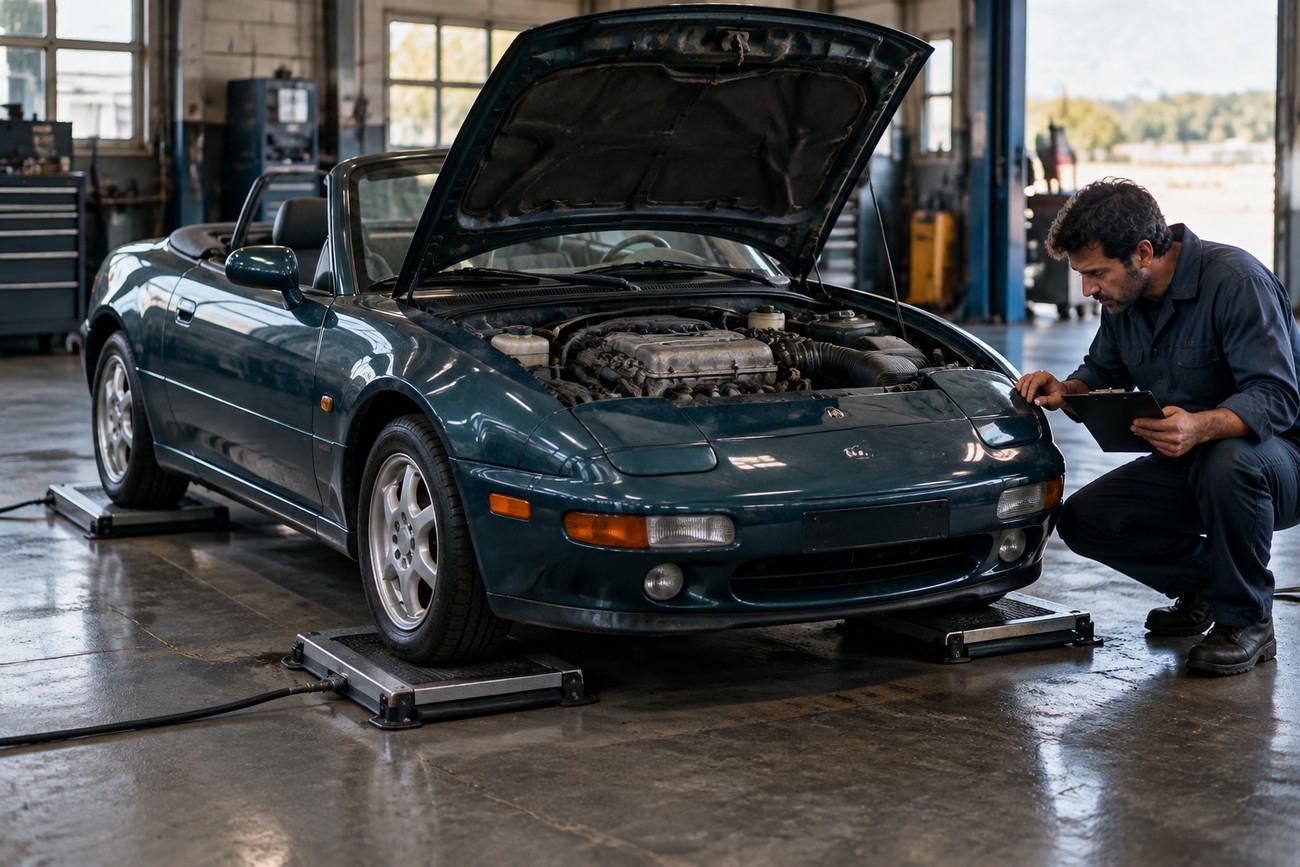
Test every electrical function, including instruments, switches, lighting, window operation, cabin controls, and steering-wheel buttons. Listen for drivetrain noise, assess clutch and gearbox operation, and look for evidence that age-related maintenance has been postponed. A lift inspection and a cold start are more valuable than a polished engine bay.
Parts research should begin before money changes hands. Search through Kia records as well as possible Lotus and Isuzu connections, then verify dimensions, markings, and application. A documented, complete car with known maintenance needs is usually safer than a cheap example whose identity, history, and missing parts remain uncertain.
Kia Elan myths, compromises, and final verdict
The first myth is that every Kia Elan has 151 hp. Catalogue figures also include 136 hp and 140 hp, so the badge does not establish output. The same caution applies to weight and acceleration: published figures range from approximately 997 to 1,070 kg and from 8.7 to 9.1 seconds to 100 km/h.
The second myth is that this is simply a Lotus with Kia lettering. The Kia has its own engine, revised lighting, and different front-end and component details. Its relationship with Lotus explains the concept and some of the character, while the individual car’s documentation determines what was actually built.
The third myth concerns parts support. The Kia Elan is a niche two-seat roadster with limited practicality and liquidity, rather than a common Kia with effortless parts availability. Basic mechanical work may be manageable, but rare body, trim, rubber, and interior pieces can turn a modest repair into a prolonged search.
The right purchase is a documented, complete, structurally sound example with a verified specification. It can offer unusual lightweight-roadster character and a direct connection to an interesting period in Kia’s history. It should be avoided as an impulse buy based solely on rarity, a low price, or the most optimistic performance figure in an advertisement.
Frequently asked questions
The Kia Elan’s unusual origins make identification and documentation especially important. Published specifications can vary, and the relationship with the Lotus Elan can lead to mistaken assumptions about identity, value, and parts compatibility. The following questions address those issues before purchase or restoration.
How can I verify that a Kia Elan is Korean-built?
Use three sources together: the VIN plate, stamped identification points on the vehicle, and the registration documents. The VIN should correspond with the recorded make, production identity, and market paperwork. A Kia badge, seller description, or generic online listing is insufficient because imported cars can be misdescribed and catalogue data can be incomplete.
Photograph the identification points and compare them with period documentation before buying. If the markings are damaged, inconsistent, or absent, treat the car as a provenance problem until an appropriate inspection or registration authority confirms its identity.
What should I do if the VIN, engine, and advert specifications disagree?
Pause the purchase and establish the documented identity of the vehicle. Confirm the engine code, gearbox, market specification, and registration details, then compare them with the physical car. Do not resolve the discrepancy by assuming that the advertisement contains the error.
An unresolved mismatch is a provenance risk, even if the car drives well. It can affect parts selection, registration, insurance, future resale, and the legitimacy of the claimed specification. A lower price does not remove that risk.
How many Lotus Elans were built?
The production total of the Lotus Elan is separate from the number of Kia Elans and should not be inferred from the Kia model’s catalogue dates. Published historical totals can depend on which generations and production phases are included, so a reliable answer requires a defined production scope and a documented source.
For a Kia Elan buyer, the more useful fact is its rarity and limited parts support. The Lotus production figure does not prove that a particular Kia component will interchange or that replacement trim will be easy to find.
How much is a Lotus Elan worth?
There is no single defensible value without specifying the Lotus generation, market, condition, originality, and documentation. A Lotus Elan and a Kia Elan are related in concept, yet they are different cars with different supply, demand, and parts considerations.
For either model, condition and completeness should lead the valuation. A running car with missing trim, uncertain identity, or structural concerns may cost more to make usable than a better-documented example bought at a higher initial price.







