
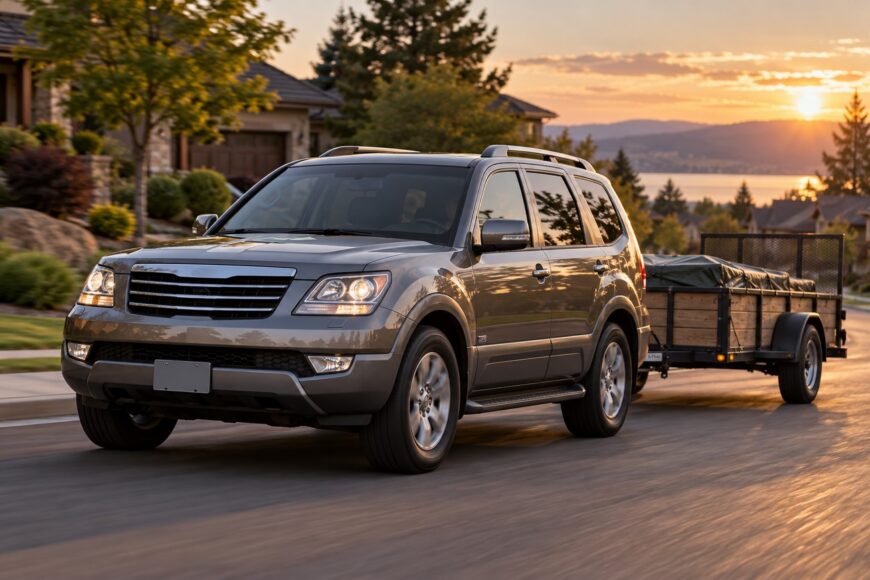
The Kia Borrego was a short-lived American-market SUV with hardware that few buyers now associate with the brand. Sold in the United States for the 2009–2010 model years, it was a separate body-on-frame SUV with a choice of V6 or V8 power. Some versions also had four-wheel drive with low range.
Those features still appeal if you need a vehicle for rough roads or occasional towing. They come with a large vehicle’s fuel use and running costs, however, and age adds another layer of risk. The Borrego deserves more than a “forgotten Kia” label: its value as a used SUV depends on whether its truck-based strengths match the work you need it to do.
- What the Kia Borrego Was—and Why It Stood Out
- Frame, Four-Wheel Drive, and the Hardware Buyers Actually Get
- Kia Borrego V6 vs. V8: What the Powertrains Change
- Why Kia Abandoned the Borrego
- The Real Cost of Owning an Old Borrego
- How to Buy a Borrego Without Buying Someone Else’s Problems
- Frequently asked questions
- Why did Kia stop making the Borrego?
- How much is a 2009 Kia Borrego worth today?
- How many Kia Borregos were made?
What the Kia Borrego Was—and Why It Stood Out
The Borrego occupied an awkward place in Kia’s U. S. lineup during its 2009–2010 model years. It sat above the Sorento in size and ambition, yet faced larger, established body-on-frame competitors. Buyers looking for an ordinary family SUV could find easier-to-live-with choices, while buyers seeking a truck-based vehicle had familiar alternatives.
This was a separate body-on-frame SUV, rather than a conventional unibody crossover. That distinction affects how it carries weight, behaves on rough surfaces, and feels in daily driving. It was designed as a large, versatile SUV, not as a direct counterpart to a specialized off-road model such as the Jeep Wrangler.
The name also needs care when researching parts or history. Borrego and Mohave are names associated with the same broader global model family, depending on the market. U. S. brochures and specifications are therefore more useful for identifying an American-market vehicle than assuming every Mohave listing describes the same equipment.
Frame, Four-Wheel Drive, and the Hardware Buyers Actually Get
The Borrego’s separate frame gives it the architecture buyers expect of a traditional truck-based SUV. Rear-wheel drive was the base layout, and four-wheel drive with low range was available on some versions. Its ground clearance and underbody geometry make more sense on poor roads than the proportions of a road-focused crossover.
A frame can be useful for load work and repeated travel over uneven ground. Low range, where fitted, gives the driver more control at low speeds on difficult surfaces. Neither feature makes every Borrego equally capable: tires, drivetrain configuration, condition, and terrain still determine what an individual vehicle can do.
The tradeoff is apparent in town. Weight and size make parking and tight maneuvering harder, while the truck-based layout generally brings more noise, vibration, and harshness than a comparable unibody crossover. Some drivers may appreciate its substantial feel on broken roads, but that does not turn it into a light or refined city vehicle.
Check the equipment on the vehicle in front of you before paying for a capability it does not have. A four-wheel-drive badge or a seller’s description is no substitute for confirming the controls and testing the system. Rear-wheel-drive examples have a different use case from those equipped with low range.
Kia Borrego V6 vs. V8: What the Powertrains Change
U. S.-market Borregos came with a 3.8-liter V6 or a 4.6-liter V8. The practical difference is clearest when the vehicle is loaded; neither engine makes the Borrego a small or economical SUV.
| Consideration | 3.8-liter V6 | 4.6-liter V8 |
|---|---|---|
| Rated output context | V6 option; verify the rating for the vehicle’s market and year. | About 337 hp and 376 lb-ft under the SAE rating used at the time. |
| Work under load | Assess performance with the passengers or cargo you expect to carry. | Owners often value its stronger reserve and more relaxed operation when towing or heavily loaded. |
| Likely fit | Worth considering if heavy-load work is occasional and the individual vehicle is well maintained. | More compelling for buyers who specifically need the additional pulling reserve. |
| Ownership tradeoff | Still moves a heavy, truck-based SUV; do not assume modest fuel use. | High fuel consumption is an especially prominent daily drawback. |
The V8’s appeal is straightforward on a long climb or with a trailer: more torque in reserve means the engine need not work as hard to maintain progress. That advantage does not establish one universal tow rating. Towing capability varied substantially by market and configuration, so check the specifications and equipment of the particular vehicle.
Engine choice should follow condition as well as intended use. A carefully serviced V6 can be a more sensible purchase than a neglected V8 with an attractive specification sheet. Conversely, choosing the V6 solely to avoid fuel costs misses the broader expense of running a heavy SUV.
Why Kia Abandoned the Borrego
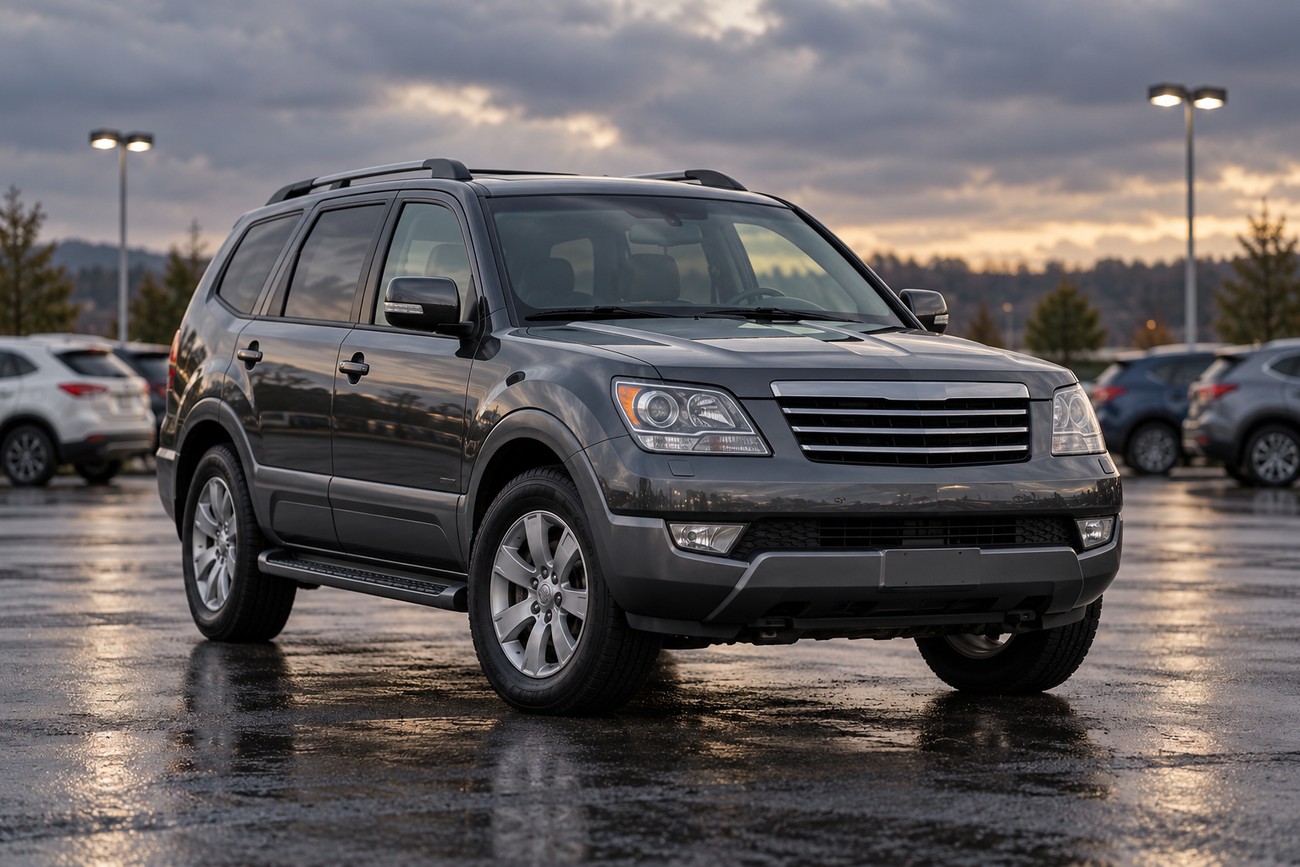
The clear U. S. outcome is a short run ending after the 2009–2010 model years. Demand was weak, and the Borrego was difficult to position between Kia’s Sorento and larger truck-based rivals. Buyers had to want its particular combination of size, frame construction, and brand positioning.
Its timing compounded that problem. A large SUV with high fuel consumption was a difficult proposition as demand shifted away from fuel-hungry vehicles. That market context helps explain the decision without pretending that one event accounts for every lost sale.
The familiar claim that Kia dropped the Borrego solely because of a gasoline crisis is too simple. Weak sales, poor timing, and awkward market fit provide a more defensible explanation. The distinction matters because a failed launch does not, by itself, prove that the vehicle’s underlying design was bad.
Nor did the U. S. withdrawal erase the wider model family. The related Mohave name retained relevance in other markets, where buyer expectations and product positioning differed. “Kia abandoned the Borrego” describes the American-market story more accurately than the fate of every version worldwide.
The Real Cost of Owning an Old Borrego
High fuel consumption is one of the most consistent owner complaints, especially with the V8. Even a V6 buyer must budget for the mass and shape of a large body-on-frame SUV. If most trips involve short urban drives, the fuel expense arrives without much opportunity to use the vehicle’s load-carrying strengths.
Size creates less obvious costs, too. Parking and maneuvering demand more space, and the vehicle’s weight puts meaningful demands on tires, brakes, and suspension components. A low purchase price will offer little comfort if several of those items need attention together.
Owner reports also describe hard interior plastics, squeaks, and dated ergonomics. The third row can be useful for occasional extra passengers, but complaints about limited comfort make it worth testing with the people who would actually sit there. These are recurring observations, not proof that every cabin has aged in the same way.
Parts availability deserves a check before purchase. Some components may take longer to source than parts for more common Kia or Hyundai models, particularly when a repair depends on a specific configuration. Ask a local repairer about availability for the example you are considering; a vehicle that is cheap to buy can be inconvenient to keep on the road.
Age is not captured by the odometer. Rubber, seals, and electrical components can deteriorate while a vehicle sits, and long gaps between services may matter as much as distance traveled. The Borrego is therefore a niche, older SUV to budget for carefully, rather than an automatic route to low-cost Kia ownership.
How to Buy a Borrego Without Buying Someone Else’s Problems

Begin underneath the vehicle and in its service file, not with the shine of its paint. Frame condition, corrosion, leaks, and drivetrain behavior matter more than cosmetic freshness. Records showing regular fluid changes and relevant drivetrain service give you more to work with than a low odometer reading alone.
On a test drive, assess transmission shifts when cold and warm, listen for unusual driveline noise, and check the cooling system for signs of leaks or neglected maintenance. Ask how the SUV was used. Heavy towing or off-road work can accelerate wear in the transmission, cooling system, suspension, and brakes, even if the cabin looks tidy.
Test the transfer case and low range, where fitted, under suitable conditions rather than judging engagement from a switch or indicator light alone. Inspect the frame and cooling system before a clean body or low mileage shapes your decision.
Have a qualified inspector examine the suspension, tires, and brakes with that use history in mind. Uneven tire wear or recent replacement parts may justify closer investigation, though neither proves abuse on its own. If four-wheel drive is advertised, verify the individual vehicle’s configuration and confirm that its functions operate correctly.
Finally, check whether the required parts and a repairer familiar with the vehicle are available in your area. The Borrego makes most sense for someone specifically seeking an affordable body-on-frame SUV and willing to accept its fuel use, size, and maintenance demands. The best candidate is usually the most thoroughly documented and cared-for example, not necessarily the newest-looking one.
Frequently asked questions
U. S. listings are only part of the Borrego story, and individual vehicles can differ considerably. These distinctions are useful when checking a seller’s claims or comparing asking prices.
Why did Kia stop making the Borrego?
Kia ended the Borrego’s short U. S. run after the 2009–2010 model years amid weak demand and difficult positioning. Its timing and fuel-hungry format worked against it, but attributing the decision solely to a gasoline crisis overstates what that explanation can establish. The related Mohave name remained relevant outside the United States, so the U. S. cancellation should not be treated as a single worldwide endpoint.
How much is a 2009 Kia Borrego worth today?
There is no defensible single price for a 2009 Borrego across regions and conditions. Compare examples with the same drivetrain and verified four-wheel-drive equipment, then adjust your assessment for service records, frame corrosion, mechanical condition, and local availability. A lower asking price can lose its appeal quickly if the vehicle needs drivetrain work or hard-to-source parts.
How many Kia Borregos were made?
A single global production total is difficult to defend without a source that clearly defines its markets, years, and treatment of the related Mohave name. U. S. Borrego sales and worldwide Borrego/Mohave production are different measures. Be wary of unsourced totals used to suggest collector status: rarity alone does not guarantee strong demand or easy resale.







