
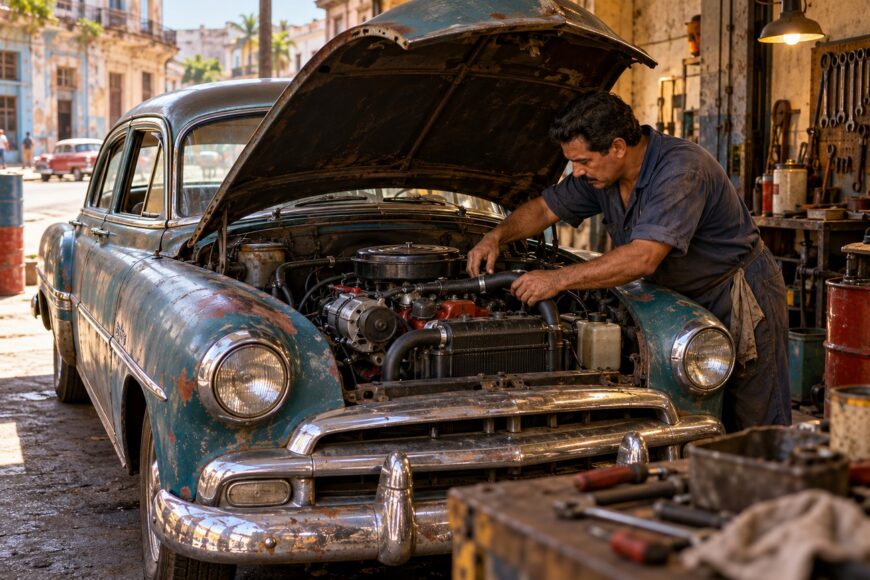
A recognizable Chevrolet body can conceal a mechanical mix that no factory parts catalog describes. The engine, gearbox, brakes, and wiring may have been replaced or adapted over decades of use in Cuba. For an owner, the useful question is whether the car can be maintained safely in its present form, not whether every component matches its original specification.
That choice begins with identification. Before ordering a part or setting a service routine, establish what is installed, how the components fit together, and who can repair them locally. A sound adaptation deserves careful upkeep; an original-looking part deserves the same scrutiny as any other repair.
- The Chevrolet body is only the starting point
- Make a parts map before buying anything
- Maintain the installed engine, not an imagined original
- Find parts through donors, adaptation, and fabrication
- Inspect the repairs a glossy exterior cannot show
- Choose a repair strategy the car can live with
- Frequently asked questions
- Why are there so many 1950s cars in Cuba?
- What is the most common car in Cuba?
- How can you document a one-off part for the next repair?
- What belongs in a roadside kit for a mixed-parts Chevy?
The Chevrolet body is only the starting point
A typical 1950 Chevrolet had a 216.5-cubic-inch (3.5-liter) inline-six, a three-speed manual transmission, and water cooling. Those specifications help identify surviving factory equipment, but they do not describe every Chevrolet from the 1950s—or every car that still wears a 1950 body.
Many American cars in Cuba have replacement powertrains or other adapted components, including Soviet-origin units. A Chevrolet body may sit over a different engine, carburetor, transmission, or electrical system. Some cars retain more original machinery than others, so conversion should be established by inspection rather than presumed.
Paint, trim, and a recognizable grille tell you little about the assemblies that will need parts next month. Even a body number cannot settle the identity of a later engine or brake conversion. Treat a catalog listing as a possible match until the fitted part and its connections have been checked.
Popular accounts refer to tens of thousands of surviving American cars, but there is no confirmed official current census or verified share retaining original mechanical components. That uncertainty matters when judging an individual car: neither a sweeping claim about Cuban classics nor a polished exterior substitutes for its repair history.
Make a parts map before buying anything
Start a record of the car as it stands. Identify the installed engine, gearbox, carburetor, generator, starter, brakes, and hubs; note markings where they remain legible. Record belt and filter dimensions, along with visible changes to mounts, linkages, hoses, and wiring.
A mixed-parts car may combine an American body, a Soviet-origin engine, a different carburetor, fabricated mounts, and rewired electrical equipment. Photograph each assembly in place before removing it. Images of brackets and connections can be as useful as a part number when a mechanic must reconstruct how a repair was made.
For a purchase, match the replacement to the fitted assembly and the measured part, then check its mounting and operating clearances. A listing for a 1950 Chevrolet may fit a surviving factory unit yet be useless for a later conversion. Likewise, the correct engine model alone does not identify a modified pulley or hose connection.
Keep the map with the car and update it after each repair. Note which component supplied a replacement and whether it needed alteration to fit. This modest record prevents the next owner or mechanic from repeating the same search—and helps distinguish a known adaptation from an unidentified one.
Maintain the installed engine, not an imagined original
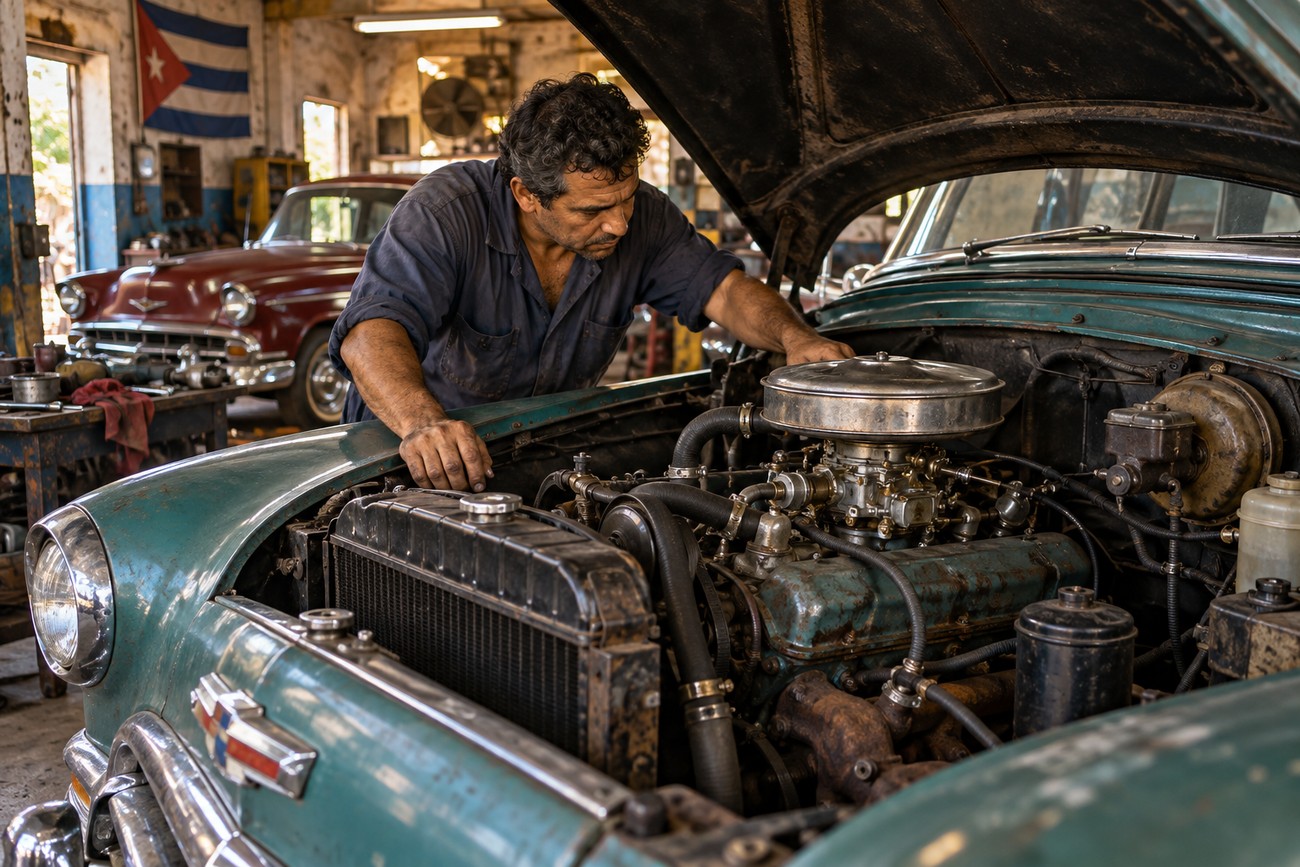
Chevrolet factory guidance separately addresses lubrication, cooling, fuel, tires, and electrical service. Use it for relevant original assemblies, checking the manual for the car’s actual specification. A generic modern interval cannot safely stand in for that guidance, particularly on a car with an uncertain maintenance history.
Replacement components need service based on their own configuration. Identify the fitted engine and fuel equipment before choosing maintenance instructions, and establish what the cooling system actually uses. Tires, brakes, and charging equipment also warrant checks as a connected routine: a dependable engine is little comfort if the car cannot stop or charge reliably.
Modified wiring may no longer match a Chevrolet factory diagram. Trace circuits as installed, inspect connections and insulation, and record any changes before using the original diagram to diagnose a fault. A circuit that works during a brief test can still conceal a poorly protected or insecure connection.
When documentation is missing, establish a baseline through inspection rather than inventing a service interval or fluid specification. Note leaks, belt condition, cooling behavior, fuel delivery, and charging performance, then obtain guidance for the identified units. Recheck after repairs so a new part does not mask an underlying problem.
Find parts through donors, adaptation, and fabrication
Limited access to imported parts encourages donor-car salvage, cross-make adaptation, and locally made components. A donor can offer more than the main assembly: its brackets, pulleys, linkages, housings, and fasteners may be what makes a workable installation possible. Buying one isolated part can leave those small but essential pieces unresolved.
Cuban mechanics use machining, welding, and careful fitting to restore components that might elsewhere be replaced. Those skills can keep a serviceable car on the road when a catalog part is unavailable. The finished piece still needs checks for fit, secure fastening, and suitability for the job it performs.
An available adapted unit may be easier to maintain than a rare original whose next replacement part cannot be found. Compare the supply of spares and local repair knowledge before changing a working assembly. Scarcity explains why a repair was improvised; it does not establish that the repair is sound.
Favor adaptations another mechanic can identify and reproduce. Save dimensions, the source of donor components, and notes on any machining or fitting. A one-off solution with no record may work well today yet turn a minor failure into a lengthy investigation later.
Inspect the repairs a glossy exterior cannot show
Original-looking bodywork and tourist-ready paint establish neither mechanical originality nor safety. Inspect the frame and the underside of the car, with particular attention to brakes, powertrain mounting points, and altered wiring. These areas reveal how the car was made to function, rather than how it was made to look.
Fabricated mounts and adapters can be reliable, but their condition and workmanship require direct inspection. Look for damaged metal, loose fasteners, poor welds, and parts rubbing under movement. The badge on a replacement engine cannot tell you whether its installation is secure.
Have the brakes assessed as a complete fitted system, including the parts that connect converted components. Trace altered wiring rather than assuming factory routing or protection remains. Where a safety-critical repair cannot be verified, arrange a competent inspection before relying on the car in traffic.
A car that manages short tourist trips has demonstrated only that limited duty. Regular longer journeys, especially with a full load, place different demands on cooling, mounting, braking, and electrical reliability. Judge suitability against the use you intend, without declaring a particular conversion safe or unsafe on appearance alone.
Choose a repair strategy the car can live with
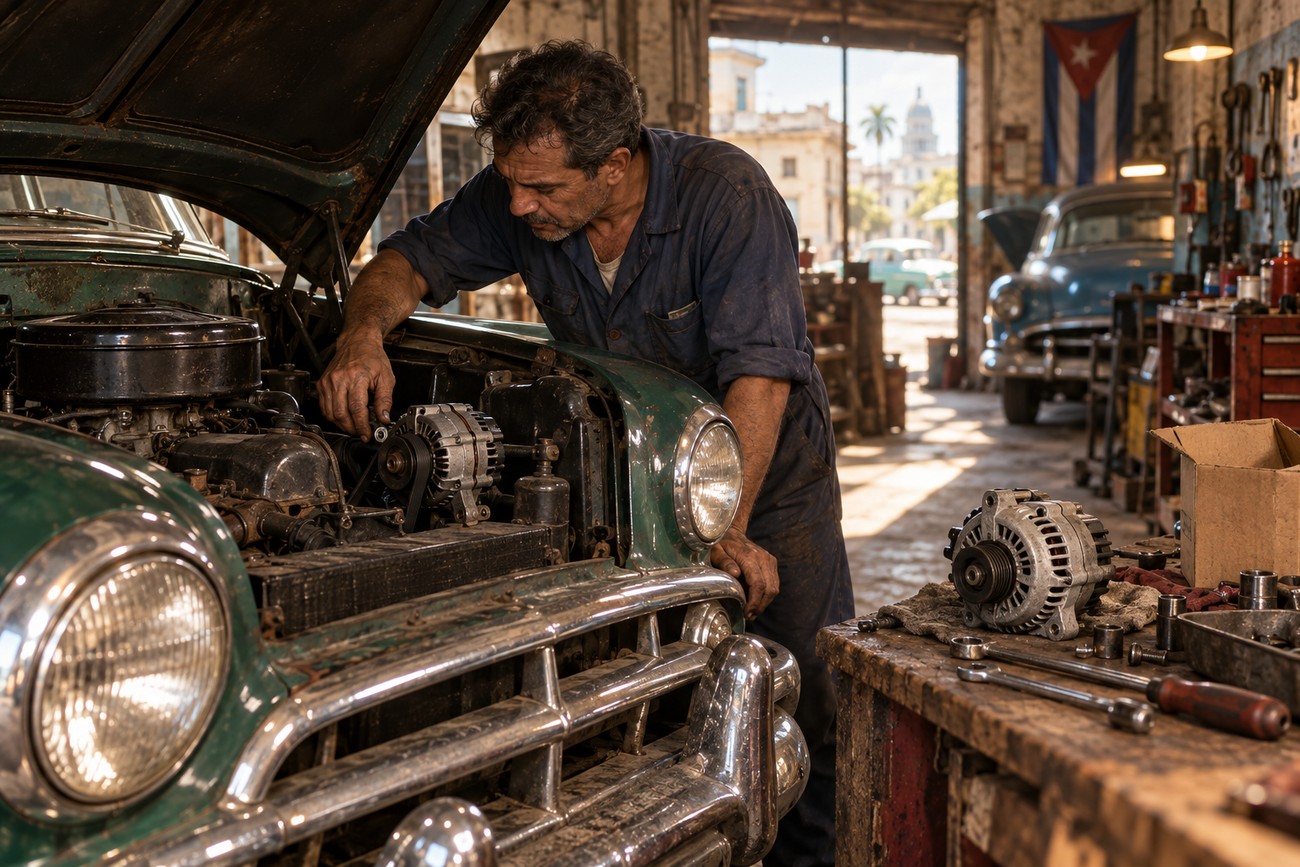
Preserving a working adaptation and returning a car to factory specification are both legitimate choices. The right one depends on the installed components, workmanship, intended use, and future repair access. Originality may matter greatly to a preservation project, while an owner who drives regularly may place more weight on local serviceability.
Before replacing a serviceable unit, consider more than its price. Establish where its original-style replacement parts would come from and who could maintain the completed installation. A rare original component may be less practical than a locally repairable replacement if ongoing support is unavailable.
The reverse also deserves attention: a common replacement is not a good choice merely because it is easy to find. Its mounts, controls, and connections must suit the car and be repairable as a system. If an existing conversion has problems, address its workmanship before treating either authenticity or availability as a cure.
Set a plan that includes the next likely repair, not just the current one. Identify the assemblies, inspect the work that joins them, and preserve enough information for another mechanic to service the car. Do that before removing a functioning adapted unit for authenticity alone.
Frequently asked questions
These ownership questions call for evidence about the particular car. Cuba’s visible classics have varied histories, and their appearance cannot establish how they were maintained or modified.
Why are there so many 1950s cars in Cuba?
Prolonged use under restricted access to imported parts helped keep older American cars in service. Owners and mechanics drew on salvaged parts, adapted other components, and fabricated replacements. Continued use therefore reflects sustained repair effort, not necessarily untouched original machinery; no confirmed official current census establishes the fleet’s size.
What is the most common car in Cuba?
The available information does not establish a verified national model ranking. Chevrolets visible in tourist areas are a poor basis for one: a memorable group of working classics does not represent every vehicle on Cuban roads.
How can you document a one-off part for the next repair?
Keep a dated sketch or photograph showing the part in place and removed, with its dimensions, installation location, and material if known. Add the workshop’s notes on how it was made or fitted. Store a copy with the car’s parts map so the next repair begins with a usable reference.
What belongs in a roadside kit for a mixed-parts Chevy?
Carry the car’s recorded belt and filter references, compatible spare consumables where available, and contact details for someone familiar with its conversions. Include the parts map or an accessible copy. A roadside mechanic can then identify the fitted assemblies without relying on the body year.







