
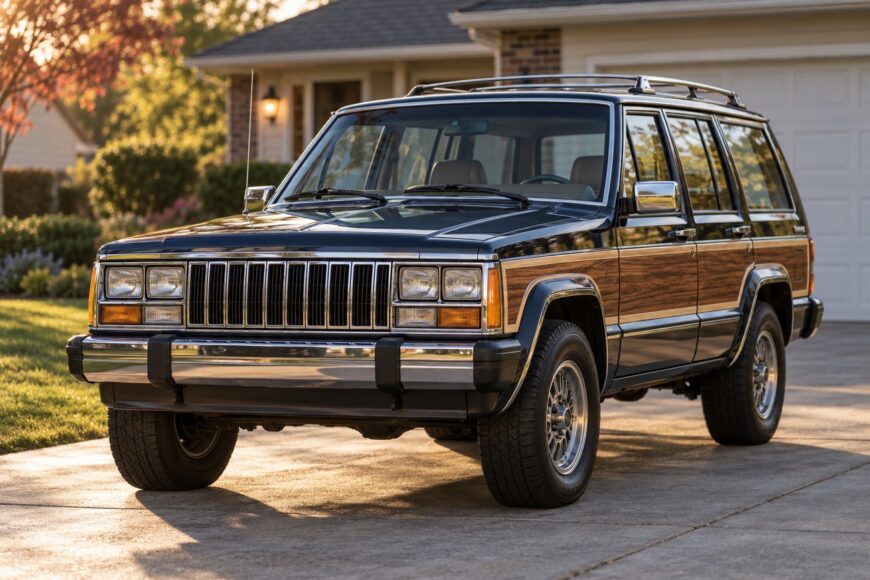
The Jeep Wagoneer Limited XJ creates a deliberate visual contradiction: a compact Cherokee wearing Wagoneer prestige, chrome trim, and vinyl woodgrain along its sides. It looks like a small version of the full-size Grand Wagoneer, yet its foundations belong to the Cherokee XJ family.
That distinction defines the buying decision. You are choosing an unusually styled and historically interesting XJ while also considering an aging used vehicle whose decorative trim can conceal corrosion, repairs, worn suspension, electrical faults, and missing parts. The badge adds character, but it cannot improve the condition of the individual vehicle.
- The XJ Wagoneer Was a Cherokee in Disguise
- What Made the Wagoneer Limited Look Special
- Engines, Size, and the Grand Wagoneer Specification Trap
- The Problems the Woodgrain Can Hide
- How to Inspect a Wagoneer Limited Before Buying
- Is the Fake Wood Cherokee Worth Preserving?
- Frequently asked questions
- What does XJ stand for in Jeep Cherokee?
- Why is the Jeep Wagoneer so cheap compared with other classic SUVs?
- Why is Jeep discontinuing the Wagoneer?
- Why is the Jeep Wagoneer so cheap?
The XJ Wagoneer Was a Cherokee in Disguise
The Jeep Wagoneer XJ was an upscale version of the Cherokee XJ on the compact unibody XJ platform, not a separate platform. It appeared approximately from 1984 to 1990/91, during the period when Jeep reused the Wagoneer name for a smaller, more modern SUV. The body, basic architecture, and engineering relationship place it firmly within the Cherokee XJ story.
Jeep offered the XJ version in two main forms: Wagoneer and Wagoneer Limited. The Limited added equipment and visual distinction, while the underlying vehicle remained a compact unibody SUV. Calling it a luxury SUV without qualification sets expectations too high for cabin isolation, materials, and ride refinement.
Confusion with the full-size Grand Wagoneer is understandable because both carried the same family name and woodgrain styling. The scale tells a different story. The XJ was nearly two feet shorter and five inches narrower than the previous full-size generation, which makes it easier to place in traffic and on narrow trails but also gives it a clearly smaller cabin and road presence.
The name therefore matters as history rather than as proof of separate engineering. Jeep was adapting the Wagoneer identity to the compact XJ market, creating a more upscale alternative to the ordinary Cherokee. That unusual positioning is the reason the model remains interesting today.
What Made the Wagoneer Limited Look Special
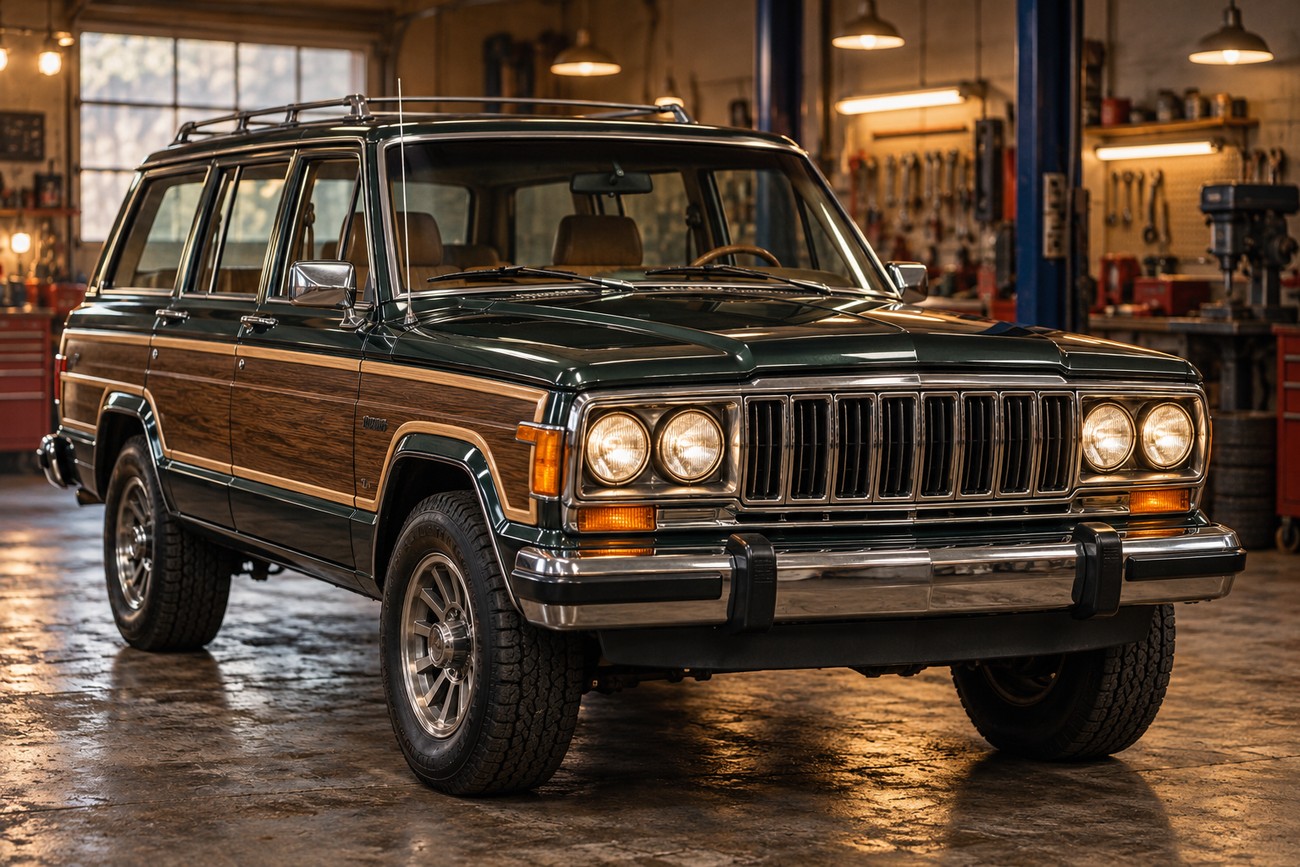
The Limited’s visual package did most of the work. Its sides carried vinyl woodgrain panels or appliques, joined by a different grille, richer interior trim, and additional chrome or exterior decoration. These details gave the compact body a more formal appearance and separated it from a standard Cherokee at a glance.
Both XJ Wagoneer versions used four headlights to distinguish them from the Cherokee, according to Jeep’s historical description. The front end is one of the easiest identification clues when a vehicle has lost its badges or received replacement body panels. The four-headlight treatment also gives the XJ Wagoneer a face of its own without changing its basic platform.
The wood was decorative material. The side treatment consisted of vinyl woodgrain panels or appliques, not natural wood, and it carried no mechanical benefit. A clean, correctly aligned original finish can add genuine historical appeal, while a faded or badly reproduced wrap can make the vehicle look like an ordinary Cherokee wearing an improvised costume.
This is where the “fake wood Cherokee” description becomes useful rather than dismissive. It identifies the model’s central tension: the Wagoneer Limited is a carefully packaged trim version with a distinctive identity, yet its styling should never be mistaken for evidence of a unique chassis, stronger drivetrain, or full-size luxury construction.
Engines, Size, and the Grand Wagoneer Specification Trap
Engine information must be tied to the XJ rather than borrowed from the larger Grand Wagoneer/SJ. XJ Wagoneer examples used engines including the 2.5-liter I4 and 4.0-liter I6. Engine and transmission combinations varied by model year and market, so a U. S. brochure cannot automatically define a vehicle sold elsewhere.
The common specification error involves the 4.2-liter I6 and 5.9-liter V8. Figures of slightly over 110 hp and 210 lb-ft for the 4.2-liter, along with 140 hp and 280 lb-ft for the 5.9-liter, belong to the full-size Grand Wagoneer. They should not be assigned to the compact XJ without clear qualification.
Listings often compress several Jeep generations into one description, especially when sellers use “Wagoneer” as a broad search term. Check the body, chassis identity, engine, transmission, and market history together. A four-headlight compact vehicle with Cherokee XJ proportions is a different purchase from a full-size Grand Wagoneer/SJ, even when both have woodgrain.
Performance expectations should remain modest. Age, gearing, vehicle weight, maintenance, and the particular engine-transmission combination all affect how an XJ drives today. The Limited’s trim level does not guarantee the most powerful engine or a unique mechanical specification; its main distinction was equipment and appearance.
The Problems the Woodgrain Can Hide
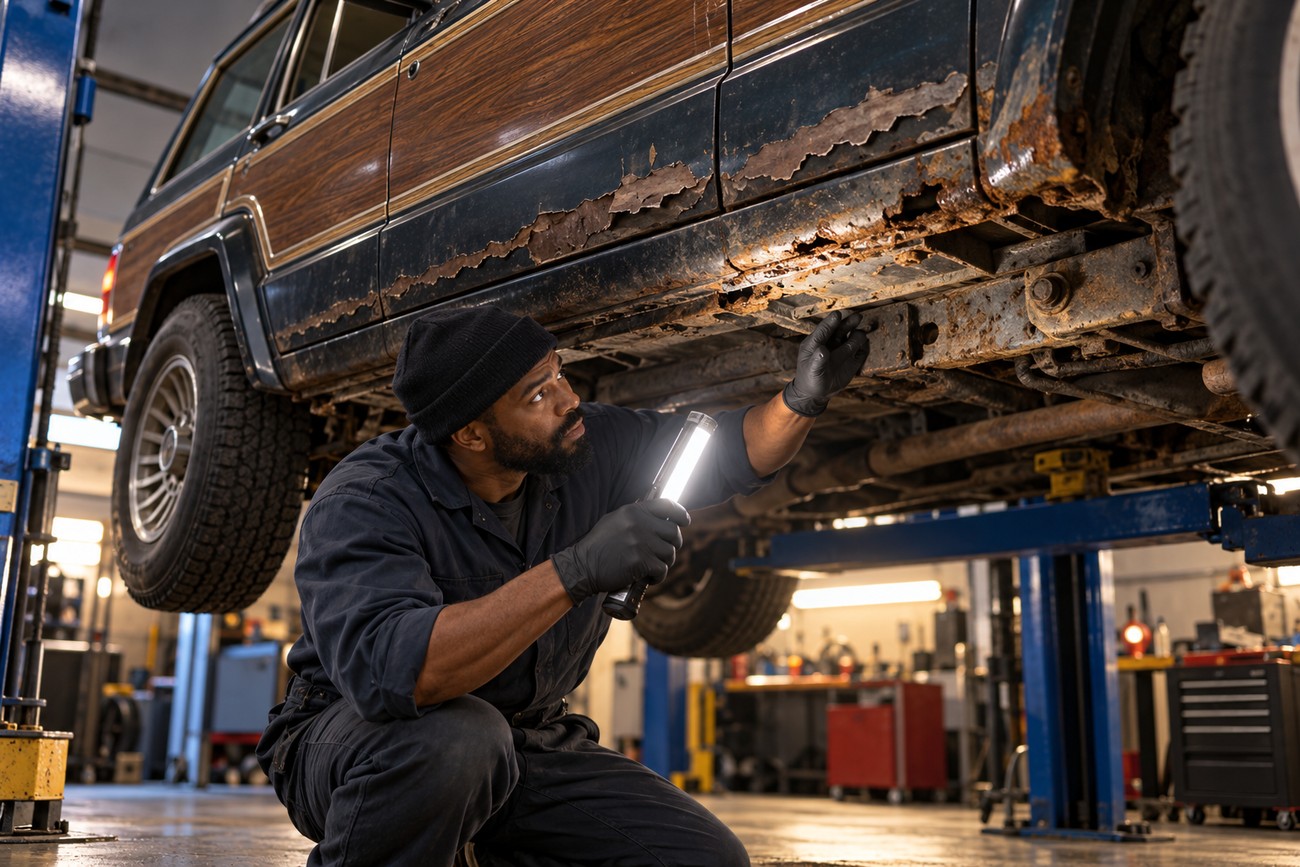
An upscale badge does not change the age of the underlying XJ. Woodgrain film and appliques can fade, peel, lift at the edges, or delaminate after years of weather exposure. Replacement material may have a different grain, color, width, or gloss, and an apparently attractive restoration can look visibly incorrect when viewed beside an original panel.
Cosmetics can distract from more expensive problems. Inspect the body for corrosion, then examine floor areas, seams, mounting points, and fastening locations before judging the interior or side graphics. Aging electrical components, brittle plastics, worn suspension parts, and drivetrain faults are all more important to the purchase than a clean grille or freshly applied woodgrain.
Glossy woodgrain deserves closer inspection, not automatic confidence. Its edges, fastener lines, and alignment can reveal where the metal was repaired, where trim was removed, and whether the restoration quality matches the asking price.
Owners and period reviews regularly raise concerns about modest dynamics and fuel economy, especially in older or heavier configurations. That does not make every XJ Wagoneer unpleasant, but it does make a thorough road test useful. Sluggish response, poor shifting, vibration, or excessive noise can turn a visually appealing example into a substantial mechanical project.
Wagoneer-specific trim and replacement parts can also be harder to source than ordinary Cherokee components. The basic XJ mechanical relationship helps, yet grille pieces, lighting details, badges, woodgrain sections, and interior items may require patient searching. A good-looking Limited can therefore be a worse buy than an honest Cherokee with sound metal and complete mechanical systems.
How to Inspect a Wagoneer Limited Before Buying
Start by verifying what the vehicle actually is. Confirm the XJ identity, approximate model year, engine, transmission, and market-specific equipment from the vehicle itself and its documentation. Do not assume that a listing’s use of “Limited” proves every advertised feature, because equipment changed by year and market.
Move next to the structure. Check body seams, floor areas, suspension attachment points, mounting locations, and other fastening areas for corrosion or previous repairs. Look beneath decorative panels where possible, and inspect the quality of welds, patches, sealant, and paint transitions. Structural condition should determine the seriousness of the purchase before trim originality enters the discussion.
Lift the visual story before evaluating originality. A panel that sits too high, a fastener line that changes direction, or woodgrain that stops short of an adjacent piece can point to repair work underneath the decoration.
Then test the mechanical systems in an orderly way: cold start, engine behavior, transmission operation, steering, suspension response, braking, drivetrain noise, and four-wheel-drive operation where fitted. Check electrical equipment and inspect plastic interior parts for brittleness. A short drive cannot replace an underside inspection, but it can expose faults that a polished static presentation conceals.
Finish by comparing the surviving decorative equipment with the price and the vehicle’s condition. Original grille pieces, four-headlight components, interior details, and correctly fitted woodgrain support the identity and collector appeal of an XJ Wagoneer. Non-original trim is not automatically disqualifying, though it should be reflected in the valuation and in the amount of work still required.
Is the Fake Wood Cherokee Worth Preserving?
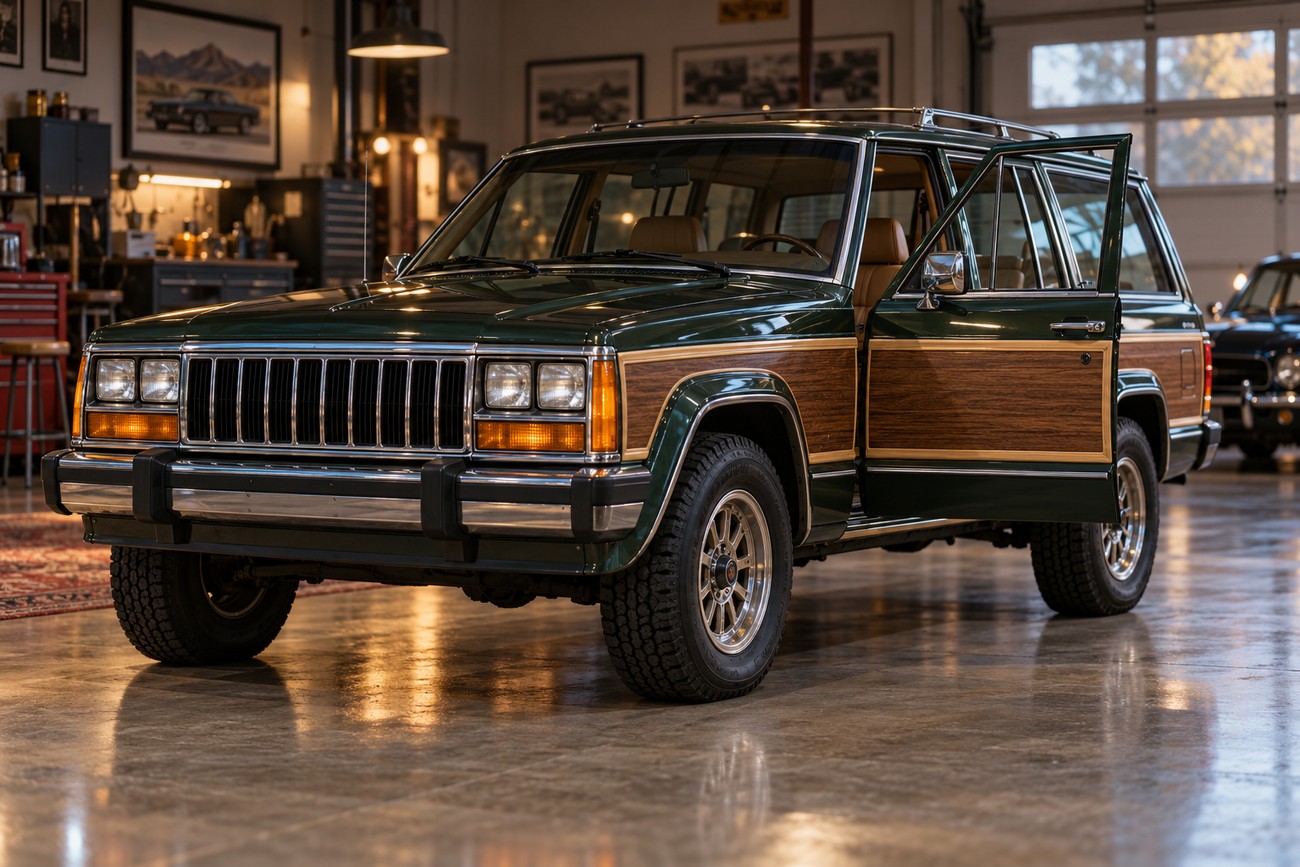
The XJ Wagoneer represents a distinct historical step in repackaging the Wagoneer name on a compact XJ. Its interest comes from the combination of Cherokee proportions, a four-headlight front end, and formal woodgrain styling. That combination is unusual enough to justify preservation when the vehicle remains structurally sound and reasonably complete.
Originality matters because the decorative elements define the model’s identity. A standard Cherokee can receive generic woodgrain and badges, but that does not recreate a correctly equipped Wagoneer Limited. The quality, placement, and survival of the original trim help separate a historically complete example from a cosmetically modified one.
Preservation does not require treating every worn part as untouchable. A careful repair can be preferable to neglect, provided the work respects the correct materials, proportions, and finish. Replacing sound metal with cosmetic shortcuts, or covering corrosion with fresh graphics, moves the vehicle in the opposite direction.
The buying principle is simple: originality helps, but structural and mechanical condition come first. A sound, correctly identified XJ Wagoneer is worth more attention than a prestigious-looking example with hidden rust, improvised woodgrain, and a tired drivetrain. The fake wood is the reason to notice the vehicle; it is not the reason to ignore its faults.
Frequently asked questions
What does XJ stand for in Jeep Cherokee?
XJ is primarily Jeep’s model or engineering designation for this Cherokee family. It is not an acronym for a separate Wagoneer luxury series, and it does not indicate a standalone luxury brand. The XJ designation covers the compact unibody architecture used by the Cherokee and the related XJ Wagoneer.
That is why “Wagoneer XJ” and “Cherokee XJ” can describe closely related vehicles. The Wagoneer name identifies the upscale styling and equipment treatment, while XJ identifies the vehicle family and engineering basis.
Why is the Jeep Wagoneer so cheap compared with other classic SUVs?
Apparent bargains often combine different Wagoneer generations, incomplete trim, corrosion, and uncertain mechanical condition. A low asking price may also reflect the difficulty of sourcing Wagoneer-specific decorative parts, especially when the grille, lights, woodgrain, or interior pieces are missing.
Price comparisons become unreliable when a compact XJ Wagoneer, a full-size Grand Wagoneer/SJ, and heavily modified vehicles appear in the same search results. The condition of the body, drivetrain, documentation, and original equipment explains more than the Wagoneer badge alone.
Why is Jeep discontinuing the Wagoneer?
The classic XJ Wagoneer is not being discontinued today; its production ended approximately in 1990/91. Headlines about a Wagoneer discontinuation generally concern a later full-size Jeep product or a particular market strategy, rather than the compact XJ discussed here.
That distinction matters because the modern full-size vehicle and the classic XJ have different platforms, dimensions, engines, ownership costs, and market histories. A current-product announcement does not change the identity or availability of the classic XJ Wagoneer.
Why is the Jeep Wagoneer so cheap?
Low prices usually reflect condition and uncertainty rather than a single weakness in demand. Rust, incomplete woodgrain, missing model-specific trim, electrical faults, worn suspension, and drivetrain work can quickly outweigh the apparent saving.
Listings also mix the compact XJ Wagoneer with the full-size Grand Wagoneer/SJ. Before comparing prices, establish the generation, inspect the structure, and confirm which original equipment remains. Only then does the asking price have useful meaning.







