
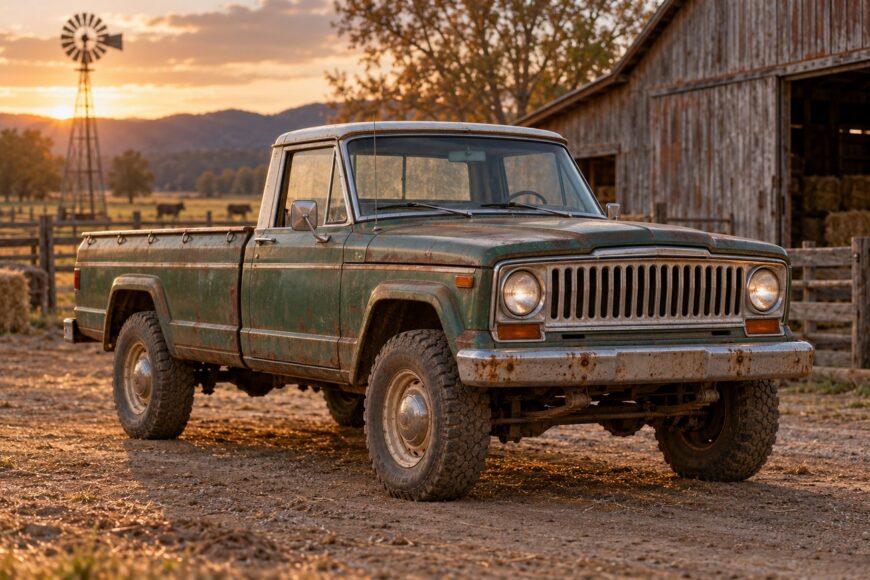
The original Jeep Gladiator SJ was a full-size, frame-built J-series pickup, not an early version of the modern JT Gladiator. Introduced for the 1963 model year, with production beginning in fall 1962, it brought Wagoneer-family engineering to a truck built for hauling and available with four-wheel drive. Its appeal lies in that combination of utility and unusual period engineering.
Age complicates the purchase. Corrosion, scarce engine and suspension parts, outdated safety, and confusing J-series identities can turn a promising truck into an expensive project. The Gladiator name alone tells you little about a particular example’s equipment, condition, or suitability for work.
- What the Original Jeep Gladiator SJ Actually Was
- J-200, J-300, and J-Series Identity: Why the Badges Matter
- Jeep Gladiator SJ Configurations at a Glance
- Engines, Transmissions, and the Tornado Problem
- Four-Wheel Drive, Axles, and the Independent Front Suspension Trap
- The Hidden Cost of Owning or Restoring an SJ
- Buying Checklist: How to Avoid the Wrong Gladiator SJ
- Is the Original Gladiator SJ Still Worth Buying?
- Frequently asked questions
- What does SJ mean on a Jeep Gladiator?
- Which Jeep Gladiator SJ is considered the best?
- Which Jeep Gladiator SJ should buyers stay away from?
- How much does a Jeep Gladiator SJ cost?
What the Original Jeep Gladiator SJ Actually Was
The Gladiator shared the SJ ladder-frame platform with the Jeep Wagoneer, which also debuted in fall 1962. That family connection matters to buyers: it gives restorers another line of research for some components, although a Wagoneer part should never be assumed to fit a pickup without checking its application.
Jeep offered the SJ as a full-size pickup with a two-seat cab and a range of wheelbases and working configurations. Its frame and available four-wheel drive gave it a role beyond that of a small recreational Jeep. Some versions were closer in purpose to commercial vehicles than to the lifestyle pickups familiar today.
The modern JT Gladiator shares a name, not the SJ’s architecture or market position. Comparing the two as though one were simply an older edition of the other obscures the SJ’s size, construction, and period-specific limitations. Assess an original truck against what it was built to do—and against what its surviving structure can still safely support.
J-200, J-300, and J-Series Identity: Why the Badges Matter
An early J-200 had a wheelbase of approximately 120 inches (about 3,048 mm), while a J-300 had a wheelbase of approximately 126 inches (about 3,200 mm). Later J-3000 and J-4000 versions exceeded 131 inches (about 3,300 mm). Those differences affect bed and chassis identification, storage space, and how easily the truck fits into everyday use.
The J-200, J-2000, J-300, J-3000, and J-4000 labels also relate to load rating and configuration; they are not simple wheelbase codes. A cab-and-chassis truck, for example, needs different scrutiny from a conventional pickup. Check its vehicle plate and surviving documentation before relying on a badge or a seller’s description to establish what it can carry.
Model-year claims need similar care. Sources report production ranges of either 1962–1970 or 1962–1971, depending on how they define the end of the original Gladiator identity. For a purchase, the recorded model year and the specification of the individual truck are more useful than treating either range as definitive.
Jeep Gladiator SJ Configurations at a Glance
These identities are starting points for inspection, not substitutes for a vehicle’s records.
| Identity | Approximate wheelbase | Configuration clue | Main buyer risk |
|---|---|---|---|
| J-200 | 120 inches (about 3,048 mm) | Early shorter-wheelbase pickup | Assuming its front suspension matches a later solid-axle truck |
| J-300 | 126 inches (about 3,200 mm) | Early longer-wheelbase pickup | Inferring load rating from wheelbase alone |
| J-3000 | More than 131 inches (about 3,300 mm) | Later long-wheelbase working configuration | Underestimating storage space and parts-identification needs |
| J-4000 | More than 131 inches (about 3,300 mm) | Later long-wheelbase configuration; some chassis-cab trucks had dual rear wheels | Treating a specialized truck as an ordinary pickup |
Confirm exact equipment, load rating, and body configuration from the vehicle plate and documentation rather than inferring them from a seller’s badge.
Engines, Transmissions, and the Tornado Problem
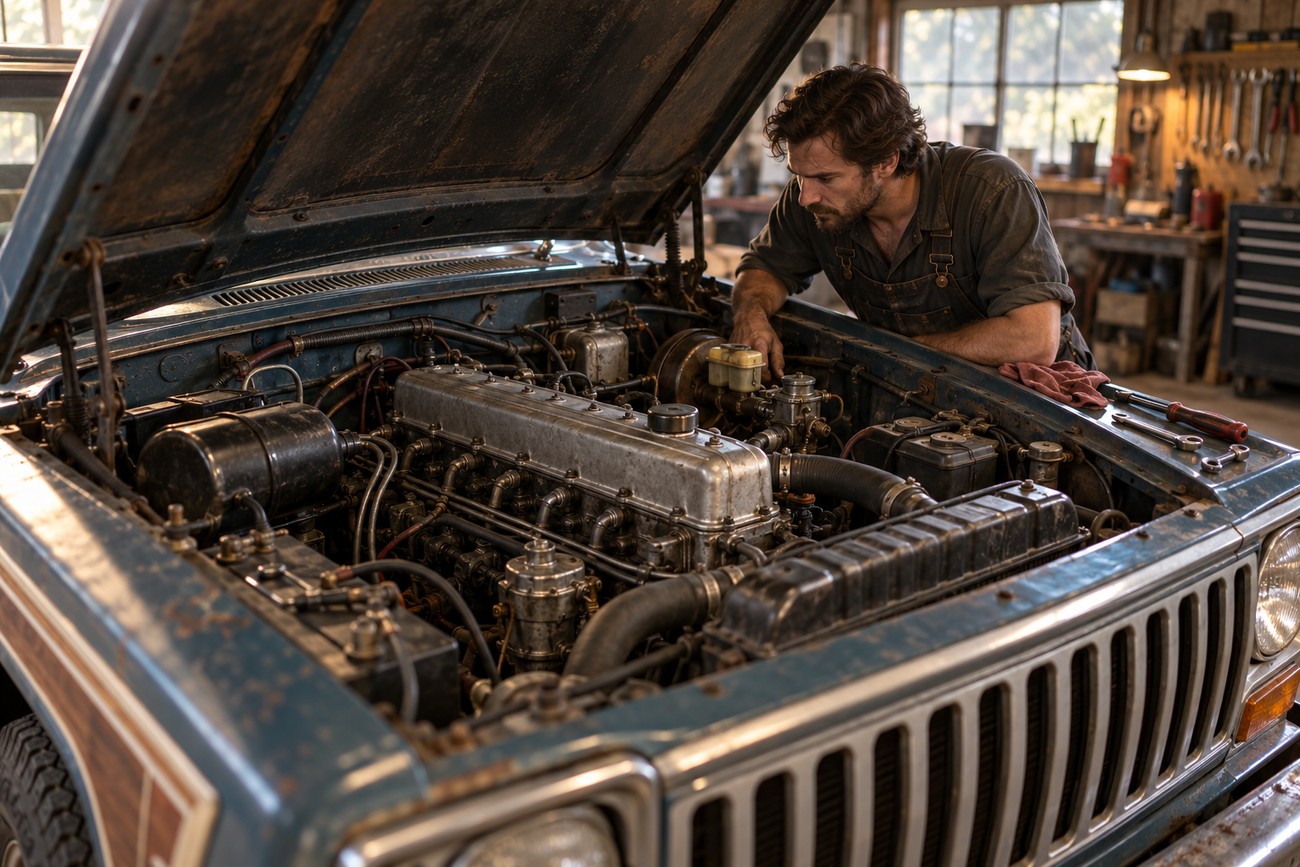
The early base engine was the Tornado OHC inline-six, reported as approximately 3.7–3.8 liters and about 140–142 hp. Early configurations used a three-speed manual transmission. Published displacement and output figures vary slightly, so an engine’s identity should be checked on the vehicle rather than settled by a rounded figure in an advertisement.
The Tornado is an interesting piece of Jeep engineering, but it can be a demanding ownership choice. Its service needs and the difficulty of sourcing specific components deserve attention before a buyer commits to a restoration. A running engine is encouraging; it does not establish that a neglected or incomplete one will be straightforward to maintain.
A 5.4-liter gasoline V8, rated at approximately 250 hp, arrived later and offered stronger performance, especially for a truck expected to move a load. Its fuel appetite can be substantial when hauling or towing. Later inline-six versions also moved toward lower-compression, economy-oriented configurations, so “six-cylinder” does not identify a single mechanical specification across the range.
A rare 1963 four-wheel-drive automatic configuration is reported as using an AS-8W transmission. Treat that claim as something to verify from vehicle documentation and the installed drivetrain, particularly if it forms part of a seller’s case for originality. Automatic availability is historically notable, but an undocumented transmission swap creates a different parts problem from a documented factory configuration.
Four-Wheel Drive, Axles, and the Independent Front Suspension Trap
The Gladiator SJ was sold with rear-wheel drive and four-wheel drive. Four-wheel-drive versions used a Dana 20 transfer case, and Dana 44 front and rear axles are part of the SJ family’s specification. Those names provide useful research leads, but the installed components still need to be identified on an individual truck.
Early light-duty versions could have independent front suspension. The solid front axle became the dominant later arrangement, creating a consequential divide for anyone ordering steering or suspension parts. A listing that simply says “1960s Gladiator” is too vague to resolve it.
Inspect the front suspension before building a parts list. Components intended for a later solid-axle truck cannot automatically be substituted on an independent-front-suspension example. The earlier layout may interest a collector of unusual Jeep engineering, yet its parts challenges can make it less attractive for a regularly used off-road truck.
Four-wheel drive is a capability to test, not a guarantee supplied by the badge. Wear in the transfer case, axles, leaf springs, and steering can substantially undermine traction and control. A careful road test and inspection of those systems tell you more about usable off-road ability than a photograph of the truck on rough ground.
The Hidden Cost of Owning or Restoring an SJ
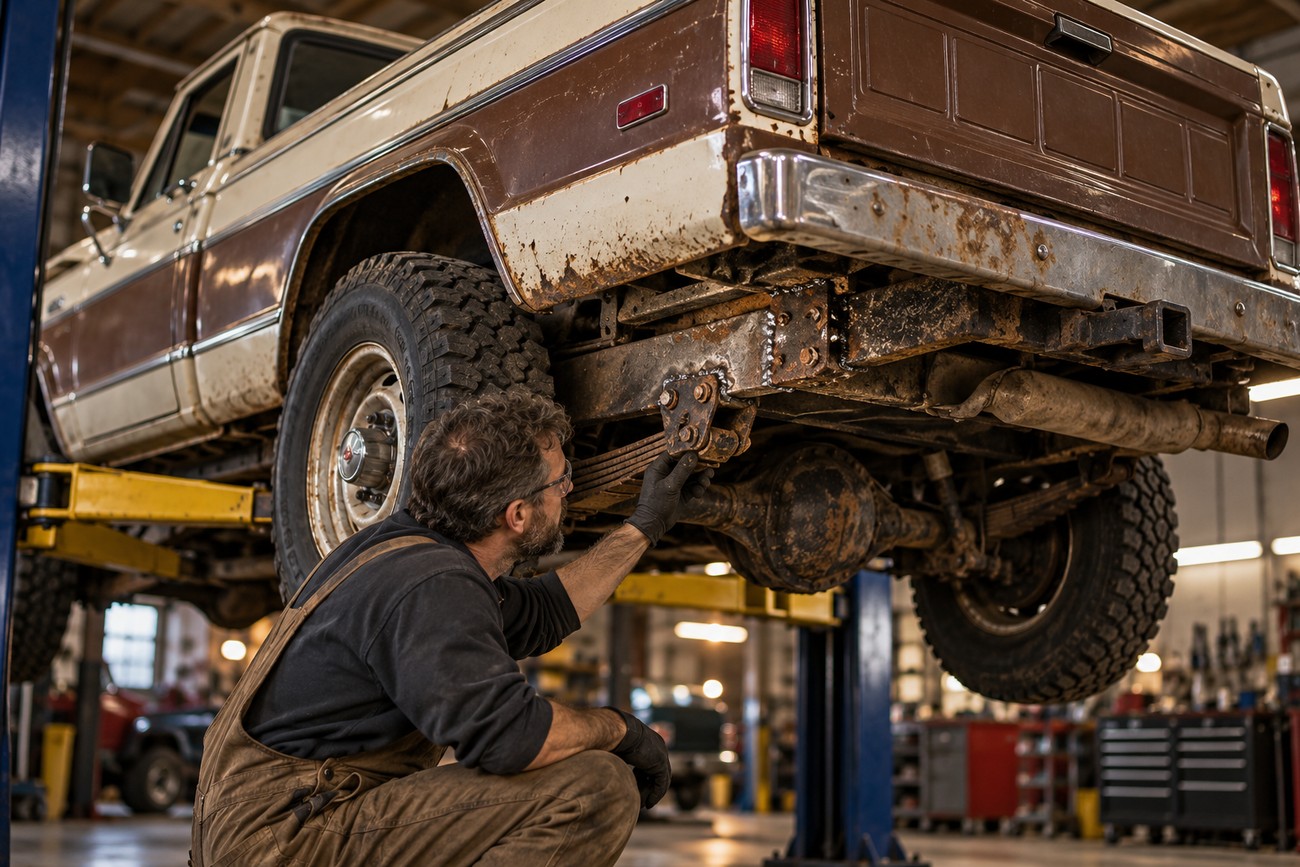
Begin a restoration assessment with the frame and body, especially on a truck that spent its life carrying loads. Corrosion around structural areas and spring mounts can change the scope of a project far more than tired paint or worn seats. Previous repairs deserve close inspection, since fresh-looking metal does not by itself establish the condition beneath it.
Parts planning can be just as consequential. Tornado OHC components and early suspension pieces may be difficult to source, while an older swap can make a catalog match misleading. Shared SJ architecture offers potential leads through Wagoneer and Grand Wagoneer parts research, but interchange must be established component by component.
Trace the frame, spring mounts, and axle identifiers before approving an engine or body restoration. A swapped assembly can make a correct-looking catalog order wrong for the truck in front of you.
Living with an SJ also asks for tolerance. The two-seat cab limits passenger space and can be tiring on long drives; the frame, suspension, and older drivetrain bring considerable noise and vibration by modern standards. Braking performance and passive safety fall short of what a current pickup offers, so its road use should reflect those limits.
Finally, a running engine does not prove economic usability. A truck can start readily while needing structural work, drivetrain repairs, and hard-to-find parts before it is dependable. Treating an aged SJ as a current commercial pickup—or overloading it because it once worked for a living—can damage the frame and leaf springs.
Buying Checklist: How to Avoid the Wrong Gladiator SJ
Start with identity: compare the vehicle plate and documents with the badge, measure the wheelbase, and establish the engine, axle, and front-suspension types. This is particularly important on an independent-front-suspension truck, where assumptions based on later solid-axle examples can lead to unusable parts orders. Record what is installed, not merely what the truck may have left the factory with.
Next, inspect the frame, spring mounts, cab, and body for corrosion and repairs. Check the drivetrain for leaks, wear, and signs of component swaps, then ask for paperwork explaining any major changes. An undocumented replacement engine or axle is not automatically a reason to reject a truck, but it should affect both the repair plan and the value you place on originality.
Match the actual load rating and dimensions to the intended job. A J-3000 or J-4000 can be awkward in a city or a standard garage, while no surviving SJ should be assigned modern work-truck loads on reputation alone. The correct choice for occasional leisure use may be quite different from one intended to haul equipment.
Budget against the truck’s condition, not the rarity claimed in the advertisement. An uncommon specification can attract interest, but it can also have a narrow buyer pool and limited resale liquidity. Before taking on a full restoration, decide whether you would still want the finished truck if selling it took time and recovered less than the work cost.
Is the Original Gladiator SJ Still Worth Buying?
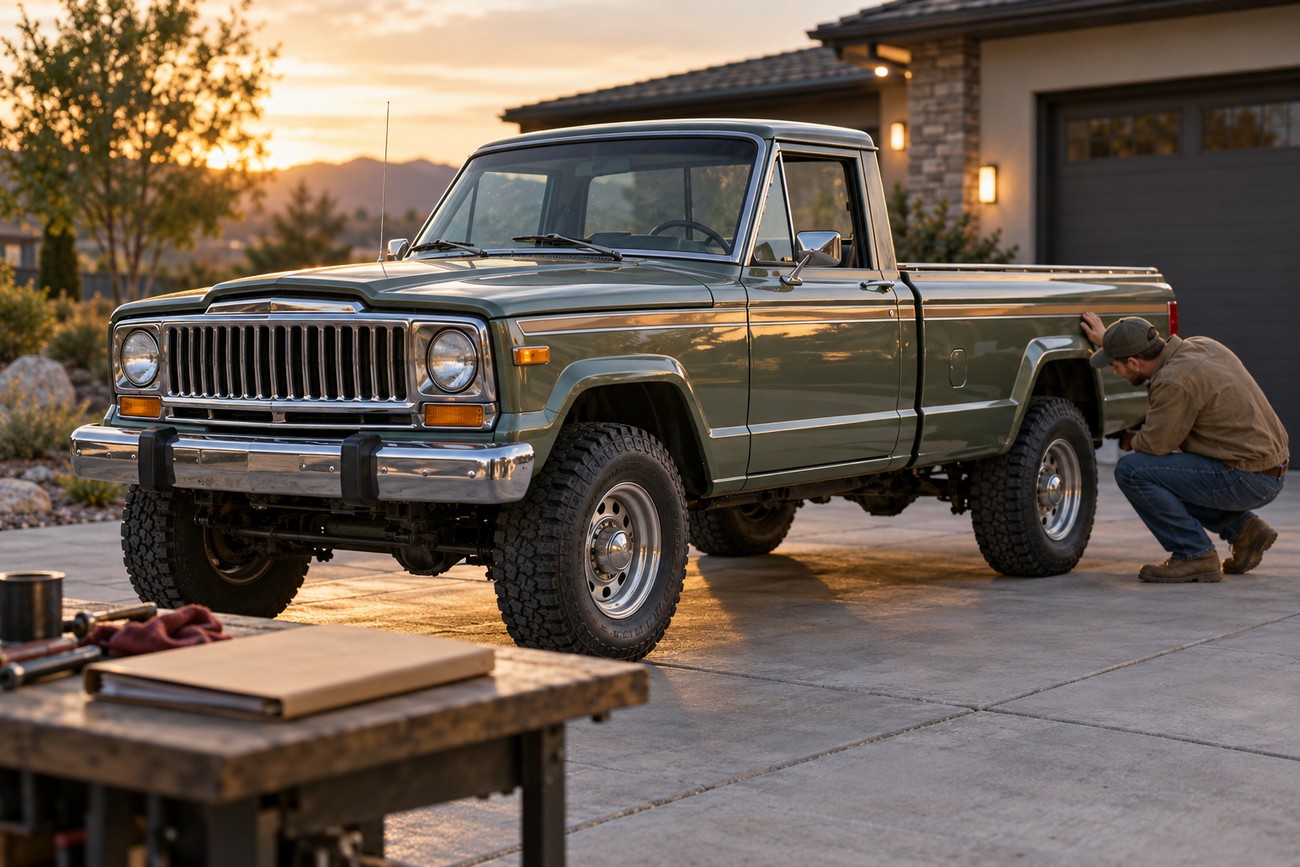
Yes, for a buyer who wants its particular mix of full-size presence, frame construction, and period Jeep utility. Four-wheel drive and unusual commercial configurations add to its appeal, and some cab-and-chassis examples could be equipped with dual rear wheels. Shared Wagoneer-family architecture can also widen the search for information and selected parts.
A documented, usable survivor is a different proposition from a corrosion-heavy project. Sound structure, identifiable mechanical components, and records that support the claimed specification make future repairs easier to plan. A desirable badge cannot compensate for extensive rust or an uncertain combination of swapped parts.
The SJ deserves recognition as a distinctive engineering and utility vehicle. It remains rewarding when bought for its actual condition and character, rather than as a direct substitute for a modern JT Gladiator or a guaranteed profitable restoration.
Frequently asked questions
These answers provide a starting point for comparing individual trucks. For identification, suitability, and value, the evidence on the vehicle matters more than a broad model description.
What does SJ mean on a Jeep Gladiator?
SJ identifies the full-size platform family shared with the Wagoneer. It is separate from J-series badges such as J-200 or J-4000, which help identify particular truck versions, and from JT, the designation associated with the modern Gladiator. When researching parts, use SJ to narrow the vehicle family, then use the truck’s plate and installed equipment to establish the precise application.
Which Jeep Gladiator SJ is considered the best?
There is no best specification independent of intended use and condition. For collecting, a well-documented truck with its original configuration may be the stronger choice; for off-road use, a sound four-wheel-drive example with serviceable components may matter more than rarity. For utility, verify the load rating and available space first, then judge whether an older truck can reasonably meet the task.
Which Jeep Gladiator SJ should buyers stay away from?
Severe structural corrosion is the clearest warning, particularly around the frame and spring mounts. Undocumented drivetrain swaps and a front suspension that conflicts with the seller’s parts or identity claims come next, because they make repair planning uncertain. A truck with those problems may still suit a specialist project, but it is a poor choice for someone seeking a straightforward usable pickup.
How much does a Jeep Gladiator SJ cost?
There is no reliable universal price: condition, documentation, drivetrain originality, and configuration can vary widely. Compare the asking price with genuinely similar trucks, then account for structural repairs and the availability of any missing parts. An inexpensive purchase can become costly if rust or identification problems are discovered only after work begins.







