
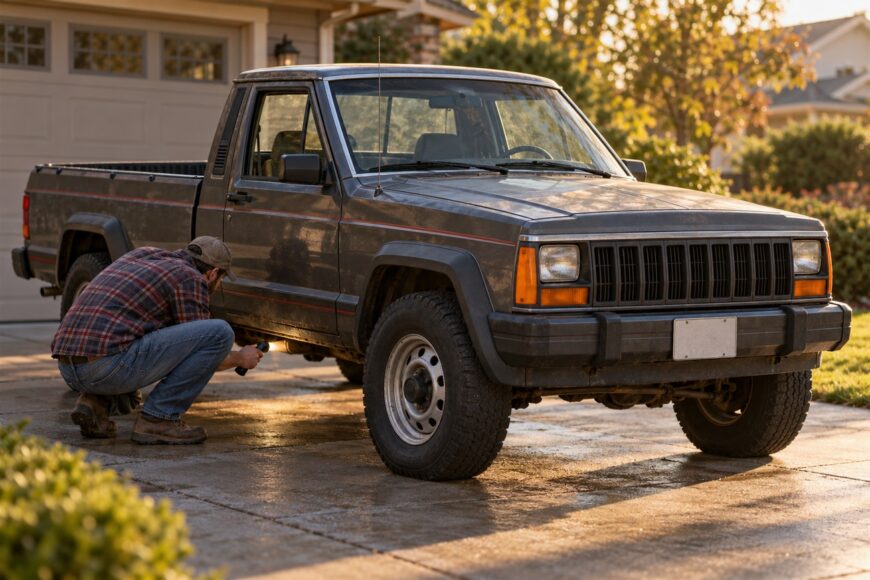
The Jeep Comanche is a compact pickup built from Cherokee XJ architecture, which explains both its appeal and its inspection risks. Produced from 1986 through 1992 under the factory designation MJ, it combines a two-door cab with a practical cargo bed and a familiar mechanical relationship to the Cherokee.
Its reputation can mislead buyers. A strong-running engine, four-wheel drive, or a long bed does not prove that the truck is sound, correctly equipped, or worth restoring. Structural rust, scarce body parts, and conflicting payload claims can turn an apparently usable Comanche into a costly fabrication project.
A modestly powered MJ with sound floors, cab connections, suspension mounts, and complete documentation is usually a better prospect than a more powerful truck hiding corrosion. Start with the structure, then verify the configuration and mechanical condition.
- What the Jeep Comanche Actually Is
- Engines, Drivetrains, and Bed Configurations
- Payload, Metric Ton, and Towing: Read the Truck’s Details
- The Rust Inspection That Matters More Than the Engine
- Mechanical and Electrical Weak Points to Check
- Parts, Repairs, and Choosing the Right Comanche
- Frequently asked questions
- How rare are Jeep Comanches today?
- How much is a Jeep Comanche worth?
- What should I document before buying a Comanche?
What the Jeep Comanche Actually Is
The Comanche was produced from 1986 through 1992 and carries the factory body designation MJ. It is a Cherokee XJ-based compact pickup, using the same basic family architecture rather than a conventional pickup layout with a separate full frame. The format is simple: a two-door cab, a separate-looking cargo bed, and a compact footprint that makes the truck easier to place on narrow roads and in small garages.
Rear-wheel-drive and selectable four-wheel-drive versions were available. Bed lengths were approximately 6 feet and 7 feet, with the longer bed adding utility but also creating more opportunities for confusion about payload packages. A 1990 configuration is listed with a 119.4-inch wheelbase, while other wheelbases can correspond to different bed arrangements.
The word “unibody” should not encourage a casual inspection. The Cherokee-derived integrated-body structure still relies on floors, rockers, cab connections, rear structural areas, and suspension mounting zones to maintain stiffness. Rust in those areas can affect alignment, load carrying, and repair feasibility even if the doors close and the engine starts.
Engines, Drivetrains, and Bed Configurations
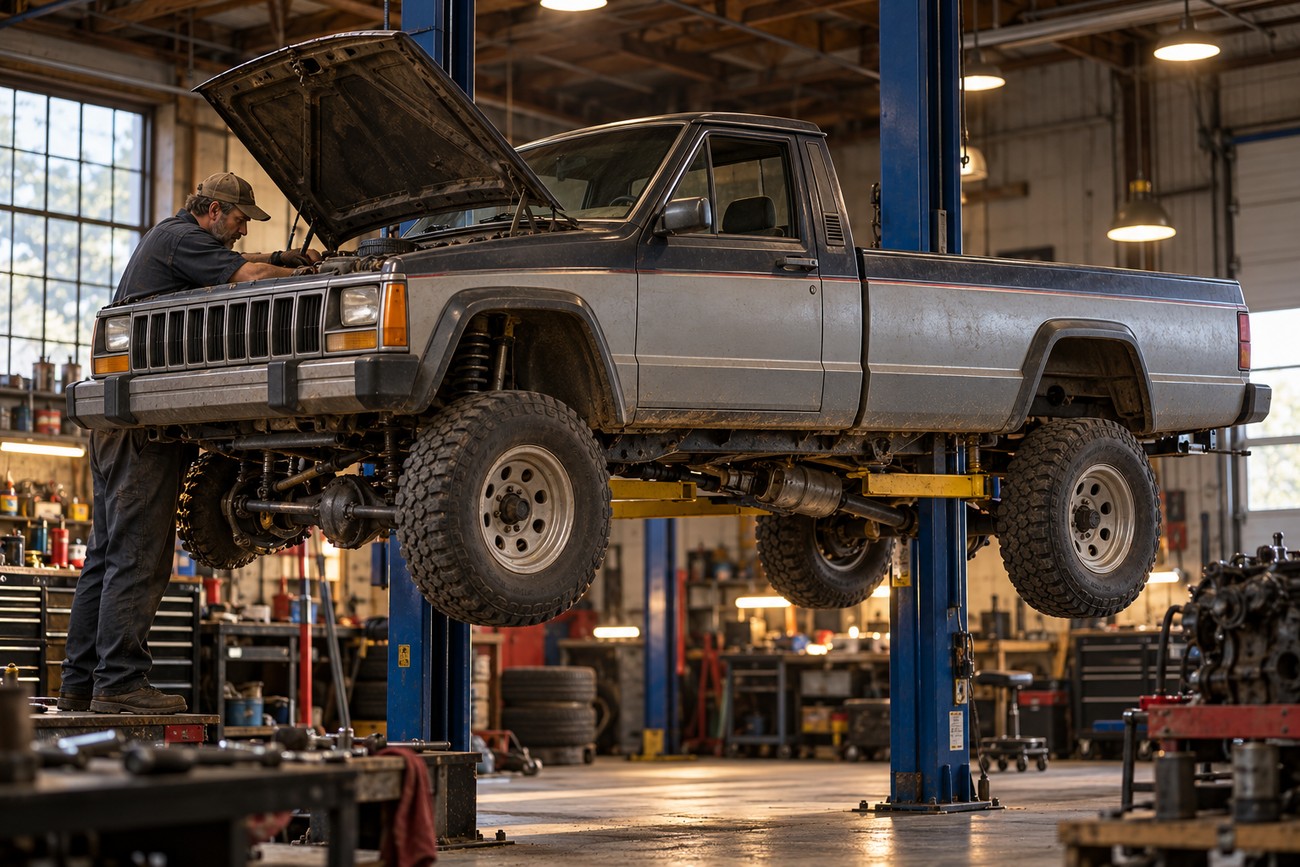
The engine range changed by year and market. It included the AMC 2.5-liter inline-four, an early GM 2.8-liter V6, the AMC 4.0-liter inline-six, and separate versions with a Renault 2.1-liter turbodiesel. Transmission, axle, and drivetrain combinations matter as much as the engine badge when judging how a particular truck will work.
The AMC 4.0-liter inline-six is often treated as the automatic choice, but reputation should not replace inspection. Cracked exhaust manifolds can produce exhaust noise and air leakage, while neglected cooling, ignition, transmission, or suspension components can cost more than an engine with an ordinary specification. A running 4.0 does not validate the rest of the truck.
Early Renix fuel-injection systems also deserve a separate check. Age-related sensors, connectors, and difficult diagnosis can make a truck that starts and idles acceptably unreliable in everyday use. Inspect wiring, grounds, connectors, and service history before assuming that a fault is simply a failed sensor.
Bed length affects usability and may influence the truck’s original ratings, but it does not identify the equipment package by itself. A long bed can be useful for materials and camping equipment, yet its value is reduced if the bed floor, lower supports, or rear structural areas have been repaired with thin patches.
Payload, Metric Ton, and Towing: Read the Truck’s Details
Payload figures for the Comanche must be read as configuration-specific references. Edmunds lists a 1990 standard payload figure of 1,475 pounds, while historical specifications cite up to 2,205 pounds for some long-bed Metric Ton trucks. Those numbers should be verified against the individual truck rather than applied to every MJ.
The Metric Ton package used heavier leaf springs, wheels, and a Dana 44 rear axle. A long bed alone does not prove that the package is present. Confirmation should come from VIN information, factory tags, the rear axle, spring hardware, and other physical evidence that matches the claimed configuration.
Payload claims are easiest to disprove from underneath: compare the rear axle and spring hardware with the truck’s tags before treating a badge, long bed, or seller description as proof of Metric Ton equipment.
Towing capability is equally configuration-dependent. Engine, axle ratio, drivetrain, towing equipment, GVWR, and axle ratings all affect the safe working limit. There is no single universal Comanche towing figure that applies across all years, engines, bed lengths, and modifications.
The Rust Inspection That Matters More Than the Engine
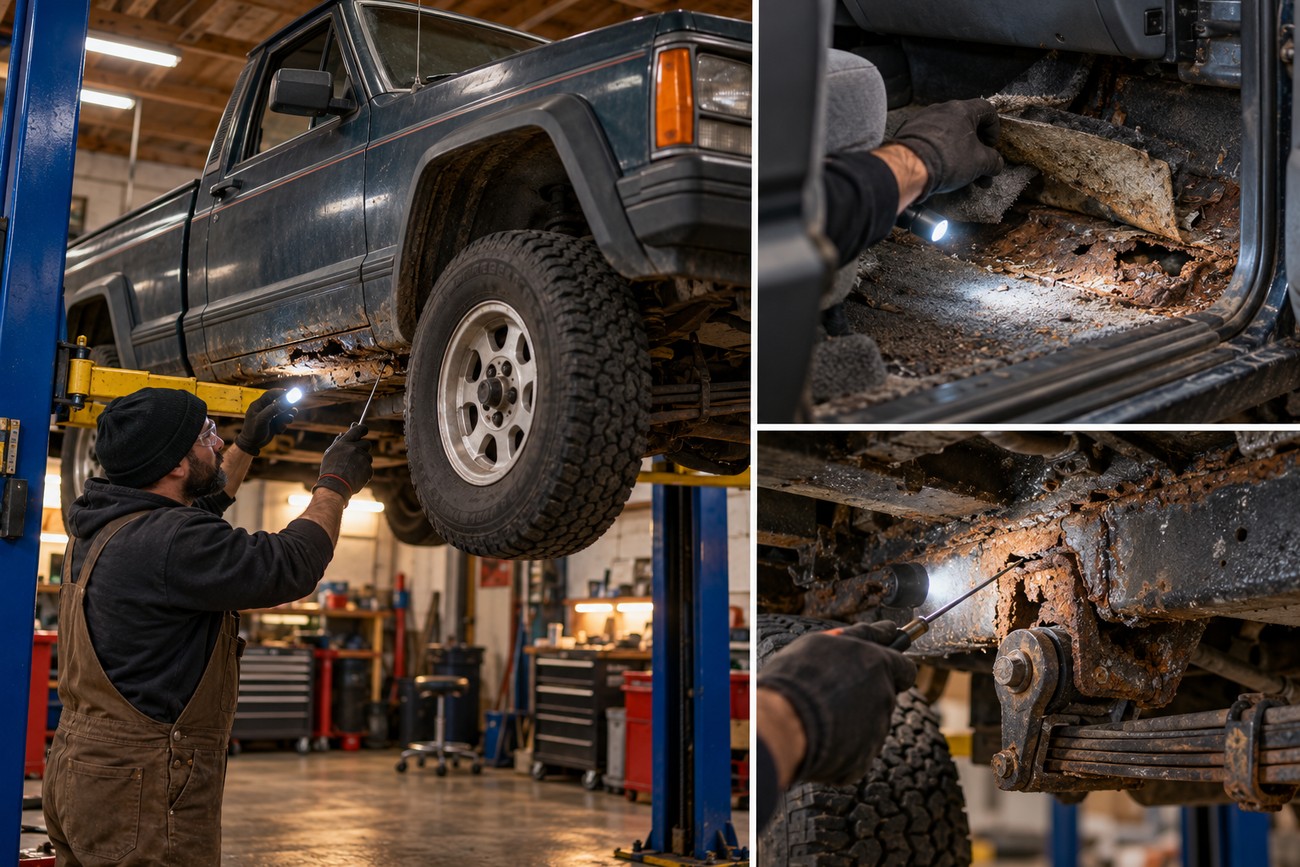
Through-rust is the most expensive common mistake in a Comanche purchase because it can be structural rather than cosmetic. Check the floor, rockers, rear cab corners, bed floor, underside of the bed, and areas around spring mounts. Rust near a suspension or control-arm attachment point deserves immediate attention, since even a small-looking perforation may involve weakened surrounding metal.
Inspect the truck from above and below. Removing the carpet can reveal perforated floor metal that is invisible from the road, while a flashlight and careful probing show whether a repair is solid or merely layered over corrosion. Check the front control-arm area, cab mounts, rear mounting zones, wheel arches, seams, and the lower edges of the cab.
Tap repaired metal, then inspect the suspension and cab attachment zones from underneath. A clean-looking floor can conceal weakened structural areas where access, welding quality, and remaining original metal determine whether the repair is practical.
Water damage often begins away from the final rust hole. Door or windshield seals can wet the floor, and a clogged air-conditioning drain can leave water near wiring and sheet metal. The battery tray deserves its own inspection because acid damage can corrode adjacent panels and floor sections before the problem becomes visible inside the cab.
Fresh undercoating, filler, or paint is not proof of good restoration. Look for abrupt changes in texture, trapped dirt, uneven welds, and patches that do not follow the original shape. A truck with honest surface rust may be easier to evaluate than one with a smooth underside concealing improvised repairs.
Mechanical and Electrical Weak Points to Check
On a 4.0-liter truck, listen for an exhaust leak during cold start and inspect the manifold for cracks. The usual clues are exhaust noise, a ticking sound, or air leakage around the manifold. The repair may be manageable, but access, broken fasteners, and related exhaust damage can increase the work.
Renix-era fuel injection requires methodical testing rather than random parts replacement. Aging sensors, connectors, grounds, and wiring can create intermittent faults that are difficult to diagnose. Water entering through seals or a blocked air-conditioning drain can add electrical damage beneath the floor, so an engine-bay inspection is not enough.
User descriptions also mention heater-control failures, but the available evidence does not establish that issue as a confirmed model-wide defect. Treat it as a possible inspection point and test the controls, fan speeds, temperature selection, and air distribution. Check the transmission, transfer case, axles, steering, and suspension as a complete system; a healthy-running engine cannot offset neglected driveline parts or structural corrosion.
Parts, Repairs, and Choosing the Right Comanche
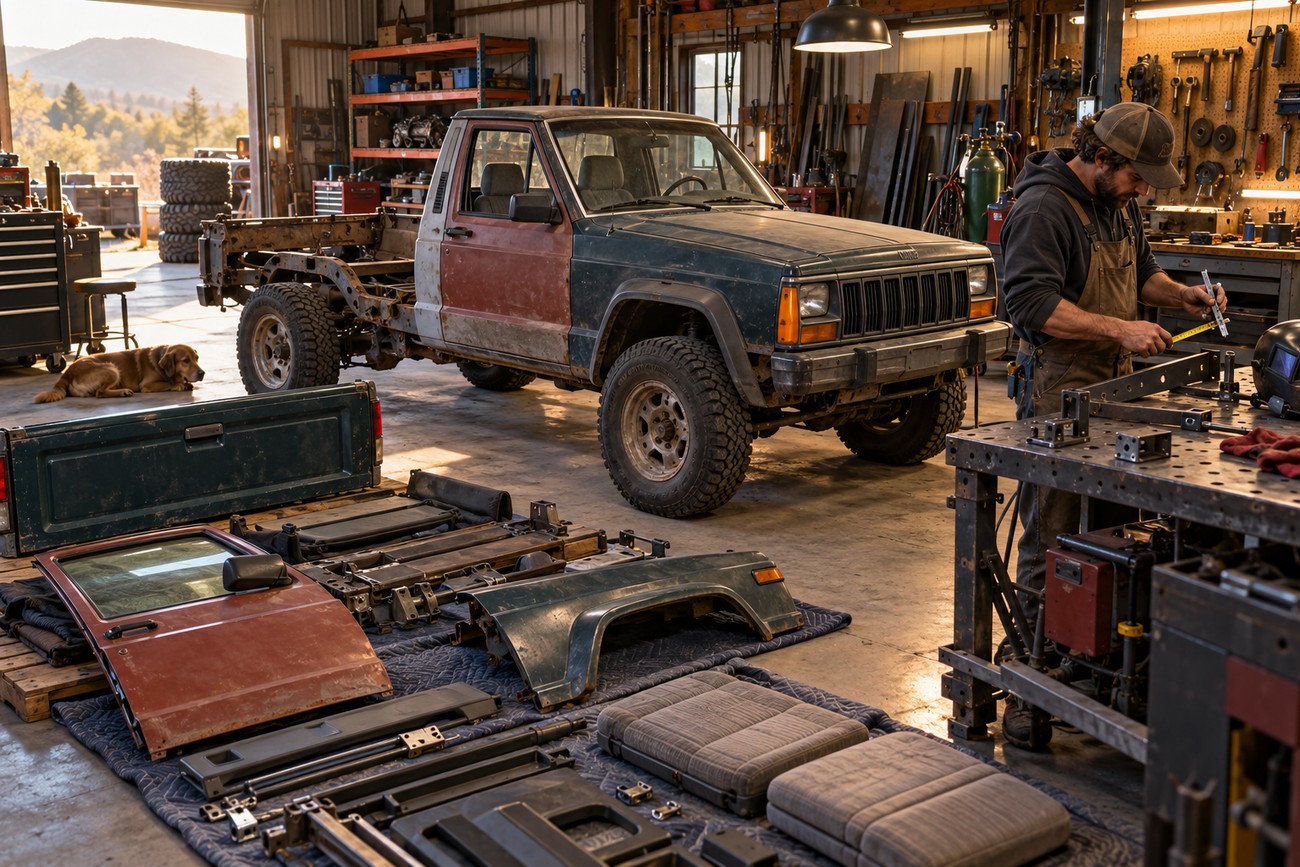
Ownership after purchase is shaped by parts availability. Original body and trim pieces can be difficult to source, including tailgate handles, doors, fenders, bed components, and some interior parts. A repair that would be routine on a common pickup may require a donor vehicle, fabrication, or a long search for a usable used component.
That scarcity changes how you should judge completeness. Missing trim, damaged bed hardware, and improvised interior repairs may not stop the truck from driving, but they add cost and time. Photograph the missing items before buying and price the repair path, rather than assuming that every part can be ordered from a regular catalog.
Metric Ton status should be confirmed through VIN information, factory tags, rear axle, springs, wheels, and related hardware. Long-bed appearance is only a starting clue. The same discipline applies to four-wheel-drive claims and engine swaps: identify what is actually installed, then compare it with the truck’s documents and ratings.
A practical buying priority is structure first, documentation second, completeness third, drivetrain fourth, and cosmetic condition last. The best candidate is usually a structurally sound, documented truck with few improvised repairs. Power and equipment matter, but they cannot compensate for rotten mounting areas or a missing collection of hard-to-find body parts.
Frequently asked questions
The Comanche market rewards careful identification because surviving trucks vary widely in condition and originality. These questions address the points that most often affect a purchase decision.
How rare are Jeep Comanches today?
Complete, rust-free, and unmodified examples are less common than ordinary project trucks. The model was produced from 1986 through 1992, and many surviving vehicles have accumulated repairs, swaps, corrosion, or missing bed and interior parts.
Rarity should therefore be judged by condition and completeness rather than by the badge alone. A structurally sound truck with clear records and intact equipment is a different market object from a running shell that needs floors, cab repairs, and scarce body panels.
How much is a Jeep Comanche worth?
There is no responsible universal price without examining the truck. Estimate value by separating structural condition, completeness, documentation, configuration, drivetrain condition, and the cost of required repairs. A truck with an attractive engine and serious floor or suspension corrosion may be worth less than a less powerful MJ with sound metal.
Include donor parts, fabrication, paint, missing trim, and transport in the budget. Then compare the total with the cost of a more complete example. This method also prevents a claimed Metric Ton package or four-wheel-drive conversion from adding value before its hardware and documentation are verified.
What should I document before buying a Comanche?
Record the VIN, factory tags, odometer, engine and transmission numbers where available, axle identification, spring hardware, and photographs of the underside. Photograph the floor with the carpet lifted, cab mounts, spring and control-arm attachment areas, bed supports, battery tray, firewall, and windshield area.
Collect service records, title information, parts receipts, and any evidence supporting payload or Metric Ton claims. If equipment records are incomplete, treat the physical truck as unverified until its axle, springs, wheels, and ratings can be matched to reliable identification data.







