
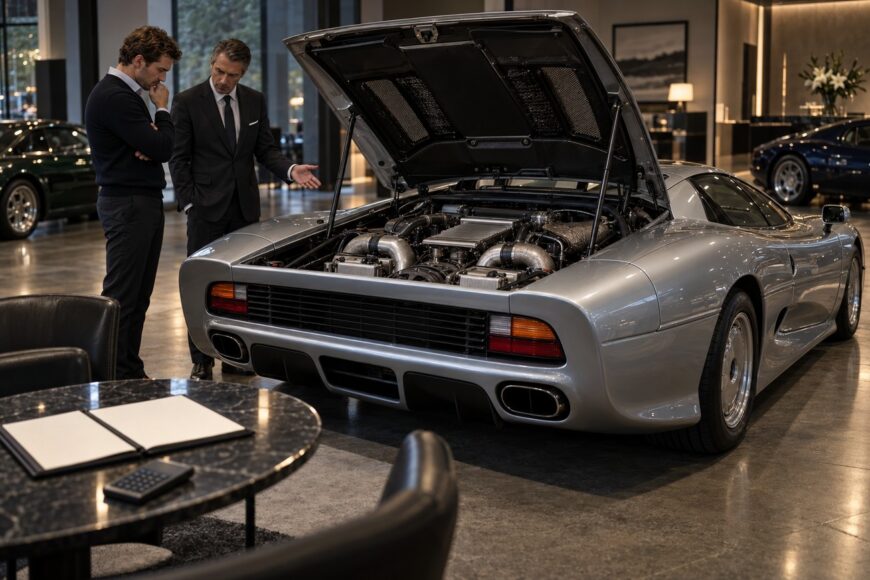
Buyers reserved one of the world’s most dramatic supercars, then many tried to escape the deal. The conflict was driven by three linked pressures: the V12, all-wheel-drive prototype became a V6, rear-wheel-drive production car; an indexed price rose sharply after the original commitment; and the high-end supercar market weakened before many cars were delivered.
That sequence made the cancellations more complicated than ordinary buyer’s remorse. Customers faced a larger financial obligation, a production specification that differed from the car shown publicly, and a market in which speculative demand had largely disappeared. The decisive issue became the signed contract, which Jaguar used to defend the production specification and its position on the deposits.
- The Real Reason Jaguar XJ220 Buyers Tried to Walk Away
- Prototype XJ220 vs. Production XJ220
- The Indexed Price Turned a Deposit into a Larger Risk
- Why the Contract Worked Better for Jaguar Than the Brochure Did
- The Recession Exposed the Speculative Side of the Order Book
- Was the XJ220 a Sales Failure or an Expectation Failure?
- The Ownership Problem Buyers Could Not See in the Contract
- Frequently asked questions
- How much is a Jaguar XJ220 worth today?
- How many Jaguar XJ220s are left?
- Why do Jaguars have low resale value?
The Real Reason Jaguar XJ220 Buyers Tried to Walk Away
The initial commitment was £50,000 plus VAT, against an announced price of £361,000. By the delivery period, indexed pricing was reported at approximately £403,000–£470,000, with the exact figure varying by source and by the stage of the pricing process being described. That increase substantially changed the financial exposure attached to each order.
Specification changes added a separate source of dissatisfaction. The concept had used a 6.2-litre V12 and all-wheel drive, while the production XJ220 used a 3.5-litre twin-turbo V6 producing 542 hp and rear-wheel drive. ABS, power steering, and adaptive suspension were also omitted from the production specification. For buyers who had treated the prototype as the substance of the offer, the delivered car represented a material change in expectations.
The market then moved against the original order book. A recession caused the high-end supercar market to fall sharply, exposing how much early demand had depended on the expectation that scarce cars would appreciate. An order that appeared financially attractive during the initial enthusiasm could become a liability once the indexed price rose and the resale market lost momentum.
Those complaints were stronger than the simple claim that wealthy customers had changed their minds. Buyers challenged the specification, the price, and the treatment of the deposit, which they described as nonrefundable. The legal response turned on the production wording in the contract, rather than on the emotional force of the prototype’s public image.
Prototype XJ220 vs. Production XJ220
The concept established the expectations that shaped the dispute, while the signed production specification described a different mechanical package. The comparison is therefore essential to understanding why the car’s identity became a contractual issue.
| Feature | XJ220 concept | Production XJ220 |
|---|---|---|
| Engine | 6.2-litre V12 | 3.5-litre twin-turbo V6 producing 542 hp |
| Drivetrain | All-wheel drive | Rear-wheel drive |
| ABS | Expected as part of the concept’s advanced specification | Omitted from the production specification |
| Power steering | Expected by some buyers from the concept presentation | Omitted from the production specification |
| Adaptive suspension | Associated with the concept’s planned technology | Omitted from the production specification |
The table explains the depth of the disappointment. A smaller engine alone might have been treated as an engineering compromise, but the change also affected the drivetrain and several systems that had helped define the concept’s technological promise.
For contract purposes, however, the concept was not necessarily the signed specification. The court accepted that the production contract referred to the V6 and rear-wheel-drive production car. That distinction allowed Jaguar to argue that the delivered model met the contractual description even though it differed substantially from the prototype shown to potential customers.
The Indexed Price Turned a Deposit into a Larger Risk
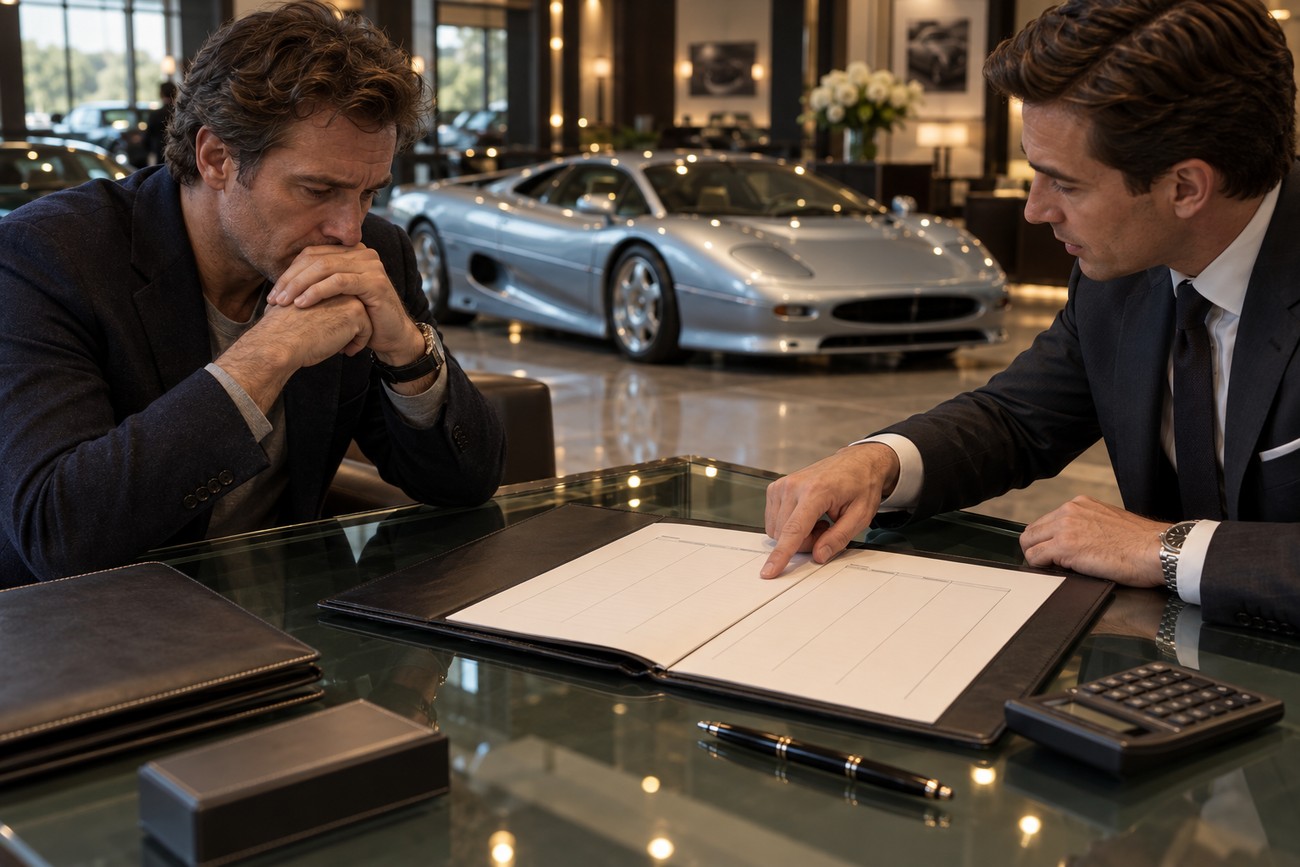
The £50,000 plus VAT deposit was only the entry point to the transaction. The announced price of £361,000 was subject to indexation, so the purchaser carried the risk that the final obligation would rise before delivery. Accounts of the delivery period place the indexed price at approximately £403,000–£470,000, depending on the source and the pricing stage it records.
The difference mattered because it affected the overall economics of the order. A buyer who had calculated affordability around £361,000 could face a substantially higher balance while also receiving a car with a different engine and drivetrain from the concept that had generated the original enthusiasm. The deposit therefore became part of a larger and less predictable financial exposure.
Buyers who challenged the deal also objected to the deposit being treated as nonrefundable. Their position was that a substantial increase in price and a significant change in specification should affect the seller’s right to retain the money. Indexation, in practical terms, transferred inflation and market risk to the purchaser while leaving the buyer committed to the order.
The often-repeated figure of £470,000 should therefore be handled carefully. It is one point cited in accounts of the indexed delivery price, not a universal final price for every transaction. The range of approximately £403,000–£470,000 better reflects the differing stages and sources, and it explains why the financial complaint cannot be reduced to resistance against a routine price adjustment.
Why the Contract Worked Better for Jaguar Than the Brochure Did
Promotional imagery created a powerful public association between the XJ220 name and the V12, all-wheel-drive concept. Contract law required a narrower examination of what the buyer had actually agreed to purchase. The dispute therefore moved from the prototype’s visual and technical promise to the wording of the production specification.
The court accepted that the contract specified the V6 and rear-wheel-drive production car. That finding supported Jaguar’s position in the relevant dispute and meant that claims seeking the expected return of deposits did not produce the result buyers wanted. The judgment did not erase the differences between the concept and production models; it established their legal significance under the agreement.
This distinction is important for interpreting the episode today. A brochure, motor-show display, or early engineering description can shape a buyer’s expectations without carrying the same weight as an agreed specification. Customers who relied primarily on the concept had a persuasive commercial complaint, while Jaguar had a stronger legal argument based on the production wording.
Jaguar later allowed some buyers to buy themselves out of their contracts. That arrangement was separate from an automatic refund of every deposit and should not be confused with a court-ordered reversal of the sales terms. It shows that the company recognized the practical difficulty of forcing every disputed transaction to completion while still defending its contractual position.
The Recession Exposed the Speculative Side of the Order Book
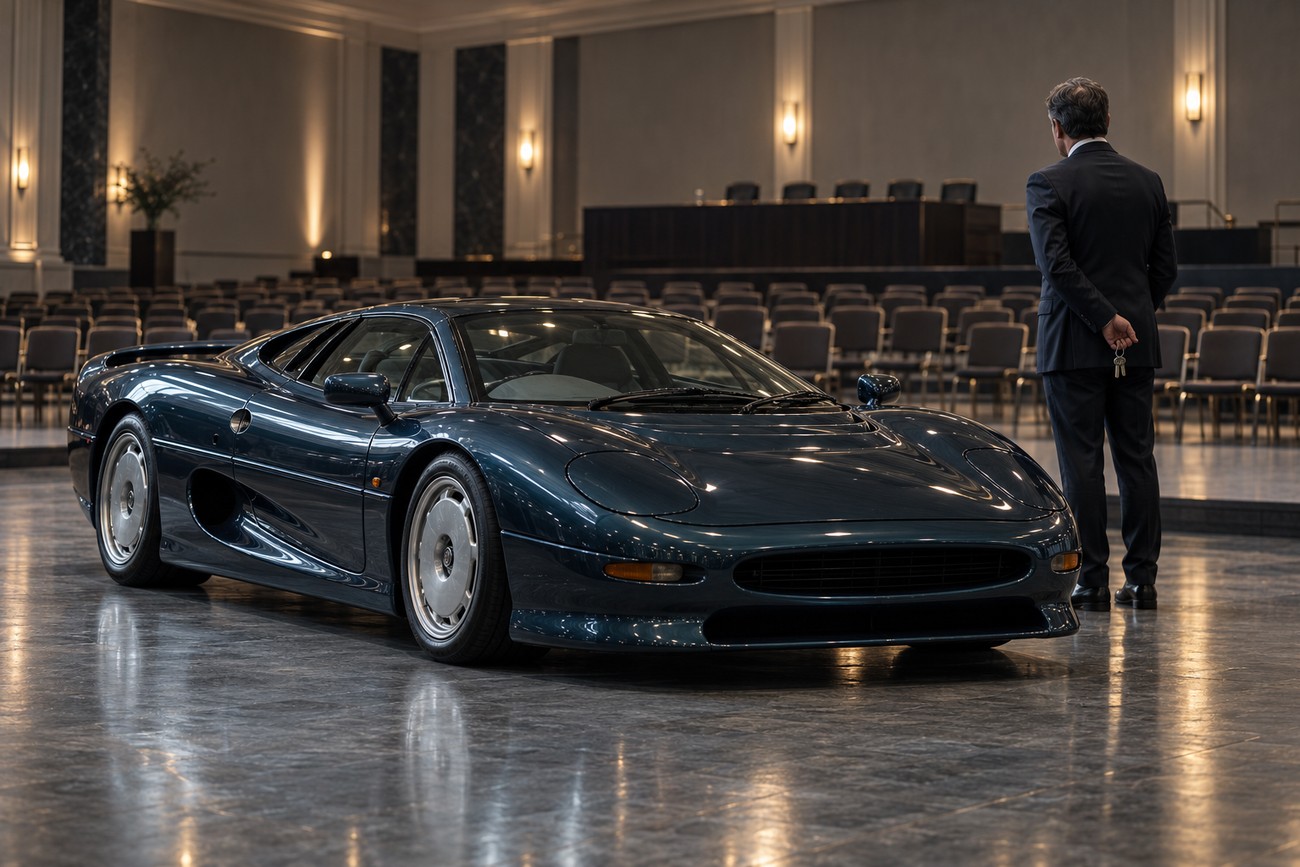
The original order book was formed during a period when limited-production supercars were widely treated as potential appreciating assets. A reservation could appear attractive even to someone who intended to sell the car, because scarcity and early demand seemed likely to support a higher value at delivery. The recession changed that calculation before many XJ220s reached customers.
Once the market fell sharply, the indexed purchase price became harder to justify through resale expectations. A buyer was left with a larger obligation and less confidence that the car could be sold at a profit. This exposed the speculative element of the demand without proving that every cancellation was motivated by investment losses.
Some buyers also argued that the JaguarSport XJR-15 weakened the XJ220’s value proposition. The XJR-15 offered another highly exclusive Jaguar-associated performance car and, in the eyes of some customers, complicated the hierarchy that had helped support the XJ220’s original appeal. It was a secondary factor in the dispute, alongside price and specification, rather than a single explanation for the cancellations.
One Hagerty account reports that 22 cars remained unsold after cancellations. That is a single-source figure and should be treated accordingly. It nevertheless illustrates how quickly an apparently secure order book could become difficult when speculative demand receded and customers reassessed the cost of completing their contracts.
Was the XJ220 a Sales Failure or an Expectation Failure?
The XJ220’s sales controversy does not settle the question of its technical quality. The production car was mechanically distinct from the V12, all-wheel-drive concept, but it remained a highly engineered, low-volume supercar. Cancellations therefore show that the commercial proposition failed for many buyers under the conditions of the time; they do not automatically establish a technical failure.
The original plan called for 350 cars. Sources cite either 281 or 286 cars as the eventual production total, depending on whether the source counts chassis or finished automobiles. Those figures should be presented as a counting dispute rather than as evidence that one side has definitively established the number.
The lower output reflects the collapse of the original assumptions surrounding the project. The car had been presented into a market receptive to expensive, scarce performance machines, then delivered into a recession with weaker speculative demand. Price, expectations, and contract terms were therefore as important to the outcome as the vehicle’s engineering.
A fair assessment separates three issues: whether the production XJ220 was an impressive machine, whether it matched the prototype buyers thought they had reserved, and whether the transaction remained financially attractive at delivery. The first can be answered independently of the second and third. Much of the historical controversy arose because those questions were treated as one.
The Ownership Problem Buyers Could Not See in the Contract
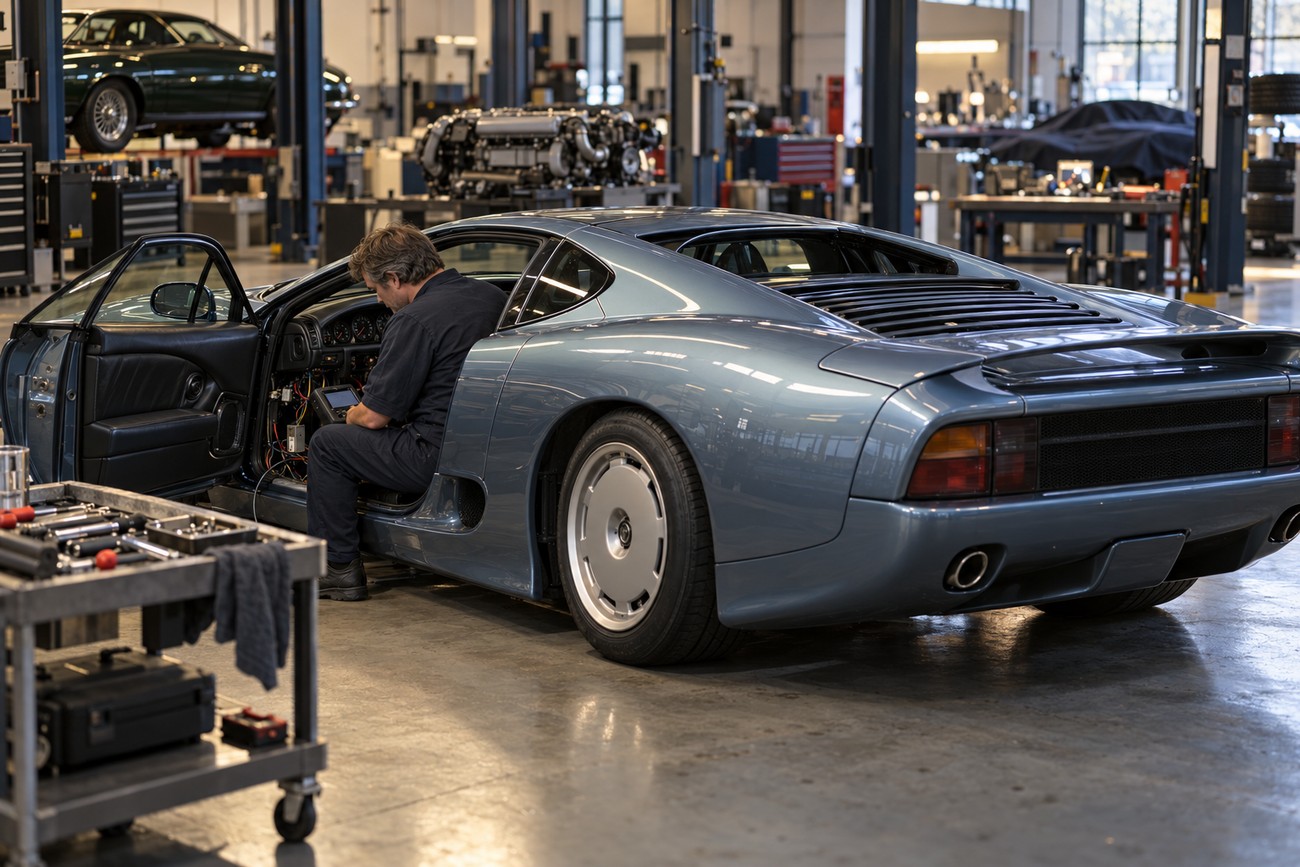
Modern ownership brings a practical risk that was not obvious from the original sales dispute. Full fault reading and clearing can require rare compatible diagnostic electronics, and that equipment is not universally accessible. A low-mileage car may therefore be difficult to operate and maintain if its diagnostic support is unavailable.
The small production run also narrows the pool of specialists who understand the car and can support its systems. Access to appropriate expertise can be expensive, while a general inspection may not reveal whether a prospective owner will be able to diagnose faults later. Service history and specialist competence should consequently be treated as part of the car’s value.
Diagnostic compatibility should be checked before mileage or cosmetic condition. A specialist needs to establish whether the available equipment can read and clear the car’s faults, because a pristine example without that support can carry an avoidable ownership risk.
This issue changes how a buyer should assess an XJ220. A documented maintenance history is useful, but it does not answer whether the car can be properly diagnosed today. The inspection should include confirmation of compatible diagnostic capability, evidence of specialist servicing, and clarity about who can support the vehicle after purchase.
The same principle applies to valuation. Rarity and low mileage may attract collectors, yet they do not remove the cost and difficulty of maintaining a low-volume machine. A car with attractive presentation but weak documentation or no practical diagnostic support may require more caution than its appearance suggests.
Frequently asked questions
The XJ220’s value depends on more than rarity or mileage. Its production history, disputed specifications, documentation, and specialist support all affect how buyers assess it.
The following answers separate historical production figures from the number of surviving cars and distinguish the XJ220 from ordinary Jaguar resale patterns.
Because the available information does not establish a single current market figure, valuation should be based on the individual car and its supporting evidence.
How much is a Jaguar XJ220 worth today?
The available brief does not support a single current valuation for the Jaguar XJ220. Condition, provenance, service history, specification, diagnostic support, and market timing all need to be assessed before a credible figure can be given.
Low mileage alone is insufficient. A well-documented car with competent specialist support may be more persuasive to a buyer than an apparently untouched example whose maintenance and diagnostic history are unclear.
How many Jaguar XJ220s are left?
The number of surviving cars cannot be established from the disputed production figures alone. Sources cite 281 or 286 cars, depending on whether they count chassis or finished automobiles; neither figure is a verified count of surviving examples.
Some cars may have been altered, stored, or recorded differently across historical sources. A seller should therefore distinguish total production from documented survivors and provide provenance for the individual car being offered.
Why do Jaguars have low resale value?
Ordinary Jaguar resale patterns should not be applied automatically to the XJ220. Its value is shaped by rarity, collector demand, the controversy over its production specification, specialist support, provenance, and the timing of the wider market.
The XJ220 occupies a separate category from a regular used Jaguar. Its unusual history can reduce buyer confidence in some transactions, while documented originality, maintenance, and access to suitable diagnostic expertise can materially affect desirability.







