
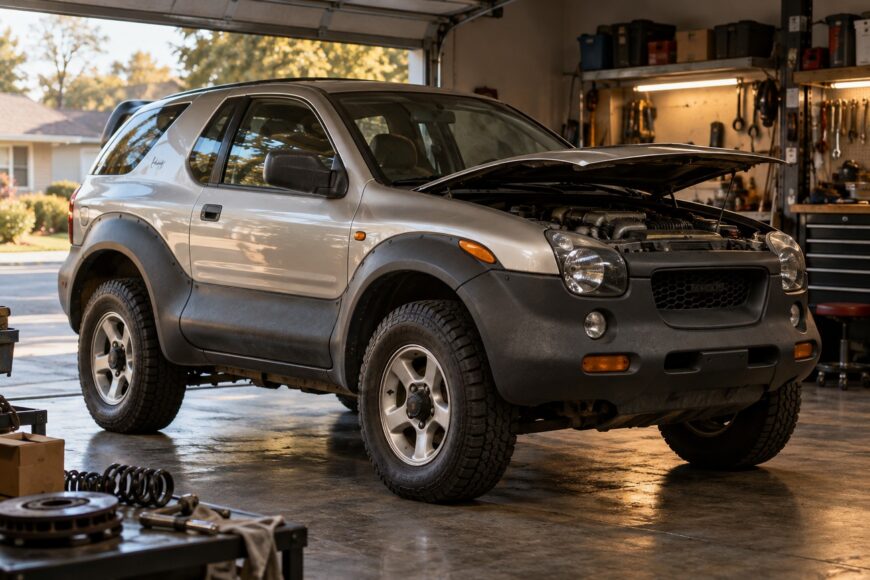
The Isuzu VehiCROSS looks like a show car that escaped into traffic. Buyers could actually take one home: this three-door SUV reached production, carrying its conspicuous design onto ordinary roads. That makes it more interesting than an inbuilt concept, and more complicated to judge than its appearance suggests.
Its rarity adds to the appeal, but it also shapes the ownership experience. Finding the right car, the right parts, and someone familiar with its drivetrain may take more effort than finding a reason to admire it.
- From show-car idea to limited production
- The production hardware behind the unusual shape
- Why the design is easier to admire than to live with
- What matters when buying one now
- Frequently asked questions
- What is the average price of a used Isuzu VehiCROSS?
- How can I identify the correct specification before ordering VehiCROSS parts?
- What is the price of a 2026 Isuzu V-Cross?
- What is the average price of an Isuzu VehiCROSS?
From show-car idea to limited production
The VehiCROSS was a production three-door SUV built from 1997 to 2001. Its bold bodywork and concept-like cabin details can make photographs look like records of a prototype, yet customers bought and drove these vehicles. The distinction matters: surviving cars have real maintenance histories, not merely a place in design archives.
Approximately 5,958 vehicles were built. That small run helps explain why the VehiCROSS remains recognizable and why model-specific replacements can be difficult to source. Production rarity, however, says nothing by itself about the condition of a car offered for sale.
Its styling was unusually prominent for a short SUV. Buyers drawn to that shape should look beyond the exterior and consider how the three-door layout works on their own trips. The qualities that make it memorable do not automatically make it an easy daily vehicle.
The production hardware behind the unusual shape
Under the distinctive body sits a V6 drivetrain with a four-speed GM 4L30E automatic. Sources list a 3.2-liter 6VD1 V6 and a 3.5-liter V6 for different markets or specifications; neither figure describes every VehiCROSS. Confirm a particular vehicle’s origin and engine before using a published power figure or buying mechanical parts.
Four-wheel drive used Torque-On-Demand (TOD), alongside a standard rear limited-slip differential. TOD can direct drive to the front wheels as conditions require, which is useful when a journey moves between dry pavement and slippery patches. It should not be described as permanent full-time all-wheel drive.
At approximately 4,130 × 1,790 × 1,710 mm, the VehiCROSS is compact in length, with an approximately 2,330 mm wheelbase. That short footprint contributes to its distinctive proportions and off-road character. It does not promise the settled ride or cabin access of a longer, five-door SUV.
Why the design is easier to admire than to live with
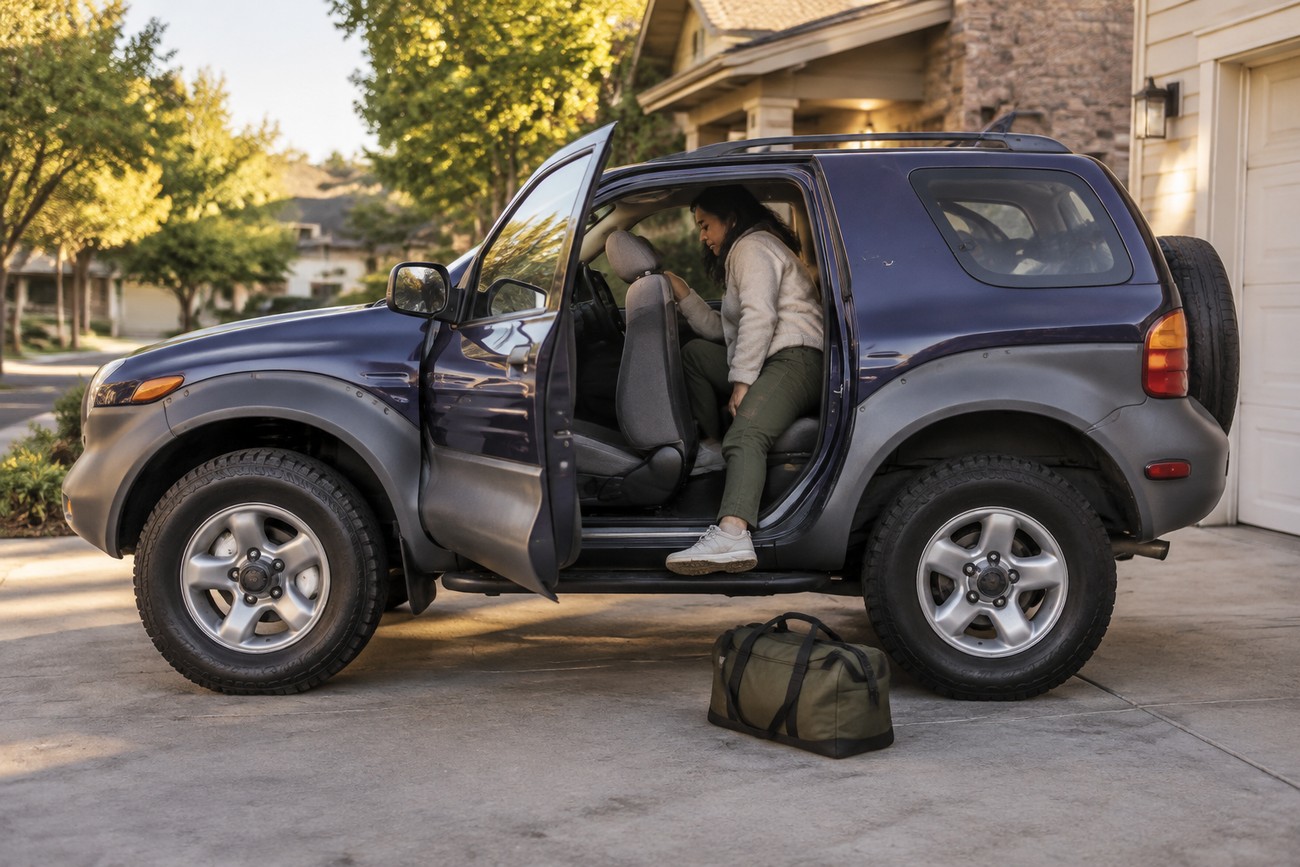
The VehiCROSS has an identity few conventional SUVs can match, which helps explain its niche collector appeal. Its exterior makes a strong first impression; living with it depends on less visible details. A buyer planning regular passenger trips should try the rear-seat entry before deciding that the compact body will be manageable.
Three doors make loading people and belongings less straightforward than in a five-door family SUV. The approximately 2,330 mm wheelbase can also make the ride feel busy on broken surfaces. Suspension condition and tires affect each individual car, so a proper drive tells you more than the model’s reputation alone.
Owners also report cabin noise and substantial fuel use from the V6 drivetrain. Neither complaint makes the VehiCROSS unsuitable for every buyer, but both matter if it will handle a long commute. Its strongest case is as a distinctive vehicle whose compromises you have tested and accepted, rather than a substitute chosen on appearance for a conventional family SUV.
What matters when buying one now
Start beneath the body. Inspect the frame, suspension mounting points, and evidence of hard off-road use or repairs; attractive paint cannot establish structural condition. Check for modifications as well, including changes that may complicate diagnosis or require parts different from those shown in a standard catalog.
On a test drive, pay attention to delayed or harsh automatic shifts, leaks, and how the four-wheel-drive system behaves across suitable surfaces. Maintenance records can help distinguish a documented repair from a fault that has simply been tolerated. An independent inspection is especially worthwhile if the seller cannot explain recent transmission or driveline work.
Original lighting, body trim, cabin pieces, and wheels deserve close attention. A low odometer reading offers little reassurance if hard-to-replace items are missing or damaged, and age can affect seals, wiring, and plastics even on a lightly used car. Inspect what is present, then check availability before assuming cosmetic work will be simple.
Finally, establish whether the car is a Japanese- or US-market version and match parts to its actual specification. Approximately 5,958 were built, so suitable donor vehicles, model-specific stock, and experienced service may be scarce. Rarity makes careful verification more important; it does not establish reliability.
Frequently asked questions
VehiCROSS listings can mix different markets, specifications, and states of repair. These distinctions are especially important when comparing asking prices or searching for parts. The similarly named V-Cross pickup is a separate vehicle.
What is the average price of a used Isuzu VehiCROSS?
A defensible current average requires recent completed sales in the same market, rather than asking prices alone. Compare cars with similar condition, originality, and documented maintenance, and account for missing model-specific parts before treating a lower price as a bargain.
How can I identify the correct specification before ordering VehiCROSS parts?
Record the vehicle identifiers, establish its market of origin, and confirm the engine designation. Then match the required part number to that specific vehicle; a listing under “VehiCROSS” alone may overlook differences between 3.2-liter and 3.5-liter specifications.
What is the price of a 2026 Isuzu V-Cross?
The V-Cross is an Isuzu pickup, not a new version of the VehiCROSS, which was produced from 1997 to 2001. Its 2026 price depends on the country, trim, taxes, and local offers; consult an Isuzu listing for your market rather than a VehiCROSS valuation.
What is the average price of an Isuzu VehiCROSS?
There is no reliable worldwide average to quote for this low-volume vehicle. If you need a buying benchmark, use recent completed sales in your country and separate original, well-documented examples from modified cars or those needing scarce trim and drivetrain repairs.







