
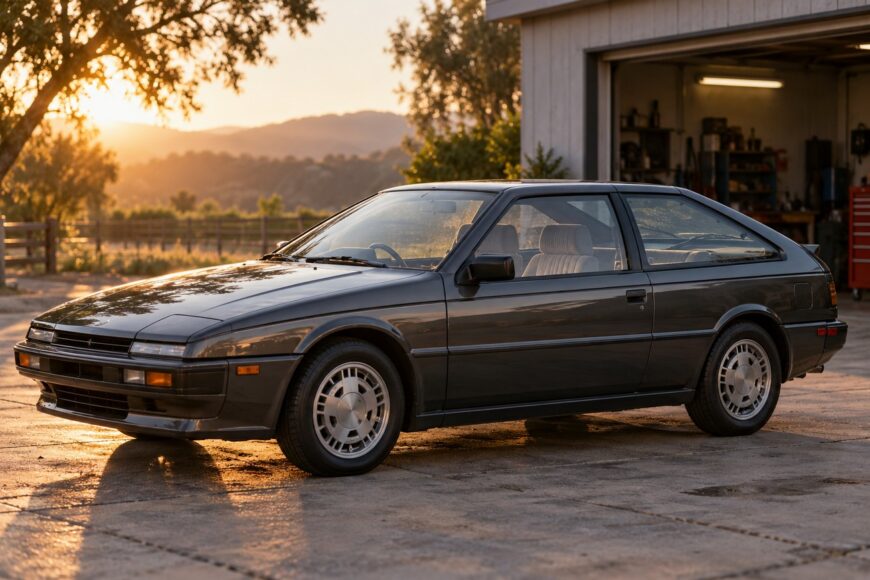
Giugiaro’s wedge-shaped Isuzu Piazza still has the power to stop a buyer mid-scroll. Owning one is less effortless: sound cars are scarce, original trim can be harder to find than mechanical parts, and a photograph says little about rust or old repairs. The Piazza is a Japanese Isuzu shaped by Italian design, rather than an Italian car wearing a Japanese badge.
That distinction matters once the search turns serious. The first generation is rear-wheel drive; the second could be front-wheel drive or four-wheel drive. For a prospective owner, choosing the right Piazza means identifying the generation and market specification, then weighing originality and parts availability against the appeal of Giugiaro’s shape.
- Why the Isuzu Piazza Still Looks Like Giugiaro’s Ace of Clubs
- The Piazza Timeline: Two Generations, Three Market Names
- Piazza Generations, Drivetrains, and Market Names
- The Engineering Behind the Styling
- Buying a Rare Piazza: Condition Beats the Badge
- What Collectors Get Wrong About the Piazza
- Frequently asked questions
- How many Isuzu Piazza cars were made?
- Why do sources say the Isuzu Piazza ended in 1992, 1993, or 1994?
- What makes an Isuzu Piazza valuable to collectors besides its engine?
Why the Isuzu Piazza Still Looks Like Giugiaro’s Ace of Clubs
The first Piazza made an unusually direct passage from Giugiaro’s Ace of Clubs design idea to a production car. Its long, low profile, clean glazing, and three-door liftback shape give it a recognizable outline without relying on decorative trim. The large rear opening also gives the four-seat car a practical feature that the word “coupe” can obscure.
Giorgetto Giugiaro is associated with the exterior and interior design. Inside, the dashboard and controls pursue the same geometric character as the bodywork, making a complete cabin central to the car’s appeal. Missing or substituted pieces therefore affect more than presentation: they interrupt one of the strongest links between the design proposal and the car an owner actually uses.
Isuzu positioned the Piazza as a successor to the 117 Coupe, another model closely tied to Giugiaro’s work. That lineage helps explain the ambition behind the car, although the Piazza had its own shape and engineering brief. It was designed for a Japanese manufacturer, built as an Isuzu model, and sold with Isuzu powertrains and running gear.
The result remains distinctive because the styling and packaging work together. A sleek roofline could have produced a cramped two-seat showpiece; instead, the Piazza offered four seats and hatchback access. Those compromises are part of the design’s interest, and they are worth examining in person rather than judging only from a side-profile photograph.
The Piazza Timeline: Two Generations, Three Market Names
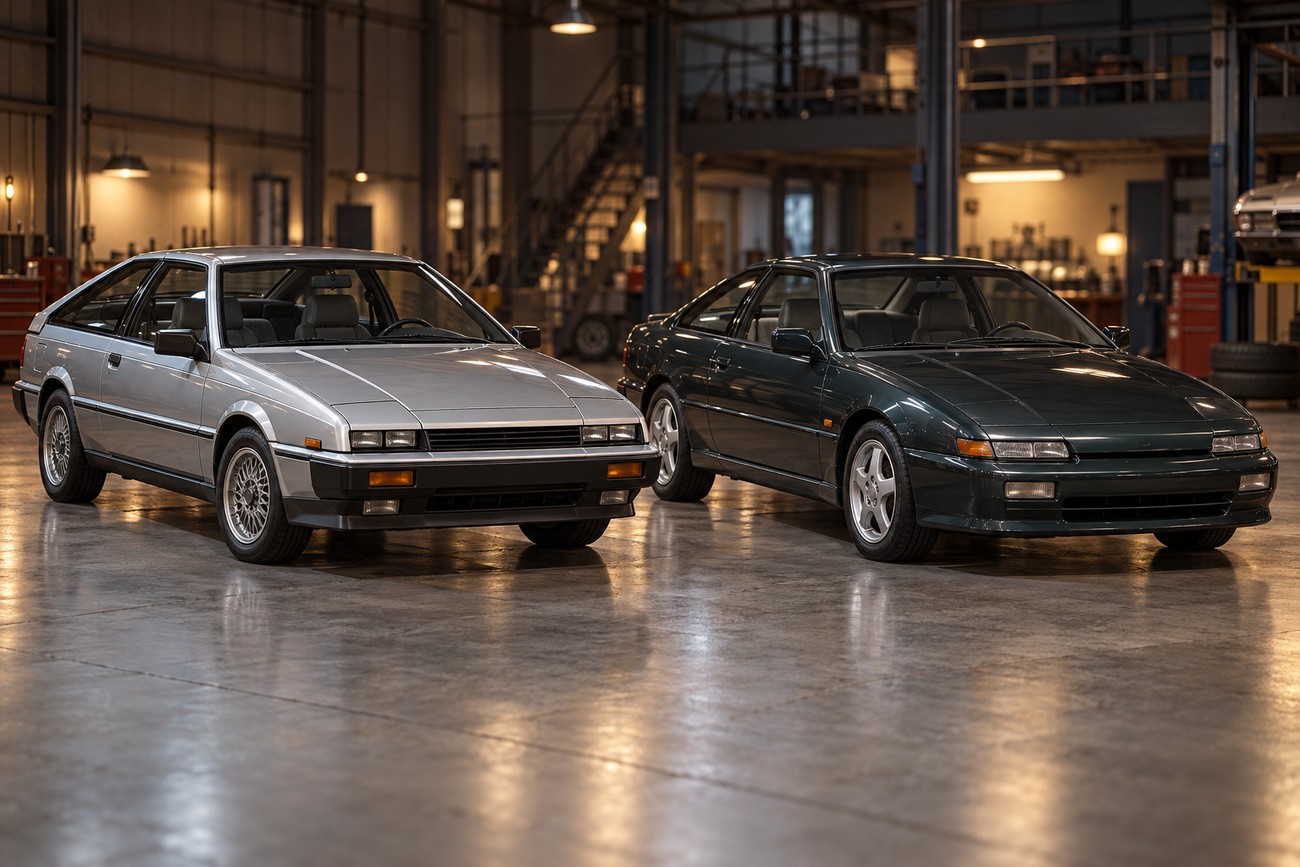
The Piazza line is commonly described as running broadly from 1981–1994. Across that span, the name covers two generations with materially different layouts. Treating every listing as the same Giugiaro-era car can lead to a mistaken assumption about what sits beneath the body.
The first generation is the rear-wheel-drive Piazza most closely associated with the Ace of Clubs shape. Naturally aspirated and turbocharged versions give enthusiasts different ways into that early car, but drivetrain alone cannot establish a particular engine or trim. An identification plate and market-specific documentation are more useful than a seller’s shorthand.
The second generation changed direction, with front-wheel-drive or four-wheel-drive versions depending on specification. That makes it a different ownership proposition, even though it belongs to the same model line. Someone seeking the early rear-wheel-drive layout should confirm the generation before investing time in a distant inspection.
Names complicate searches further. The car was sold as the Isuzu Impulse in the United States and the Holden Piazza in Australia; those badges denote market names, not distinct models in themselves. Searching all relevant names can uncover cars, documentation, and parts, provided you still check which generation and market each result describes.
Piazza Generations, Drivetrains, and Market Names
This comparison identifies broad model-line differences; engine outputs and equipment require confirmation for the individual car and market.
| Generation | Body format | Drivetrain | Engines and power | Transmissions | Market names |
|---|---|---|---|---|---|
| First | Three-door sports liftback/hatchback | Rear-wheel drive | Approximately 1.9–2.0 liters in published references; naturally aspirated and turbocharged versions. Output varies by specification. | Manual and automatic versions documented | Isuzu Piazza; Isuzu Impulse in the United States; Holden Piazza in Australia |
| Second | Three-door sports liftback/hatchback | Front-wheel drive or four-wheel drive, depending on version | Approximately 1.9–2.0 liters across model references. Published figures across generations and markets run roughly 95–180 hp; this is not a second-generation-only range. | Manual and automatic versions documented | Isuzu Piazza and market-specific Impulse naming; verify the badge and specification of the individual car |
The Engineering Behind the Styling
The Piazza was more than an exercise in getting a concept-car silhouette onto the road. References to its engines span approximately 1.9–2.0 liters, while published outputs across generations and markets range roughly from 95–180 hp. Such a wide spread describes a model line, not the performance of any particular car offered for sale.
Early rear-wheel-drive versions have a specific appeal because their layout belongs to the original Giugiaro-shaped generation. A naturally aspirated car and a turbocharged car may share that visual identity while offering different driving and maintenance considerations. Manual and automatic transmissions were both offered, so the gearbox is another detail to verify rather than infer from the badge.
Catalog entries often compress market, model year, engine, and trim into a single specification. That is risky with a car sold under several names and altered substantially between generations. Before quoting power or ordering a component, match the car’s identification details to market-specific paperwork and check what is physically installed; an older example may have been repaired or modified more than once.
Related-model references need equal care. The Gemini Coupe and Geo Storm may appear in discussions of Isuzu’s market or platform connections, but neither should be treated as an identical Piazza or a universal parts donor. A shared manufacturer or apparent family resemblance does not establish that a dashboard panel, body pressing, or mechanical assembly will fit.
Buying a Rare Piazza: Condition Beats the Badge
Finding a Piazza can mean searching well beyond your local market, and rarity makes it tempting to commit from photographs. Start with evidence of the shell: inspect corrosion-prone areas accessible on the individual car, look for accident repairs, and compare panel fit and finish on both sides. A running engine offers limited reassurance if the structure or a hard-to-replace exterior panel needs major work.
Completeness deserves an early check. Body pieces, seals, cabin trim, and some mechanical parts may require specialist orders, dismantled cars, or custom solutions rather than an ordinary parts-counter visit. Ask for clear photographs of every side, the cabin, the luggage area, and any loose parts included with the sale before arranging a long journey.
Age also brings less photogenic faults. Test electrical equipment repeatedly, check switches and instruments, and examine rubber seals for deterioration or signs of water entry. Repairs may have been made over decades of ownership, so tidy visible wiring is no substitute for checking that equipment works and that alterations are understandable.
Original seats, dashboard panels, and instrument equipment warrant particular attention. A complete, worn interior may give a restorer more to work with than a superficially fresh cabin assembled from incorrect pieces. Mileage alone cannot describe this difference, especially when a car’s service history and past repairs are incomplete.
Finally, confirm the paperwork against the car. Establish whether it is a first-generation rear-wheel-drive Piazza or a second-generation front- or four-wheel-drive version, and verify the engine and transmission claimed in the advertisement. This protects you from buying the right silhouette with the wrong assumptions—or buying a rare car whose missing parts cannot readily be replaced.
What Collectors Get Wrong About the Piazza
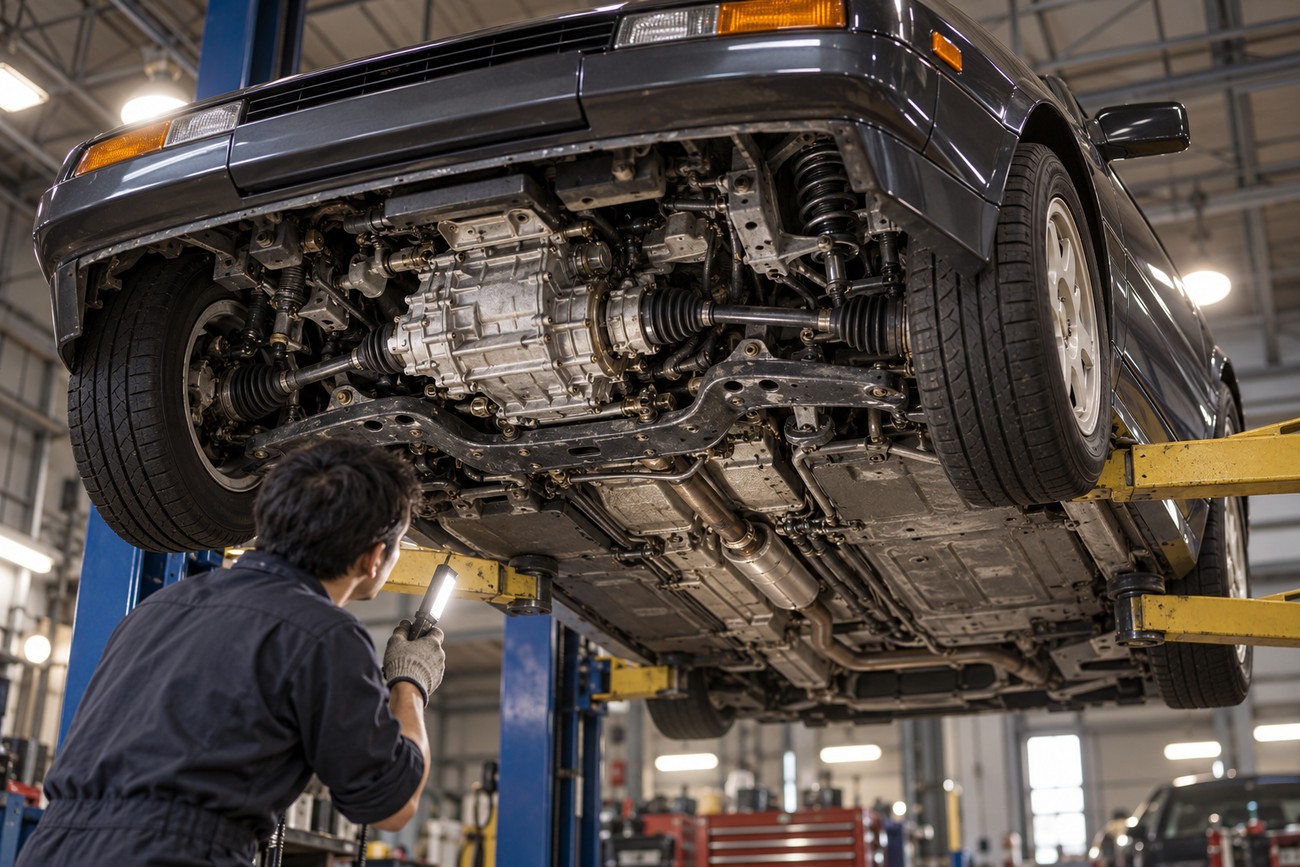
The first misconception is that every Piazza is rear-wheel drive. That describes the first generation, whereas the second was offered with front-wheel drive or four-wheel drive. The distinction affects the experience a collector is buying and should be settled before debating which badge or color is more desirable.
Calling the car merely a pretty shell misses its range of engines, manual and automatic transmissions, and turbocharged versions. It also overlooks why the early layout has its own following. At the same time, those specifications should not become a ranking that ignores condition: a sought-after powertrain does little for a car with serious corrosion or irreplaceable missing trim.
Rarity is another unreliable shortcut to value. One source quotes production of 113,419 cars, but that figure is not treated here as a cross-checked official total. Even an established total would say little about the condition, specification, or completeness of an individual survivor.
For enthusiasts, a documented, substantially original car can be more compelling than a lower-mileage example with an incomplete cabin and uncertain repairs. Correct market-specific details matter because Piazza, Impulse, and Holden Piazza examples did not all carry the same equipment. The sensible attraction is access to a distinctive Japanese designer coupe, with its ownership demands understood—not an assumption that scarcity guarantees a financial return.
Frequently asked questions
Production figures, dates, and collector descriptions often lose their qualifications when repeated in listings. The answers below separate useful broad facts from claims that need a source tied to a particular market or car. For a purchase, original documentation remains more valuable than a confident catalog summary.
How many Isuzu Piazza cars were made?
A figure of 113,419 cars has been quoted, but the available basis here is a single source, not a cross-checked official factory total. It should therefore be presented as a reported figure rather than a definitive count. Production claims can also depend on which generations and export-market names a source includes, so check the scope of any total before using it to assess rarity.
Why do sources say the Isuzu Piazza ended in 1992, 1993, or 1994?
Sources may be counting different markets, using different generation cutoffs, or recording a model’s final catalog year rather than the same production endpoint. The broad span 1981–1994 is useful for describing the line, while 1992 and 1993 also appear as end dates in some references. If the date matters for registration or historical accuracy, rely on documentation for the specific car and state what the cited source actually covers.
What makes an Isuzu Piazza valuable to collectors besides its engine?
Collectors tend to look first at a sound, complete car with a credible history, then at its correct market specification and the condition of scarce original pieces. Seats, dashboard panels, instruments, exterior trim, and evidence of careful previous repairs can distinguish two cars with similar engines and mileage. A usable mechanical specification is attractive, but replacing incorrect or missing model-specific parts may prove the harder task.







