
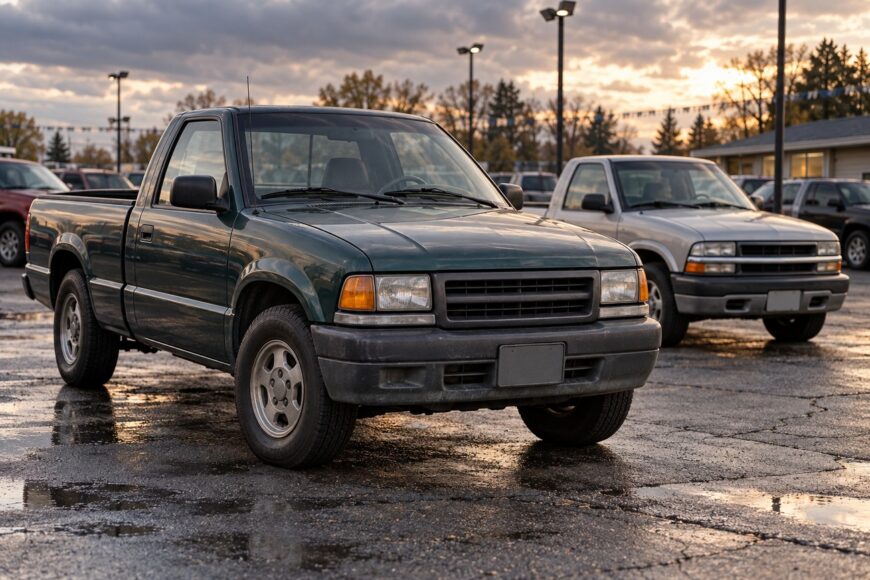
The Isuzu Hombre was a North American pickup built by GM for Isuzu on the Chevrolet S-10 platform. That gives a used-truck buyer a useful starting point: many mechanical parts can be researched through familiar GM references. It also creates a costly assumption. The Hombre’s distinct front end and other Isuzu-specific exterior pieces can be harder to identify and find than routine service parts.
When new, the Hombre offered a lower starting price than the S-10 in a 1998 comparison. Today, that historical saving matters less than the condition of the truck in front of you. Its narrower lineup, weak resale appeal, and uneven support for body parts make careful identification more important than the badge’s rarity.
- What the Isuzu Hombre Actually Was
- Isuzu Hombre vs. Chevrolet S-10: Key Differences
- Engines, Drivetrains, and the Narrower Lineup
- The S-10 Clone Myth: What Actually Fits
- Buying a Used Hombre: Parts, VIN Checks, and Resale Risk
- Frequently asked questions
- What is the GMC version of the Chevy S-10?
- Was the Isuzu Hombre sold outside North America?
- Why do some listings call the Hombre a 1995 model?
- Which information should be recorded before ordering a replacement part?
What the Isuzu Hombre Actually Was
The Hombre was a GM-built pickup for Isuzu, based on the Chevrolet S-10 and sold only in North America. GM assembled it at a plant in the United States, not in Japan. The Isuzu badge does not mean its mechanical design or many of its service parts came from Japan.
The main model period was 1996–2000. Some sources and listings blur 1995 or 2000 when discussing model years and production dates, so a date in an advertisement should not settle the identity of an individual truck. Use its VIN and documentation when checking parts or specifications.
Within GM’s compact-pickup family, the Hombre occupied a smaller corner of the market than the S-10. It shared the basic architecture, yet Isuzu offered a narrower selection of configurations. A buyer seeking a particular engine, drivetrain, or body style has fewer Hombre candidates to choose from.
Its short life also affects ownership now. A Chevrolet S-10 search may reveal useful mechanical information, while an Isuzu search may be necessary to identify exterior pieces. Neither approach alone is a dependable substitute for checking the exact vehicle.
Isuzu Hombre vs. Chevrolet S-10: Key Differences
The 1998 comparison shows why the Hombre could appeal when new, while also showing the limits of treating the two trucks as identical. Prices and warranties below describe that period, not a benefit carried by a used truck today.
| 1998 comparison | Isuzu Hombre | Chevrolet S-10 |
|---|---|---|
| Platform | GM platform shared with the S-10 | GM compact-pickup platform |
| Starting price | $11,543 | $12,108 |
| Basic warranty when new | 3 years/50,000 miles | 3 years/36,000 miles |
| Dimensions | 108-inch wheelbase; 73-inch bed length | Dimensions varied by configuration |
| Drivetrains | Rear-wheel drive and four-wheel drive | Rear-wheel drive and four-wheel drive |
| Lineup | Narrower range of configurations | Broader range of configurations |
The Hombre’s lower entry price and longer basic warranty gave it a clear showroom argument. They did not give it the S-10’s breadth of choice, and the expired warranty has no practical value in a current sale. Condition, parts support, and the suitability of the specific configuration now carry more weight than its original price advantage.
The shared platform is most useful as a research lead. It does not guarantee that an S-10 body part will restore a damaged Hombre to its original appearance. That distinction becomes especially important when comparing two trucks at similar asking prices: an intact Hombre may be straightforward to maintain mechanically, while one needing front-end repairs may be much harder to put right.
Engines, Drivetrains, and the Narrower Lineup
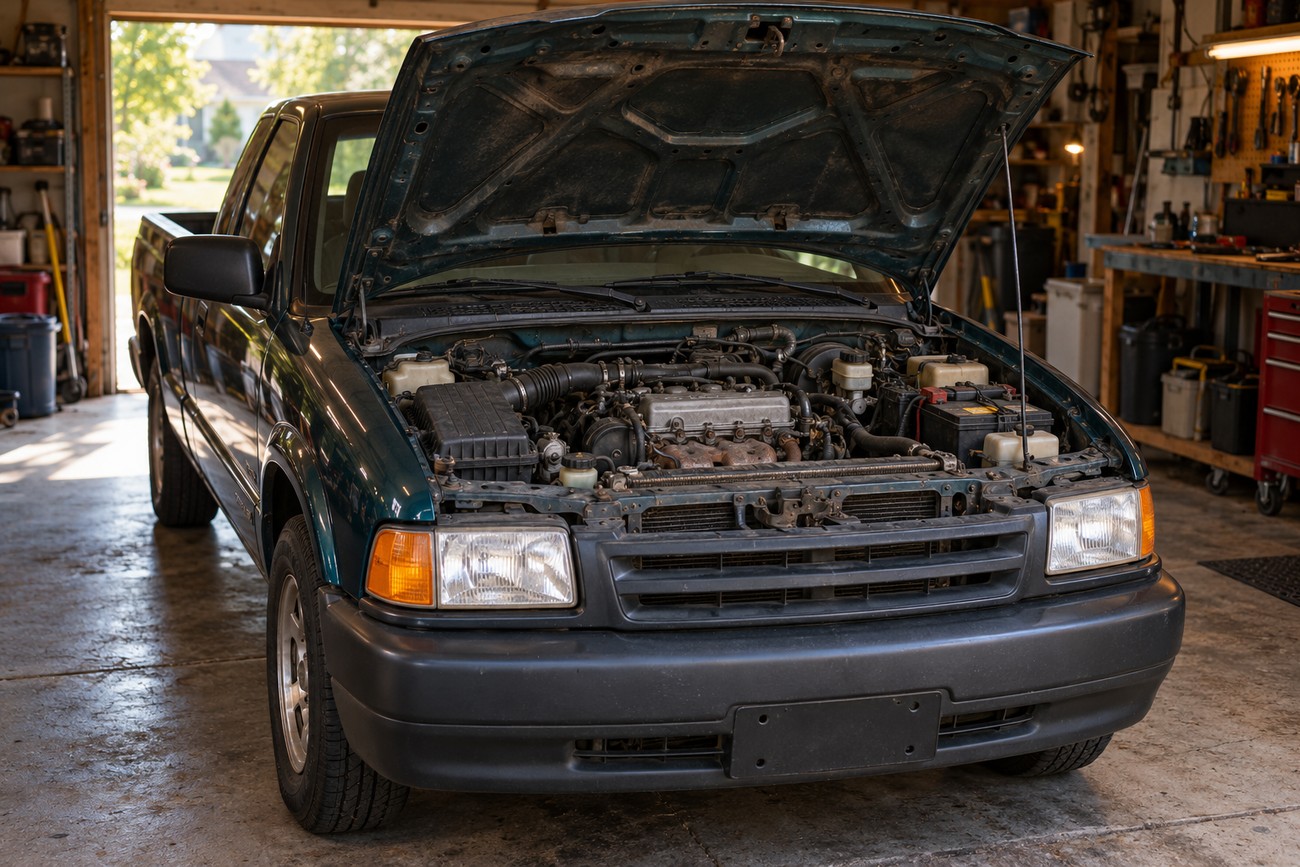
The mainstream base engine was a 2.2-liter inline-four rated at 120 hp and 140 N·m. In a simple truck with a manual transmission, it represented the core of the Hombre range rather than a rare economy-focused option. Buyers should judge it against the work they expect the truck to do, without assuming every Hombre had access to a larger engine.
A 4.3-liter V6 was available on some versions and years, with output up to 190 hp. Its availability should be verified on the truck being advertised; a catalog entry for the Hombre as a whole does not establish that a particular example has that engine. The same caution applies when matching engine-specific service parts.
The range included rear-wheel drive and four-wheel drive, as well as manual and automatic transmissions. Those choices gave buyers meaningful options, though the overall lineup remained narrower than the Chevrolet S-10’s. A search for a V6, four-wheel-drive, or particular transmission combination may therefore take longer than the shared platform suggests.
For a used purchase, configuration matters more than a generic model description. Confirm the engine and drivetrain from the vehicle and its records before assessing parts supply or comparing asking prices. Two Hombre listings can pose different ownership problems even if both are described simply as S-10-based pickups.
The S-10 Clone Myth: What Actually Fits
The Hombre and S-10 share a GM platform, so S-10 references can help identify many service and chassis components. This mechanical overlap is the strongest practical case for owning the Isuzu. It is still a starting point for part selection, rather than proof that every listed Chevrolet component fits.
The visible differences extend beyond the badges. The Hombre had different headlights, grille, bumper, fenders, and related front-end details. Exterior panels and Isuzu-specific pieces are therefore not universally interchangeable with S-10 parts, even when the trucks look closely related in photographs.
Body repairs expose the gap between platform compatibility and finished fit. A component that appears plausible in a broad parts search still needs confirmation for the model year, configuration, and adjoining panels. If an advertisement shows front-end damage, identify the required Hombre-specific pieces before treating the repair as an ordinary S-10 job.
Buying a Used Hombre: Parts, VIN Checks, and Resale Risk
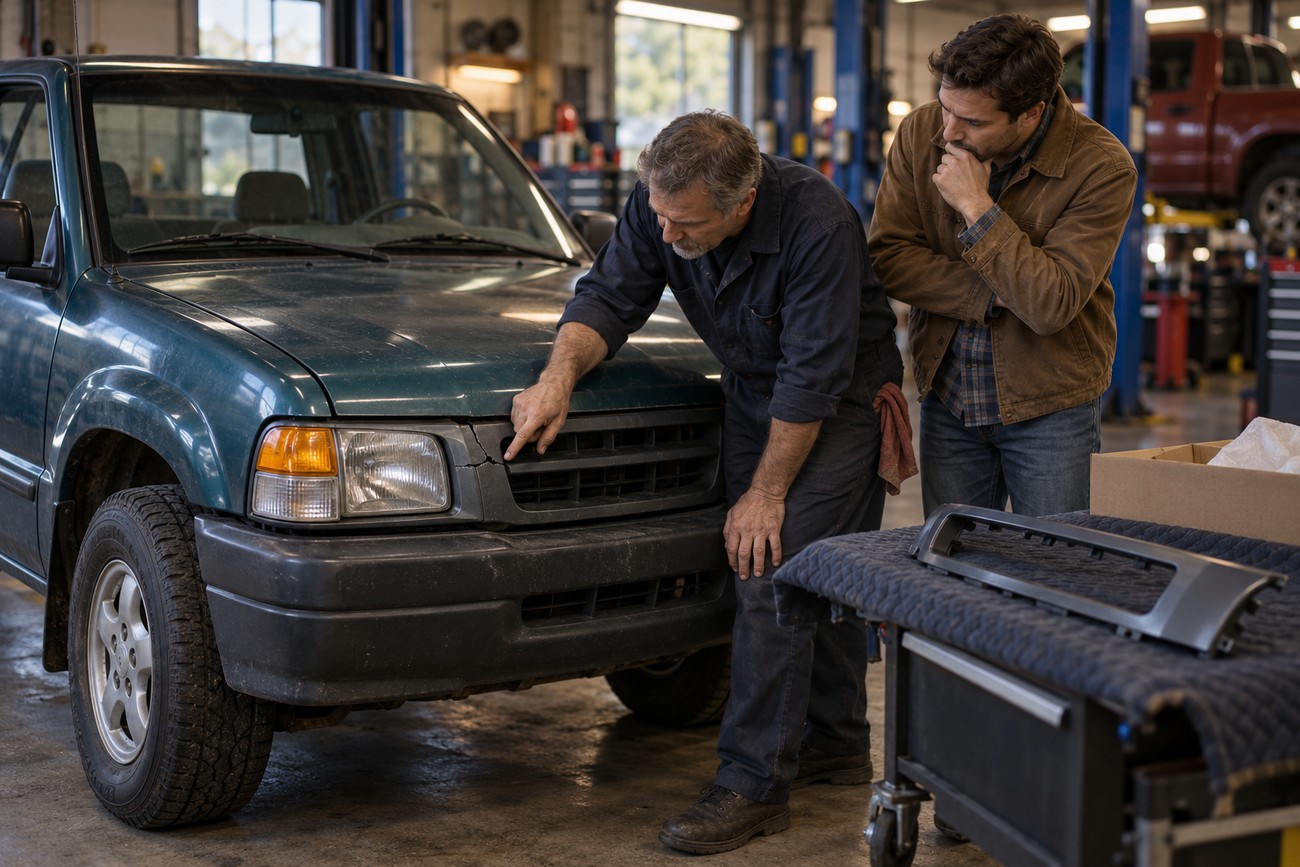
Finding a sound Hombre can take patience because the model had a short life and has a limited presence on the used market. Scarcity alone does not establish collector value. The market commonly treats it as a rebadged S-10, which can weaken resale appeal even when an owner has kept it in good condition.
Inspect the body with future repairs in mind. Damage to a distinctive front-end piece deserves attention beyond the immediate repair estimate, because a suitable replacement may be scarce locally. Check nearby parts suppliers and salvage yards before purchase rather than assuming the S-10 inventory will cover every need.
Parts research may require searches under both Isuzu Hombre and Chevrolet S-10. Record the VIN, model year, engine, drivetrain, and specific GM configuration before ordering; then compare the catalog description with the installed component. Broad model-level search results can hide a difference that matters at the mounting points or in the surrounding bodywork.
A low purchase price can be attractive if the truck is complete and its mechanical needs are well understood. It becomes less persuasive when missing trim or damaged Isuzu-specific panels must be sourced later. Consider the time needed to identify parts, local repair support, and likely resale alongside the initial price.
The sensible choice is the example whose identity and condition you can verify. An intact, correctly documented Hombre offers much of the S-10’s mechanical familiarity with a less common badge. A poorly identified project truck asks you to absorb the disadvantages of that rarity without gaining a dependable supply of replacement body parts.
Frequently asked questions
These answers address naming and documentation details that can cause confusion when researching an individual Hombre.
What is the GMC version of the Chevy S-10?
The GMC counterpart to the Chevrolet S-10 was the GMC Sonoma. The Hombre was Isuzu’s GM-built pickup based on the S-10 platform; the Sonoma name refers to the GMC model, not to an Isuzu trim or an alternative Hombre name.
Was the Isuzu Hombre sold outside North America?
No. The Hombre was sold only in North America. Its Isuzu badge should not be taken as evidence of a Japanese-market version or a wider international parts network for Hombre-specific bodywork.
Why do some listings call the Hombre a 1995 model?
Early listings and discussions can blur production timing and model-year language, producing a 1995 label. The main model-period convention is 1996–2000. For a particular truck, use its VIN and documentation rather than an advertisement’s year alone when selecting parts.
Which information should be recorded before ordering a replacement part?
Record the VIN, model year, engine, drivetrain, cab or bed configuration, and the exact component you need to replace. Photographs and any readable part number can help a supplier compare the installed piece with Isuzu and S-10 catalog entries, especially for exterior parts.







