
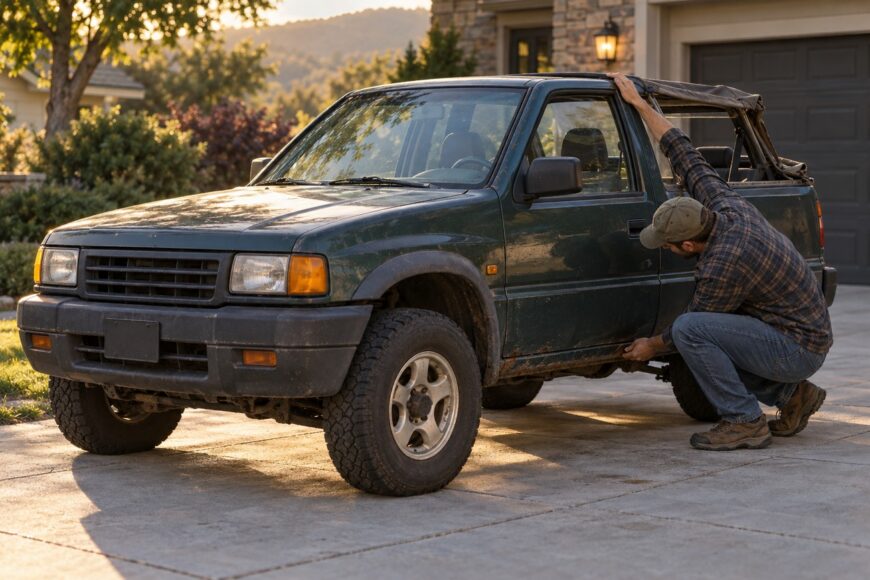
A removable roof gives the Isuzu Amigo an appeal few compact SUVs can match. On a clear day, its short body and open cabin make an ordinary drive feel more exposed and engaging. Underneath, it remains a body-on-frame vehicle with genuine off-road equipment available on some versions.
That combination comes with an old-vehicle trade-off. A tired top can leak and rattle, corrosion can threaten the frame, and Amigo-specific parts may take patience to find. The best example is an entertaining SUV you can use with confidence; a neglected one can make the purchase price the smallest part of ownership costs.
- What Makes the Isuzu Amigo a Convertible SUV?
- The Removable Roof: Freedom With Fussy Hardware
- Engines, 4WD and the Drive Behind the Looks
- Where the Fun SUV Falls Short as Daily Transport
- Used-Amigo Inspection: Start Underneath, Not at the Top
- Ownership Costs and Who Should Buy One
- Frequently asked questions
- How much are 1998 and 1999 Isuzu Amigos worth?
- How can I find a replacement top that actually fits?
- How can I tell whether a particular Amigo has working 4WD?
What Makes the Isuzu Amigo a Convertible SUV?
The Amigo is a short-wheelbase, body-on-frame compact SUV related to the Isuzu Rodeo. It could be rear-wheel drive or equipped with part-time four-wheel drive. That construction gives it a different character from a car-based crossover, even before the roof comes off.
Its open-air design also differs from an ordinary convertible. Depending on configuration, a rear soft top or removable hard top covers a cabin built around an SUV body. Some versions have a separate panel above the front seats, so the amount of open sky—and the work needed to get it—varies.
The first U. S. Amigo generation ran approximately from 1989 to 1994. A later Amigo/Rodeo Sport family ran approximately from 1998 to 2004, depending on market and name. MU is a related name used in other markets, rather than proof that two vehicles share identical equipment.
Those names matter when shopping. Year, market, drivetrain, and roof fittings can change what you are buying and which replacement parts will fit. Identify the individual vehicle before relying on a specification or a parts listing for “the Amigo.”
The Removable Roof: Freedom With Fussy Hardware
Soft-top and removable hard-top Amigos offer distinct versions of the same pleasure: fresh air without giving up the upright seating and useful ground clearance of an SUV. On some vehicles, a separate front panel adds another way to open the cabin. Roof layouts and fasteners vary, so a demonstration on the actual vehicle is more useful than a general claim about quick removal.
An aging soft top may resist being stretched into place, particularly if its fasteners or frame are worn. Seams and zippers can leak, while loose material and top-frame hardware may flap or rattle at highway speed. Check that every closure engages and that the material sits evenly before treating a tidy-looking roof as sound.
A hard top changes the experience, yet its panels, glass, seals, and fittings deserve close attention. A missing or damaged model-specific piece may be difficult to replace. Confirm that all removable sections are present and can be secured properly, rather than assuming a roof is complete because it is installed.
Cold weather exposes another limit. A soft top offers modest insulation, and condensation or fogged windows can make regular winter use tiring. Gentle cleaning around seams is wiser than directing high-pressure water at them; the open-air benefit is easier to enjoy when the roof still keeps ordinary rain outside.
Engines, 4WD and the Drive Behind the Looks
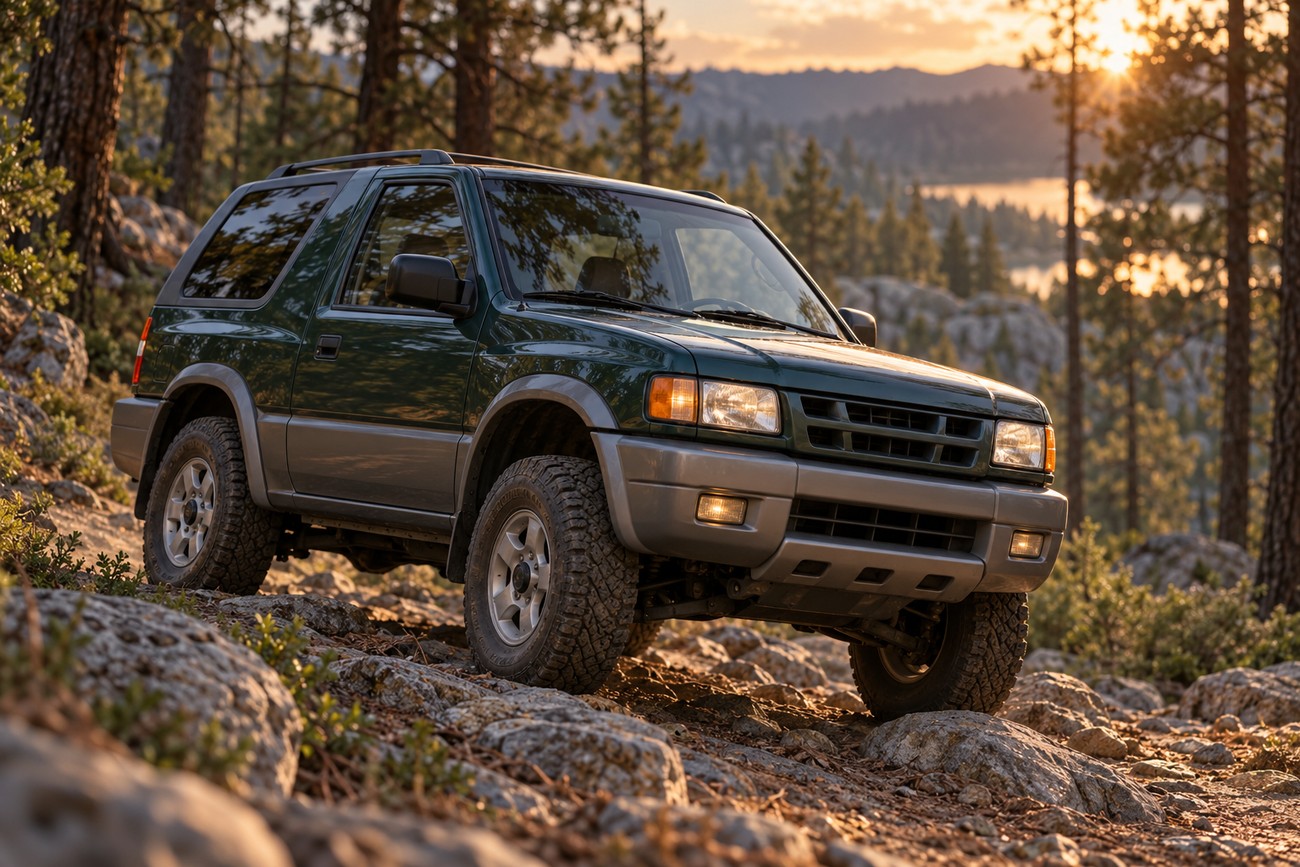
Common Amigo configurations include a 2.6-liter inline-four and a 3.2-liter V6, paired with a five-speed manual or four-speed automatic. Specifications vary by vehicle. The V6 generally feels livelier, especially when carrying passengers or climbing, while the four-cylinder asks for more patience.
Rear-wheel drive was available, as was part-time 4WD with low range; four-wheel drive was not standard on every Amigo. Low range and a sound drivetrain give equipped examples meaningful ability on suitable trails. Tires, maintenance, and the condition of the transfer case matter more than the convertible image.
That capability carries a fuel cost. Owners report approximately 14–18 mpg in the city and 18–22 mpg on the highway for V6 examples, with actual consumption varying by condition and use. Treat those figures as a planning guide, rather than a promise for an individual truck.
Trail hardware does not produce relaxed highway manners. The short, tall vehicle can feel busy in crosswinds, and roof noise makes speed more noticeable. A test drive should include the sort of road you will use regularly, with attention to steering response, vibration, and how securely the top sits.
Where the Fun SUV Falls Short as Daily Transport
The front seats deliver the Amigo’s best view of its appeal. Behind them, access is awkward and the rear seat is cramped, with a position that can wear on passengers over a long trip. It can carry people, but its open-air charm should not be mistaken for the space of a comfortable long-distance family SUV.
Wind noise, a rattling top frame, and whistling near the windshield are recurring owner complaints. Their severity depends on roof condition and fit, which is why a quiet short test drive proves little. Try the vehicle at normal highway speed if you expect to use it there.
Crosswinds may also require more steering attention, particularly with an aging top or the roof open. Oversized tires or a lift can compound that feeling. One well-kept, standard-height Amigo may drive quite differently from a modified example with worn suspension, so assess behavior rather than accepting it as inevitable.
Safety deserves the same clear-eyed approach. An older Amigo lacks many features familiar in modern SUVs, and a soft top does not provide the protection of a fixed roof. Its frame and off-road ability should not be taken as substitutes for modern occupant protection; passengers and driving conditions belong in the buying decision.
Used-Amigo Inspection: Start Underneath, Not at the Top
Begin with the frame and rear structural areas, especially where road salt has been used. Look for heavy scaling, perforation, repairs, and areas that have been concealed by fresh coating. Then inspect wheel arches and lower doors. A sound-looking cabin cannot settle questions about corrosion underneath.
If access is limited or rust is suspected, arrange an independent underside inspection before negotiating on price. A visual look in a driveway cannot establish structural safety or the quality of previous repairs.
A clean soft top can draw attention away from the rear frame areas, where serious corrosion is easier to miss. Put the underside assessment ahead of a roof demonstration when deciding whether an example is worth pursuing.
Next, operate every roof closure and examine seams, zippers, seals, frame fittings, and any hard-top panels. Check for damp trim and water staining after rain if possible. Missing hardware deserves particular caution: improvising a clip is a different proposition from sourcing a model-specific panel or piece of glass.
Confirm the fitted drivetrain and check that available 4WD equipment works. Review maintenance records, underbody damage, and signs of hard off-road use; mileage alone says little about those stresses. Lifts and oversize tires call for a closer look at steering, handling, and component wear before you accept the modifications as an upgrade.
Ownership Costs and Who Should Buy One
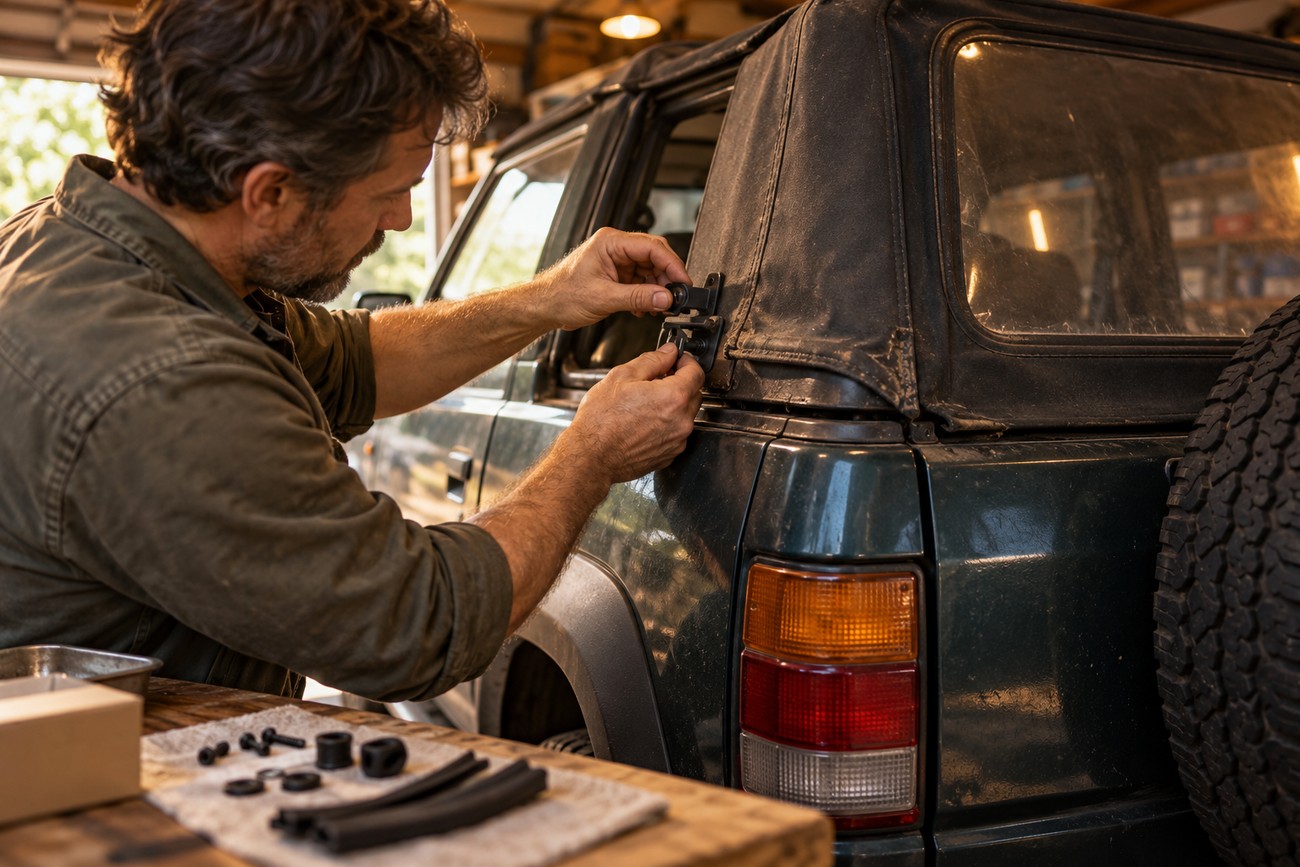
Some shared mechanical service parts remain obtainable, which helps keep a sound Amigo in use. Roof hardware, trim, and model-specific body pieces can be much harder to source. Enthusiast communities and salvage vehicles may help identify parts, though availability and compatibility still need checking.
Small age-related jobs can accumulate. Wiring, sensors, and brittle plastic fittings may demand attention between larger services, while an ill-fitting roof can require repeated adjustment. Leave room in an ownership plan for those interruptions as well as routine maintenance.
The V6’s stronger performance comes with greater fuel appetite than the four-cylinder, and owner-reported consumption may exceed what an old brochure suggests. Resale is also a niche market: documented condition can make an example more desirable, but finding the right buyer may take time. Neither rarity nor a low asking price establishes value on its own.
A sound, well-documented Amigo suits someone who enjoys its open cabin and real SUV hardware and can tolerate occasional parts searches. Someone seeking a cheap, effortless convertible—or a quiet family commuter—will find its compromises harder to justify.
Frequently asked questions
The details that decide a purchase are often specific to one Amigo. Roof fittings, drivetrain equipment, and structural condition should be verified on the vehicle itself. These checks are more dependable than assuming every example of the same name or year is alike.
How much are 1998 and 1999 Isuzu Amigos worth?
There is no reliable fixed current price for a 1998 or 1999 Amigo. Compare nearby completed sales where available, then use credible local listings to gauge asking prices. Match year, roof configuration, drivetrain, maintenance records, and structural condition as closely as possible; a listing with frame rust is a poor comparison for a sound vehicle, even if both look tidy in photographs.
How can I find a replacement top that actually fits?
Identify the vehicle’s exact year and market, then confirm whether it has a soft top, removable hard top, or separate front panel. Photograph the existing roof frame, attachment points, and fasteners before ordering. Compare those details and any available part numbers with the seller’s item; a top advertised simply for an “Amigo” may use different fittings.
How can I tell whether a particular Amigo has working 4WD?
First confirm that the vehicle was equipped with part-time 4WD and low range; neither came on every Amigo. Check its controls and drivetrain components, then arrange a test of engagement and low range with a qualified inspector on an appropriate surface. Avoid using a dry, high-grip road to test part-time 4WD, and treat a warning light or lever movement alone as insufficient proof that the system works.







