
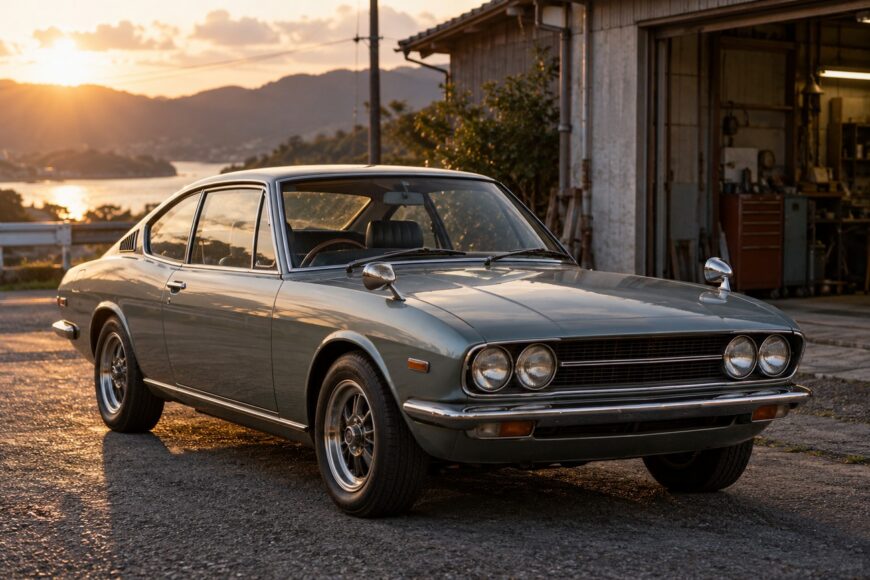
The Isuzu 117 Coupe has the sort of shape that can make ownership seem easier than it is. Giorgetto Giugiaro’s clean, low-slung design gives the car an Italian air, while its rarity encourages the assumption that any surviving example is automatically valuable. In practice, this is a 1968–1981 Japanese GT whose condition, originality, and parts access matter more than the badge.
Its appeal rests on an unusual combination: Italian styling, advanced Japanese engineering, and a range of engines and versions that included early DOHC petrol cars, fuel injection, and an uncommon diesel GT. That mixture makes the 117 Coupe more than a styling exercise. It also means that buying one requires identifying the exact car, rather than relying on broad assumptions about the model.
- Why the 117 Coupe Still Matters
- Giugiaro Style Versus the Hand-Built Myth
- Engines, Versions, and the Performance Story
- The XD Diesel: Historical Anomaly, Not Automatic Sports Upgrade
- Where Ownership Gets Difficult
- How to Inspect and Buy One Today
- What Makes a 117 Coupe Collectible
- Frequently Asked Questions
- Was the Isuzu 117 Coupe truly fully hand-built?
- Why do published Isuzu 117 Coupe specifications disagree?
- What should a buyer verify before trusting a PA, PAD, PA95, or PA96 label?
- What other cars were designed by Giorgetto Giugiaro?
Why the 117 Coupe Still Matters
Produced from 1968 to 1981, the 117 Coupe was a two-door GT with a front-engine, rear-wheel-drive layout. It occupied an interesting position in the Japanese market, offering long-distance style and mechanical sophistication at a time when Japanese manufacturers were establishing their own design language. The car’s proportions were international, but its engineering was developed for Isuzu’s production environment.
Giugiaro’s contribution gave the coupe a visual distinction that many contemporary Japanese cars lacked. The long body, slim glasshouse, and restrained surface treatment avoided the decorative excess common to some period grand tourers. That elegance has aged well, although it can also conceal how much of the car’s appeal depends on correct trim, panel alignment, and original details.
The 117 Coupe remains significant because its design and technology support each other. The early 1,584 cc inline-four DOHC engine was an important technical statement in Japanese practice, while later versions broadened the range with larger petrol engines, fuel injection, and diesel power. The result was a model with genuine engineering interest, rather than a fashionable body placed over ordinary running gear.
Giugiaro Style Versus the Hand-Built Myth
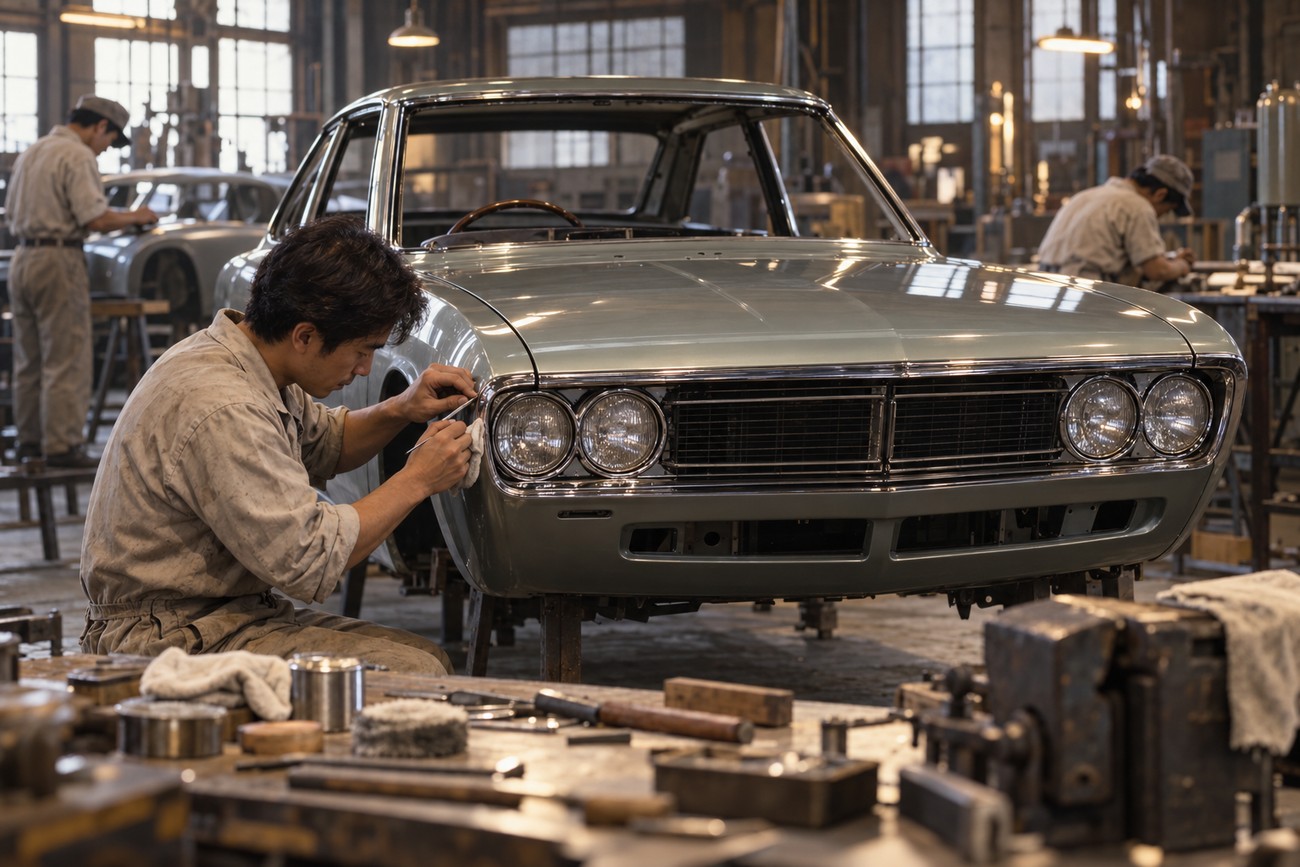
The 117 Coupe is widely regarded as one of Japan’s best-known Italian-styled GTs, and that reputation has encouraged a stronger story about its construction. Descriptions of the model as “hand-built” often refer to hand-finishing or selective manual assembly of particular elements. There is no reliable confirmation that the entire production run was fully hand-built in the strict coachbuilt sense.
That distinction matters because rarity and artisanal production are not interchangeable. A scarce car can still have been made within a normal manufacturing program, with manual attention applied to selected body or trim operations. The practical result is that a 117 Coupe should be judged by its actual shell, equipment, and mechanical specification, rather than by an unverified production legend.
Original bodywork and trim carry more weight than a vague “Giugiaro edition” label. Some later special descriptions may reflect cosmetic or equipment differences rather than a major technical redesign. A straight, correctly detailed body with period-correct hardware is usually more meaningful to collectors than a modified car wearing attractive but poorly documented upgrades.
Engines, Versions, and the Performance Story
The early 117 Coupe used a 1,584 cc inline-four DOHC engine, a feature that helps explain why early cars remain especially interesting to enthusiasts. Later petrol engines ranged from 1.8 to 2.2 litres, and reported outputs across the model line vary from approximately 73 to 135 hp depending on version and market. These figures should never be treated as one universal specification.
The EC fuel-injected version is commonly listed with Bosch D-Jetronic, 130 hp, a top speed of 187 km/h, and 0–100 km/h in 10.1 seconds. Those figures describe a particular specification, not every fuel-injected or late 117 Coupe. The engine, induction system, transmission, model year, and market must all be established before performance claims can be compared.
PA, PAD, PA95, and PA96 identify different versions or development periods, not one interchangeable specification. Similar-looking cars may therefore contain different engines, fuel systems, trim, and electrical arrangements. A seller’s abbreviated description is a starting point for inspection, not proof of what sits under the hood.
The technical variety is one of the model’s strengths and one of its ownership problems. Early DOHC-specific parts, pre-facelift equipment, and unusual injection components can be harder to source than generic service items. A car with the more desirable engine may also demand the most specialized research and the least improvisation.
The XD Diesel: Historical Anomaly, Not Automatic Sports Upgrade
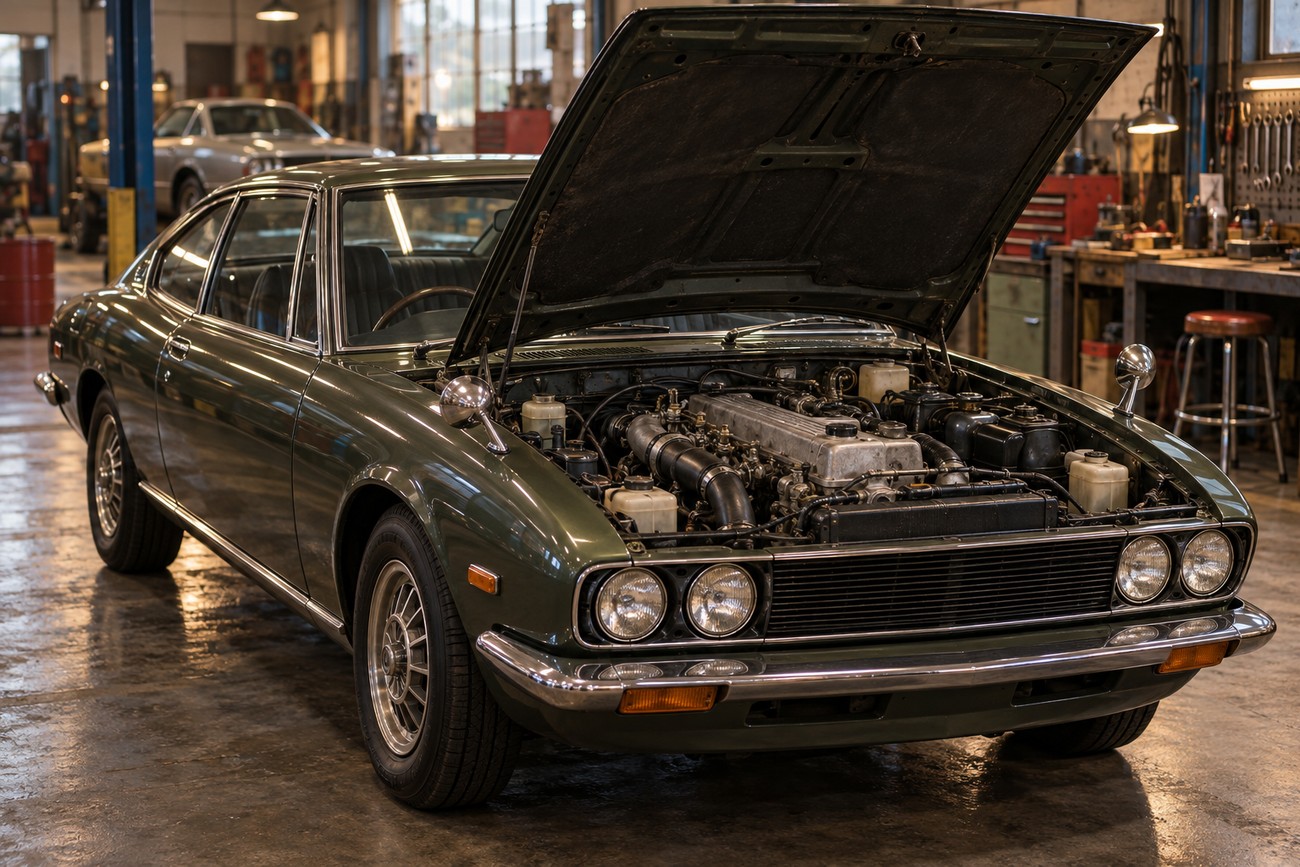
In 1979, Isuzu introduced the XD version with a 2.238-litre diesel engine. A diesel-powered GT was an unusual idea for the period, particularly in a coupe presented as a stylish personal car. The XD therefore has historical importance beyond its production numbers or its place in the model range.
Some sources call the XD the first sports car with a diesel engine. That claim is repeated often, but clear primary-source verification is insufficient, so it should be presented as a qualified historical description rather than settled fact. The safer conclusion is that the XD was an exceptionally unusual diesel GT.
Rarity does not make the diesel the fastest or most sporting 117 Coupe. Its collector interest comes from the combination of body style, engine choice, and historical context. Buyers who want the most responsive driving experience should assess the specific mechanical condition and intended use rather than assume that the rarest engine is automatically the most desirable on the road.
Where Ownership Gets Difficult
Corrosion is the first serious concern. Sills, chassis rails, and lower body edges can deteriorate beneath respectable paint, while repairs may be hidden by underseal or cosmetic work. The shell deserves inspection on a lift, with attention to previous welding, panel joins, drain paths, and the quality of any structural repair.
Original body panels, lighting, and chrome are difficult to source. Seals, wiring, and vacuum lines also age regardless of mileage, producing leaks, electrical faults, and inconsistent operation. An attractive interior or fresh paint cannot compensate for a car whose basic systems have been left dormant or patched repeatedly.
Restorers check the shell, trim, and parts interchangeability before tuning the engine. One missing model-specific panel or early DOHC component can immobilize a project longer than a mechanical fault.
Bosch D-Jetronic and comparable injection systems require informed diagnosis rather than guesswork. Faults may involve wiring, sensors, vacuum integrity, fuel delivery, or calibration, and replacing parts at random can make an original system harder to understand. Early DOHC cars can present a similar problem when specialist components have been substituted or modified over time.
How to Inspect and Buy One Today
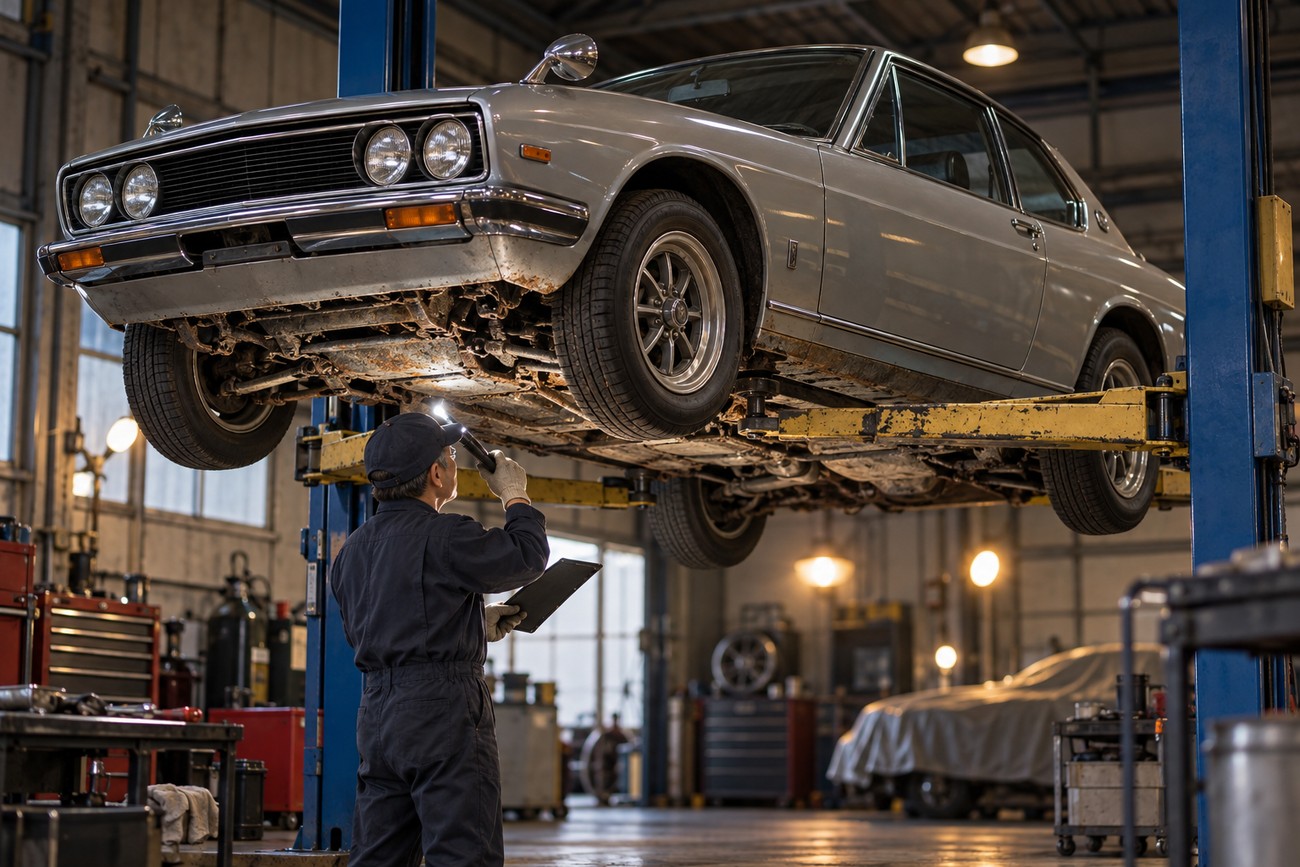
Begin with the structure, not the paint or engine note. Confirm the condition of the sills, chassis rails, floor sections, suspension mounting areas, and lower edges before discussing price. A low asking figure means little if the shell requires extensive fabrication and the correct panels, chrome, or lights cannot be found.
Next, verify the car’s identity in detail. Match the engine to the claimed version, record the model designation, inspect the fuel system, and compare the equipment with period documentation. PA, PAD, PA95, and PA96 should be treated as clues requiring confirmation, especially when a car has passed through several owners or markets.
Service history is valuable, but physical evidence matters more than a folder of general receipts. Look for coherent maintenance, correct wiring repairs, evidence of sustained storage, and an explanation for any engine or injection changes. Many surviving cars have partial modifications that may improve usability while reducing originality and complicating future restoration.
Budget for bodywork, chrome, interior recommissioning, electrical repairs, and adaptation of replacement parts. Direct substitutes are not guaranteed, and some repairs may require fabrication or careful modification. A dry-climate storage history can outweigh low mileage because preserved metal and trim are often harder to recreate than a worn but serviceable mechanical unit.
What Makes a 117 Coupe Collectible
Early DOHC cars are generally more desirable to enthusiasts than SOHC versions of similar displacement, but engine type is only one part of the equation. Production year matters because the 1968–1981 run included technical and trim changes. A transition-year car may have an unusual combination of equipment that needs to be documented rather than casually classified.
The XD diesel is collectible as an unusual GT configuration and historical anomaly. Its importance is distinct from the appeal of a well-preserved early petrol car, and rarity alone should not erase concerns about condition or serviceability. Collectors should decide whether they value mechanical originality, unusual specification, driving character, or historical completeness most highly.
A beautiful shell with a replacement engine, altered trim, and incomplete records is not automatically more desirable than a less glamorous car with a sound structure and documented originality. The strongest examples combine correct bodywork, coherent mechanical specification, and a credible storage and maintenance history. On this model, originality is a technical question as much as a cosmetic one.
Frequently Asked Questions
The 117 Coupe’s reputation is shaped by design history, inconsistent reference data, and labels that are sometimes used more loosely than the surviving cars justify. These answers separate established facts from claims that require qualification.
Was the Isuzu 117 Coupe truly fully hand-built?
There is no reliable confirmation that every 117 Coupe was entirely hand-built. The model was rare and may have involved hand-finishing or selective manual assembly, but that is a narrower claim than full artisanal production.
For a buyer, the distinction changes the inspection standard. Evidence of careful original assembly, correct trim, and an undisturbed shell is more useful than a general hand-built description that cannot be linked to the specific car.
Why do published Isuzu 117 Coupe specifications disagree?
Specifications differ because the production period covered multiple engines, fuel systems, model years, markets, and version designations. PA, PAD, PA95, and PA96 do not describe one uniform car, so power, dimensions, and performance figures may refer to different configurations.
Reference sources can also reproduce inconsistent measurements or rounded data. The reliable method is to identify the exact engine and period first, then compare figures that belong to that specification.
What should a buyer verify before trusting a PA, PAD, PA95, or PA96 label?
Verify the model designation against the chassis and engine identity, fuel system, production period, dashboard and trim, and available service records. Photographing identification marks and comparing equipment with period references can expose a seller’s mistaken classification.
Inspect for swaps and partial restorations as well. A badge, brochure description, or registration entry may reflect an earlier assumption rather than the car’s current mechanical specification.
What other cars were designed by Giorgetto Giugiaro?
Giugiaro’s independently recognized projects include the Volkswagen Golf Mk1, DeLorean DMC-12, Lotus Esprit, BMW M1, and Fiat Panda. These cars show the breadth of his work across mass-market, sports, and luxury categories.
Shared authorship does not mean shared engineering or market position. The 117 Coupe remains distinctive because its Italian styling was paired with Isuzu’s Japanese mechanical development and an unusually varied GT powertrain range.







