
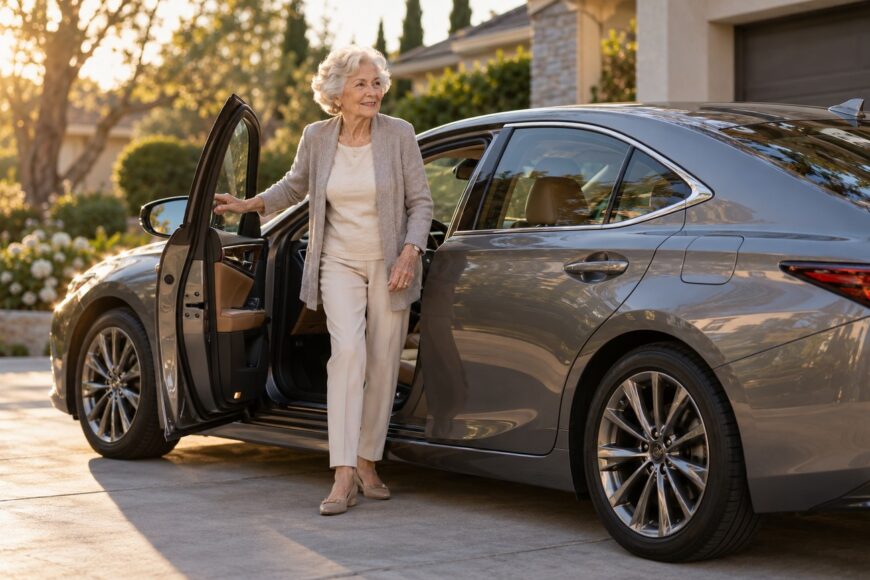
The Lexus ES offers safety features that may ease parts of a drive, but they cannot make it easier to rise from a low seat, see through a difficult intersection, or find a control without looking away from the road. Those everyday tasks deserve as much attention as a safety rating or equipment list.
An ES may be a good choice for an 85-year-old driver if that person can get in and out comfortably, see clearly, use the controls, and take charge promptly when assistance is unavailable. Age alone does not establish whether the ES suits an individual driver; mobility, vision, reaction, and medical limitations matter. The decision should rest on this driver’s experience in the specific car.
- Is the Lexus ES a good choice at 85?
- The first hurdle: getting in—and getting back out
- Can the driver see clearly and use the controls?
- What the safety systems can—and cannot—do
- A test drive that reveals more than a smooth ride
- When to buy the ES—and when to keep looking
- Frequently asked questions
- Which years of the Lexus ES 350 should I avoid?
- What Lexus is good for seniors?
- What is the best car for an 80-year-old?
- What is the most comfortable car for senior citizens?
Is the Lexus ES a good choice at 85?
Yes, potentially. The ES is worth considering if its driving position feels natural and the driver can manage ordinary journeys independently. Someone who struggles to stand from its seat or turn to check traffic may be better served by a different vehicle, regardless of how pleasant the ES feels on the move.
A smooth test drive is useful, but it captures only part of ownership. Repeated trips involve getting out after sitting for a while, navigating parking spaces, and handling traffic when tired or distracted. Ask whether the car remains manageable through those routine demands, rather than judging it by a brief drive on an easy road.
Vision, reaction, mobility, and medical limitations also affect safe driving in ways vehicle equipment cannot resolve. If those abilities are uncertain, an independent driving assessment or advice from an appropriate health professional can help clarify the next step. That is a more respectful approach than treating a birthday as either approval or disqualification.
The first hurdle: getting in—and getting back out
The ES is a sedan with a lower seating position than most crossovers; entry and especially exit require an individual mobility check. Sitting down may involve bending the knees and hips farther than expected. Standing again can demand more leg strength, particularly after a drive.
Have the driver get in and out more than once, without another person lifting them where an unaided test is appropriate. Give them time to settle into the seat between attempts. Watch for a need to pull hard on the door, twist uncomfortably, or brace against surfaces that are awkward to reach.
Check access in a parking space with a neighboring vehicle, where the door cannot open fully. The driver should also be able to reach and fasten the seat belt, then adjust the seat and steering wheel without strain. These small movements become important when they must be repeated on every trip.
A compact crossover is a sensible comparison if the ES feels too low, though a higher seat is not automatically easier. Its step-in height, door shape, and seat position may present different difficulties. Try both vehicles in the same practical conditions.
Can the driver see clearly and use the controls?

Visibility needs to be checked in the specific ES model year and trim. Adjust the seat and mirrors to the driver’s normal position, then assess the view at intersections, through bends, and while reversing. The driver should be able to make necessary shoulder checks without pain or losing a stable driving position.
Parking reveals issues a clear road may hide. Have the driver judge the car’s corners, see nearby pedestrians, and interpret any camera image or warning without becoming dependent on it. A camera helps only when its display is easy for that driver to read and understand.
The 2026 ES has a 14-inch central display and a 12.3-inch digital instrument display; larger screens do not necessarily mean simpler controls. With their usual glasses, the driver should check whether text and alerts are legible and whether they can perform essential climate and audio tasks without prolonged screen attention. Controls differ by model year and trim, so try the exact vehicle under consideration.
Warning sounds deserve a check with the driver’s usual hearing aids, if worn. Set a comfortable audio level, then confirm that assistance alerts remain distinguishable from music and navigation prompts. Initial setup may reduce distraction later, but the driver must still understand what the car is telling them.
What the safety systems can—and cannot—do
The 2026 ES has standard Lexus Safety System+ 4.0, including automatic braking, lane assistance, and adaptive cruise control; these remain driver-assistance features subject to operating limits. They can provide useful backup when conditions allow detection and response. The driver must continue to watch the road and be ready to act.
Automatic braking is designed to help in certain potential collisions, including situations involving detected road users. It should not be treated as a promise to identify every obstacle or prevent every crash. Visibility, sensor condition, and the circumstances of an encounter can affect what the system detects and does.
Full-Speed Range Dynamic Radar Cruise Control can maintain a following distance down to a stop but does not replace driver supervision. In slow traffic, that may reduce the work of repeatedly adjusting speed. It does not remove the need to monitor surrounding vehicles and respond promptly when conditions change.
Lane Departure Alert with steering assistance depends on detected lane markings or suitable road edges; operating conditions vary by function. Faded markings, narrow roads, or poor visibility can therefore limit assistance. A driver should recognize an alert or steering input without mistaking it for the car taking over.
A five-star NHTSA overall rating is reported for the 2024 ES; check the rating for the specific vehicle under consideration. A rating describes performance in defined tests for an applicable model year and configuration, rather than safety in every situation. It also says nothing about whether an individual driver can comfortably see, reach the brake, or intervene in time.
A test drive that reveals more than a smooth ride
Begin with repeated entry and exit, then set the seat, steering wheel, and mirrors before moving. The driver should wear their usual glasses and shoes so pedal feel and visibility reflect an ordinary trip. Check that the driving position still allows firm, comfortable use of the brake.
Choose a route that includes intersections, parking, and imperfect lane markings, with conditions the driver is likely to encounter regularly. Let the driver handle the car rather than having a companion manage every setting. Notice whether they can judge gaps, position the sedan, and complete maneuvers without feeling rushed.
During the drive, ask the driver to operate essential controls and identify assistance alerts while maintaining attention on traffic. If an assistance feature responds, they should understand what happened and remain able to take over promptly. There is no need to provoke an emergency to test this; ordinary alerts and a careful explanation of the controls are enough to expose confusion.
If eyesight, reaction, mobility, or medication-related drowsiness is a concern, review it separately with an appropriate professional. A vision check, medication review, or independent driving assessment may provide information a showroom visit cannot. Driver-assistance features do not compensate for limitations that make independent vehicle control unsafe.
When to buy the ES—and when to keep looking
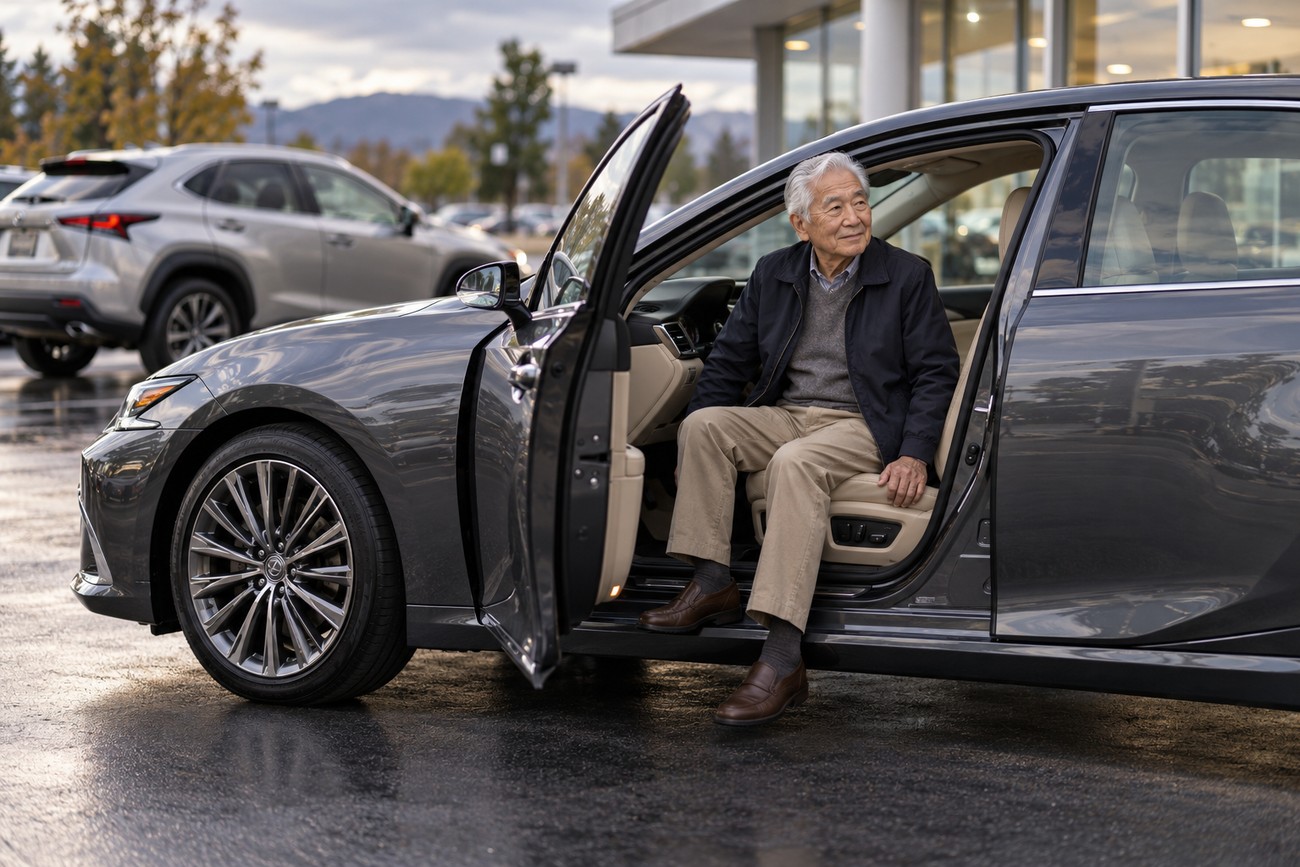
Proceed if this driver can repeatedly access the car, see adequately, use essential controls, and maintain independent control on a realistic route. Their own comfort and judgment should carry weight, alongside any relevant professional advice. A pleasant ride alone is too narrow a basis for the decision.
If getting out requires a painful effort or the controls repeatedly draw attention from traffic, compare another body style. A compact crossover may offer a more suitable seating position, although it needs the same individual check. Changing cars should solve a specific difficulty observed in the ES.
Feature availability varies by ES model year and trim; do not assume a head-up display, parking feature, or camera is included. Before paying for one, confirm that the driver can read or interpret it in the vehicle being purchased. An unfamiliar extra display may add work instead of reducing it.
Consider ownership beyond the test drive. Accessible servicing and a family member’s help with initial settings can make routine use less taxing, provided the driver remains comfortable operating the car independently. Save the preferred settings, explain the alerts, and make sure the driver can find essential functions without a helper in the passenger seat.
Frequently asked questions
These questions are best answered by narrowing the choice to an actual vehicle and an actual driver. Model reputation can guide a shortlist, but condition, equipment, and individual ability determine whether a purchase makes sense.
Which years of the Lexus ES 350 should I avoid?
There is no established model-wide list of ES 350 years to avoid here. For a used car, check its vehicle history, maintenance records, outstanding recalls, and a pre-purchase inspection rather than rejecting or approving an entire model year. Confirm the safety rating that applies to the specific vehicle; the five-star NHTSA overall rating reported for the 2024 ES should not be assigned to other years automatically.
What Lexus is good for seniors?
A suitable Lexus is one whose seat height, controls, visibility, and driving demands fit the individual. The ES may suit a driver who prefers a sedan and can enter and exit it comfortably; a Lexus crossover is worth comparing if standing from a lower seat is difficult. Shortlist actual vehicles, then seek an independent driving assessment if driving ability is in doubt.
What is the best car for an 80-year-old?
There is no single best car based on being 80. The best choice lets that driver get in and out, see traffic, reach the controls, and drive safely without relying on assistance systems to cover a limitation. If those abilities are uncertain, assess the driver before choosing a model; a different vehicle cannot resolve an underlying medical driving concern.
What is the most comfortable car for senior citizens?
Comfort depends on the person’s mobility and driving position, especially whether they can stand up from the seat without strain. If access is the main obstacle, compare seat heights in several body styles before considering an aftermarket swivel cushion or other access aid. Any aid should stay secure, preserve proper seat-belt fit, and avoid interfering with airbags or vehicle controls; check compatibility with the vehicle and an appropriate mobility specialist before use.







