
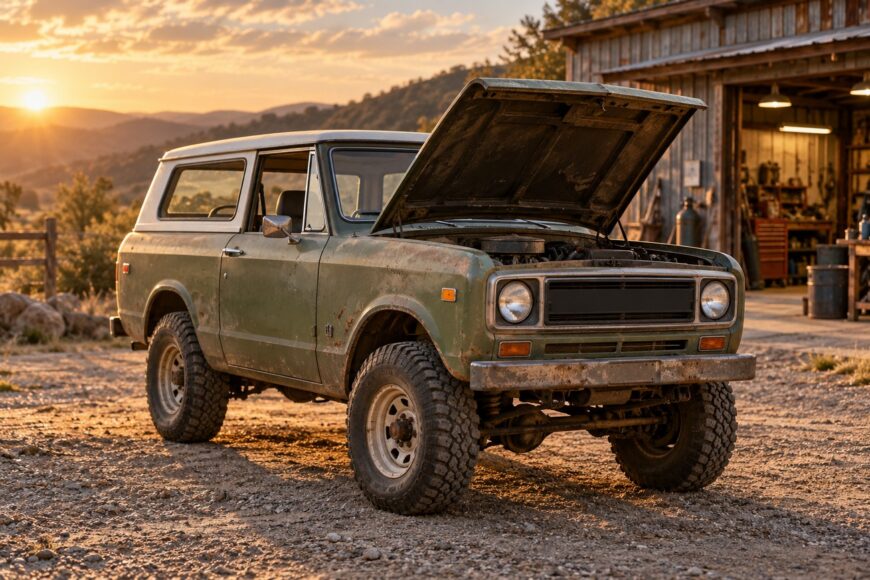
The International Scout II is one of the clearest expressions of International Harvester’s idea of a practical four-wheel-drive utility vehicle. It has a steel body on a separate frame, a solid front axle, leaf springs, a removable roof on many examples, and mechanical systems that can still be understood without factory diagnostic software. Those qualities explain its appeal as a trail machine and restoration project.
Age changes the calculation. Scout II production ran from 1971 through 1980, so every example is now a roughly half-century-old vehicle with a history of repairs, modifications, and storage conditions. Frame corrosion, mismatched drivetrain parts, deteriorated wiring, vague horsepower claims, and poor highway manners can cost more than a tired engine. The badge and engine size matter less than the condition of the structure and the quality of the work already done.
- What the International Scout II Was Built to Do
- Scout II Factory Specifications: Engines, Axles, and Brakes
- How the Scout II Performs Off-Road—and on the Highway
- The Scout II’s Hidden Age-Related Problems
- A Buyer’s Inspection Checklist for an International Scout II
- Restoring and Living With the International Harvester Off-Roader
- Frequently asked questions
- How much is an International Scout II worth?
- What are the key differences between the International Scout and the Scout II?
- How much does an International Harvester Scout cost?
- Which year is considered the best for the International Harvester Scout II?
What the International Scout II Was Built to Do
International Harvester developed the Scout II as a compact four-wheel-drive vehicle for work, recreation, and rough access roads. Its proportions were more useful than luxurious: a short body, upright seating, simple controls, and a separate frame capable of carrying suspension and drivetrain loads. The standard wheelbase was 100 inches, while the Terra pickup and Traveler wagon used a longer 118-inch wheelbase.
The steel body was mounted on a separate frame, giving the Scout II a serviceable foundation for off-road use and body repairs. That construction also creates two separate inspection problems. A presentable body can conceal a weakened frame, while a solid frame can sit beneath floors, sills, or body mounts affected by corrosion.
Its front suspension used a solid axle on semi-elliptic leaf springs. This layout favors durability, wheel movement, and straightforward trail repairs, although it brings more unstrung weight and less precise road behavior than an independent suspension. The same design that tolerates uneven ground can produce axle tramp, steering kickback, and substantial body movement when worn parts are combined with modern traffic speeds.
Removable roof sections and the available Traveltop made the Scout II adaptable as a utility wagon, open-air recreational vehicle, or pickup-style hauler. They also added seams, fasteners, seals, and roof interfaces that can leak or loosen. Removing a roof or interior trim during inspection often reveals water staining, hidden rust, and repairs that were invisible from outside.
Scout II Factory Specifications: Engines, Axles, and Brakes
The 1974 specifications provide a useful reference point, provided they are treated as year- and configuration-specific data rather than a universal description of every Scout II.
| Item | 1974 factory reference | Scope and caution |
|---|---|---|
| Standard wheelbase | 100 inches | Terra and Traveler versions used a 118-inch wheelbase |
| 258 cubic-inch inline-six | 113 hp and 191 lb-ft at 2,000 rpm | The stated specification required 91-octane fuel |
| 304 cubic-inch V8 | 144 hp and 263 lb-ft; 156 hp and 269 lb-ft with dual exhaust | Output depends on the documented factory configuration |
| Other engine families | Inline-four and inline-six engines; 304 and 345 cubic-inch V8s | Nissan SD33 diesel examples are associated with 1976–1980 applications; SD33T examples are associated with 1979–1980 applications and require verification |
| Four-wheel-drive axles | Dana 44 front and rear | Applies to the stated 1974 four-wheel-drive configuration; gearing, brakes, shafts, hubs, and lockers can differ |
| Transfer case | Two-speed transfer case | Confirm the actual unit on a modified or repaired vehicle |
| Brakes | 11.75-inch front discs; 11-by-2.5-inch rear drums | Later, replacement, or converted systems may differ |
| Steering | Worm-and-roller steering box, 24:1 ratio | Wear in the box and linkage can make the ratio feel even slower |
The engine list changed across the production run, and many surviving trucks have received replacements. A 345 V8, an inline-six, and a Nissan SD33 diesel each produce a different combination of cooling, gearing, fuel-system, and exhaust requirements. A seller’s engine description therefore deserves the same verification as the chassis number and body style.
Horsepower figures require particular caution. Claims of approximately 197 hp may describe an advertising figure, a different configuration, or a different measurement method; they cannot be applied to every 345 or V8 Scout II. Gross and net horsepower figures from the 1970s should not be compared directly with modern ratings until the measurement method is known.
How the Scout II Performs Off-Road—and on the Highway
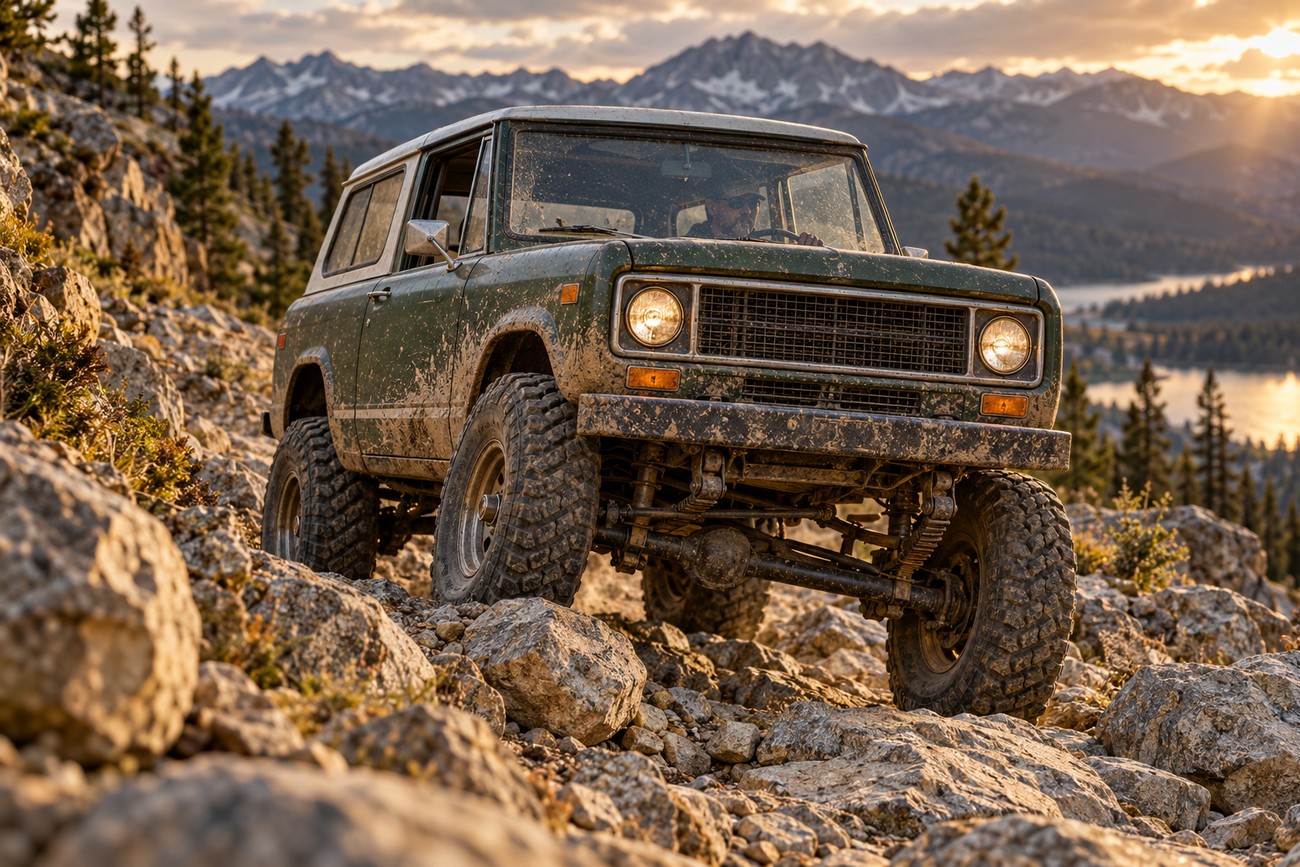
On a trail, the Scout II’s strengths are easy to understand. The solid axles and leaf springs tolerate abuse, keep the drivetrain layout accessible, and allow repairs with conventional tools. Low-speed traction depends on gearing, tire condition, axle ratios, and driver control as much as engine output. A healthy four-wheel-drive system can make the truck effective on uneven ground without requiring electronic traction systems.
The 345 V8’s low-rpm torque can be useful when climbing, crawling, or pulling through soft terrain. It does not turn the Scout II into a fast vehicle, and additional engine output places greater demands on cooling, brakes, steering, and driveline components. The 304 can be an equally sensible choice when the vehicle’s structure and supporting systems are in better condition.
Highway behavior follows directly from the same hardware. Slow steering, body roll, cabin noise, limited directional stability, and modest acceleration are normal concerns by contemporary standards. Worn tie-rod ends, loose wheel bearings, tired springs, incorrect alignment, or an inaccurately adjusted steering box can turn those characteristics into a serious fatigue and safety problem.
The standard narrow track and tall body also deserve attention after modifications. Wide tires and lift kits increase loads on hubs, steering parts, axles, gearing, brakes, and wheel arches. A towing figure of up to 5,300 lb applies only to specifically equipped versions; it is not a universal rating for every Scout II, especially one with unknown brakes, tires, cooling capacity, or drivetrain changes.
The Scout II’s Hidden Age-Related Problems
Rust is the first major threat because it affects both appearance and load paths. Inspect the frame, its inner surfaces, spring and suspension attachments, body mounts, sills, floor sections, and the area around the windshield. Fresh undercoating or thick protective material can hide repairs, perforation, and distorted metal, so an inspection should include tapping, probing, and viewing from several angles.
The removable roof, doors, seals, and windshield surround create additional routes for water. Water entering the cabin can remain beneath carpets and insulation, where it attacks floors and body mounts from above. A clean restored interior may reflect recent cosmetic work rather than dry storage or sound structure.
Electrical faults often begin with a poor ground or an altered connector long before a component fails completely. A Scout that starts reliably in a workshop can still develop flickering lights, dead instruments, or intermittent starting once vibration and moisture expose those weaknesses.
Old harnesses, grounds, connectors, and fuse systems can cause hard starting, flickering lights, and dead instruments. Modifications are common, including added accessories, replacement charging systems, relocated batteries, and incomplete wiring repairs. Trace the circuit rather than replacing parts at random; a clean voltage reading at the battery says little about voltage loss at a distant lamp or ignition connection.
V8 versions bring their own maintenance pattern. Fuel consumption can be high, carburetor adjustment may be needed, vacuum leaks can upset idle and ignition behavior, and the cooling system must cope with an old engine bay, restricted passages, a tired radiator, or an incorrectly installed replacement engine. Leaking seals, failed roof seals, and aged hoses can create problems that appear unrelated until the vehicle is used regularly.
Parts sourcing adds another layer of risk. Engines, transmissions, axles, brakes, and electrical systems may come from different suppliers or different years, so a parts catalog lookup based only on the model year can produce the wrong component. Confirm dimensions, mounting patterns, connector types, axle details, and the actual equipment fitted to the truck.
A Buyer’s Inspection Checklist for an International Scout II
Start with identification. Compare the vehicle tags, body style, engine, transmission, axles, transfer case, and visible wiring changes with the seller’s description. Record casting numbers and component markings where possible. An advertisement may call a truck original even when the running gear, brakes, or electrical system have been replaced several times.
Move underneath before judging paint or engine sound. Inspect the inside of the frame, crossmembers, spring hangers, body mounts, floors, sills, and windshield surround. Look for fresh welds, rippled metal, patches over scale, drain holes blocked by coating, and repairs that stop abruptly at a convenient edge. Check whether doors, roof sections, and body panels fit consistently; uneven gaps can indicate settling or previous structural work.
With the vehicle safely supported, check steering-box play, linkage joints, wheel bearings, steering-knuckle or ball-joint play, spring mounts, U-joints, and driveshaft condition. Test the brakes for a firm pedal, even application, and leaks. Before using four-wheel drive, verify hub operation, axle oil condition, transfer-case engagement, and the absence of damaging noise or vibration.
Axle ratios, transfer-case type, driveshaft lengths, and wiring changes should be confirmed before ordering parts for a swapped or heavily modified truck. A correct-looking replacement can still be wrong for the actual combination of components.
Check the cooling system under load rather than accepting a brief idle demonstration. Look for overheating, unstable temperature, coolant leaks, fan and shroud problems, and evidence that an engine swap has left the radiator or exhaust system poorly matched. Confirm that the transmission, transfer case, driveshafts, and axle ratios work as a set; changing an engine alone can leave gearing, clearance, or shaft length unsuitable.
Inspect large tires and suspension modifications with suspicion. Measure clearance through steering and suspension travel, examine rubbing marks, and consider the extra leverage applied to steering, hubs, axles, brakes, and wheel arches. A restored cabin, quiet idle, or fresh paint cannot compensate for a weakened frame, excessive steering play, or an undocumented drivetrain.
Restoring and Living With the International Harvester Off-Roader
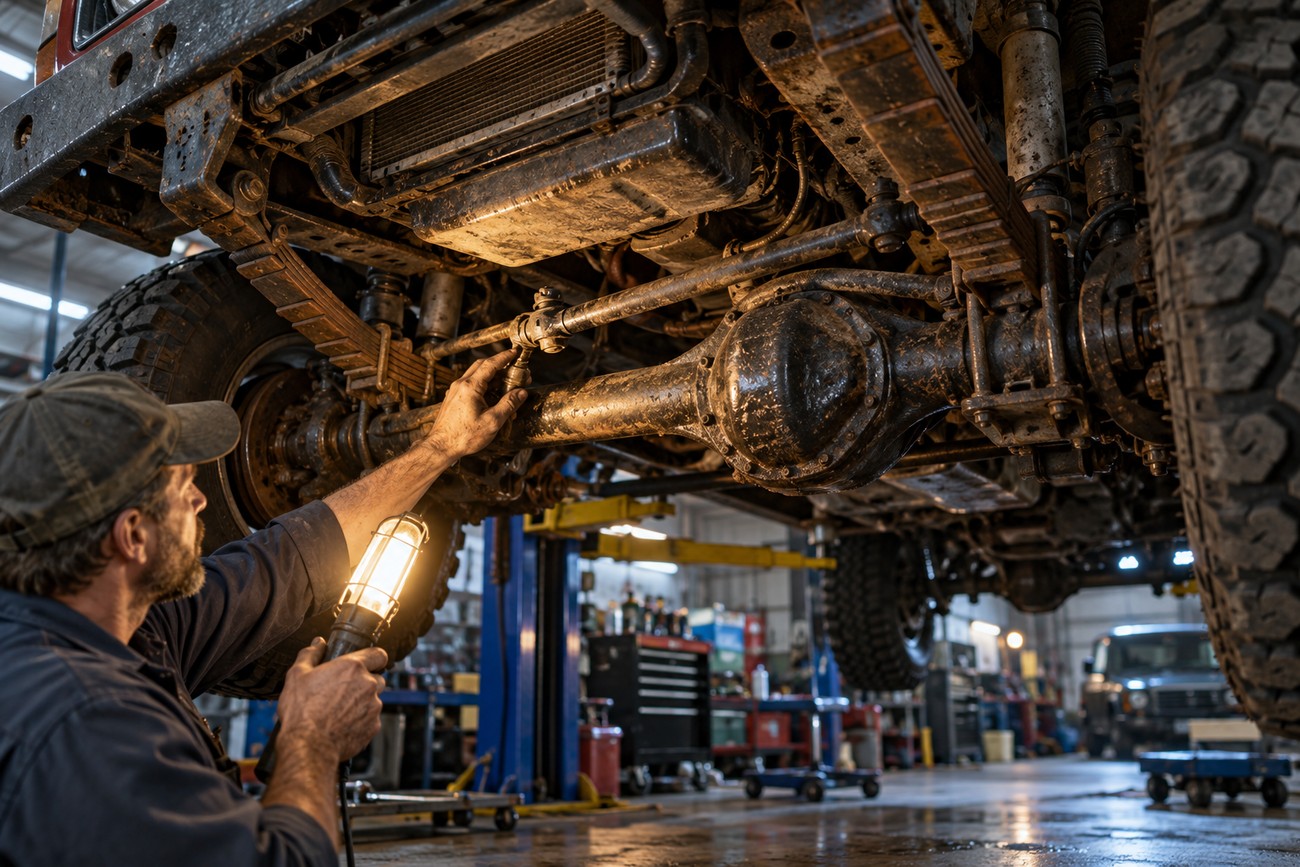
A usable Scout II project should begin with the frame, steering, brakes, cooling system, and drivetrain health. Engine preference comes later. A sound 304-powered truck with dependable brakes and clear records is generally a better foundation than a 345 truck with corrosion, overheating, and uncertain axle work.
Dana 44 identification provides useful information, though it does not guarantee identical gearing, brakes, axle shafts, hubs, or locking equipment. Axle names also say nothing about fatigue, cracks, deformation, or damage from previous off-road use. Inspect the actual assembly and check ratios before selecting transfer-case gearing, tire size, or replacement parts.
Year-specific factory service manuals and parts catalogs are more dependable than generic online charts. Scout II details changed across the production period, and a catalog intended for a nearby year can misidentify brake hardware, wiring, fasteners, or transmission parts. Keep a written record of every confirmed component before ordering a restoration batch.
Originality, reliability, and modernized running gear involve different priorities. A carefully documented original truck can be valuable to a collector, while a discreetly upgraded truck may be easier to use regularly. Larger tires, altered steering, electronic ignition, upgraded cooling, or replacement brakes can improve operation when engineered as a system; isolated upgrades often transfer stress to parts that were never rebuilt.
Frequently asked questions
The Scout II market includes complete survivors, modified trail trucks, cosmetic restorations, and long-term projects. That range makes condition and documentation more useful than a single headline specification.
How much is an International Scout II worth?
Its value depends primarily on structural condition, documentation, originality, and repair quality. A sound frame with traceable work, functioning four-wheel drive, dependable brakes, and a dry body belongs in a different category from a freshly painted project with hidden rust or an unverified drivetrain.
Assess the underside, body mounts, roof interfaces, wiring, cooling system, and modification history before using comparable listings. Engine size can influence interest, while poor structure or incomplete repairs can overwhelm that advantage. A professional inspection is especially worthwhile when coating, paint, or interior restoration limits access to the metal.
What are the key differences between the International Scout and the Scout II?
The Scout II is a distinct generation from the earlier International Scout models. It was produced from 1971 through 1980 and used its own body, chassis details, parts changes, and factory configurations. The names are related, yet parts and specifications should not be assumed to interchange simply because both vehicles carry the Scout badge.
For a purchase, identify the generation from the vehicle documentation and tags, then verify the actual hardware. An earlier Scout body style, a Scout II, and a later modified truck can appear in similar advertisements while requiring different restoration methods and parts catalogs.
How much does an International Harvester Scout cost?
There is no responsible universal cost figure for an International Harvester Scout. The broader name covers several generations, body styles, engines, drivetrain combinations, and conditions ranging from complete projects to usable restorations.
Build a budget from the exact vehicle: purchase condition, frame repairs, body and paint, brakes, wiring, cooling, tires, drivetrain work, and parts availability. A lower-priced truck with structural corrosion or undocumented modifications can require substantially more work than a better-documented example with a higher initial price.
Which year is considered the best for the International Harvester Scout II?
No single year automatically wins. The best choice is usually the example with the soundest structure, clearest documentation, factory configuration that suits your use, and modifications completed to a high standard.
Compare frame condition, steering and brakes, cooling, axle ratios, transfer-case type, and repair history before selecting by year. A later diesel application, a V8 truck, or a 1974 four-wheel-drive configuration may be attractive for specific reasons, yet the individual vehicle’s condition remains the decisive factor.







