
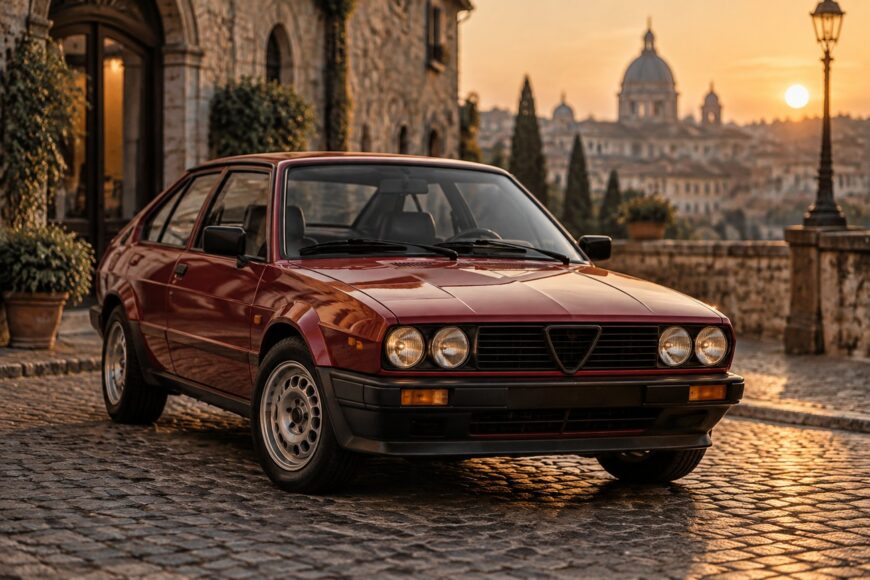
The Innocenti Mini De Tomaso has the shape of a small Bertone hatchback and the attitude of a much larger performance car. Its rarity adds to the appeal, but it also raises the stakes of a restoration: a neat exterior can conceal corrosion, and missing Italian-specific parts may be difficult to replace.
The first distinction for a buyer is mechanical. Early cars used a 1275 cm³ BLMC four-cylinder, while the later Turbo used a turbocharged 993 cm³ Daihatsu three-cylinder. Badges, paint, and advertised horsepower cannot reliably tell you which specification survives underneath or whether the car still matches its factory configuration.
- What the Innocenti Mini De Tomaso Actually Is
- Two Technical Chapters: 1275 Four-Cylinder and Daihatsu Turbo
- Early De Tomaso vs. Turbo: The Specs That Change the Story
- Why Condition Matters More Than Rarity
- How to Verify a Car Before You Buy
- The Myths Behind the De Tomaso Badge
- Which Version Makes More Sense for an Enthusiast?
- Frequently Asked Questions
- What should a seller photograph before you travel to inspect a De Tomaso?
- What is the smallest Italian car?
- What happened to the Mini Coopers from The Italian Job?
- What is the fastest classic Mini?
What the Innocenti Mini De Tomaso Actually Is
The De Tomaso is a three-door Bertone hatchback based on a separate Italian version of the Mini. Its angular body gives it a character distinct from the familiar British Mini, and the differences extend beyond styling. Treating it as a British car with different badges is a poor starting point for either research or a parts order.
That distinction becomes tangible during restoration. Body panels, trim, lighting, and equipment need to be identified against the Italian car, rather than assumed interchangeable with British Mini components. Even a part that looks plausible in a photograph may belong to another Innocenti generation.
The De Tomaso name also spans two substantially different technical periods. An early four-cylinder car and a later Daihatsu-powered Turbo may share a badge and Bertone identity, but they call for different mechanical checks. Establish the year and engine before using a specification sheet to judge an advertised example.
Two Technical Chapters: 1275 Four-Cylinder and Daihatsu Turbo
The early De Tomaso period runs from 1976–1982. These cars used a BLMC four-cylinder engine of 1275 cm³ and a four-speed manual transmission. For someone drawn to classic four-cylinder Mini character, this is the more familiar mechanical starting point, though condition and past modifications still matter more than the badge.
Claimed output rose across that period from approximately 71 hp to 74 hp. Those are period specification figures, not a promise of what an individual engine produces now. Gearing, vehicle condition, and the accuracy of a car’s stated specification all affect how it drives.
From 1983, the Turbo De Tomaso introduced a turbocharged Daihatsu three-cylinder of 993 cm³, with a claimed output of approximately 72 hp. Similar headline power can obscure a substantial mechanical change. The Turbo had a different powertrain and revised suspension construction compared with the early Mini; it was not simply an early car fitted with a turbocharger.
That separation matters when planning maintenance. A Turbo’s engine installation brings its own cooling, hose, and boost-system checks, while parts and diagnostic assumptions drawn from a four-cylinder car may lead you astray. Record the build year and installed engine separately, particularly where an older car has been modified or an advertisement uses the De Tomaso name loosely.
Early De Tomaso vs. Turbo: The Specs That Change the Story
Compare the two versions by mechanical specification rather than mixing horsepower figures or treating every advertised model year as a production boundary.
| Specification | Early De Tomaso | Turbo De Tomaso |
|---|---|---|
| Period | 1976–1982 | From 1983 |
| Engine | BLMC four-cylinder, 1275 cm³ | Turbocharged Daihatsu three-cylinder, 993 cm³ |
| Claimed power | Approximately 71–74 hp, rising across the period | Approximately 72 hp |
| Transmission information | Four-speed manual | Confirm the fitted transmission against the individual car’s specification and documentation |
| Suspension distinction | Early Mini construction | Revised suspension construction compared with the early Mini |
| Specification caveats | A 1275 cm³ engine alone does not establish factory originality | A claimed mass of about 715 kg appears for some specifications; it is not universal across markets and versions |
| Dating caveat | Many catalogues end the four-cylinder version in 1982 | Some listings extend the Mini De Tomaso family to 1987, reflecting different periods or modifications rather than a later end date for the four-cylinder car |
Why Condition Matters More Than Rarity
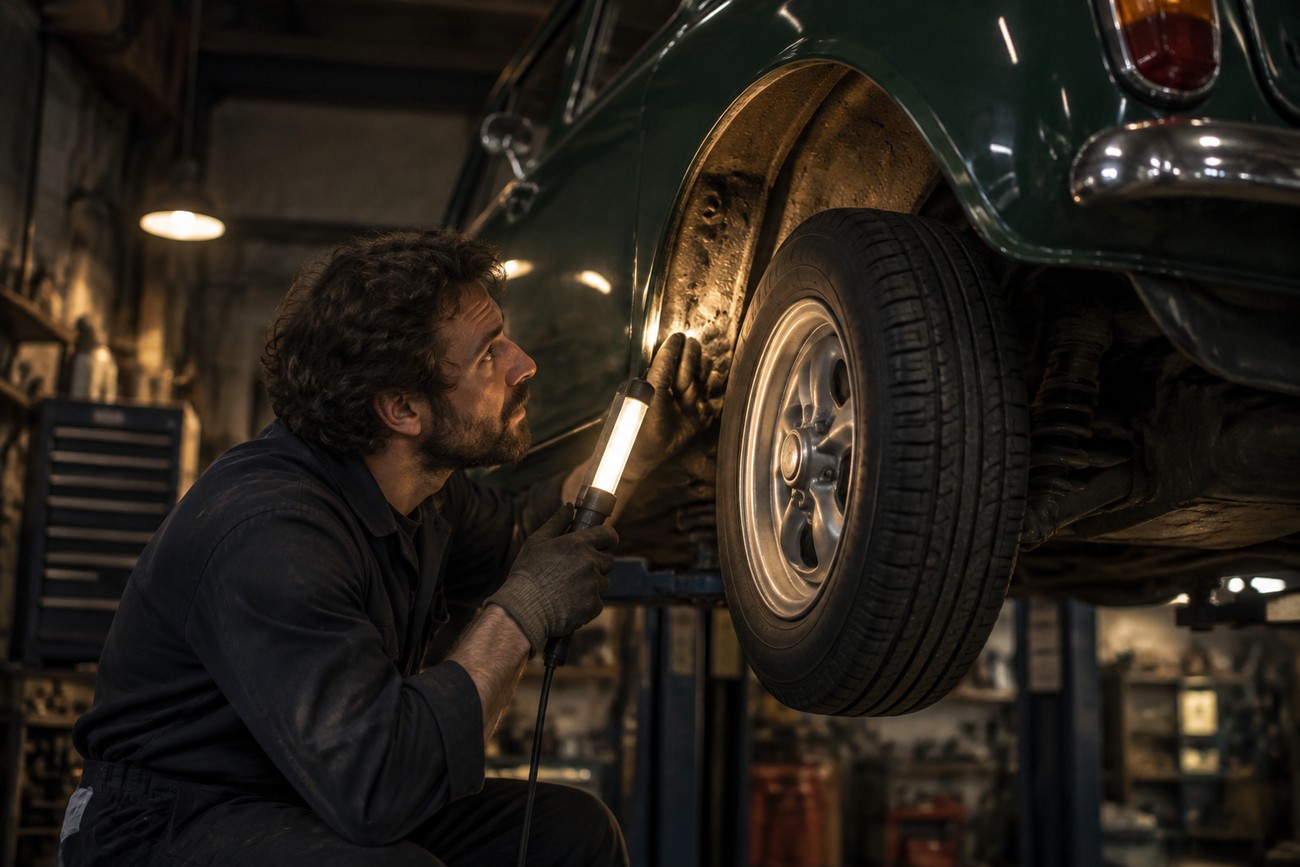
A rare Bertone hatchback can look persuasive in photographs while needing extensive structural work. Inspect the floors, sills, and wheel arches closely, then follow the metal into the inner cavities and suspension mounting areas. A tidy exterior does not establish that the shell carrying the suspension is sound.
Plastic extensions and bumpers can hide corrosion at their edges and behind their mounting points. Carpets can conceal damaged floors, while fresh coating underneath may make old repairs harder to assess. If access is restricted, treat the unseen areas as an unresolved risk rather than assuming that clean paint continues beneath them.
The cost of repairing a poor shell extends beyond metalwork. Original body panels, decorative trim, and specific lighting can be difficult to source, so a missing small component may delay completion long after the main repair is finished. A complete, sound car can therefore be a more manageable project than a cheaper-looking example with an attractive finish and missing details.
Ask for photographs of the engine bay, underside, and identification plates before spending time on an inspection trip. They help expose repairs, mechanical substitutions, and identity questions that polished interior pictures cannot settle. Clear photographs are only a first filter; a physical inspection should still reach the concealed corrosion areas.
How to Verify a Car Before You Buy
Start by separating the seller’s description from the car itself. Check the body number, engine, year, and relevant factory differences against the paperwork available for that example. A De Tomaso badge establishes neither its mechanical specification nor its originality.
Examine restoration records for changes to the engine, gearbox, wheels, and interior. Early cars may have acquired replacements over decades of use, and finding a 1275 cm³ engine is not proof that it is the original unit or factory configuration. An undocumented rebuild can be harder to evaluate than a visibly modified car with a clear account of the work.
Inspect suspension mounting points and inner wheel-arch cavities before judging a glossy repaint. Photographs of the underside and identification plates can also reveal questions worth resolving before you travel to see the car.
Check parts compatibility by Italian body and exact generation before ordering from a British Mini catalog. Shared ancestry does not guarantee that a panel, lamp, mounting, or mechanical component will fit. For a prospective purchase, identify unavailable or missing pieces early enough to price the work realistically.
Give a Turbo an additional inspection of its cooling system, hoses, and boost plumbing, including evidence of repairs or improvised substitutions. A Daihatsu engine does not make every part of its installation interchangeable with a Daihatsu donor vehicle: mounting, wiring, cooling, and peripheral components can depend on the Innocenti version. In either chapter, coherent documentation is more useful than a brochure horsepower claim.
The Myths Behind the De Tomaso Badge
The easiest mistake is to call this a British Mini in Italian clothing. The three-door Bertone hatchback belongs to a separate Italian version of the Mini, with body and equipment differences that become important as soon as you inspect corrosion or search for replacement parts.
Another misconception is that every De Tomaso has the 1275 cm³ four-cylinder. That describes the early 1976–1982 chapter; the Turbo introduced from 1983 used a turbocharged Daihatsu three-cylinder of 993 cm³. Its different powertrain and revised suspension construction make “the same car with a turbo added” an equally misleading description.
A quoted 72 hp is no universal factory figure, either. Early claimed output rose from approximately 71 hp to 74 hp, while approximately 72 hp refers to the later Turbo specification. Modified survivors complicate matters further: the correct period figure for a model does not verify the engine or output of the particular car for sale.
Which Version Makes More Sense for an Enthusiast?
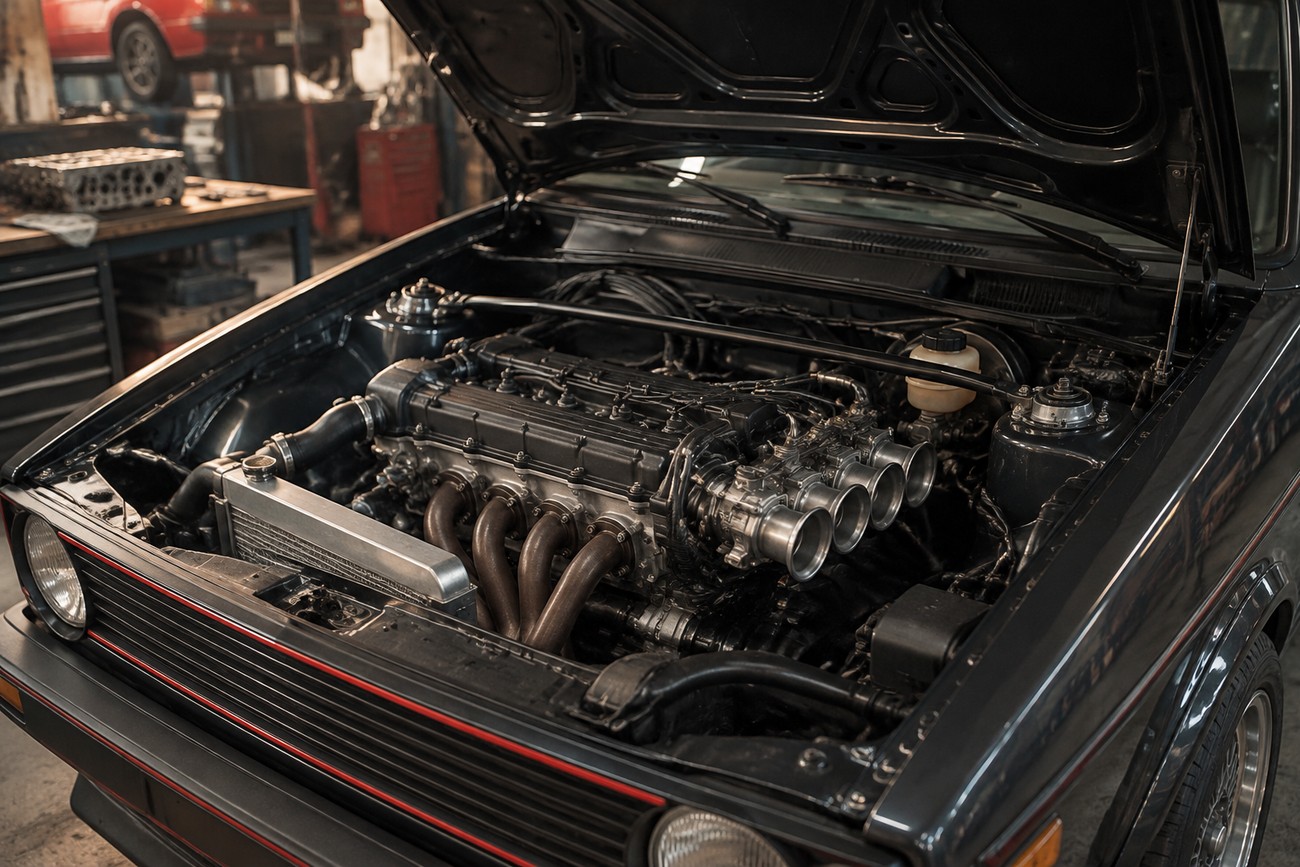
The early De Tomaso is the more logical choice if your interest centers on classic four-cylinder Mini character. Its BLMC engine and four-speed manual provide a clearer link to that experience, provided the car’s mechanical specification and structural condition stand up to inspection.
The Turbo deserves consideration on its own terms. Its Daihatsu powertrain and revised suspension make it a distinctive later chapter, though scarce parts and the extra cooling and boost hardware can make diagnosis and restoration more demanding. Rarity also makes small original components consequential: an incomplete car may be difficult to finish correctly.
Choose the better-supported car rather than the more exciting advertisement. A sound shell, convincing documentation, a specification you can verify, and access to appropriate restoration help provide a stronger basis for ownership than badge prestige or a marginal difference in claimed power.
Frequently Asked Questions
These questions help separate useful pre-purchase evidence from broader Mini and Italian-car comparisons.
What should a seller photograph before you travel to inspect a De Tomaso?
Request clear views of the entire engine bay, identification plates, and underside, including the floors, sills, wheel arches, and suspension mounting areas. Ask for close-ups inside accessible wheel-arch cavities and around plastic extensions or bumpers where corrosion may hide. Photographs will not replace an inspection, but they can show whether the seller can substantiate the car’s identity and condition before you travel.
What is the smallest Italian car?
There is no single answer without defining “Italian” and “smallest.” The Italian-designed Iso Isetta is much smaller than the familiar Fiat 500, while different answers emerge if the comparison is restricted to conventional four-seat cars or to models built in Italy. The Innocenti Mini De Tomaso is a compact hatchback, not a contender for an undisputed smallest-car title.
What happened to the Mini Coopers from The Italian Job?
The 1969 film used British Minis, including Cooper S cars, rather than the later Bertone-bodied Innocenti De Tomaso. Multiple vehicles were used in filming, so there is no single fate for “the” movie Mini; stunt use and later ownership claims further complicate identification. A car presented as an original film vehicle needs specific production and ownership evidence.
What is the fastest classic Mini?
There is no definitive answer until “classic Mini” and “fastest” are defined. A factory-original road car, a modified road car, and a racing Mini are different comparisons; the British 1275 Cooper S is a familiar factory performance reference, while modified cars can exceed its performance. Claimed horsepower alone cannot settle the question, and the Bertone-bodied Innocenti De Tomaso should not be treated as mechanically identical to a British Mini.







