
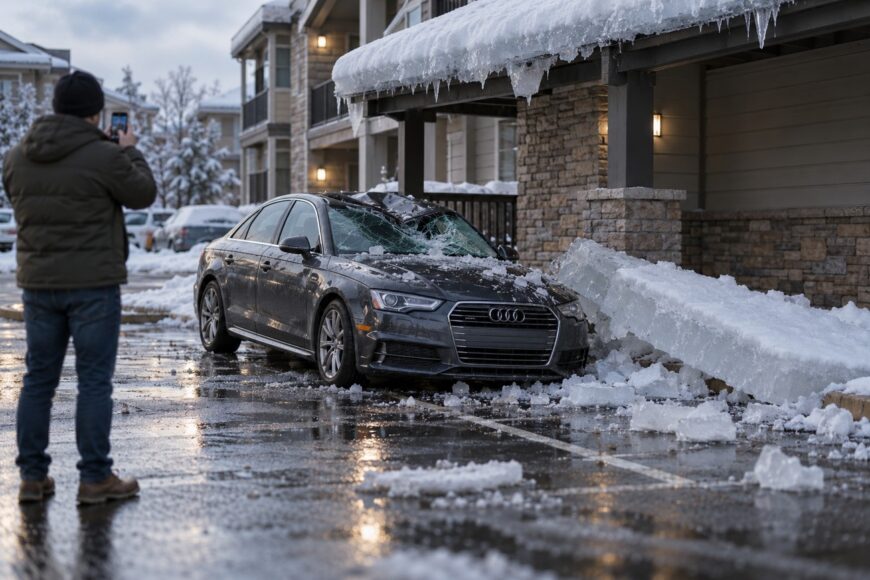
Seeing ice fall onto your Audi A4 is a shock. A dented roof, cracked windshield, or shattered side window may look like the whole problem, yet the outcome often depends on proving where the ice came from and choosing the correct claim route.
Act quickly, but do not rush into washing or repairing the car. You need to preserve evidence for the insurer, building manager, or any later liability assessment while also preventing a windshield crack or water leak from getting worse.
- What to Do Immediately After Ice Hits Your Audi A4
- Who May Pay for Damage Caused by Falling Ice?
- Why a Small Impact Can Become an Expensive Audi Repair
- Common Claim Mistakes and How to Challenge a Low Estimate
- Frequently asked questions
- Who pays for car damage from ice?
- What should I do if the building manager denies responsibility?
What to Do Immediately After Ice Hits Your Audi A4
Move away from the roof edge and check for further falling ice before approaching the Audi. Ice falling from roughly 2–5 stores can generate enough impact energy to crack glass, dent panels, or chip paint. If the car is unsafe to drive, arrange assistance rather than taking it through traffic.
Photograph the vehicle from close and wide angles, including the damage, fallen ice, parking position, roof or canopy, and the wider scene. Capture the exact building section, roof edge, snow or ice buildup, warning signs, and anything linking the impact to that construction. A photograph of the damaged Audi alone usually cannot establish the source.
Ask witnesses for contact details and request that nearby CCTV footage be preserved. Keep any recording in its original form with metadata; a screenshot is weaker evidence. Notify the building manager or owners’ association, and consider contacting police or emergency services where local procedure makes that useful. Notify the insurer within the policy deadline, even if the cause is still being investigated.
Do not wash the car, remove broken glass, or authorize repairs before documenting it and receiving claim instructions, unless immediate action is needed for safety. Cleaning can remove impact traces, while early repairs may make an expert assessment harder. Keep all reports, messages, photographs, and receipts together.
Who May Pay for Damage Caused by Falling Ice?
Falling ice is generally treated as external mechanical impact. A comprehensive or casco policy may respond if it covers the relevant event and its conditions are met. The wording matters: a policy may distinguish between a falling object and snow or ice sliding or falling from a roof.
Mandatory third-party liability insurance generally does not cover damage to the policyholder’s own Audi. A separate claim against the property owner or managing organization may be possible if negligent roof maintenance can be shown and the ice can be connected to that building. That route usually requires more than proof that the vehicle was damaged.
The strongest file combines scene photographs, original video, witnesses, and relevant building-management, police, or emergency-service records. A refusal by a manager does not by itself settle responsibility, and an insurer’s reference to “no road accident” does not automatically exclude a comprehensive claim. Check exclusions, reporting deadlines, and the deductible before deciding how to proceed.
In practical terms, the insurer may be the easiest first claim route even where another party could ultimately be responsible. Follow the policy’s notification procedure, avoid admissions about fault, and ask for a written explanation if coverage is denied or the damage is assessed too narrowly.
Why a Small Impact Can Become an Expensive Audi Repair
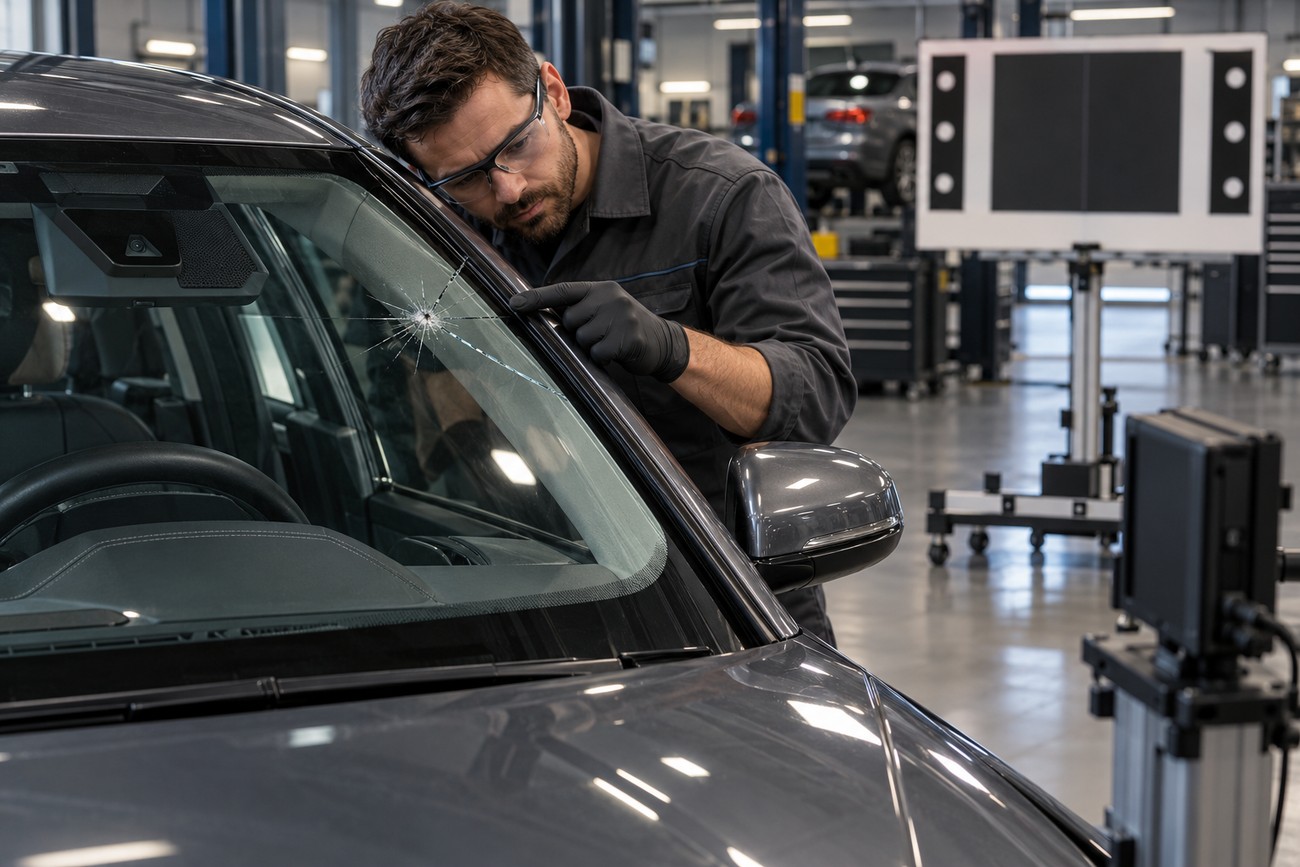
The Audi A4 windshield is laminated; it normally cracks or forms star-shaped damage rather than shattering. Side windows are usually tempered and may break into many small fragments. A crack reaching the glass edge or entering the driver’s viewing area may require complete windshield replacement, even when the original impact mark appears small.
Glass replacement can involve more than fitting a new panel. Depending on the vehicle’s equipment, the work may affect cameras, rain and light detectors, heating elements, sensors, mouldings, and seals. After windshield replacement, cameras and sensors may need inspection or recalibration for driver-assistance systems to operate correctly.
Require the repair estimate to list ADAS calibration, seal and molding replacement, leak testing, and a post-repair scan separately instead of accepting a glass-only quote.
A panoramic roof creates a different risk. Its glass panel, guides, and seals can be damaged even when the visible outer surface seems intact. Delayed leaks, wind noise, vibration, loose trim, or damaged roof fittings may appear after washing or temperature changes, so the inspection should include operation and sealing.
Thin panels can show dents more clearly later, particularly after a temperature change. Ask the repairer to inspect fasteners, sensors, seals, and adjacent panels, and to record pre-existing damage separately. This helps prevent a low estimate from being justified by an incomplete inspection.
Common Claim Mistakes and How to Challenge a Low Estimate
Leaving before recording the scene can make the source of the ice difficult to prove. So can assuming that the building manager will admit fault. Notify the insurer before sending the Audi to a repair shop, unless emergency safety work is necessary, and preserve the damaged parts where practical.
Read the policy for the deductible, exclusions, reporting deadline, and the distinction between falling objects and snow or ice sliding from a roof. Ask for the insurer’s position in writing. A phone statement that the event is “not an accident” is not a substitute for applying the actual wording.
Request a written damage assessment that identifies glass, calibration, mouldings, seals, leak testing, electronic components, vehicle-recovery, and expert-assessment costs where the policy or applicable rules allow. If the estimate omits these items, obtain an independent assessment and compare the technical reasons, rather than arguing only over the total.
Keep photographs, reports, invoices, and removed parts. Hidden damage may include leaks, wind noise, vibration, damaged trim fasteners, sensors, or roof fittings. A complete file gives the insurer, property manager, or relevant dispute process something concrete to evaluate.
Frequently asked questions
The payment route and proof of responsibility are separate issues. Your policy may provide a quicker route even when a property-related claim remains possible.
Who pays for car damage from ice?
The comprehensive insurer may pay under covered accidental-damage terms. A property owner or managing organization may be pursued when negligent maintenance and the source of the ice can be proven. The responsible payer and the easiest claim route are not always the same, so check the policy before waiting for a liability dispute to finish.
What should I do if the building manager denies responsibility?
Request the denial in writing and preserve the original photographs, video, witness details, and any building records. Obtain an independent assessment, identify who was responsible for roof maintenance, and submit the complete file to the insurer or relevant dispute process. Avoid relying on repeated phone arguments; a dated evidence file is more useful.







