
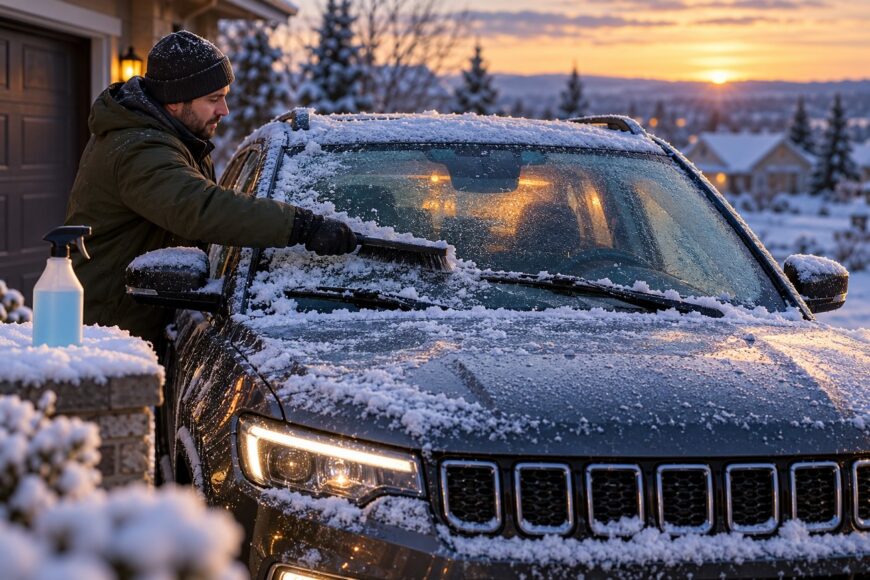
An iced-over Jeep Compass windshield creates pressure to leave before the glass is ready. That urgency is exactly when drivers are most likely to switch on frozen wipers, scrape aggressively, or clear only a small viewing patch. Each shortcut can damage the wiper system or leave you with insufficient sight of traffic, pedestrians, and road edges.
Start with gradual heat and remove snow before tackling the ice. Use the right tools, free the wiper blades by hand, and keep clearing until you have a full view of the road. A Compass may have winter heating features depending on its model year, trim, and market, but no such feature removes the need for a final visibility check.
- How to Clear an Iced-Over Jeep Compass Windshield
- Free Frozen Wipers Before You Switch Them On
- Shortcuts That Can Scratch or Crack the Glass
- Which Jeep Compass Heating Features Actually Help?
- Prevent the Next Morning’s Ice Without Creating a New Problem
- Frequently asked questions
- What if the frost is on the inside of my Jeep Compass windshield?
- How much does a replacement windshield for a Jeep Compass cost?
- What should I do if my windshield is covered in ice?
How to Clear an Iced-Over Jeep Compass Windshield
Start the vehicle according to its normal operating instructions and select the windshield defrost setting. Use gradual warming rather than directing sudden, intense heat at one cold area of the glass. This helps loosen the ice, although thick ice may still require manual clearing.
Remove loose snow first with a soft brush. Brush lightly and avoid dragging grit across the windshield. If the ice remains bonded to the glass, apply a suitable windshield de-icer and allow it time to work instead of applying heavy pressure.
Use a plastic scraper gently, moving it in one direction across softened areas. Smooth passes are safer than aggressive back-and-forth strokes, especially when sand or road dirt is trapped under the ice. Work around thick sections gradually; trying to break them by force can increase the chance of fine scratches or glass damage.
Clear the entire windshield, the side windows needed for safe observation, and the exterior mirrors. Check that the wiper blades and washer nozzles are free before using them. Do not move the Compass until visibility is adequate in all directions; driver-assistance features do not replace a properly cleared windshield.
Free Frozen Wipers Before You Switch Them On
Before touching the wiper switch, look at the full length of each blade. Ice may hold the rubber to the glass even when the tip appears loose. Let the defroster and any fitted heating system loosen the bond, then carefully separate the blade by hand without twisting it.
Activating wipers while the blades are frozen to the glass can damage the blade rubber, the motor, or the linkage. Similar strain can occur when the blades are asked to push thick ice or heavy slush. Wipers are designed to move water and light residue, not to act as an ice scraper.
A heated wiper park area, where fitted, can help loosen ice near the bottom of the windshield. It does not guarantee that the entire blade is free, so inspect both blades after the glass has warmed and before using washer fluid or intermittent wiping.
Shortcuts That Can Scratch or Crack the Glass
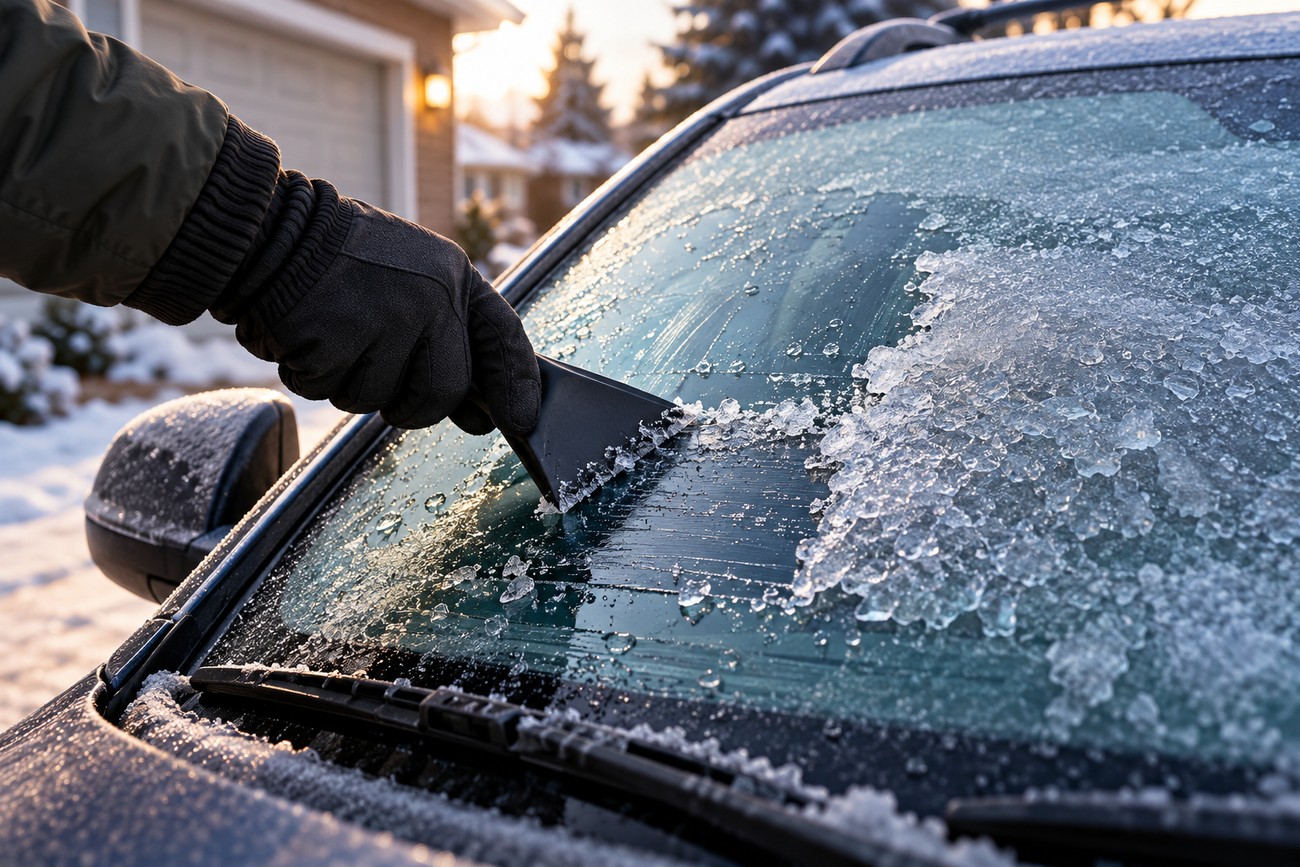
Do not pour hot or boiling water over a frozen Compass windshield. The sudden temperature change creates a thermal-shock risk for cold glass, and an existing chip or edge defect may make the glass more vulnerable. Use gradual defrosting and a suitable de-icer instead.
A scraper should glide over softened ice with light, controlled pressure. Heavy pressure can force grit against the glass and leave fine scratches. If the scraper catches repeatedly, stop, apply more de-icer, and allow the ice to loosen before continuing.
Brushing over road dirt creates a similar problem. Remove loose snow carefully, then use a clean soft brush and a plastic scraper. Keeping the tools clean matters because trapped sand can abrade the glass during otherwise careful cleaning.
These precautions address winter-cleaning risks specifically. A crack can also result from impact, a pre-existing chip, or other causes, so inspect damaged glass rather than assuming that every mark came from scraping.
Which Jeep Compass Heating Features Actually Help?
A heated wiper park area warms the region where the blades rest and can help release ice at the base of the windshield. A heated windshield, where fitted, applies heat across a broader area. Heated washer nozzles serve a different purpose by helping prevent ice blockage at the nozzles.
Any of these features may be available depending on the Jeep Compass model year, trim, and market. Check the dashboard controls and the owner’s manual rather than assuming that a feature fitted to one Compass is standard on another.
Gradual defrosting and fitted heating features can help loosen ice, but thick ice may still require manual clearing; neither guarantees adequate visibility. Allow the system to work while removing loose snow, then finish with a suitable de-icer and plastic scraper if necessary.
Inspect the full sightline after the heating cycle. Pay particular attention to the lower windshield, corners, mirror area, and any remaining film that could scatter headlights. Heating assists ice removal, while the driver remains responsible for confirming that the glass is clear enough to drive.
Prevent the Next Morning’s Ice Without Creating a New Problem
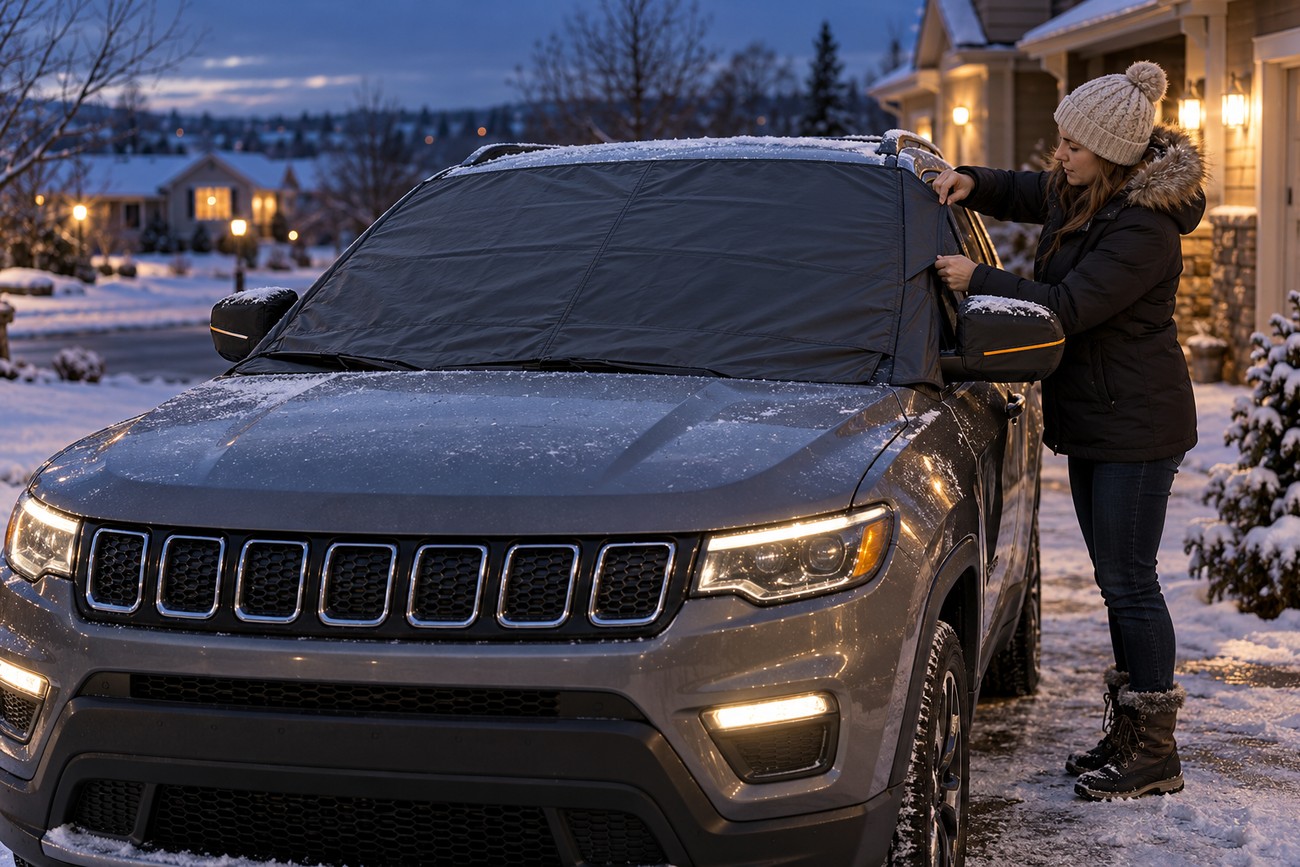
Fit an exterior windshield cover before snow, freezing rain, or frost begins. The cover works best when its edges are positioned correctly and its straps, flaps, or other fasteners hold it firmly against wind. A loose cover can shift, collect snow, or expose part of the windshield.
Remove a wet cover carefully in freezing weather. It may become stiff or bonded to the glass, so pull it away gradually rather than yanking it. Handle it carefully when folding or storing it; a frozen cover can be awkward and may carry grit back onto the windshield.
A cover is preventive equipment. It is less useful once ice has already formed underneath, and it does not replace clearing the glass before driving. Fit it before precipitation whenever possible, then check the windshield, wipers, and mirrors after removal.
Be cautious with claims that a particular multiplayer windshield film prevents winter scratches. Claims by individual sellers that multiplayer windshield film reduces scratches are not established as a general protection standard for the Jeep Compass. Clean tools, gentle technique, and removing grit remain dependable precautions.
Frequently asked questions
Ice on the outside is only one windshield problem Compass drivers face. Frost inside the cabin calls for moisture control as well as defrosting. If the glass needs replacement, its specification and any required calibration affect the quote.
What if the frost is on the inside of my Jeep Compass windshield?
Interior frost usually points to moisture inside the cabin freezing on the glass. Use the windshield defrost setting, allow the cabin to warm gradually, and wipe away loosened moisture with a clean, dry microfiber cloth. Avoid scraping the interior surface with a hard tool, which can mark dashboard trim or the glass.
Once the windshield is clear, reduce cabin moisture by removing wet floor mats, snow-covered clothing, or standing water. Using the air-conditioning function with defrost, where available, can help dry the air even when the heater is running. If interior frost returns repeatedly, check for damp carpeting or water entering the cabin.
How much does a replacement windshield for a Jeep Compass cost?
A reliable single price cannot be given without the Compass model year, glass specification, location, and details of the installation quote. Different glass may include features such as heating, an acoustic layer, or mounting provisions for vehicle sensors.
Ask the installer whether the replacement requires camera-related calibration. If a forward-facing camera or other driver-assistance sensor is mounted near the windshield, correct calibration may be required after replacement. The quote should identify the glass, labor, molding or hardware, and any calibration separately.
What should I do if my windshield is covered in ice?
Park safely, start gradual windshield defrosting, remove loose snow with a soft brush, and use a suitable de-icer where needed. Finish with a clean plastic scraper and free the wiper blades before switching them on. Do not use boiling water or drive with only a narrow viewing patch cleared.







