
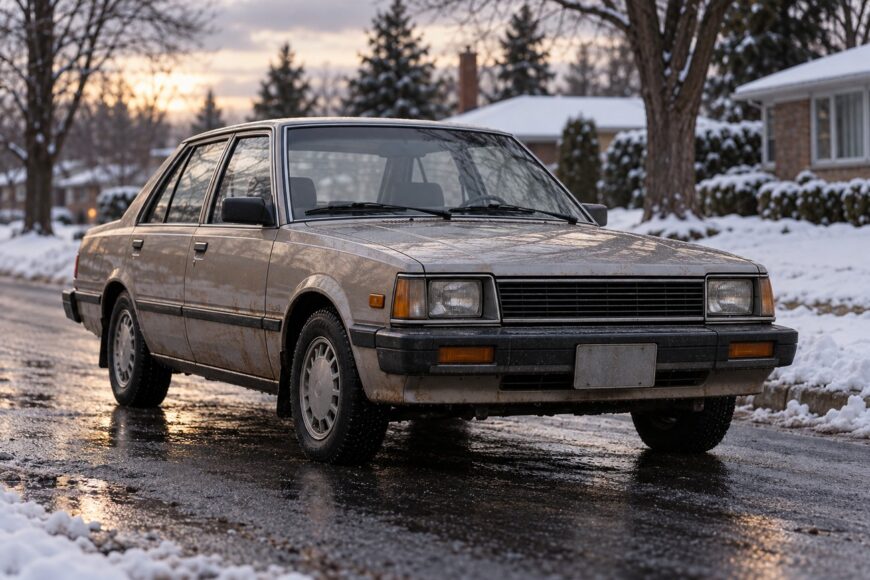
A Hyundai sedan sold in Canada but absent from the United States seems like an unlikely combination. The Hyundai Stellar makes sense only when its market history is kept separate from the better-known American Hyundai range.
That distinction matters today because surviving cars are rare, documentation is thin, and specifications from different countries are often mixed together. Identifying a Canadian Stellar requires more than matching its shape in an old photograph; its lighting, bumpers, engine, gearbox, and repair history all deserve scrutiny.
- Why the Stellar Was Sold in Canada but Not the US
- What Made a Canadian-Market Stellar Different
- Engines, Gearboxes and the Everyday Drive
- When the Sonata Took Over—and Why Dates Clash
- Inspecting a Surviving Stellar Before You Buy
- Finding Parts Without Losing the Canadian Spec
- Frequently asked questions
- Was the Hyundai Stellar built in Canada?
- Was a Stellar station wagon sold in Canada?
- Which paperwork should I ask for when buying a Canadian Stellar?
Why the Stellar Was Sold in Canada but Not the US
The Hyundai Stellar was a rear-wheel-drive midsize sedan produced from 1983 to 1992. It belonged to Hyundai’s early period of international expansion, when the company was establishing a presence outside South Korea with relatively conventional mechanical designs and market-specific adaptations.
Canada received the Stellar, while the United States did not. Available accounts cite US emissions requirements as the reason for its absence from the American market. The Canadian and US Hyundai lineups therefore cannot be treated as interchangeable, even when a car appears broadly similar to models sold elsewhere.
Rear-wheel drive gave the Stellar a different character from many later front-wheel-drive Hyundai sedans. Period descriptions include a live rear axle, and the layout reflects an older engineering approach that was familiar in the midsize-car market at the beginning of the 1980s.
The car is best understood as a transitional product rather than a plentiful mainstream classic. It helped Hyundai build international experience, yet its limited North American availability left owners with fewer surviving examples, fewer dedicated references, and less parts information than buyers usually expect from a car sold by an established manufacturer.
What Made a Canadian-Market Stellar Different
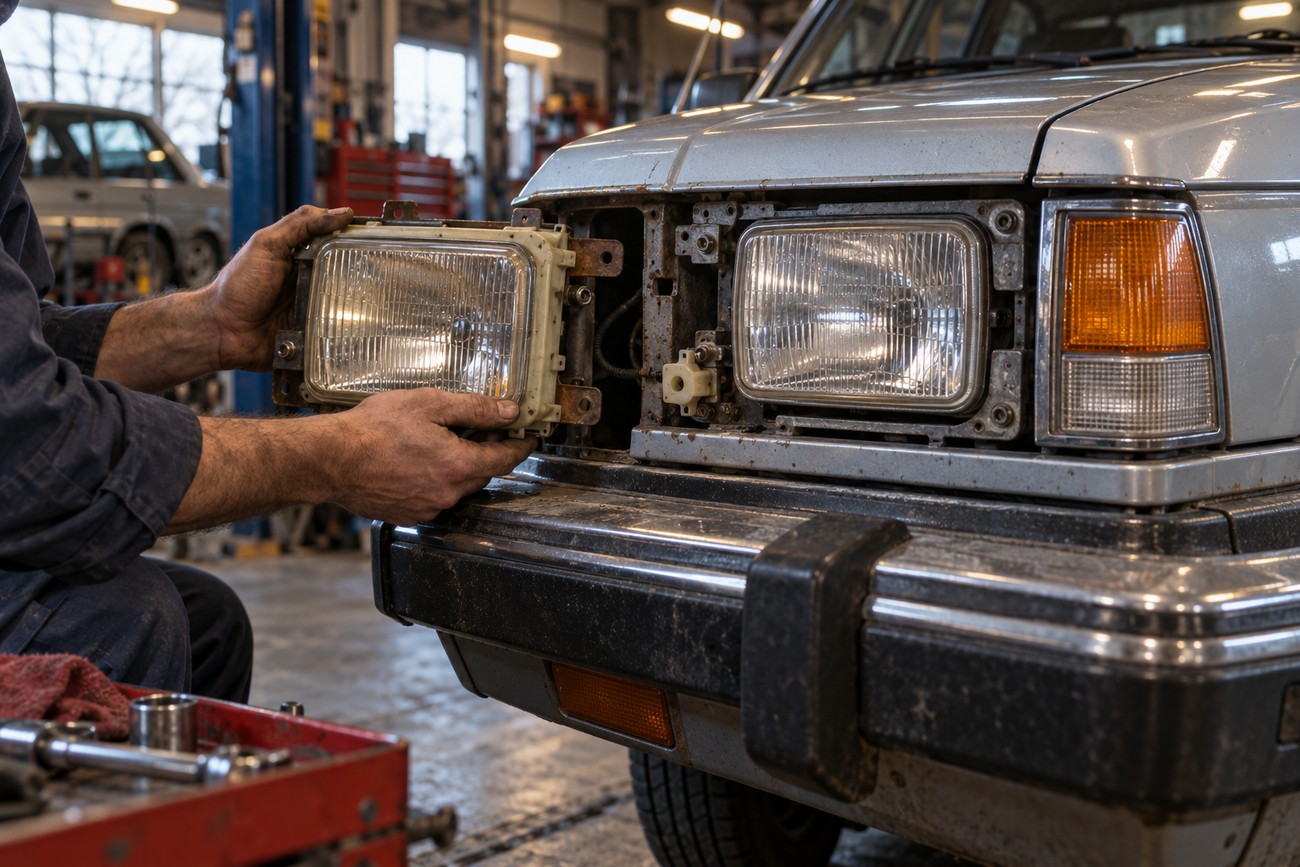
Canadian-market Stellar sedans are noted for sealed-beam headlights and larger impact bumpers. Those details are useful identification clues because they reflect North American requirements and can distinguish a Canadian car from a visually similar version photographed in another country.
Commonly cited dimensions are 4556 mm in length, 1716 mm in width, 1372 mm in height, and a 2579 mm wheelbase. These figures describe a midsize sedan for its period, with enough exterior length for a conventional cabin and trunk without the bulk of a full-size car.
The specified chassis includes rear-wheel drive, rack-and-pinion steering, front disc brakes, and rear drum brakes. A live rear axle and this brake arrangement also explain why a modern-looking restoration may still have distinctly old-car behavior under braking, in corners, or over uneven pavement.
Photographs and specifications from another market cannot establish the identity or parts fit of a Canadian example. Headlamp assemblies, bumper structures, mounting points, and even engine-related components may differ. A seller’s general reference to a “Stellar part” is therefore a starting point for research, not proof of compatibility.
Engines, Gearboxes and the Everyday Drive
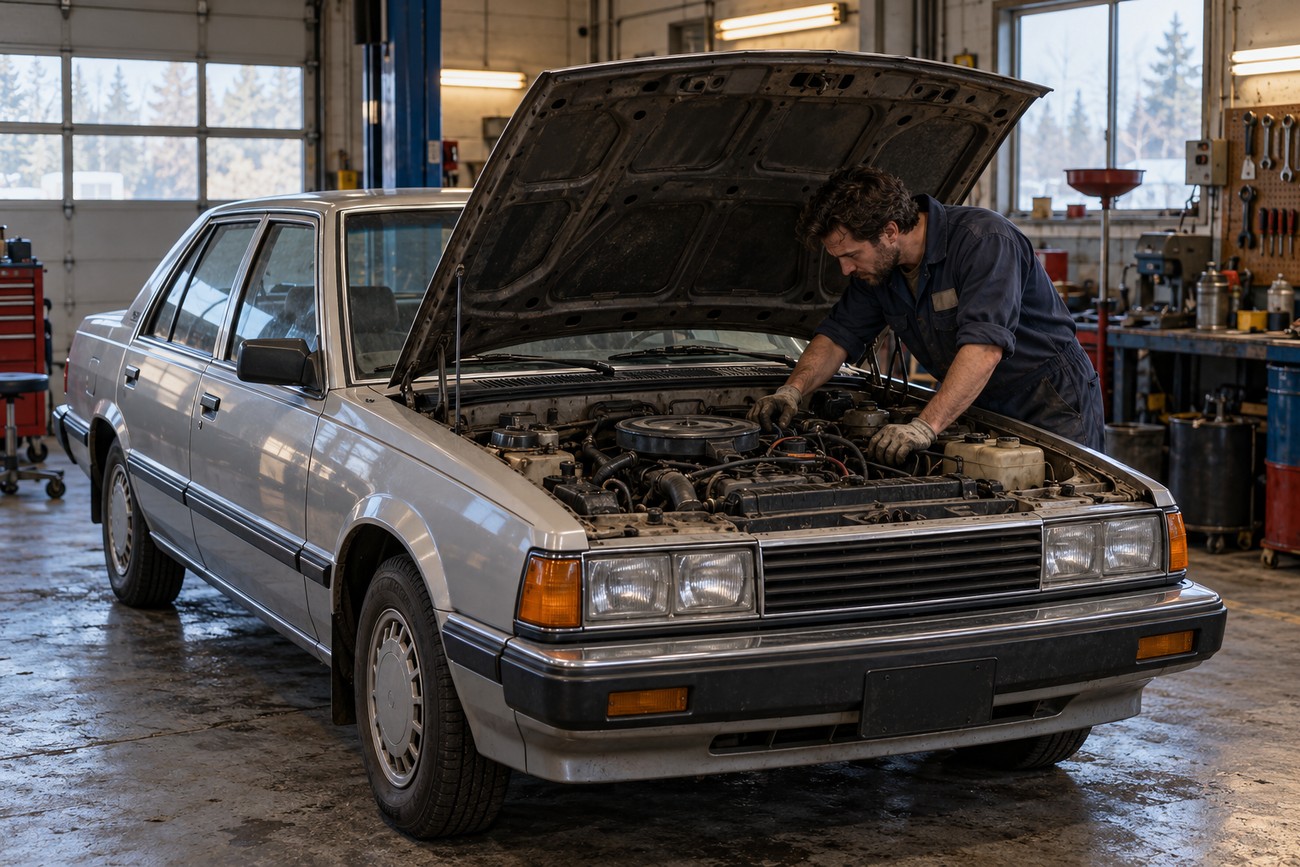
Early Canadian engine listings include 1.4- and 1.6-litre engines. A 2.0-litre engine is reported from 1987. The early cars can feel modest in contemporary North American traffic, especially when carrying passengers or climbing a grade, but that impression reflects their period engineering and gearing rather than a verified acceleration figure.
Canadian listings include a five-speed manual and a three-speed Borg-Warner automatic. A four-speed automatic with overdrive is also reported for 1987, although that detail should be confirmed against the individual car rather than assumed from a model-year summary.
Rear-wheel drive and the live rear axle give the Stellar a mechanical layout that can be easy to understand during inspection. They also mean that age-related wear in the driveline, suspension, steering, and axle components can affect the driving experience more than a clean engine bay suggests.
One description gives approximately 13 l/100 km in city driving, but that figure comes from a single source and is not a verified standardized result. Fuel use depends on the engine, transmission, tune, tire condition, traffic, and the quality of previous repairs, so it should not be used as a firm buying specification.
When the Sonata Took Over—and Why Dates Clash
The Hyundai Stellar and Hyundai Sonata were distinct models. The Sonata was not simply another name for the same Stellar generation, even though it eventually took over the role of Hyundai’s midsize sedan in Canada.
Canadian-market accounts disagree about the timing. Some date the handover to 1988, while 1992 is more commonly cited as the end of Canadian Stellar sales. The surviving references do not establish a precise overlap or changeover month.
For practical identification, a 1992 end date is the safer commonly cited reference, with the 1988 date retained as a conflicting account. This matters when researching brochures, registration records, or replacement parts: a listing that calls every late-1980s Hyundai midsize sedan a Sonata may conceal a market or model-year error.
The transition also helps explain why the Stellar is easy to mislabel today. Its rear-wheel-drive architecture belongs to an earlier stage of Hyundai’s development, while the Sonata represents the next chapter in the company’s midsize-car history.
Inspecting a Surviving Stellar Before You Buy
Begin with the body and corrosion, then move underneath before judging the car’s cosmetic presentation. Check structural areas, suspension mounting points, floor sections, bumper mounts, and signs of previous accident repair. A tidy exterior can hide old welding, substituted panels, or corrosion covered by fresh paint.
Next inspect the steering, suspension, and brakes. The front discs and rear drums should be checked for condition, leaks, uneven operation, and improvised repairs. Look for play in steering and suspension components, and confirm that the car tracks and stops predictably during a controlled road test.
The cooling system deserves its own examination because an aging radiator, hose arrangement, or replacement component may be difficult to identify later. Inspect fluid condition, temperature stability, leaks, fan operation, and evidence of repeated overheating. Then verify the fitted transmission: operate every manual gear or check the automatic’s engagement, shifts, and response when warm.
Age and improvised repairs can conceal the car’s real condition. Ask for evidence of previous work, compare the installed components with the claimed engine and gearbox, and treat a road test as essential. A shiny body is useful, but it tells you far less than predictable braking, stable cooling, quiet steering, and a transmission that behaves consistently.
Finding Parts Without Losing the Canadian Spec
Parts research for a Stellar can take time because model-specific catalogues and reliable technical information are scarce. Start by recording the market, model year, engine, transmission, and visible identification numbers. Do not order from a broad Hyundai catalogue until the physical component and its mounting details have been compared with the car.
Headlights and bumpers provide an obvious example. Canadian cars are noted for sealed-beam headlights and larger impact bumpers, so a part listed for a Stellar from another market may look close while using different fittings or dimensions. The same caution applies to electrical connections, trim, cooling parts, and transmission components.
Early Canadian engine listings include 1.4- and 1.6-litre units, while a 2.0-litre engine is reported from 1987. Engine size alone is not enough: an older car may have received a replacement engine, gearbox, radiator, carburetor, or brake component during its long service life.
Use photographs, measurements, casting or supplier markings, and the car’s repair records alongside catalogue searches. This slower method reduces the risk of buying a technically correct part for the wrong market or a component that fits a different engine. The Stellar’s significance lies in Hyundai’s early international expansion, while its present-day reality is that of a niche older car with limited model-specific documentation.
Frequently asked questions
Canadian sales do not establish Canadian manufacture. Likewise, references to a wagon in other markets do not confirm that one was offered in Canada. Registration and repair records can help clarify a car’s history and fitted components.
Was the Hyundai Stellar built in Canada?
Hyundai established a plant in Bromont, Canada, in 1989, but that fact alone does not establish that Stellar sedans were built there. The Stellar was sold in Canada, and Canadian sales should not be confused with Canadian manufacture.
Was a Stellar station wagon sold in Canada?
The Canadian-market subject is the Stellar sedan. References to a rare wagon in other markets do not establish that a wagon was offered in Canada, so a purported Canadian wagon needs separate documentary evidence rather than a general model listing.
Which paperwork should I ask for when buying a Canadian Stellar?
Ask for registration records, repair invoices, and any documents identifying the fitted engine and gearbox. Those records can clarify the car’s market history and reveal component substitutions that may otherwise lead to incorrect parts orders.







