
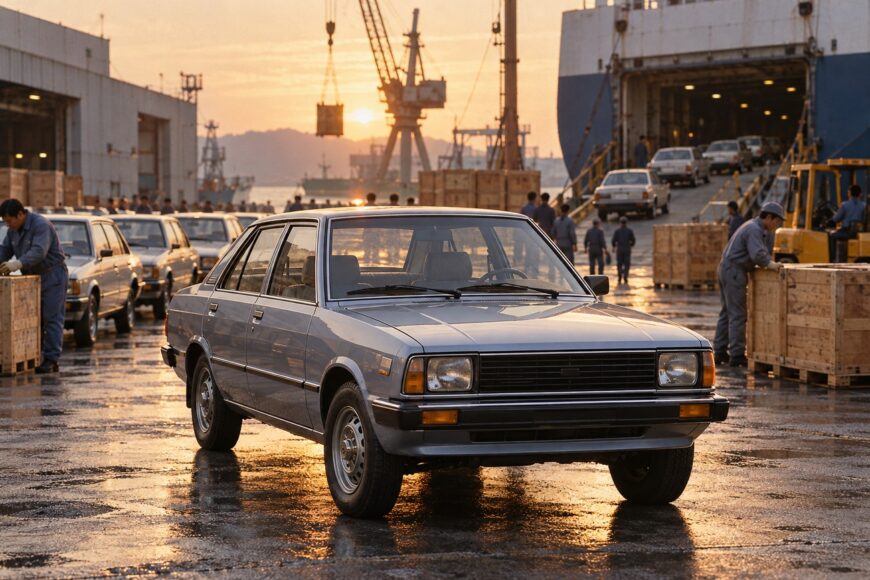
The Hyundai Pony occupies a special place in automotive history as South Korea’s first mass-produced and exported car. Its production debut came in December 1975, when Hyundai was still building the industrial capability needed to become a major international automaker. The Pony gave that ambition a recognizable product and helped move Hyundai from assembly and licensing toward a national passenger-car industry.
Its “homegrown” status needs careful wording. Hyundai calls the Pony its first original model, yet it was not technically independent: Giorgetto Giugiaro designed the body, while Mitsubishi engines and part of the engineering base were used. That combination makes the Pony historically important without turning it into a story of isolated engineering invention.
Surviving examples also differ sharply. The Pony was produced from 1975 to 1990 as a sedan, pickup, wagon, and three-door hatchback, with specifications changing by year and export market. For a buyer today, body style, parts compatibility, maintenance history, and hidden rust matter more than a clean photograph or a period power figure.
- Why the Hyundai Pony Mattered to South Korea
- Giugiaro Design, Mitsubishi Hardware, and Rear-Wheel Drive
- One Pony Family: Sedan, Pickup, Wagon, and Hatchback
- Specifications Changed More Than the Badge Suggests
- From Korean Launch to Export Model
- Buying a Hyundai Pony: Rust Before Engine Noise
- Frequently asked questions
- When did the first Hyundai Pony come out?
- Was the Hyundai Pony reliable?
- What was the first Korean car?
- How much is a Hyundai Pony worth today?
Why the Hyundai Pony Mattered to South Korea
The Pony mattered because it represented a complete step into passenger-car manufacturing. Series production began in December 1975, giving Hyundai a car it could build under its own name and sell beyond the domestic market. The achievement was industrial as much as automotive: production, supply, distribution, and export planning had to work together around one model.
The design story had already attracted attention before the production car appeared. The Pony Coupe concept was shown in Turin in October 1974, establishing a visual connection with one of Europe’s most influential design centers. The production body that followed was more practical than a concept car, yet the Turin presentation helped position the project as a serious modern automobile rather than a local assembly exercise.
Hyundai identifies the Pony as South Korea’s first mass-produced and exported car. That description is more precise than calling it the first Korean car in every possible sense. Foreign technical influence was substantial, but the Pony’s significance lies in Hyundai organizing those resources into a production model that could be sold at home and abroad.
Production continued from 1975 to 1990, giving the nameplate a long industrial life and allowing it to evolve through several body styles and specifications. Its importance therefore extends beyond surviving collector cars. The Pony helped establish the manufacturing and export identity that later Hyundai models would build upon.
Giugiaro Design, Mitsubishi Hardware, and Rear-Wheel Drive
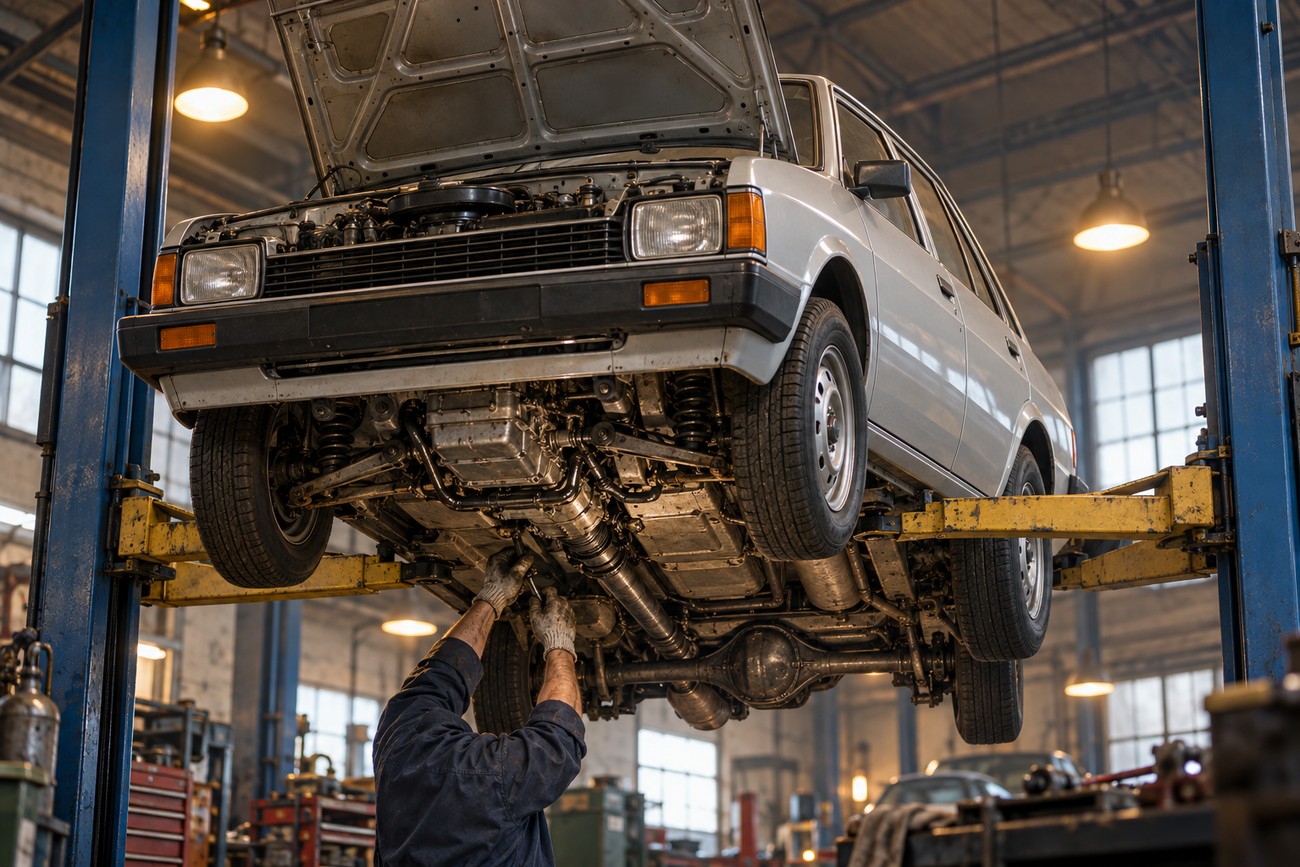
Giorgetto Giugiaro designed the production body, giving the Pony a restrained, squared-off shape that suited the period. Its proportions were compact, its surfaces relatively simple, and its packaging practical for a family car. Today, that design also makes it easier to see the model as a product of the 1970s rather than as an early version of a modern Hyundai.
The mechanical layout was rear-wheel drive, a detail that separates the Pony from the front-wheel-drive small cars most buyers associate with later Korean manufacturing. Rear-wheel drive brought a conventional longitudinal powertrain arrangement and a different driving character. It also means that restoration parts and repair assumptions from later compact Hyundai models cannot automatically be applied.
Engine capacity options included 1,238 cc, 1,439 cc, and 1,597 cc inline-four petrol engines of Mitsubishi origin. Early stated outputs included 55 PS for the 1.2-liter and 68 PS for the 1.4-liter. Those figures describe period specifications for particular versions; they do not predict the output of an engine that has spent decades exposed to wear, poor servicing, or long storage.
The Mitsubishi connection is central to an accurate description of the car. Mitsubishi supplied engines and contributed to part of the engineering base, while Hyundai handled the creation and production of the model as a Korean export product. Calling the Pony entirely independent oversimplifies its origins; dismissing it as merely a rebadged foreign car misses the industrial achievement represented by the finished vehicle.
One Pony Family: Sedan, Pickup, Wagon, and Hatchback
The Pony was a family of body styles rather than a single hatchback. The range included a sedan, pickup, wagon, and three-door hatchback, allowing Hyundai to address different uses with one model name. This breadth also explains why photographs and specifications can appear inconsistent when they actually show different members of the Pony family.
The pickup appeared in 1976, followed by the wagon in 1977. The three-door hatchback arrived in 1980, adding a sportier-looking and more compact alternative to the sedan range. These dates are useful identification clues, especially when a listing describes a car loosely as a “Pony” without stating its body style or production year.
Body style affects more than appearance. Exterior panels, glass, trim, interior components, and practical mechanical details may differ between a sedan, pickup, wagon, and hatchback. Export-market equipment can create further variation, so a part that appears correct in a photograph may still be unsuitable for a particular car.
That makes careful identification essential before buying parts or planning restoration work. Record the body style, model year if known, market of origin, engine size, and transmission. A rare body may be historically appealing while also being harder to complete if missing trim or body-specific components cannot be sourced easily.
Specifications Changed More Than the Badge Suggests
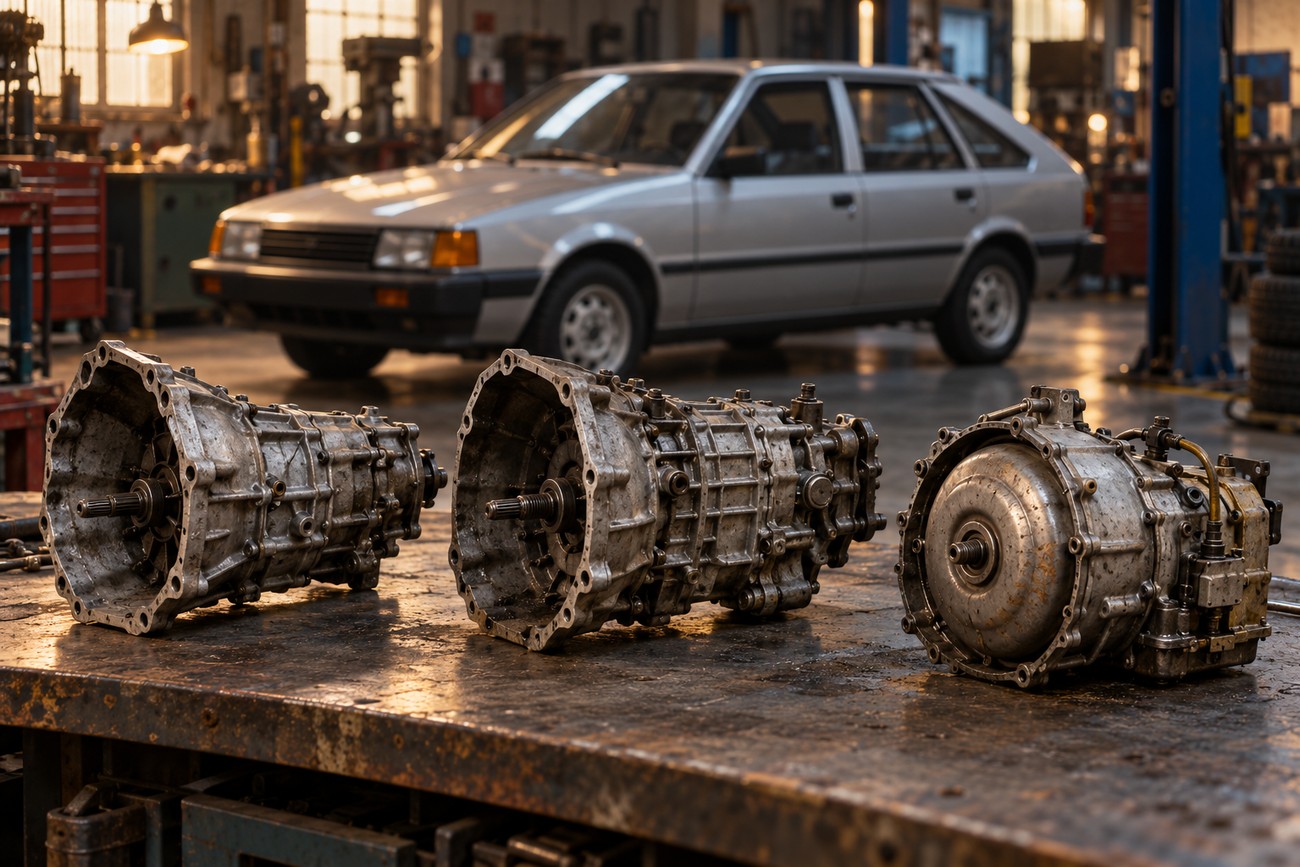
The Pony badge covers a wide spread of specifications. A 1984 1.4-liter version was listed at 70 hp and 111 Nm, while earlier stated figures included 55 PS for the 1.2-liter and 68 PS for the 1.4-liter. The difference reflects changes in version and model year rather than a contradiction that can be resolved by choosing one universal number.
Transmission choices also changed. In 1984, the range offered a four-speed manual, a five-speed manual, and a three-speed automatic. The presence of an automatic can substantially affect parts searches and servicing because transmission-specific components are less interchangeable than a casual inspection of the engine bay may suggest.
After 1986, some versions used a 1.6-liter engine rated at 74 hp. That reference applies to some later versions and should not be used to label every Pony as a 1.6-liter car. Export markets could receive different combinations of engine, transmission, equipment, and body style.
Historical rated power is useful for identifying a version, yet it says little about the present condition of an individual car. Compression, carburetion or fuel-system condition, ignition health, cooling, and previous repairs all affect how a decades-old engine runs. A specification sheet should guide inspection rather than replace it.
From Korean Launch to Export Model
Exports began in 1976, soon after domestic production started. The United Kingdom became the Pony’s first European market, giving Hyundai an early foothold in a region with established small-car manufacturers and demanding buyers. That step mattered because the car had to meet the practical expectations of an international market, including distribution and after-sales support.
The Pony was also supplied to Argentina, Colombia, and Egypt. These destinations show that its export identity was broader than a single European launch. The model reached markets with different road conditions, climates, customer expectations, and service networks, all of which could influence the specification and survival of individual cars.
Export status did not guarantee identical engines, body styles, or equipment. A Pony sold in the United Kingdom may differ from one supplied to Argentina, Colombia, or Egypt, even when the cars share the same basic name and appearance. This is particularly important when researching factory specifications from surviving vehicles that have later been imported or modified.
International distribution helped establish Hyundai as an exporting carmaker. The Pony did not need to be technically independent in every component to perform that role. Its lasting importance comes from the way Hyundai combined external engineering resources, its own manufacturing program, and an export strategy into a recognizable national product.
Buying a Hyundai Pony: Rust Before Engine Noise
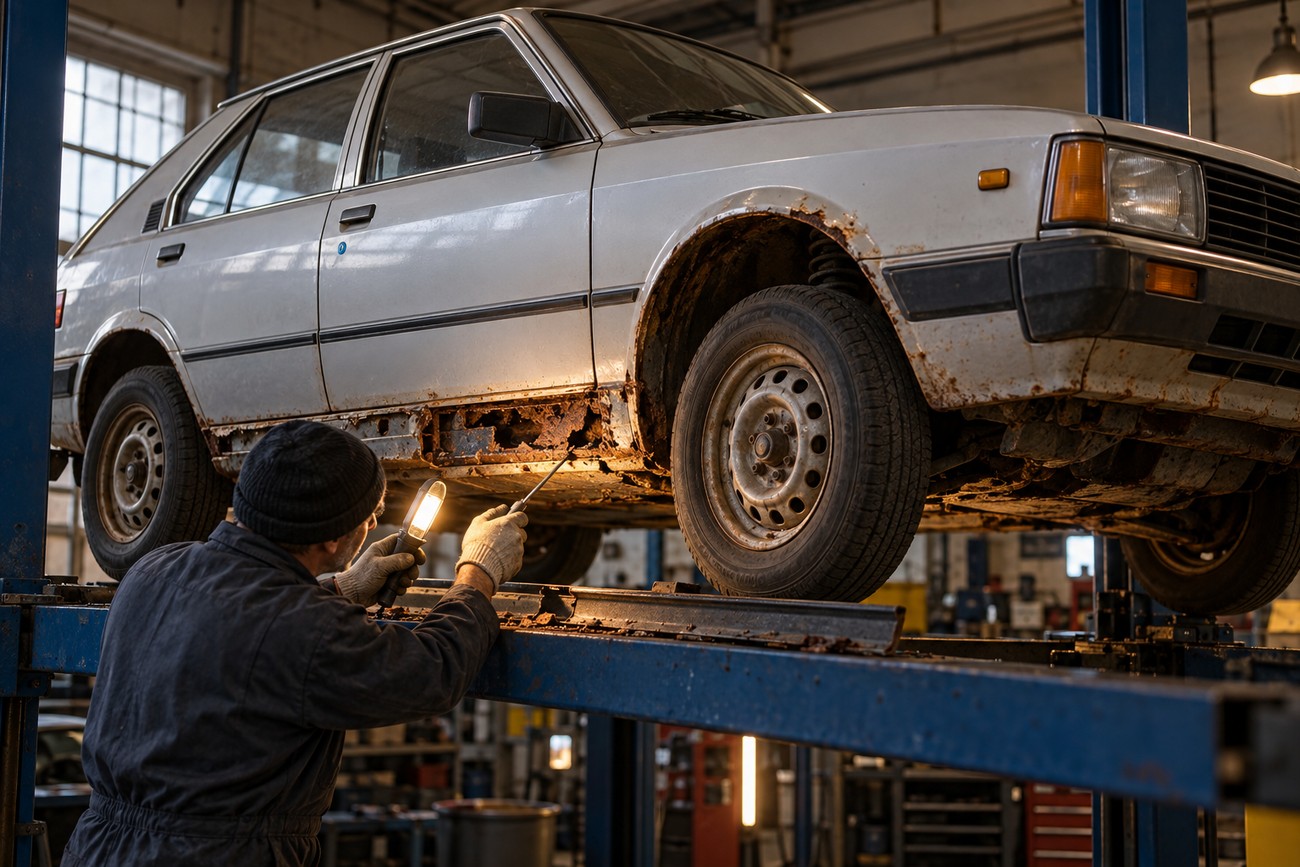
Rust is the first serious buying concern. Commonly reported corrosion areas include the wheel arches, sills, and floors, all of which can affect the car’s structure as well as its appearance. A Pony with a lively engine and presentable paint can still require major restoration if the shell has deteriorated beneath the visible surfaces.
Sills deserve particular attention because plastic trim can conceal severe or through corrosion. Exterior panels may look straight while the metal underneath has lost its strength. Structural rust can turn what appears to be a routine mechanical project into a substantially more expensive body project, especially when floors, mounting areas, or other structural sections require fabrication.
Inspect the sills, floor, and structural areas before diagnosing or rebuilding the engine. Plastic trim can hide deterioration that a clean exterior gives no warning of.
A sensible inspection sequence is straightforward:
- Lift the car safely and inspect the underside rather than relying on paintwork.
- Use a light to examine the floors, sills, wheel arches, and concealed edges.
- Check whether plastic trim is covering damaged metal instead of treating it as proof of protection.
- Assess structural corrosion before authorizing engine or transmission work.
- Confirm the body style and market specification before ordering replacement parts.
Mechanical simplicity helps once the shell is sound, but it does not remove the ownership limitations of an old, relatively uncommon car. Parts availability for body panels, decorative elements, and individual components may be considerably weaker than for a modern mass-market Hyundai. Access to specialists familiar with early Mitsubishi-based components can also be limited, depending on location.
These corrosion warnings come from limited available owner discussion rather than a statistical survey, so they should be treated as inspection priorities rather than failure-rate claims. The practical lesson remains strong: do not spend heavily on an engine before establishing that the car has a repairable body. A structurally sound, mechanically tired Pony can be a manageable project; a structurally rotten one can consume the budget before the engine work begins.
Frequently asked questions
When did the first Hyundai Pony come out?
The first production Hyundai Pony appeared in December 1975. It followed the Pony Coupe concept shown in Turin in October 1974, so the concept and the production car should be treated as separate milestones. The concept introduced the design direction, while December 1975 marks the start of series production.
Was the Hyundai Pony reliable?
The Pony used relatively simple period mechanical systems, which can make diagnosis and repair more direct than on a modern car. Present-day reliability depends heavily on corrosion, maintenance history, storage, previous repairs, and the condition of its Mitsubishi-based components.
Age creates risks that a period road test could not measure. Parts may be scarce, and specialist knowledge may be harder to find than for later Hyundai models. Reliability should therefore be judged car by car, with the body shell inspected before the engine is treated as the main priority.
What was the first Korean car?
The most accurate description of the Pony is South Korea’s first mass-produced and exported car. Hyundai also calls it its first original model, but that does not mean it was designed and engineered entirely without foreign components.
Giorgetto Giugiaro designed the body, while Mitsubishi engines and part of the engineering base were used. The Pony was therefore a Korean industrial and manufacturing milestone built with international technical input, rather than a purely isolated national engineering project.
How much is a Hyundai Pony worth today?
There is no single meaningful price for every surviving Pony. Value depends on condition, body style, market specification, completeness, and the extent of structural rust, with a sound original car generally occupying a very different category from a visually tidy project with hidden corrosion.
Engine size and historical rarity can influence interest, but they do not automatically compensate for rotten sills or floors. A buyer should establish the repairability of the shell, the availability of missing parts, and the authenticity of the specification before assigning a value.







