
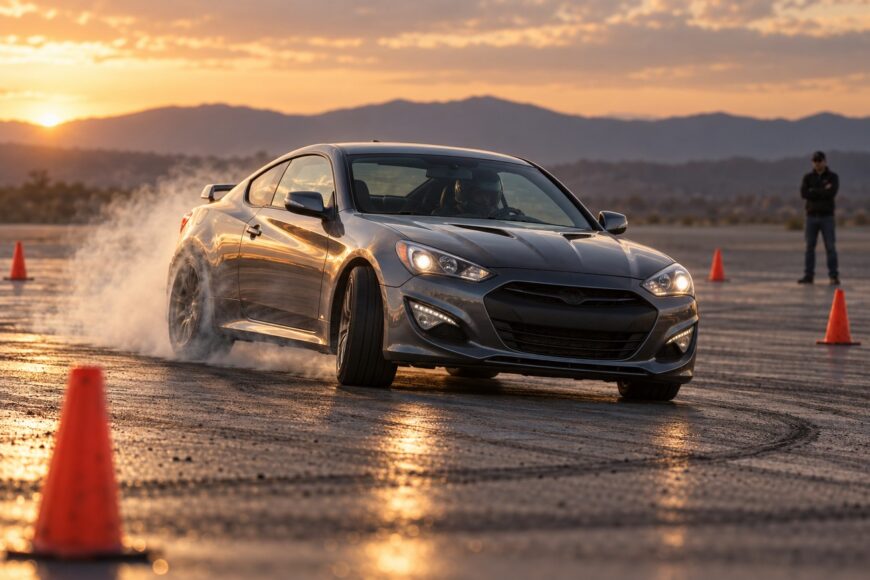
The Hyundai Genesis Coupe is unusually accessible as a rear-wheel-drive platform. It offers useful power, a proper longitudinal drivetrain, and factory six-speed manual and automatic transmissions without the price of more established performance coupes. That combination makes it attractive for learning car control and building a track project on a limited budget.
The low purchase price can hide the real cost. Many available cars have deferred maintenance, cosmetic modifications, uncertain LSD equipment, or damage from previous drifting. Regular sideways use also loads the clutch, driveshaft, axles, differential mounts, steering system, cooling system, and subframes far harder than ordinary road driving.
A Genesis Coupe can become a capable budget drift car, but it is not automatically ready for repeated drifting. The sensible purchase is the healthiest chassis with a confirmed, functioning LSD and a clear inspection history—not necessarily the car with the highest advertised horsepower.
- Why the Genesis Coupe Looks Like a Budget Drift Car
- 2.0T or 3.8: Which Powertrain Fits the Drift Budget?
- The LSD Question: The Part That Decides Whether It Drifts Properly
- Why a Cheap Example Can Become an Expensive Drift Car
- What Repeated Drifting Breaks First
- Build for Your Goal, Not for a Dyno Number
- A Sensible Inspection and Preparation Sequence
- Frequently asked questions
- Why are Hyundai Genesis Coupes so cheap?
- What is the cheapest drift car to build?
Why the Genesis Coupe Looks Like a Budget Drift Car
The basic layout does most of the selling. The Genesis Coupe is a rear-wheel-drive coupe with enough engine output to overcome rear-tire grip, and its wheelbase and seating position provide a useful foundation for learning throttle control. Rear-wheel drive also makes weight transfer easier to understand because throttle application directly influences the driven rear axle.
Factory equipment included six-speed manual and automatic transmissions. A manual car gives the driver more control over gear selection and engine braking, while an automatic can still be used for controlled practice if its condition is good and the driver understands its limitations. Transmission choice does not determine whether the car has a usable limited-slip differential.
Marketing language can create the wrong expectation. Describing the car as a purpose-built sports coupe communicates its intended character and chassis layout; it does not certify the suspension, differential mounts, cooling system, or drivetrain for repeated drift sessions. A road-focused sports coupe still needs inspection and preparation before track use.
The platform’s accessibility is strongest when the buyer treats it as a project base. A clean car with a working LSD, healthy cooling system, and straight underbody can provide a sound starting point. A heavily modified example with an unknown history may require more money than a standard, well-maintained car before it becomes reliable.
2.0T or 3.8: Which Powertrain Fits the Drift Budget?
Output figures vary by year, market, and fuel, so they should be used as a starting point for comparison. Condition, cooling performance, and the rest of the drivetrain matter more than peak horsepower when choosing a used Genesis Coupe.
| Powertrain | Stated output | Character | Fuel sensitivity | Budget implications |
|---|---|---|---|---|
| Early 2.0T | 210 hp and 223 lb-ft | Turbocharged torque with room for configuration-specific differences | Output and calibration depend on year, market, and fuel | Can be an accessible starting point, but stable drift performance may require careful preparation and supporting repairs |
| Early 3.8 V6 | 306 hp and 266 lb-ft on regular fuel | Stronger naturally aspirated response and easier wheelspin | Regular-fuel figure applies to the stated early specification | More immediate performance, with greater fuel use and potentially higher running costs |
| Facelifted 2.0T | Approximately 271–275 hp | More powerful turbocharged package than the early version | Depends on year, market, fuel, turbocharger, and electronics | Useful power for drifting, though turbo, cooling, and drivetrain condition remain decisive |
| Facelifted 3.8 GDI | Approximately 343–348 hp, depending on market, year, and fuel | Strong naturally aspirated performance with substantial rear-axle demand | Fuel quality affects the published figure; a 2016 specification lists 348 hp on Premium and 344 hp on Regular | Less need for immediate power upgrades, but fuel and maintenance costs can be higher |
The 2.0T generally makes sense for buyers who value lower engine mass and a potentially lower entry cost, provided the turbocharger, cooling system, and engine health check out. The 3.8 gives the driver more accessible wheelspin and can reduce the need for power modifications, but its fuel consumption and service costs deserve a realistic budget.
A powerful engine can expose weak parts sooner. More torque at the rear wheels increases demands on the clutch, driveshaft, axles, differential mounts, and tires, especially when the driver uses high-grip rubber. A healthy, lower-output car with a working LSD is often easier to use and cheaper to keep running than a neglected high-output car.
The LSD Question: The Part That Decides Whether It Drifts Properly
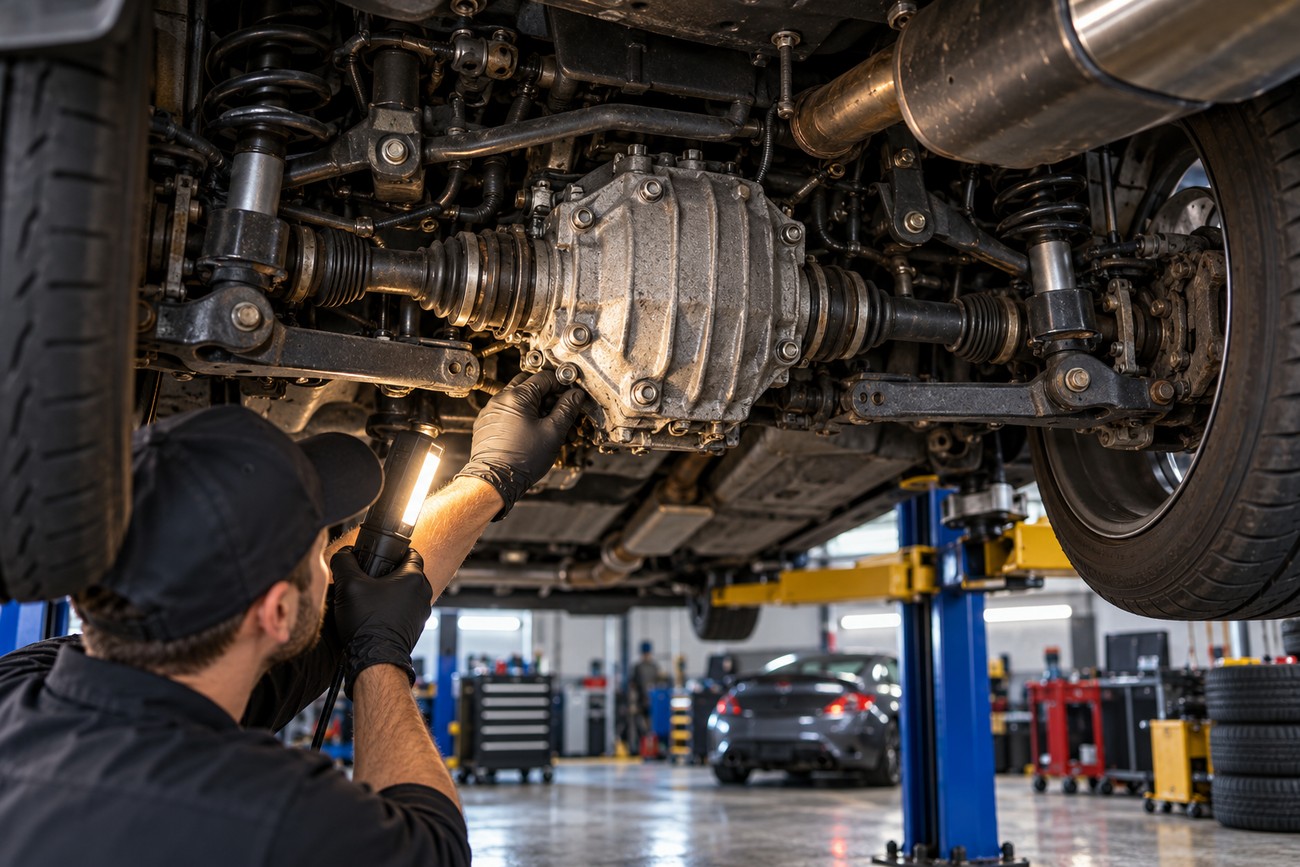
Rear-wheel drive only tells you where the engine’s torque goes. An open differential can send usable wheelspin to only one driven wheel, which may produce a one-wheel burnout instead of predictable, sustained drifting. Engine power cannot correct that basic traction problem.
Genesis Coupe configurations differ, so do not assume that every car has an LSD. Verify the equipment by VIN where possible, then inspect the actual differential and its surrounding hardware on the car. A seller’s description, badge, or assumption based on the trim level is insufficient evidence for a drift purchase.
An LSD also needs to work correctly. Its preload can be weak, and its friction components can be worn even when the unit is technically a limited-slip differential. During inspection, look for abnormal backlash, impact marks, leaks, unusual noise, and behavior suggesting that the two rear wheels are not being controlled consistently.
The differential should be treated as part of a system. Mount condition, fluid condition, axle play, driveshaft play, and rear-subframe integrity all affect how smoothly torque reaches the tires. Replacing or identifying the LSD before addressing those parts can leave the car unpredictable and expensive.
Why a Cheap Example Can Become an Expensive Drift Car
The advertised price says little about the cost of regular drifting. Track use accelerates wear in the clutch, gearbox, driveshaft, axles, differential, steering components, cooling system, and suspension mounts. A car that appears cheap can require immediate repairs before it is safe or mechanically consistent.
Exterior modifications deserve careful skepticism. Welded or painted parts can hide worn clutch components, differential damage, stretched mounting holes, cracked brackets, distorted subframe sections, and signs of overheating. Inspect underneath the car instead of treating wheels, aero parts, or a roll-bar-looking interior as evidence of proper preparation.
A pre-purchase inspection should include a compression test, a leak inspection, and a review of overheating history. On turbocharged cars, check turbocharger condition, signs of oil-supply problems, boost behavior, and cooling performance. The gearbox should engage every gear cleanly, and the clutch should not slip or show signs of severe heat damage.
Use a lift for the rest of the inspection. Check driveshaft and axle play, differential-mount bushing condition, the steering rack, the rear subframe, mounting points, and the underbody for cracks or deformation. A professional inspection is inexpensive compared with buying a car that needs structural and drivetrain repairs at the same time.
What Repeated Drifting Breaks First
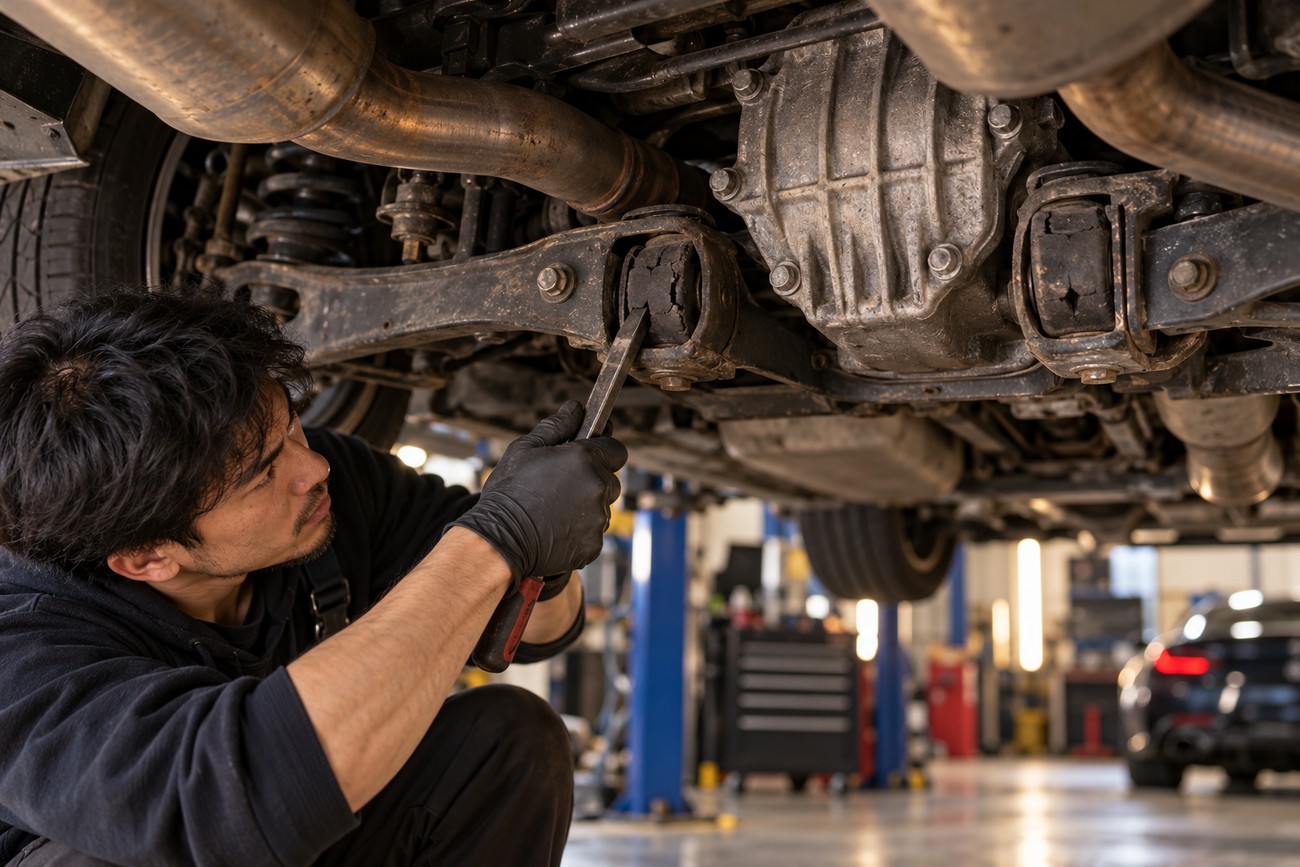
Owners report differential-mount bushing damage after drifting, with impacts, looseness, and driveline movement as warning signs. This should be treated as a reported pattern requiring confirmation for the specific year and market, rather than as a universal factory defect. Once the mount allows excessive movement, torque changes can produce sharper impacts through the differential and surrounding structure.
Power steering pumps can also fail on drift-used cars. Repeated high steering angles, rapid corrections, heat, and sustained load can turn a marginal pump into a failed one. Heavy steering during a session is a safety problem because it reduces the driver’s ability to make timely countersteering corrections.
Substantially gripper tires should follow inspection and reinforcement of the differential mount and nearby structure. Extra traction transfers sharper impact loads into bushings, mounts, axles, and subframe attachment points that may already be weakened.
Tire choice changes the load path through the entire car. Wide or high-grip tires can make the car easier to hold at an angle, yet they also increase shock loads when grip returns suddenly or the rear tires catch. During early practice, a cheaper rear tire can deliberately limit impact loads while the driver develops smoother weight transfer and throttle control; it is not a universal performance recommendation.
Track fluids need a service plan. Engine oil, transmission fluid, and differential oil can lose protective ability after overheating, so inspect or replace them according to the severity and duration of use. The differential specification is API GL-5 SAE 75W/85 hypoid gear oil, with a typical capacity of approximately 1.2 liters.
That capacity does not guarantee stable temperatures during long drift sessions. Temperature depends on load, speed, ambient conditions, tire grip, and cooling. A differential filled to the specified capacity can still run too hot under repeated abuse, so fluid condition, leaks, noise, and duty cycle all deserve attention.
Build for Your Goal, Not for a Dyno Number
A learning car needs predictable behavior, reliable cooling, a functioning LSD, and enough tire budget to practice safely. The chassis should be straight, the steering should work correctly, and the drivetrain should respond consistently. Large power upgrades add cost before they solve the driver’s main limitation: control.
Occasional short drift sessions impose a different workload from regular competition. Short demonstrations may need basic temperature monitoring and sensible maintenance, while repeated competition use can require stronger mounts, more serious cooling control, frequent fluid service, and a detailed inspection schedule. The correct preparation depends on how long and how hard the car will be used.
Driver training remains central. Learn weight transfer, throttle modulation, and timely countersteering on a closed course with appropriate safety equipment and instruction. Late countersteering can allow the rotation to continue, while braking once the car is already rotating can intensify a spin instead of stabilizing it.
Peak horsepower is a poor substitute for preparation. A well-maintained car with a working LSD can be more practical than a more powerful but abused example, especially when the goal is to build driving skill and keep repair intervals manageable. Add grip and power progressively, after the car demonstrates that its structure, cooling, steering, and drivetrain are healthy.
A Sensible Inspection and Preparation Sequence
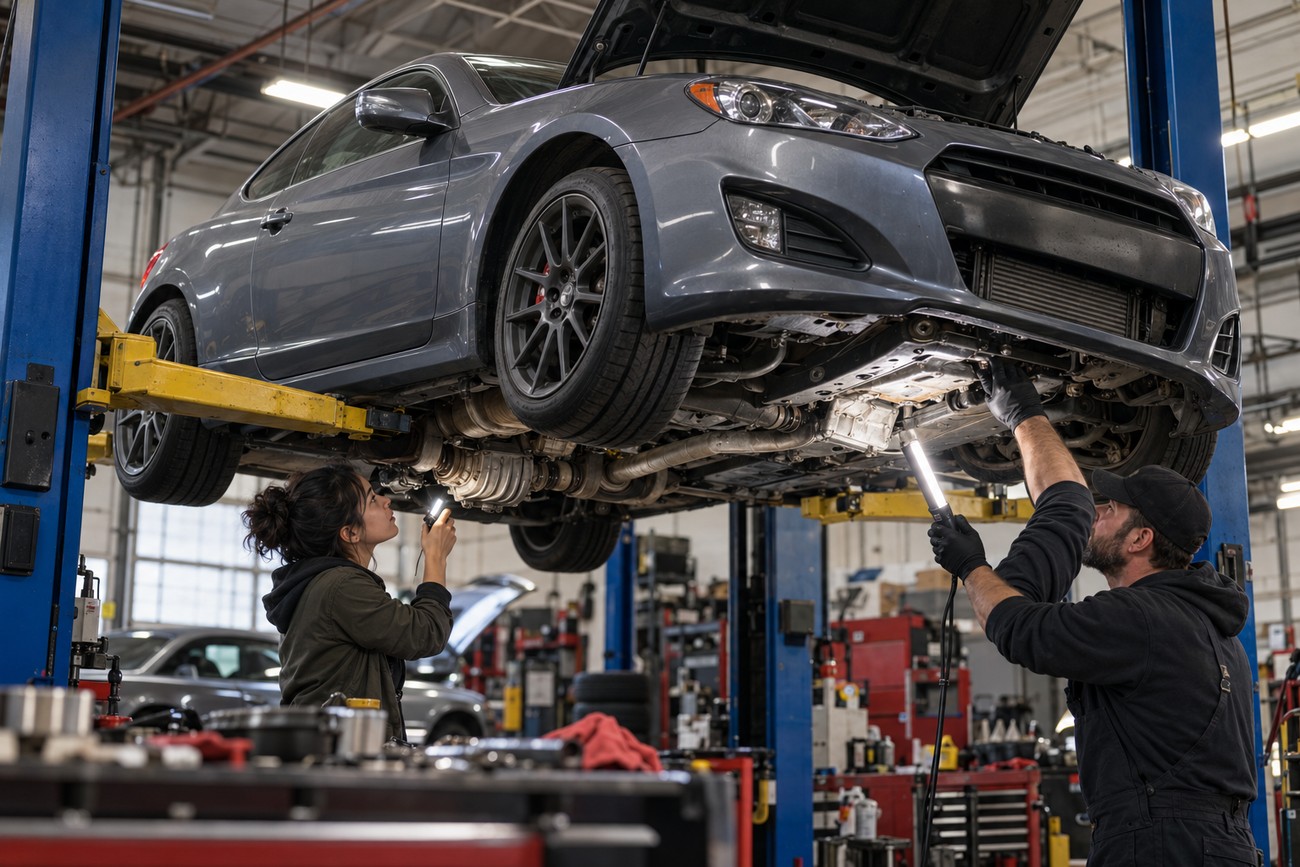
Start by defining the use case: learning, occasional demonstrations, or regular competition. That decision controls the acceptable condition of the donor car, the cooling requirements, the reinforcement budget, and how much consumable wear you should expect. Buying for competition while budgeting for casual road use creates problems immediately.
Next, verify the exact configuration. Confirm the engine, transmission, market-specific equipment, and LSD status by VIN and physical inspection. The same 2.0T name does not guarantee identical turbocharger, power, fuel, gearbox, or electronic configuration across years and markets.
Put the car on a lift before discussing modifications. Check driveshaft and axle play, differential-mount bushing condition, the rear subframe, steering rack, mounting points, and evidence of overheating or fluid leaks. Examine the underbody for cracks, elongated holes, bent metal, and repairs that suggest previous impacts or repeated track use.
Only after the mechanical baseline is established should you choose tire grip and reinforcement. More grip increases the load on mounts, bushings, axles, and the differential, so tire changes should be matched with monitoring and structural attention. During early practice, a less expensive rear tire can be a deliberate way to limit sudden impact loads while the driver learns smoother inputs.
Frequently asked questions
The Genesis Coupe can make sense as a budget drift platform, but its economics depend on the specific car. The answers below focus on total project cost and mechanical condition rather than purchase price alone.
Why are Hyundai Genesis Coupes so cheap?
Depreciation lowers the entry price, while modified and neglected examples can lower it further. Some cars have deferred clutch, differential, cooling, steering, or drivetrain repairs that are invisible in a short test drive. Cosmetic upgrades can make an abused car look more valuable than its mechanical condition justifies.
The low price does not prove poor basic design. It often reflects age, ownership history, fuel and maintenance costs, and the number of cars that have already been used hard. A clean, inspected example may cost more initially yet require fewer immediate repairs than a cheaper car with hidden drift damage.
What is the cheapest drift car to build?
There is no universal cheapest drift build. Compare the total cost of a sound chassis, a verified and functioning LSD, structural and drivetrain repairs, fluids, tires, and expected consumables. A more expensive but healthier Genesis Coupe can be the cheaper project when a low-priced example needs major cooling, clutch, differential, steering, and subframe work.
The best decision rule is to buy condition before horsepower. Confirm the car’s configuration, inspect it on a lift, and reserve money for maintenance and safe practice. A car that starts with a straight structure, working LSD, reliable cooling, and predictable steering provides a more economical path than a powerful car that needs reconstruction.







