
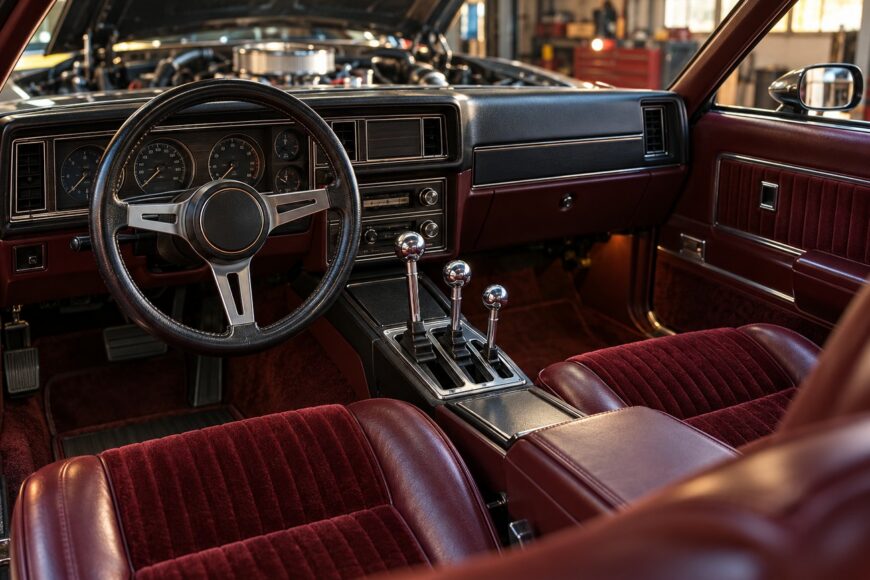
Three chrome levers rising from the console give the Hurst/Olds an unmistakable visual punch. They look like the controls of a manual gearbox, yet they operate a four-speed automatic transmission. The unusual arrangement is the car’s defining feature, and it is also the source of many misunderstandings during inspection.
The 1983 and 1984 Hurst/Olds models were based on the Oldsmobile Cutlass Calais on GM’s G-body platform and used a carbureted Oldsmobile 307-cubic-inch V8. Production totaled 3,001 cars in 1983 and 3,500 in 1984, for 6,501 cars combined. Finding an example with genuine factory hardware, correctly functioning linkage, and the right documentation is harder than finding a car with a shiny console and three levers.
Original Lightning Rods parts can be difficult to source, including levers, bushings, rods, trim, and console components. A buyer therefore has two separate jobs: establish factory provenance and assess the mechanical condition of an aging automatic drivetrain. Cosmetic resemblance helps with neither task on its own.
- Why the Hurst/Olds Lightning Rods Still Matter
- How the Three Lightning Rod Shifters Actually Work
- 1983 vs. 1984: The Differences That Matter
- 1983 and 1984 Hurst/Olds: Production and Hardware at a Glance
- How to Authenticate One Before Paying a Premium
- The Mechanical Weak Points Hidden Behind the Chrome
- Myths, Specification Disputes, and Restoration Traps
- Frequently asked questions
- How many 1984 Hurst/Olds cars were exported to Canada?
- What did the original 1984 Hurst/Olds paint scheme look like?
- What shift points are associated with the factory Lightning Rods calibration?
Why the Hurst/Olds Lightning Rods Still Matter
The Hurst/Olds occupied a narrow place in the early-1980s performance market. It was a limited Oldsmobile special based on the Cutlass Calais, with distinctive graphics, trim, and the Lightning Rods shifter system. Its appeal came from the complete package and the unusual driving interface rather than from the acceleration figures associated with earlier muscle cars.
Power came from a carbureted Oldsmobile 307-cubic-inch V8. Published output is disputed: professional and club specifications commonly cite 180 hp and 245 lb-ft, while some secondary sources cite 140 hp. That disagreement should be recorded accurately in a vehicle description instead of being silently resolved by repeating whichever figure appears in an old advertisement or online listing.
Production was limited to 3,001 cars for 1983 and 3,500 cars for 1984, giving a combined production total of 6,501. Those numbers establish scarcity, yet scarcity alone cannot prove that a particular car retains its factory engine, transmission, axle, interior, or shifter components.
The Lightning Rods arrangement gives the car its identity in a way the 307 cannot. A conventional automatic selector would make the car easier to confuse with other G-body performance models. The three-lever console creates a specific mechanical experience, provided the linkage remains correctly adjusted and the original components are still present.
How the Three Lightning Rod Shifters Actually Work
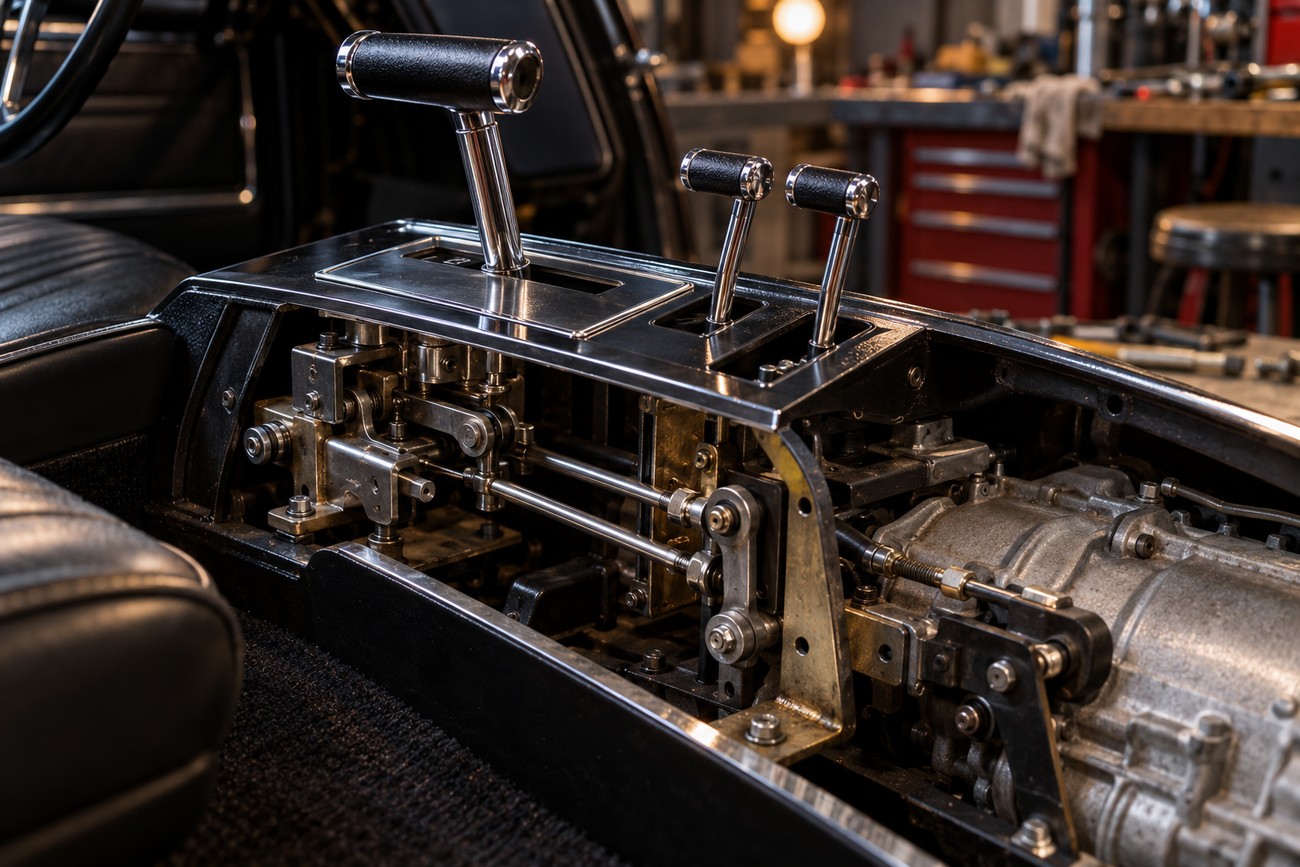
The operating logic begins with the transmission, not with the appearance of the console. The Hurst/Olds used a four-speed automatic Hydra-Matic/TH200-4R with overdrive, and Lightning Rods mechanically operated that automatic transmission through a multi-lever control system.
The left lever remains the main selector. It controls P–R–N–O/D–D, covering the normal range positions and the overdrive-related selection. The two neighboring levers provide manual holding and sequential selection of lower gears through the automatic transmission.
Those auxiliary levers are therefore part of a coordinated control system. They are not three independent PRND selectors, and they do not give the driver three separate ways to select every transmission range. Their function is to impose lower-gear control within the operating limits of the TH200-4R.
Lightning Rods does not add a clutch, a manual gearbox, or direct mechanical selection of individual gears in the manner of a conventional stick-shift transmission. The torque converter and automatic hydraulic system remain in service. The driver gains a more deliberate method of holding and selecting lower gears, while the underlying transmission remains an automatic.
1983 vs. 1984: The Differences That Matter
The most important hardware distinction between the two model years is the rear axle. The 1983 cars are usually associated with a 7.5-inch rear axle, while 1984 introduced a more durable 8.5-inch unit. That change matters for buyers who plan regular use, performance driving, or future drivetrain work.
Both years retained the carbureted Oldsmobile 307-cubic-inch V8 and the four-speed automatic layout with Lightning Rods controls. A 1984 model therefore deserves a closer look at its actual axle rather than an automatic assumption that every surviving car still has the equipment associated with its model year. Replacements and later modifications are common concerns on cars of this age.
Engine output requires separate treatment because the published figures conflict. Professional and club specifications commonly cite 180 hp and 245 lb-ft, while some secondary sources cite 140 hp. A careful appraisal should identify the source and describe the figure as disputed rather than using the conflict as evidence of a different engine specification.
The 1984 model year also carried a different visual emphasis in its paint scheme. The silver main body with black lower elements effectively reversed the 1983 black-and-silver emphasis, which can help an inspector identify an incorrectly presented or repainted car. Paint alone remains supporting evidence; drivetrain and production records carry greater weight.
1983 and 1984 Hurst/Olds: Production and Hardware at a Glance
This comparison separates documented model-year differences from the disputed published horsepower figures. The rear-axle descriptions are usual specifications, so the actual component on an individual car still requires inspection.
| Item | 1983 | 1984 |
|---|---|---|
| Production | 3,001 cars | 3,500 cars |
| Combined production | 6,501 cars | |
| Base vehicle | Oldsmobile Cutlass Calais on the GM G-body platform | Oldsmobile Cutlass Calais on the GM G-body platform |
| Engine | Carbureted Oldsmobile 307-cubic-inch V8 | Carbureted Oldsmobile 307-cubic-inch V8 |
| Published output | Professional and club specifications commonly cite 180 hp and 245 lb-ft; some secondary sources cite 140 hp | Professional and club specifications commonly cite 180 hp and 245 lb-ft; some secondary sources cite 140 hp |
| Transmission and shifter | Four-speed automatic Hydra-Matic/TH200-4R with overdrive and mechanical Lightning Rods multi-lever controls | Four-speed automatic Hydra-Matic/TH200-4R with overdrive and mechanical Lightning Rods multi-lever controls |
| Usual rear axle | Usually a 7.5-inch unit | More durable 8.5-inch unit |
The table shows why model-year identification is useful without being sufficient. A 1984 car with a replacement 7.5-inch axle may still be a genuine Hurst/Olds, while a car advertised as a 1984 model with an 8.5-inch axle still needs VIN and registry support.
The same caution applies to the transmission. A TH200-4R casting or case does not automatically confirm the correct factory installation, calibration, or internal condition. Identification should include the transmission markings, control hardware, and evidence that the unit works properly in the car.
How to Authenticate One Before Paying a Premium
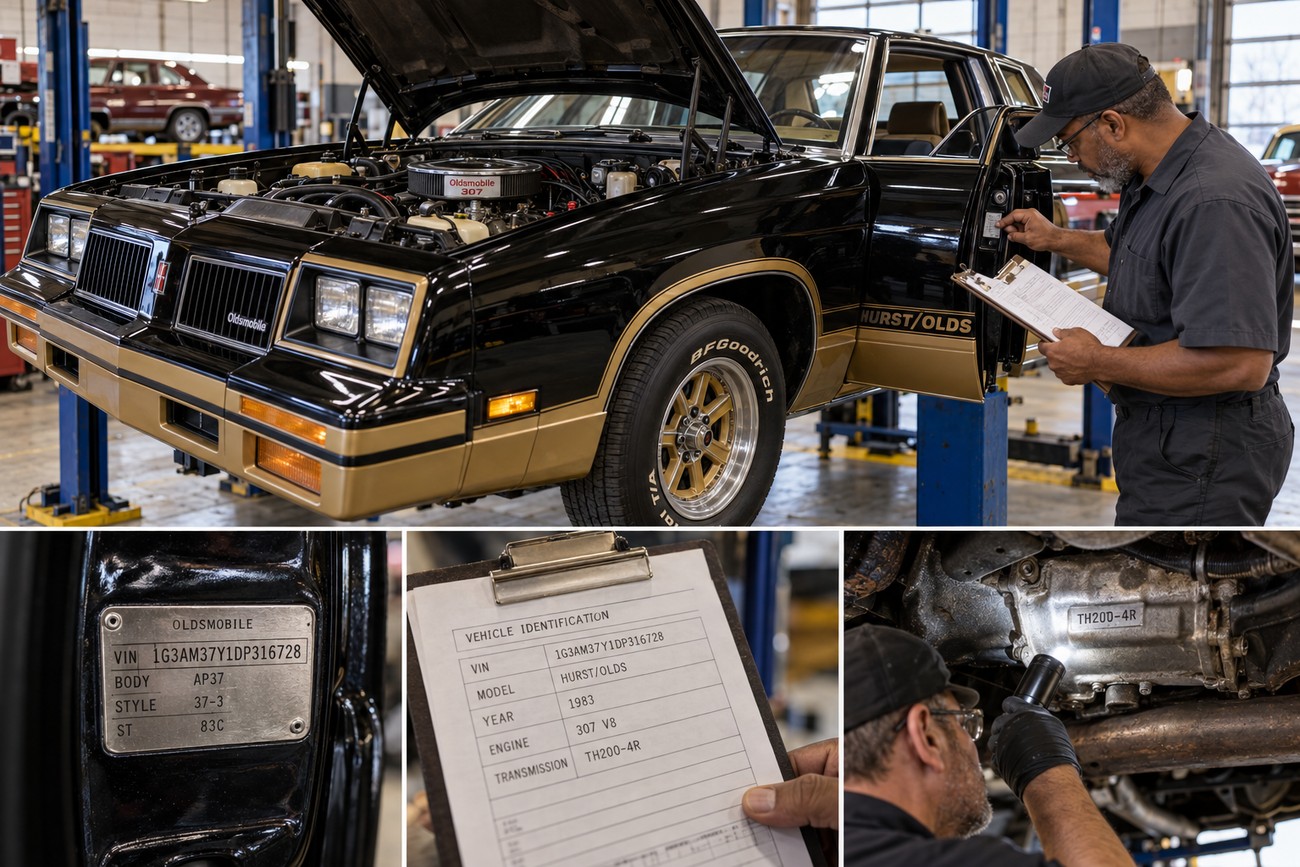
Start with the VIN and production documentation. Compare the car with Hurst/Olds Club records where possible, since club registries can document VINs, build dates, and export cars. A registry match provides meaningful support for provenance, while the presence of a familiar console provides only visual evidence.
Inspect the engine and transmission as separate items. Confirm that the engine is consistent with the carbureted Oldsmobile 307-cubic-inch V8 specification, then examine the TH200-4R identification and installation details. A replacement transmission may function well, yet it should be described as a replacement rather than presented as untouched factory equipment.
Examine the exterior colors and the interior as a complete system. The 1984 silver main body with black lower elements should be considered alongside trim, console components, seats, and other model-specific details. An ordinary Cutlass interior, a substitute console, or reproduction trim can make a modified car appear more complete than it is.
Give the Lightning Rods hardware a close inspection. Original components include the levers, bushings, rods, trim, and console elements. Look for looseness, bent rods, improvised fasteners, missing stops, and parts that appear newly made without supporting documentation. The mechanism must also be tested with the engine running and the vehicle safely stationary before any road evaluation.
Separate originality from condition in the written appraisal. A genuine car may have a rebuilt transmission, replacement carburetor, different rear axle, or restored console. Those changes do not erase its identity, but they affect value, serviceability, and the amount of work required to return it to factory specification.
The Mechanical Weak Points Hidden Behind the Chrome
Lightning Rods adds mechanical linkages, bushings, and adjustment points to a system that would otherwise use a simpler selector. Age-related wear can create excess movement and inaccurate range selection. A lever may feel as though it has reached a detent while the transmission linkage has not reached the intended position.
Incorrect adjustment can cause the transmission to select the wrong gear, stick between positions, or fail to return correctly. That makes linkage condition a safety matter, not a cosmetic restoration detail. Every range, the interlock function, and overdrive operation should be checked with the engine running and the vehicle moving under controlled conditions.
Lever movement is only an indication of control. Actual gear engagement under load reveals whether the linkage adjustment, bushings, and transmission are working together.
Testing the levers with the engine off is insufficient because it does not confirm hydraulic engagement, load behavior, shift quality, or the operation of the overdrive range. A road test should be planned around safe verification of all relevant functions, with attention to delayed engagement, slipping, harsh shifts, and unwanted gear selection.
Age-related faults also extend beyond the shifter. Vacuum lines can leak, carburetors can develop drivability problems, electrical connections can deteriorate, and cold starting can become difficult. The cooling system and transmission deserve equal attention because an overheated or incorrectly set-up TH200-4R can lose service life quickly.
The driving character has clear limits. The car retains an automatic torque converter, a carbureted V8, and rear drum brakes. The Lightning Rods can make gear selection more engaging, yet it does not turn the Hurst/Olds into a modern performance car or a manual-transmission equivalent.
Myths, Specification Disputes, and Restoration Traps
Myth: Lightning Rods is almost a manual transmission. Reality: it is a mechanical multi-lever control system for a four-speed automatic Hydra-Matic/TH200-4R with overdrive. The levers alter how the automatic transmission is controlled; they do not introduce a clutch or a manual gearbox.
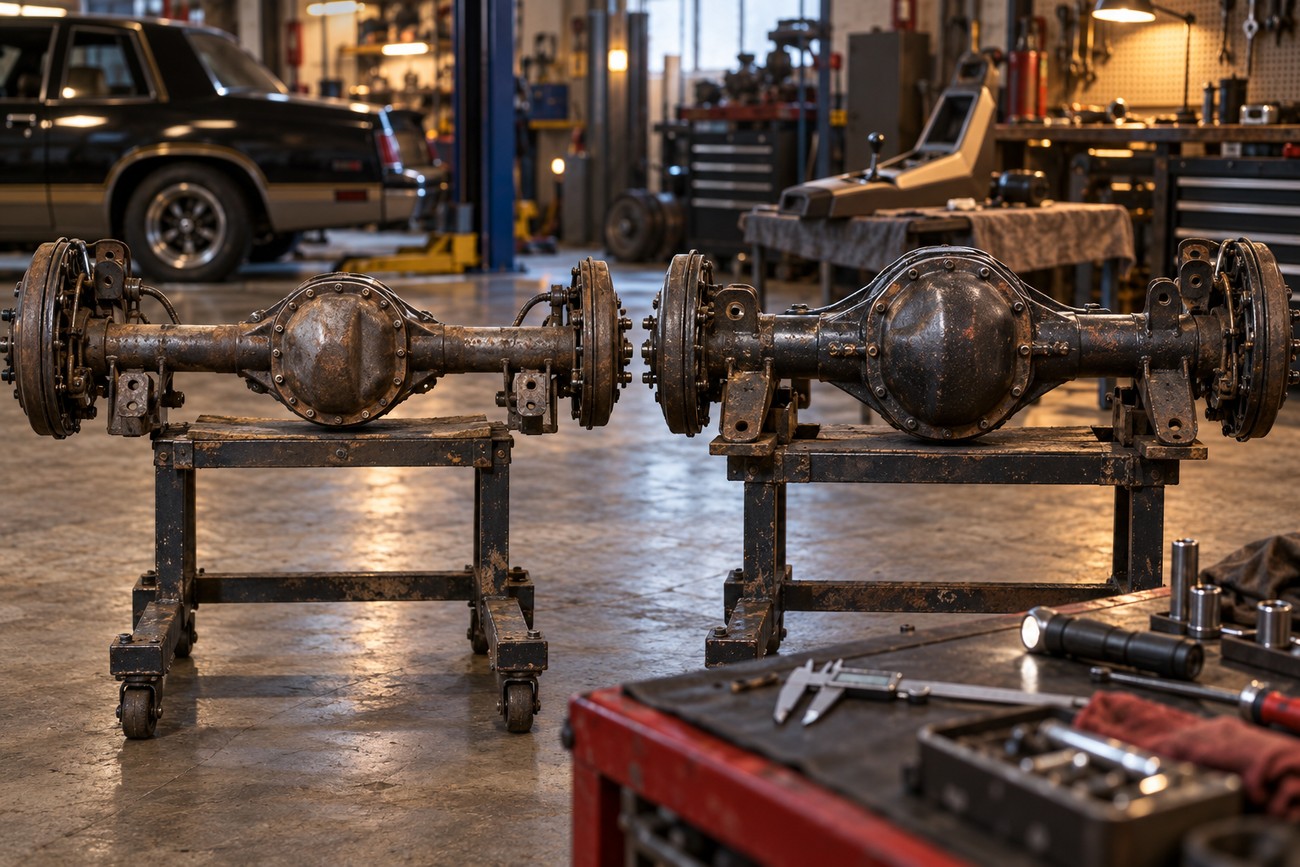
Myth: every Hurst/Olds has the same rear axle. Reality: 1983 cars are usually identified with a 7.5-inch unit, while 1984 introduced the more durable 8.5-inch unit. A buyer should inspect the axle housing and documentation rather than assign the model-year specification to every surviving vehicle.
Myth: 140 hp is the uncontested rating. Reality: professional and club specifications commonly cite 180 hp and 245 lb-ft, while some secondary sources cite 140 hp. The output dispute should remain visible in any serious description, especially when the engine or carburetor may have been replaced.
Reported factory shift calibration figures are approximately 5,200 rpm for 1–2, 4,900 rpm for 2–3, and 4,400 rpm for 3–4. Those figures come from one professional description, and an individual car may vary with condition, adjustment, transmission work, and operating circumstances. They are useful reference points, not a substitute for a complete mechanical diagnosis.
Frequently asked questions
The following questions address production records, paint identification, and reported shift calibration. Each answer should be considered alongside the car’s documentation and mechanical inspection.
How many 1984 Hurst/Olds cars were exported to Canada?
The Hurst/Olds Club registry lists 220 exported 1984 cars to Canada. That registry-specific figure matters because U. S. production counts should not automatically be treated as a complete worldwide total.
What did the original 1984 Hurst/Olds paint scheme look like?
The 1984 scheme used a silver main body with black lower elements. It effectively reversed the black-and-silver emphasis associated with 1983, giving inspectors a useful styling clue when reviewing repaint work or a car with mixed-year components.
What shift points are associated with the factory Lightning Rods calibration?
One professional description reports approximately 5,200 rpm for the 1–2 shift, 4,900 rpm for 2–3, and 4,400 rpm for 3–4. These figures describe the reported calibration and may vary with transmission condition, linkage adjustment, and individual setup.







