
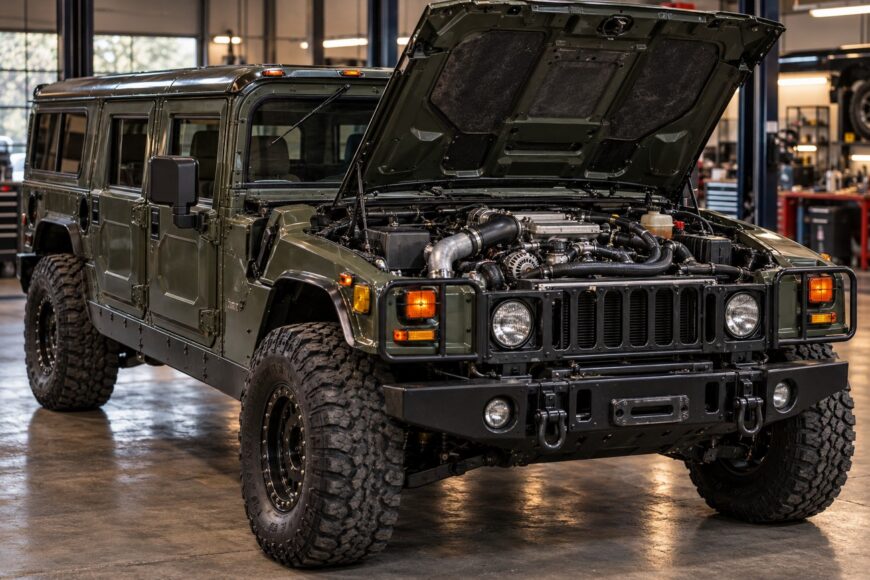
The final factory Duramax H1 has an appeal that a later engine conversion cannot quite replicate: it pairs the H1’s formidable off-road hardware with a stronger factory powertrain and rare late-production provenance. “Final Edition” describes its place in the story, rather than a verified official trim name.
That combination comes with a difficult ownership equation. The Alpha is wide, heavy, expensive to use, and often modified by the time it reaches a buyer. Finding one with convincing records and sound mechanical condition matters far more than finding the most imposing example.
- What Makes the H1 Alpha a Factory Alpha
- Duramax Power: A Real Upgrade, Not a Modern SUV
- Where the H1 Hardware Excels—and Where Size Wins
- Fuel, Parts, and the Cost of Actually Using One
- The Pre-Purchase Inspection That Matters
- Rarity, Originality, and What Makes One Worth Buying
- Frequently asked questions
- How many Hummer H1 Alphas were made?
- How much does a Hummer H1 Alpha cost?
- What should I confirm with an insurer before buying one?
What Makes the H1 Alpha a Factory Alpha
The H1 Alpha is a rare, late-production factory H1 configuration built around a GM 6.6L Duramax LBZ diesel V8 and a five-speed Allison 1000 automatic. Those components distinguish it from earlier diesel H1s, but its identity rests on how the truck left the factory. A later engine conversion does not establish Alpha provenance.
This distinction matters most when comparing listings. A Duramax-swapped H1 may be an appealing vehicle, yet its engineering, documentation, and resale prospects depend on the quality of that individual conversion. An Alpha badge, a familiar-looking engine bay, or a seller’s description is no substitute for records that identify the truck’s original specification.
“Final Edition” is a useful shorthand for the Alpha’s position near the end of H1 production. It should not be treated as a verified official trim designation or as proof of a particular production total. Buyers paying for factory originality should ask for documentation before assigning a premium to the name.
Duramax Power: A Real Upgrade, Not a Modern SUV
The commonly cited factory rating for the H1 Alpha is 300 hp and 520 lb-ft of torque. Paired with the five-speed Allison 1000 automatic, the Duramax gives the truck stronger factory output than earlier diesel H1s. That extra torque can make pulling away and building speed feel less laborious in ordinary driving.
Some owners describe more reassuring passing response than they experienced in earlier diesel H1s. Treat that as a useful impression, rather than a universal performance measurement: vehicle condition, tires, load, and road conditions all affect the result. The Alpha remains a heavy, blunt-shaped vehicle with drivetrain losses to overcome.
Factory ratings and owner dynamometer readings answer different questions. Dyno results can vary with the test setup and the condition of the truck, so a single printout cannot rewrite the manufacturer’s specification. Likewise, calling the Alpha the most powerful H1 needs a qualification: modified H1s may exceed its factory output without becoming factory Alphas.
Where the H1 Hardware Excels—and Where Size Wins
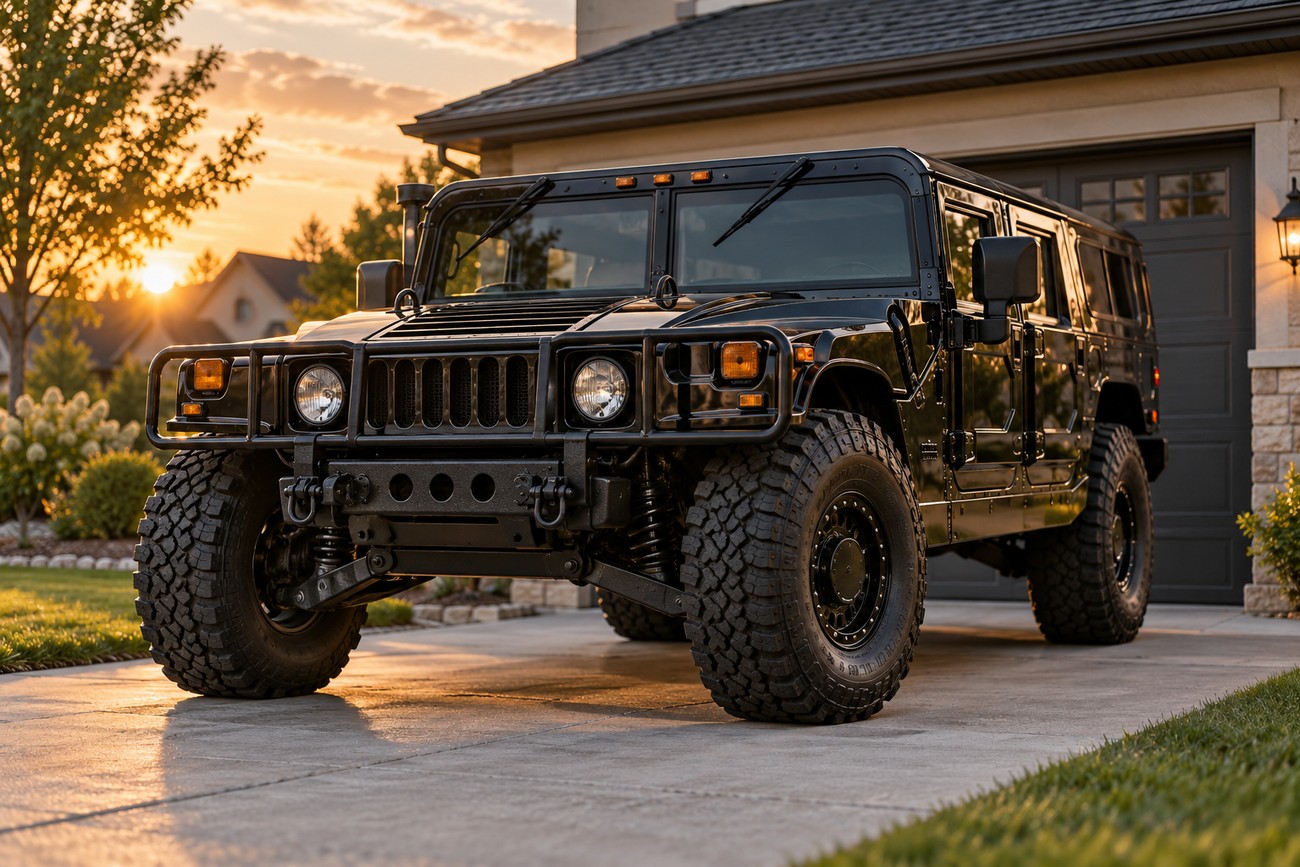
The Alpha retains the H1’s standard four-wheel drive, portal geared hubs, and substantial ground clearance. The geared hubs help provide clearance beneath the vehicle, while the overall layout suits difficult ground that would stop many conventional SUVs. These are functional advantages if your routes genuinely call for them.
Ordinary streets expose the other side of the design. The H1’s exceptional width and mass make parking spaces, tight turns, narrow lanes, and crowded access points harder to manage. Before buying, check the places the truck would actually use, including its storage space and the route into it; visual estimates are a poor guide to clearance.
Road comfort is another adjustment. Cabin noise, ride quality, and the effort of placing such a wide vehicle can become tiring over distance, particularly if you expect the ease of a modern SUV. Rugged construction does not make geared hubs, steering, or other heavily loaded parts immune to age and wear.
Fuel, Parts, and the Cost of Actually Using One
Owners commonly report fuel economy in the double-digit mpg range, though driving conditions, tire choice, and vehicle setup can change the result substantially. Frequent urban use is especially hard on the ownership case: the truck consumes fuel while offering little of the parking ease or daily practicality buyers may expect at its price.
Fuel is only one recurring expense. Large tires, brakes, specialist labor, and suitable storage all deserve attention before purchase. Correct replacement parts may be costly or slow to obtain, and a repair that looks straightforward can stall if it needs an H1-specific component or someone familiar with the vehicle.
Modifications can raise the running bill further. Oversized tires and heavy accessories add demands to hubs, steering, and brakes, even if the truck appears more capable in photographs. Ask what was fitted, why it was fitted, and whether subsequent maintenance reflects the extra load; a tall stance alone is no evidence of a better-prepared H1.
The Pre-Purchase Inspection That Matters
Start with records rather than upholstery. Documented work on geared hubs, cooling, and the transmission tells you more about likely ownership demands than a tidy cabin or fresh exterior finish. Electrical repairs and changes also deserve a clear paper trail, especially where previous owners have added equipment.
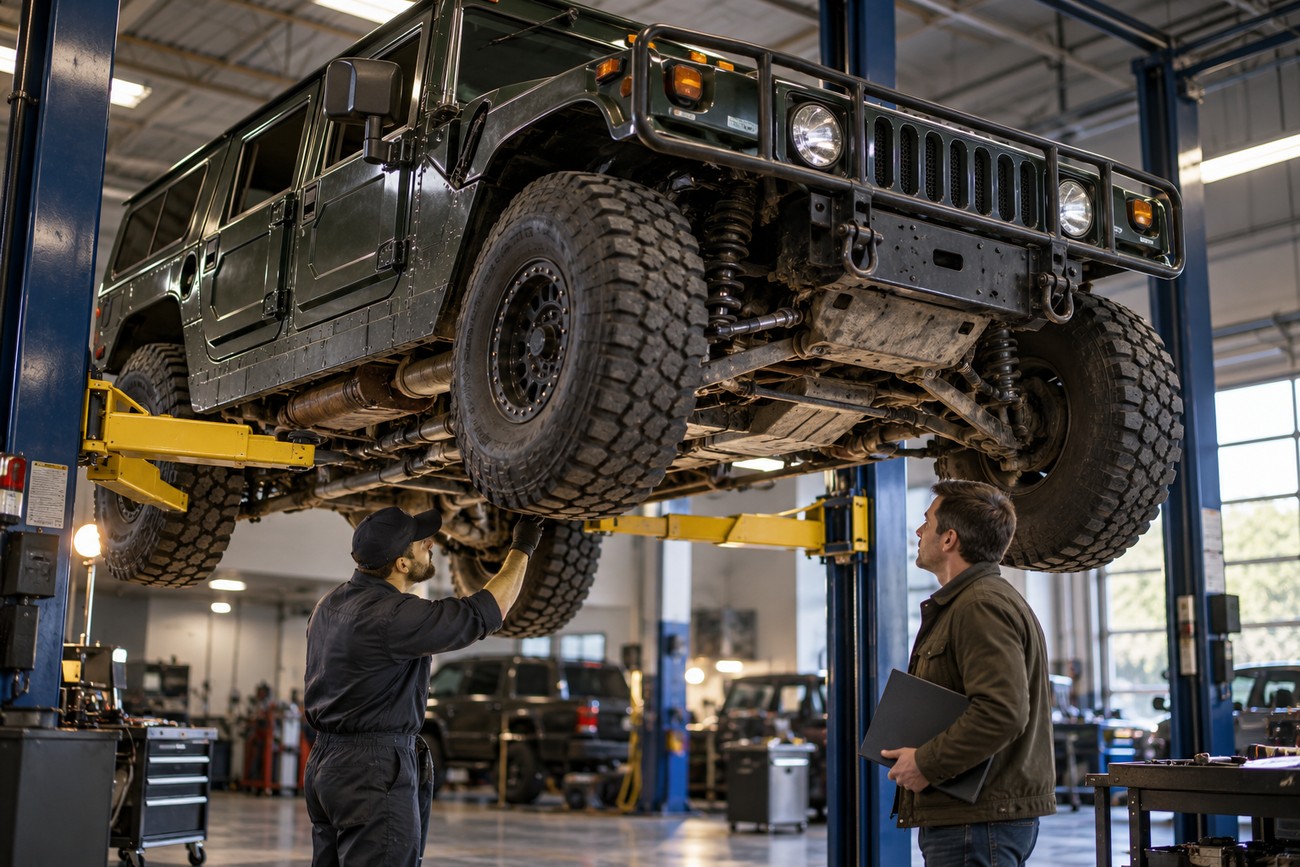
Arrange an independent inspection on a lift with someone who knows H1s. Have them check for leaks, corrosion, drivetrain wear, and the quality and consequences of modifications. The inspection should cover the frame and body as well as the visible mechanical assemblies; photographs and a short road test cannot show everything underneath.
Ask the inspector to reconcile geared-hub and drivetrain service records with what is visible on the lift. An invoice for past work is most useful when the assemblies’ present condition supports it.
A clean-looking truck can still carry expensive wear, and a vague claim of military toughness cannot establish how it was maintained. Poorly executed changes to cooling, wiring, or drivetrain components may also undermine reliability and originality. If the seller cannot explain substantial work or allow specialist scrutiny, price the uncertainty into your decision—or walk away.
Rarity, Originality, and What Makes One Worth Buying
The factory Alpha’s rarity makes provenance important, but rarity alone does not establish value. A sound frame and body, credible factory identity, and documented maintenance give a buyer more to rely on than fresh paint or a headline horsepower claim. Those same qualities may matter when the time comes to resell.
Evaluate an asking price against current comparable sales, then examine what each vehicle actually is. An original, maintained Alpha and a modified H1 with greater power answer different buyer priorities; higher output does not automatically make the latter more valuable. Likewise, an attractive restoration needs evidence of the work beneath its finish.
Restrained, well-documented modifications are easier to assess than unexplained changes. Budget room for inspection findings and for parts that may take time to source, rather than committing every available dollar to the purchase itself. The Alpha makes most sense as a considered enthusiast vehicle; as a routine daily driver, its size and operating demands are difficult to ignore.
Frequently asked questions
The questions below are best settled with defined evidence, rather than a number repeated in a listing. Production claims need a clear scope, market comparisons need comparable vehicles, and insurance terms need confirmation for the truck you intend to buy.
How many Hummer H1 Alphas were made?
A precise total requires a verified production source and a definition of what is being counted, including model years and body styles. The Alpha is a rare late-production factory configuration, but no verified total is established here. If a seller quotes a figure to justify a premium, ask for its source and check that it covers the same vehicles.
How much does a Hummer H1 Alpha cost?
There is no reliable single price without current, comparable sales and details of the specific truck. Compare documented factory Alphas with similar body styles and condition, then account for provenance, maintenance records, modifications, and inspection findings. An asking price shows what a seller hopes to receive; a comparable completed sale provides a firmer reference.
What should I confirm with an insurer before buying one?
Confirm the proposed insured value, whether agreed-value cover is available, and how any modifications must be declared. Explain your intended use and ask about storage requirements, mileage conditions, and any limits relevant to off-road driving. Obtain the terms for the specific vehicle before committing to a purchase; its rarity or existing cover does not guarantee the policy you need.







